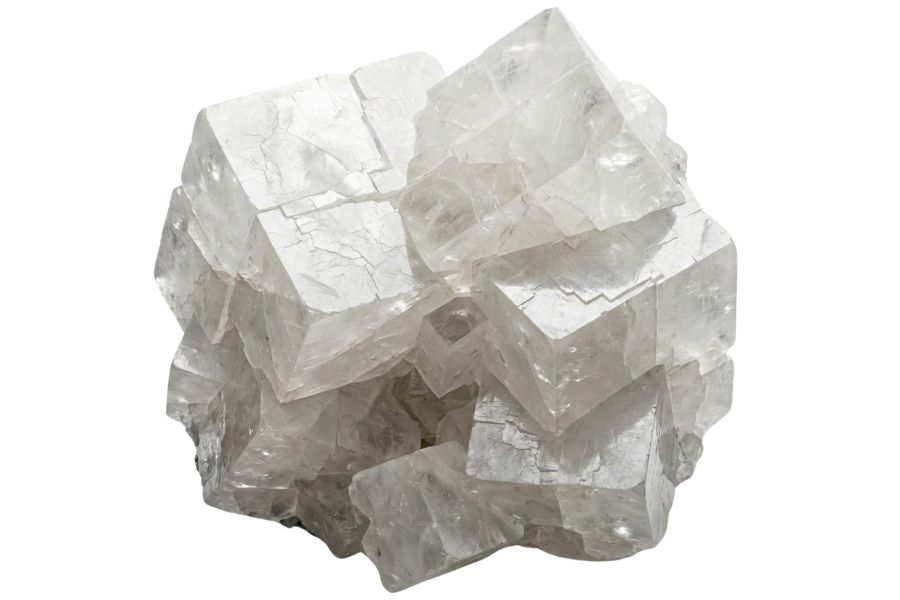
Taking a field trip to find crystals in Virginia can be an amazing experience, but it helps to know which part of the state to aim for.
Virginia is long and narrow, and its geology changes dramatically from the coast to the mountains. The collectors who have the most success don’t just pick a random state park. They understand that a productive hunt is less about luck and more about strategy.
By focusing your search within areas that are known to produce great rocks and minerals, you’ll avoid wasting fuel on unproductive areas. Getting you to those precise spots is exactly what we’re here to do.
- The extensive local experience and understanding of our team
- Input from multiple local crystal hunters and crystal collecting groups
- The accessibility of the crystal mining locations
- Safety and potential hazards when collecting
- Private and public locations
- A desire to include locations for both experienced crystal hunters and those who are just starting out
Using these weights we think we’ve put together the best list out there for those who love finding new crystals for our collections!
The Types of Virginia Crystals You Can Find
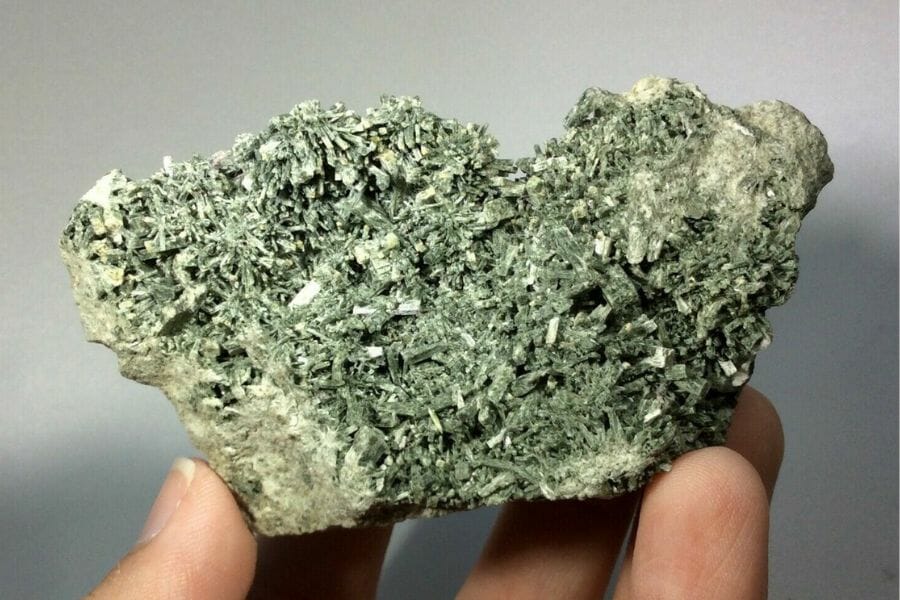
Virginia is a hot spot for crystal hunters, as the state is home to an array of crystal deposits waiting to be discovered. Whether you’re looking for something shiny and smooth or jagged and rough, you’re bound to find what you’re searching for! With some luck and perseverance, you might even uncover a rare crystal that will make all your friends green with envy.
Calcite
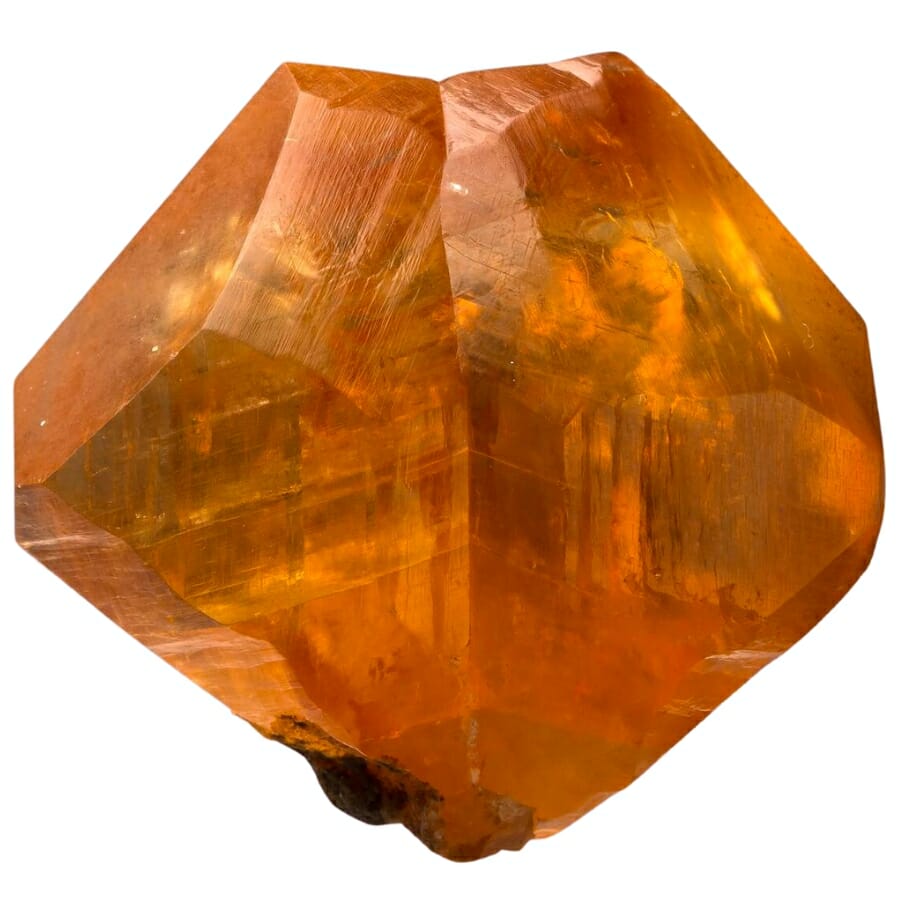
Like garnet, calcite can be found in so many colors and shapes. From clear to yellow, pink, green, or even blue, it wears many faces, and each one is amazing!
Calcite forms in various environments, like caves, hot springs, or even deep in the ocean. Imagine dripping water in a cave, slowly building up into a sparkling formation. It’s this gem in action!
Why do people value calcite? It’s not just a pretty face. It’s used in lots of everyday things, like toothpaste and antacids. It’s also a major part of limestone, which is used in buildings and roads.
Calcite is also a favorite among collectors. Its many shapes and colors make it a gem for anyone who loves rocks and minerals. Some believe it has special energies that can help with learning and memory. It’s like having a sparkly study buddy!
Where you can find Calcite in Virginia
You can find calcite in many sites of our state like:
- Between Shiloh Mountain and Appleberry Mountain in Albemarle County
- Craigsville area in Augusta County
- James River Hydrate & Supply Company Quarry in Botetourt County
Amethyst
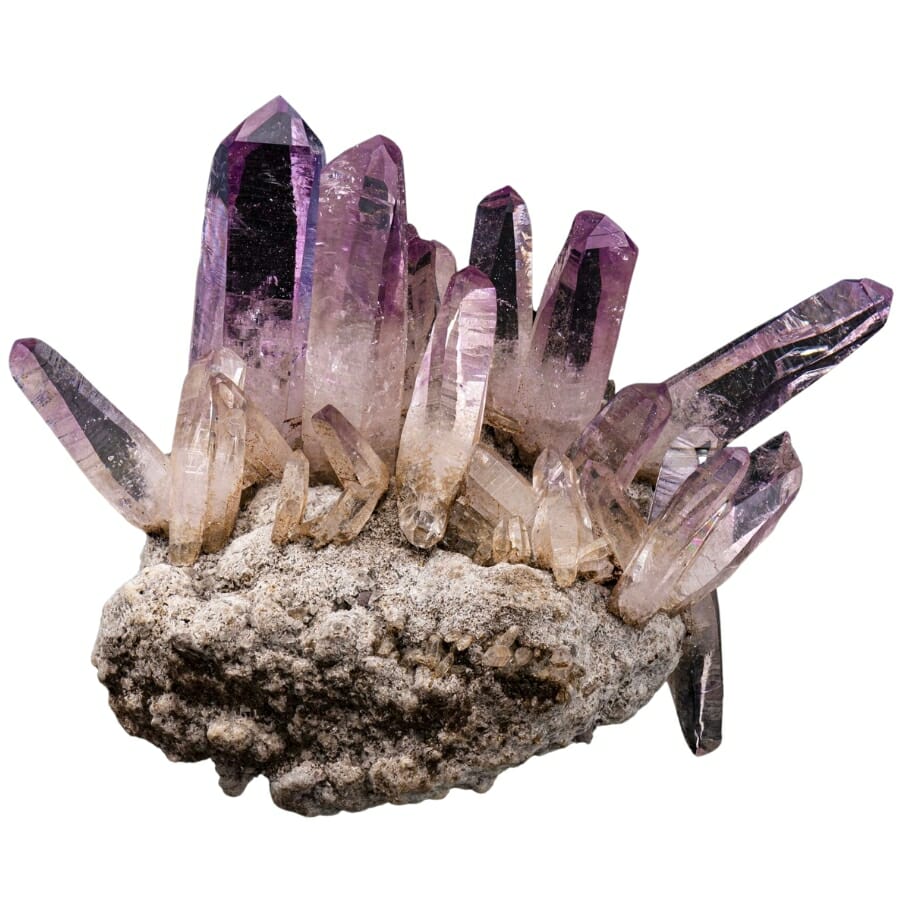
With its dazzling shades of purple, amethyst is like a royal gem! Imagine the colors of a sunset mixed with the sparkle of a starry night, and you’ve got this gem.
Amethyst’s purple hue ranges from light lilac to deep, rich violet. Tiny bits of iron in the crystal and some natural radiation combine to create this masterpiece. Nature sure knows how to paint with minerals!
Amethyst is highly valued and loved for thousands of years. Besides being gorgeous, ancient cultures believed it could prevent drunkenness (quick trivia: its name actually means “not intoxicated” in Greek!). It’s widely used in jewelry and even in art and decorations.
Where you can find Amethyst in Virginia
To find beautiful amethyst specimens here, pay a visit to these places:
- A.W. Donald Plantation in Charlotte County
- Schaar Farm in Amherst County
- Lacey Rush property in Campbell County
Apatite
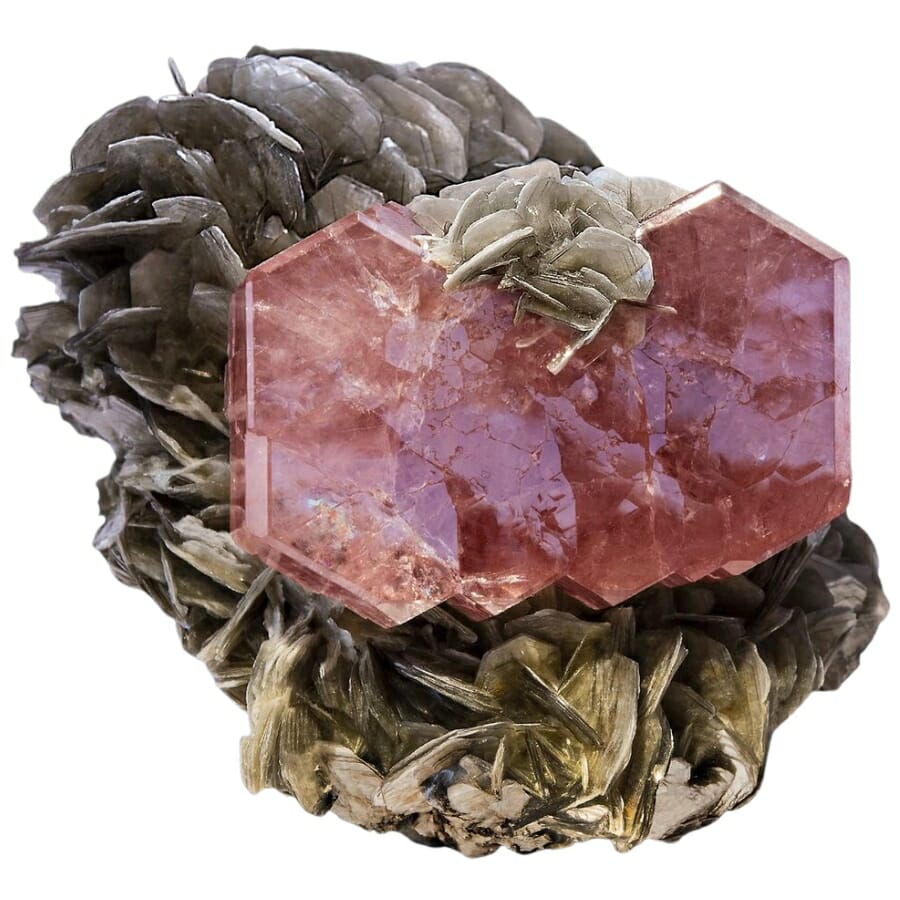
Apatite’s name comes from a Greek word that means “to deceive,” but it’s not that at all! This wonderful gem comes in a rainbow of colors, and it’s more common than you might think.
This gem can be blue, green, yellow, or even colorless. Sometimes, it’s even mistaken for other gems because of its wide color range. It grows in many different types of rocks, likes to mix with other minerals, and can be found in clusters of beautiful crystals.
Aside from being a stunning gem, apatite is a key ingredient in something you use every day: your teeth! It forms the hard parts of our teeth and bones.
It’s also important for farmers. Crushed apatite rocks are used as a source of phosphorus in fertilizers, so it helps plants grow strong and healthy.
Where you can find Apatite in Virginia
If you want to find apatite here, consider visiting these locations:
- Gladehill School in Franklin County
- Roseland area in Nelson County
- Front Royal area in Warren County
Rhodonite
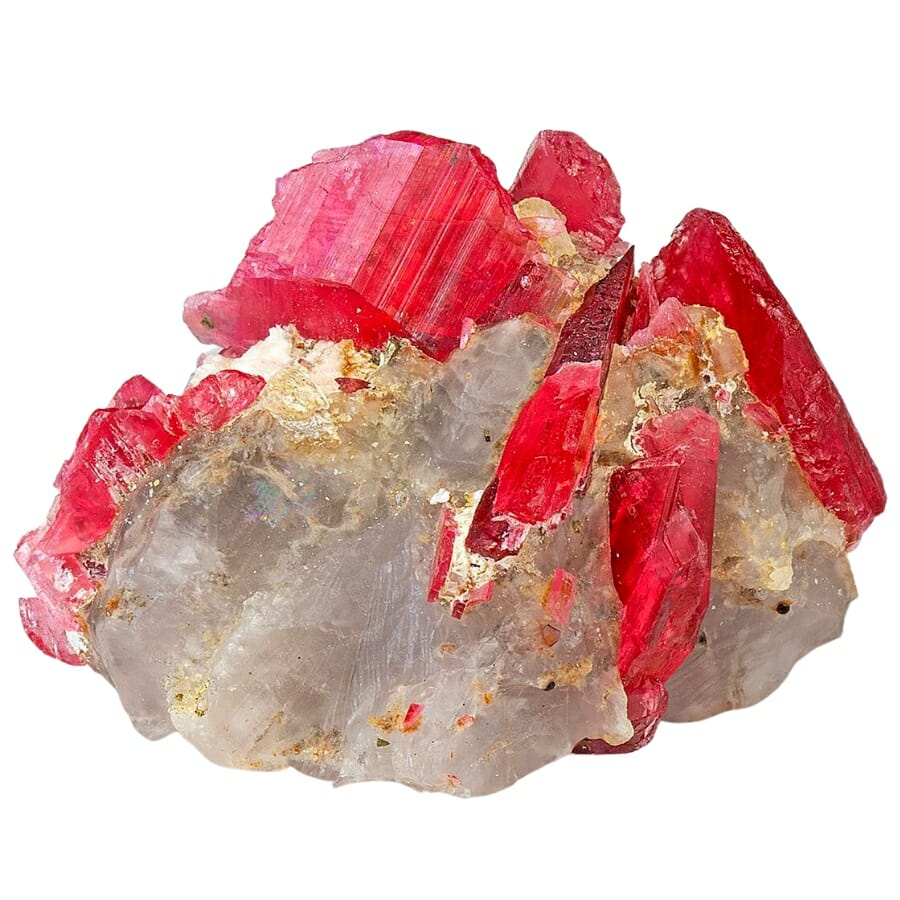
Rhodonite is mostly pink, with dark red, black, or brown patterns swirling through it. Just picture a sunrise captured in stone, and you’re close to imagining its beauty.
This fantastic gemstone comes to life when magma cools down and forms into rock. Its pink color comes from manganese. Over time, other minerals join in, creating their fascinating patterns.
The value of rhodonite is mostly based on its looks and uses. Jewelers carve it into beads, pendants, and other pieces that look great with just about anything. Some people also think it helps with healing and forgiveness.
Aside from this, it’s used for making things like knobs, vases, and other decorative items. It’s like a touch of nature’s beauty in everyday things!
Where you can find Rhodonite in Virginia
You can find rhodonite in Fluvanna County, specifically in the Central Plains area and the Kidd’s Store area.
Topaz
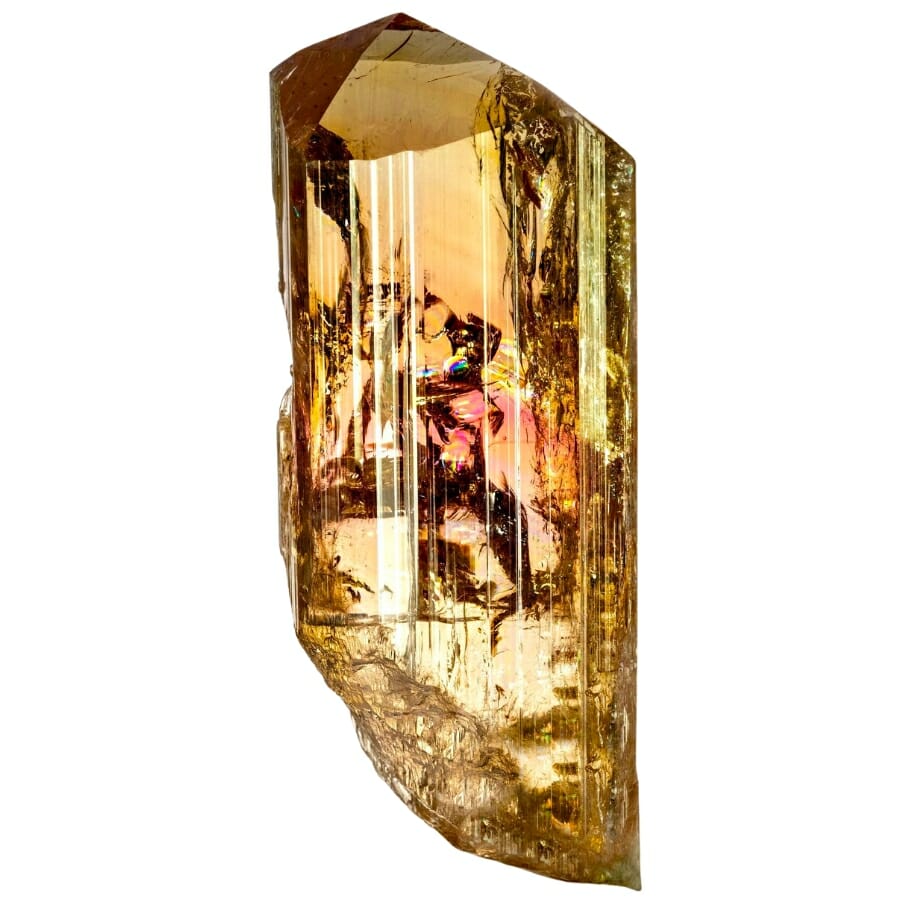
Topaz is known for its dazzling colors and crystal-clear beauty. It can be found in many shades: blue and green, yellow, pink, or even completely clear. It’s found in rocks that are formed from cooling magma.
Topaz is loved for one thing— it’s stunning to look at! Jewelers adore it because it sparkles and shines in the light. It’s like wearing a piece of sunlight or a drop of the sea. Some people even believe it has special powers, like bringing joy and success.
Best of all, topaz is considered a hard gemstone, standing at 8 on the Mohs scale of hardness. Imagine a gem that can keep its sparkle and shine through the everyday bumps and bangs, that’s topaz!
Where you can find Topaz in Virginia
Find topaz by exploring and searching through these spots:
- Amelia Count House in Amelia County
- Willis Mountain in Buckingham County
- Leigh Mountain in Prince Edward County
Quartz
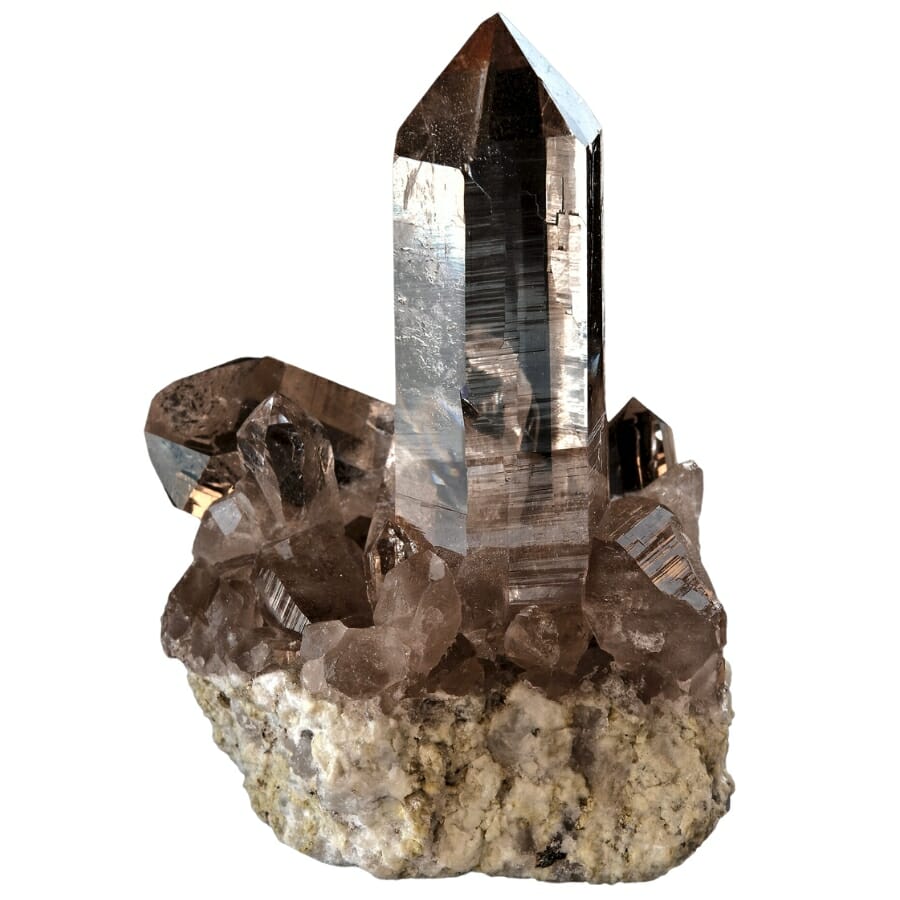
Quartz is one of the most common crystals, but there’s nothing ordinary about it. It can be clear as a mountain stream or colorful like a rainbow.
It’s formed in many different ways. Sometimes, it grows slowly in cracks in rocks as hot water passes through, leaving behind tiny quartz crystals. Other times, it forms from cooling magma.
The value of quartz isn’t just because it’s beautiful; it’s useful too! It’s used in watches, radios, and even computer chips.
Luckily, our state is endowed with different types of quartz. From the Blue Ridge Mountains to the Piedmont area, quartz is a part of Virginia’s landscape.
Where you can find Quartz in Virginia
We suggest searching through these sites if you want to find quartz:
- Hillsboro Quarry in Albemarle County
- George R. Smith far in Prince Edward County
- Spruce Run in Giles County
Epidote
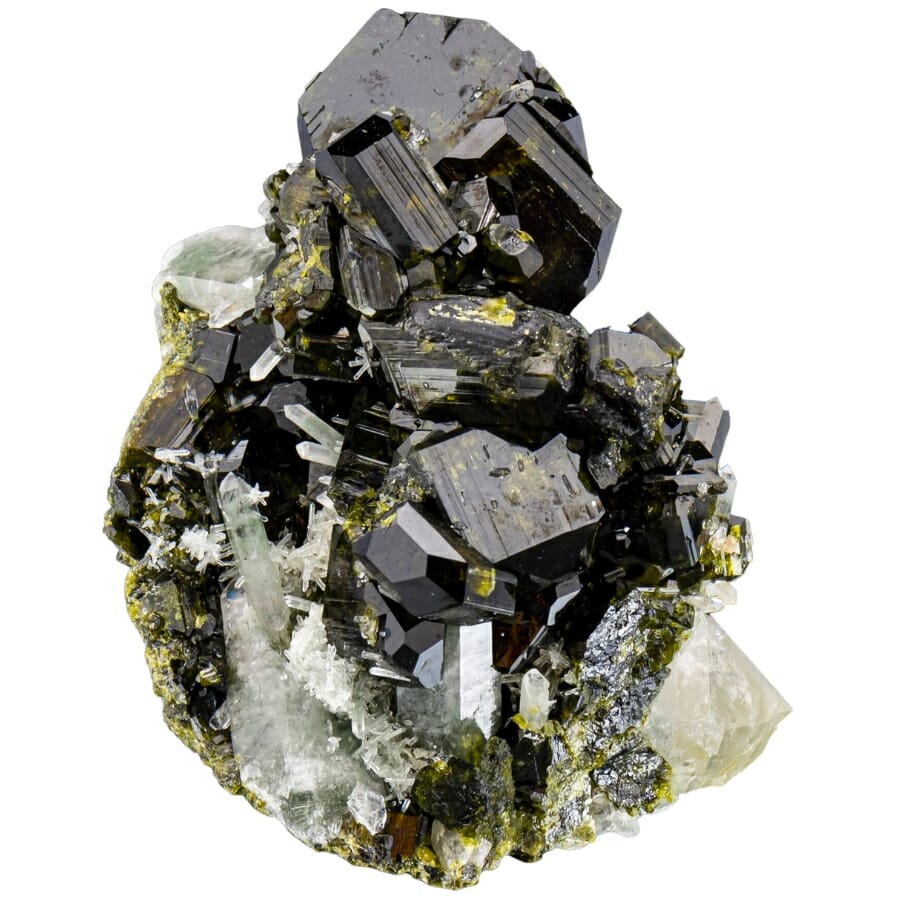
Epidote got this neat green color that can range from bright to dark. Sometimes, it’s even multicolored!
But it’s not just a pretty face. It’s actually used by scientists to understand the history and conditions of the rocks it’s found in. It’s also loved for jewelry and decoration because its green color makes a great conversation piece.
This crystal has been spotted in different areas within our state, with specimens varying in color and shape. Sometimes, it grows with other minerals, forming a complex crystal dance. You might find epidote with quartz or other crystals.
Epidote also has a talent for showing different shades of green depending on how you look at it. This property is called pleochroism, and it makes this crystal one-of-a-kind.
Where you can find Epidote in Virginia
To find epidote, we recommend you visit and search through the following areas:
- Early property in Hillsville area, Carroll County
- Fontaine area in Henry County
- Ida area in Page County
Galena
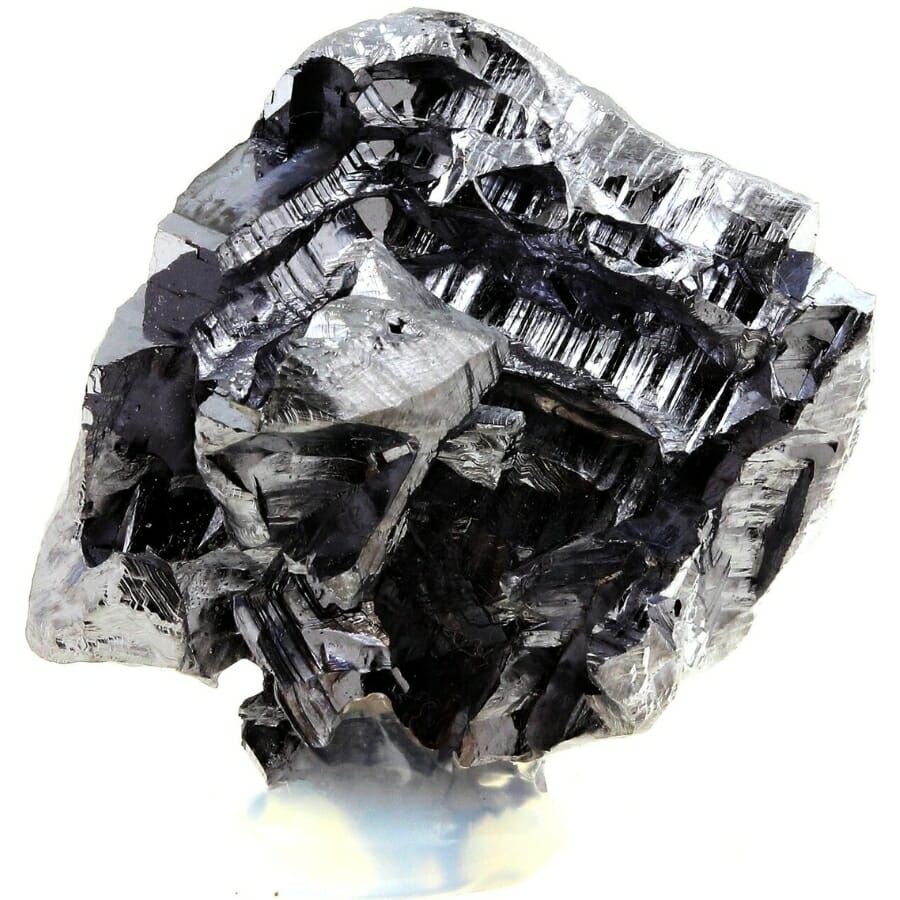
You’ve probably already seen a galena before since it’s quite common. Mostly made of lead, it has a bright silver color and shiny, metallic appearance. Sometimes it forms shiny cubes, and other times you might see it in more complex shapes.
Galena usually forms deep inside the Earth, where hot fluids bubble around rocks. Over time, these fluids turn into galena.
This mineral is valued not only for its interesting looks but also for making lead, which we use in batteries and shielding against radiation. Sometimes, galena even has silver in it, which makes it extra special.
Where you can find Galena in Virginia
You can find galena in our state by exploring different spots, such as:
- Between Shiloh Mountain and Appleberry Mountain in Albemarle County
- Betty Baker Mine in Hillsville, Carroll County
- Area mines in Faber in Nelson County
Feldspar
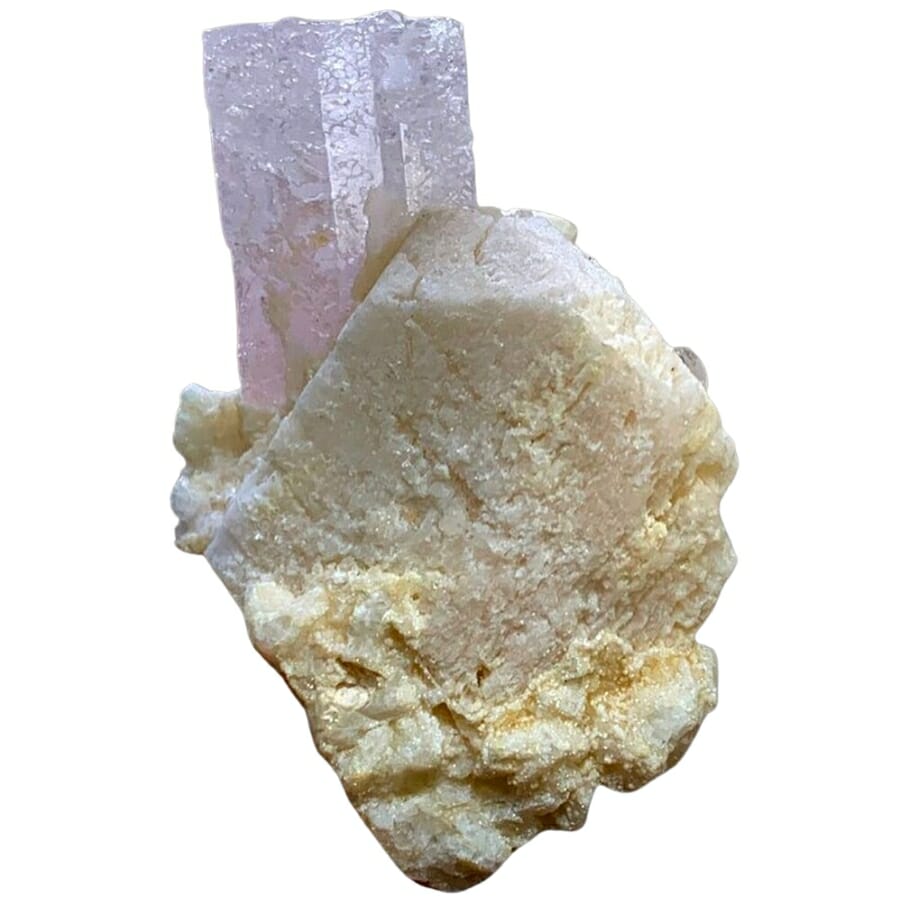
Feldspar is like Mr. Popular of the rock world because it’s found in so many rocks! It comes in a variety of colors: pink, white, or even sparkly.
When magma cools down, feldspar crystals start to grow. Sometimes, it can even form from super-hot water that changes other rocks.
While it’s common, feldspar is still very valuable. Have you ever used pottery or looked through a glass window? If so, then you’ve used something made with feldspar since it’s an essential ingredient in ceramics and glass.
This rock even adds sparkle to toothpaste products.
Where you can find Feldspar in Virginia
You can visit the following places where feldspar is found:
- Burks Creek in Carroll County
- O.W. Harris Mica Mine in Goochland County
- Area mines and pegmatites of Peaks of Otter in Bedford and Botetourt Counties
Pyromorphite
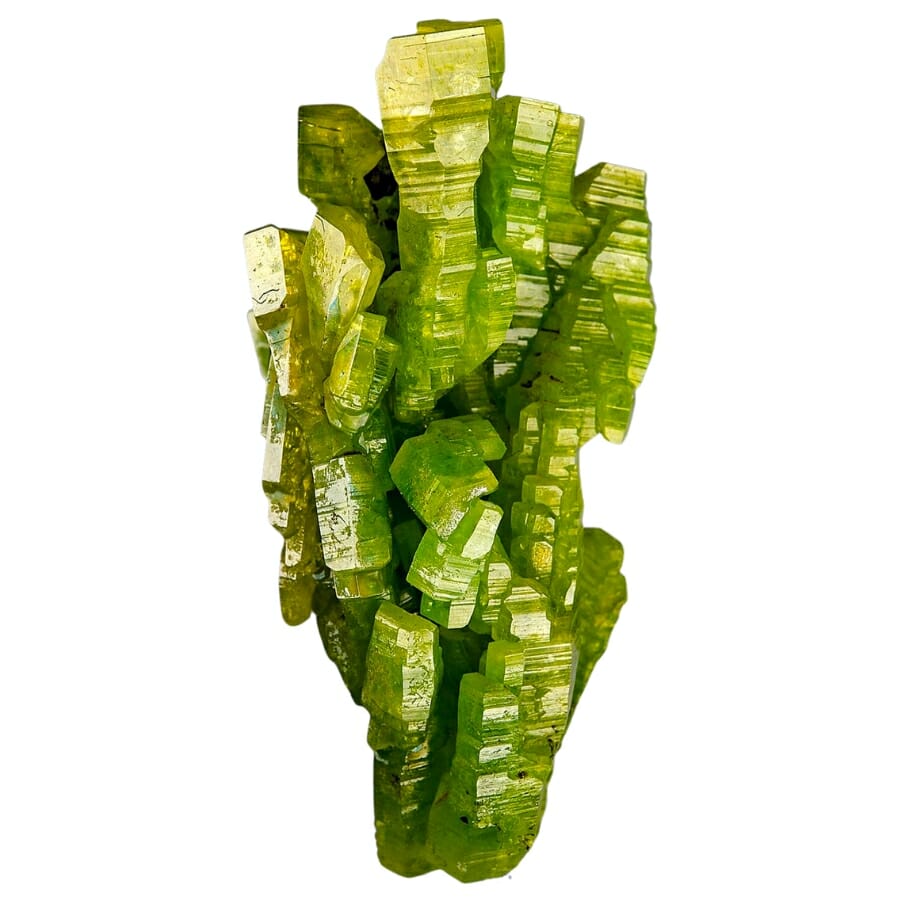
Pyromorphite is a mineral with a name that sounds like it’s straight out of a superhero comic, and it’s just as cool! It can be green, yellow, orange, or even brown and has bright, shiny crystals that look like they’re glowing.
When galena reacts with certain chemicals, pyromorphite crystals start to grow.
Collectors love this mineral for its stunning colors and unique crystal shapes. Sometimes, its crystals look like barrels or hexagons, which is simply amazing to see! Scientists also study it to understand more about our planet’s geology.
Where you can find Pyromorphite in Virginia
You can find pyromorphite in the area mines of Faber in Nelson County.
Magnetite
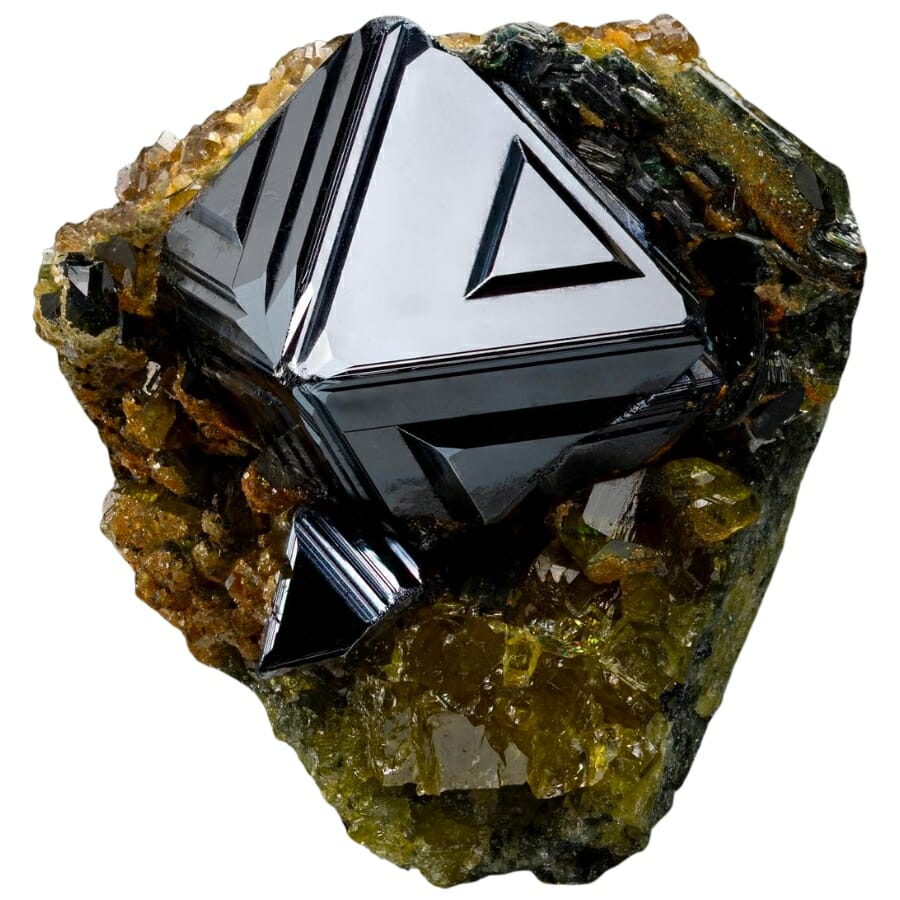
True to its name, magnetite is a mineral that attracts metal objects, just like a magnet.
Besides being magnetic, which is already pretty exciting, magnetite is also used in lots of everyday things. People mine it to make iron and steel, so it might be in your bike, car, or even your school’s building. That’s why magnetite’s value is just as magnetizing!
Luckily, magnetite is part of the rich tapestry of rocks and minerals here in Virginia.
Where you can find Magnetite in Virginia
We recommend visiting the following locations to find magnetite:
- King-Ramsey Quarry in Franklin County
- Old Sulphur Mine in Louisa County
- Hairston Mine in Patrick County
Hornblende
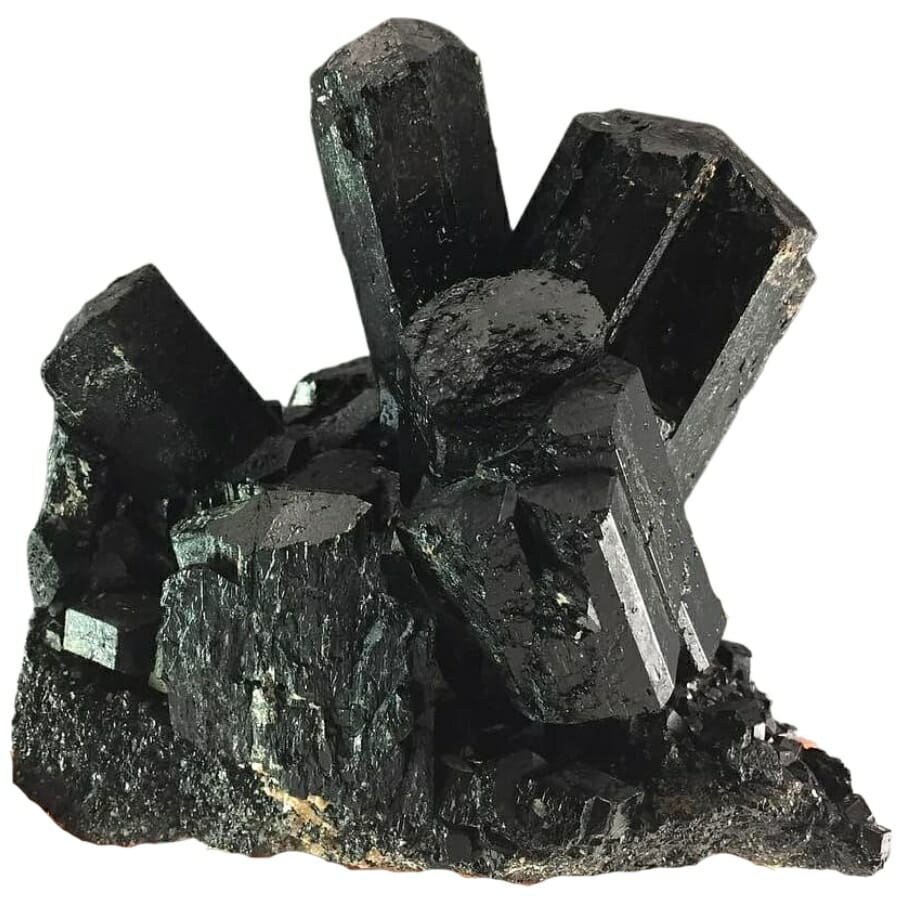
Hornblende is part of a group of minerals that often show up in different types of rocks, especially in igneous rocks like granite. It’s usually dark green to black in color, sometimes with a little shine.
Geologists love this mineral because it tells them about the conditions deep inside the Earth where the magma was formed.
Hornblende’s not just for studying, though. It also adds strength to rocks, making them more resistant to weathering. This can be important for things like building materials for the walls of buildings or even roads.
Fortunately, this mineral is found in many rocks throughout our beautiful state. From the Blue Ridge Mountains to other rocky areas, hornblende is part of Virginia’s geological story.
Where you can find Hornblende in Virginia
We highly recommend exploring the Pipers Gap in Carroll County to find hornblende
Kyanite
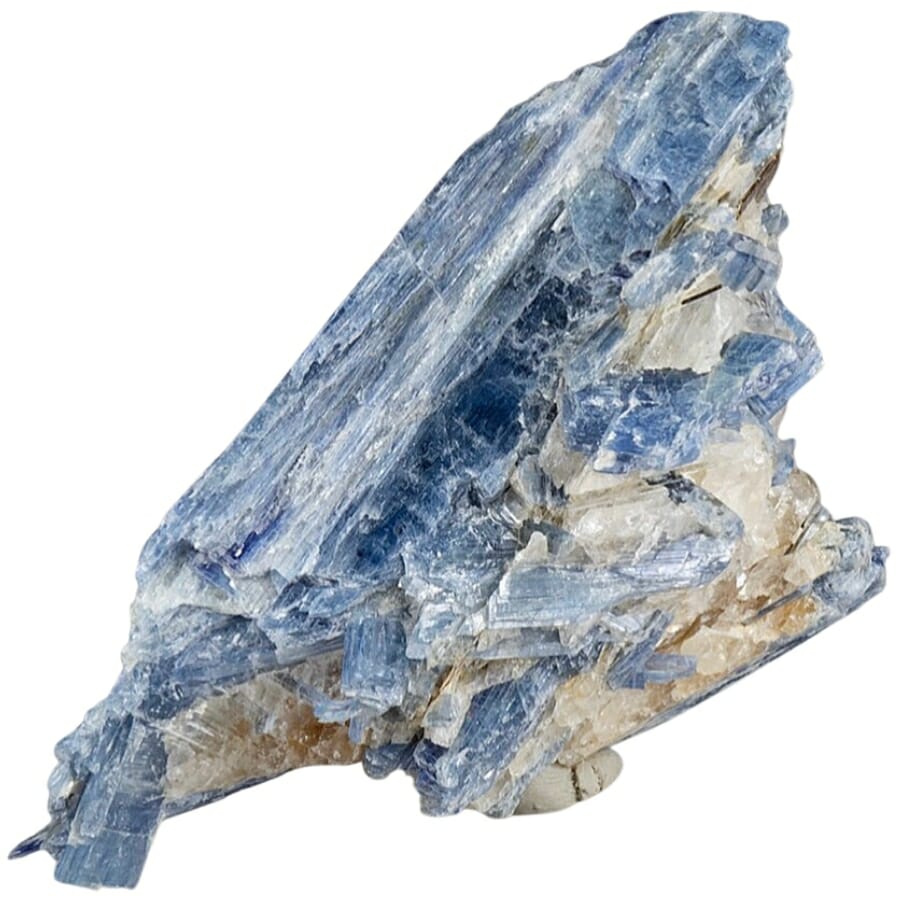
Kyanite is a blue, bladed crystal that can also be found in green, yellow, and even colorless forms. If you want to talk about a crystal that has some fantastic properties and a connection to Virginia, kyanite is the one.
It’s formed when heat and pressure combine to make something truly special. They form in long, thin blades that can look like tiny, shiny swords.
The blue color of kyanite can range from pale to deep. It’s often used in jewelry, but it doesn’t stop at just being pretty. It has a unique property called “anisotropism, which means it’s hard in one direction and soft in another.
You might be wondering why we said kyanite has a strong connection to Virginia. Well, our state is one of the best places in the whole world to find this crystal!
Where you can find Kyanite in Virginia
You can go to these places to find captivating kyanite specimens:
- O.W. Harris Mica Mine in Goochland County
- Rustburg area in Campbell County
- Difficult Run in Fairfax County
Pyrite
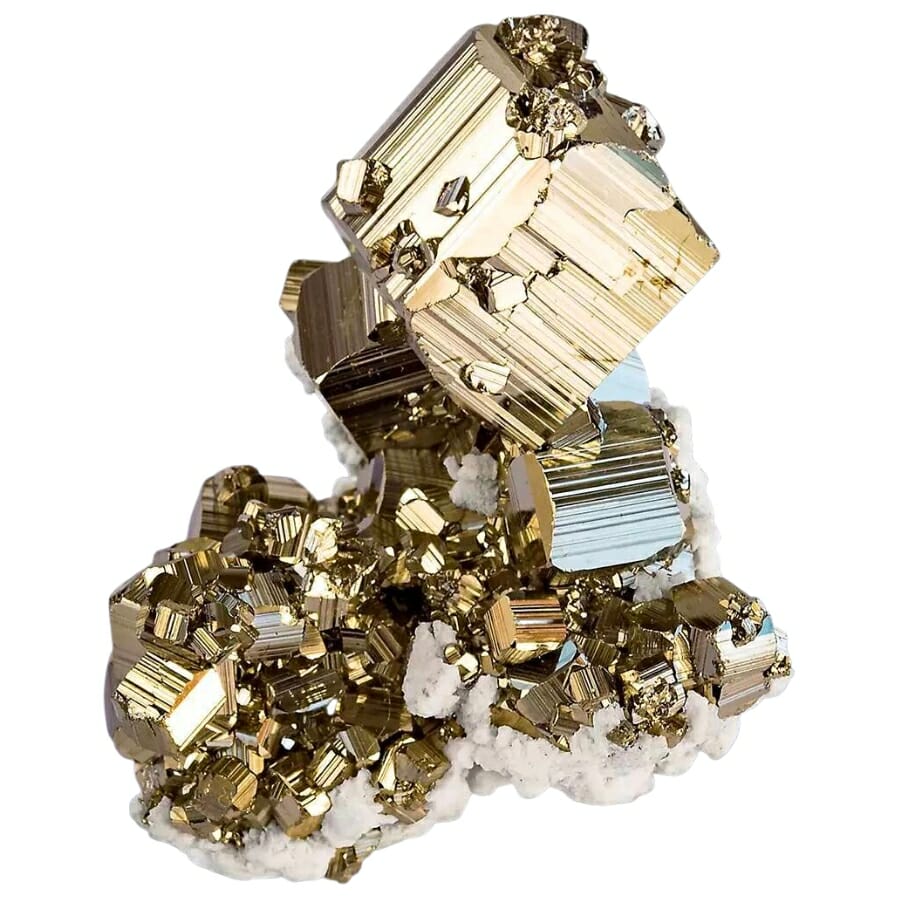
Often called “Fool’s Gold,” pyrite is way cooler than its nickname might suggest. You may have seen its shiny, golden appearance and thought it was the real deal. But it has its own incredible characteristics.
When iron and sulfur atoms come together in the right way, under the right conditions, they create this sparkly crystal. You’ll often find pyrite in rocks like shale or limestone, and it usually forms around the same time as these rocks.
Aside from its awesome appearance, pyrite’s value is also influenced by its practical uses. In the old days, people used it to start fires by striking it against steel.
Nowadays, pyrite is used in making sulfur compounds that we find in things like paper and ink. And believe it or not, it can even be found in some batteries!
Where you can find Pyrite in Virginia
Pyrite is pretty widespread in our state, and you can find them in these sites:
- Elk Creek area in Grayson County
- Copper mines of Lydia area in Greene County
- Lexington area in Rockbridge County
Chalcopyrite
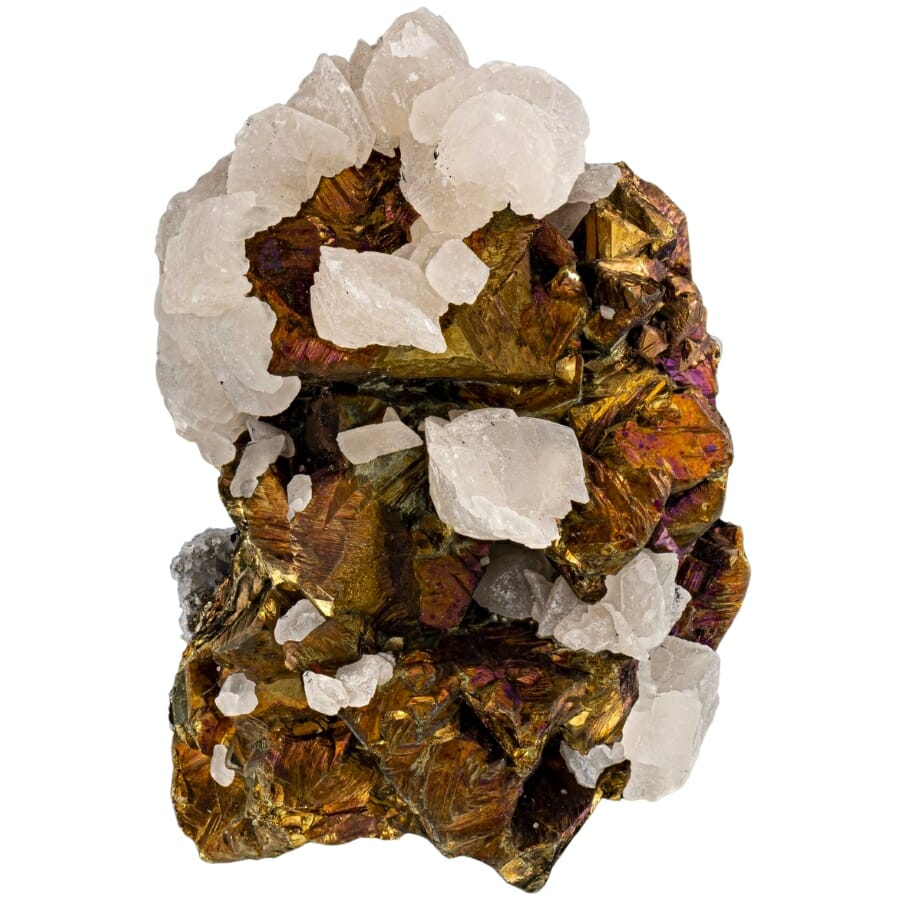
If you’re a fan of shiny finds, chalcopyrite will fascinate you. Imagine a blend of gold, green, purple, and more, all mixed together. It’s also often mistaken for gold like pyrite because of its color, but it’s much more colorful and vibrant.
Chalcopyrite is formed when copper, iron, and sulfur combine. Its crystals grow in cool shapes and often near other minerals like pyrite and quartz.
This crystal is one of the most important sources of copper in the world. Think of all the wires and pipes in your house— chalcopyrite helps make those! But that’s not all. It’s even used in research to develop solar energy.
Where you can find Chalcopyrite in Virginia
You can find chalcopyrite if you explore these sites:
- State Limestone Quarry in Appomattox County
- Hardware area iin Fluvanna County
- Mining dumps in Galax area, Carroll County
Staurolite
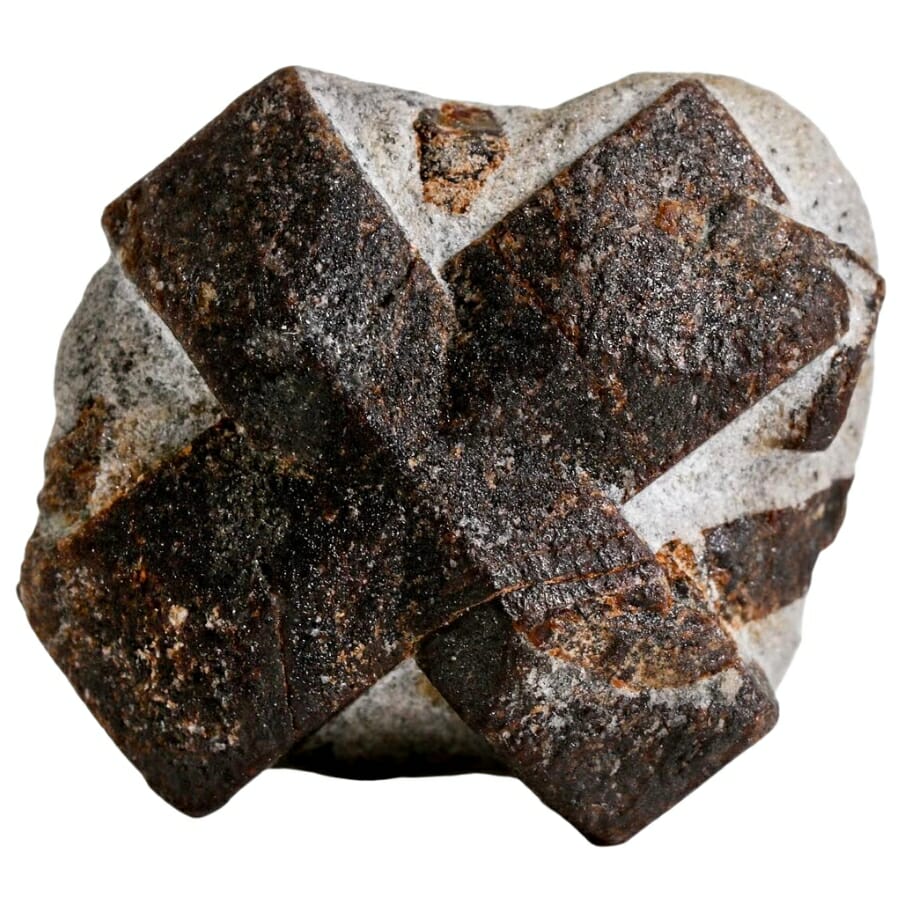
Staurolite is one of those rocks that make you stop and go, “Wow! How did that happen?” It’s like Mother Nature was playing with her art supplies and came up with something truly special.
It’s known for its cross-like shape, making people call it “fairy stone” or “fairy cross”. Staurolite is made from a mix of different minerals like aluminum, iron, and silica. When they get together under the right conditions, they form these crystals.
While its looks are unique and surely adds to its worth, staurolite is valued for many reasons. Some believe it brings good luck and protection, so they carry it around like a lucky charm. Others value it for its connection to nature. Geologists also see staurolite as a clue to understanding the past.
Where you can find Staurolite in Virginia
Staurolite is found in different sites in our state, including:
- Tower Hill in Buckingham County
- Road cut near the south bank of the Smith River in Henry County
- Old Womans Creek in Pittsylvania County
The Best Locations For Crystal Mining in Virginia
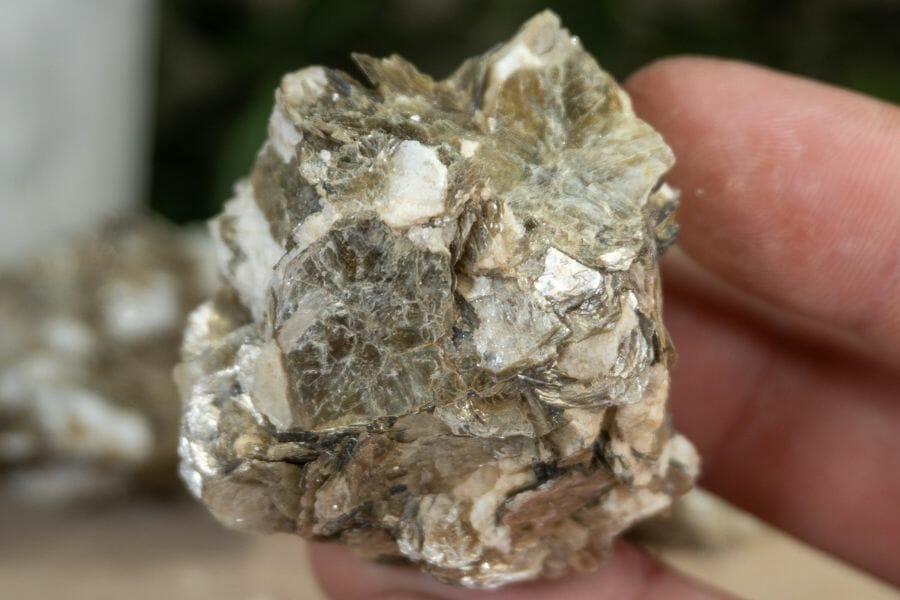
We’ve selected our top 5 suggestions from among the many incredible locations in Virginia where you can find crystals, and we’re positive you’ll love exploring them!
Always Confirm Access and Collection Rules!
Before heading out to any of the locations on our list you need to confirm access requirements and collection rules for both public and private locations directly with the location. We haven’t personally verified every location and the access requirements and collection rules often change without notice.
Many of the locations we mention will not allow collecting but are still great places for those who love to find beautiful rocks and minerals in the wild without keeping them. We also can’t guarantee you will find anything in these locations since they are constantly changing.
Always get updated information directly from the source ahead of time to ensure responsible rockhounding. If you want even more current options it’s always a good idea to contact local rock and mineral clubs and groups
Betty Baker Mine is Our Favorite Crystal Mine in Virginia
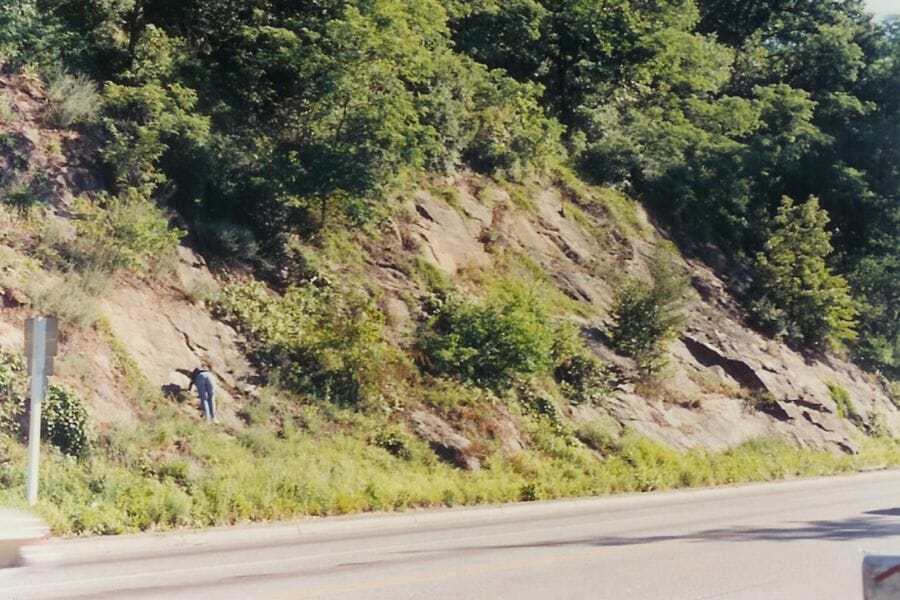
Blue Ridge Province, Carroll County
The Betty Baker Mine is a must-see if you’re wondering where to discover crystals in Virginia. This mine has a rich history, dating back to the 19th century, when it was originally used for copper mining. In the 1960s, a group of rockhounds discovered the mine’s hidden treasure trove of crystals, and it has been a popular spot for crystal hunting ever since. It’s also one of the best places to mine gems in Virginia.
The Betty Baker Mine is located in the foothills of the Blue Ridge Mountains, near the town of Amelia. Its unique geology, which includes a combination of volcanic and sedimentary rocks, makes it an ideal location for crystal formation. The mine’s owners are friendly and welcoming, and they provide all the tools and equipment you need to dig for crystals. Plus, the mine has a reputation for producing high-quality crystals,
Where we found crystals at the Betty Baker Mine
We had the most success searching for azurite, chalcopyrite, chrysocolla, galena, and pyrite crystals at Betty Baker Mine.
If you want REAL results finding incredible rocks and minerals you need one of these 👇👇👇

Finding the coolest rocks in isn’t luck, it's knowing what to look for. Thousands of your fellow rock hunters are already carrying Rock Chasing field guides. Maybe it's time you joined the community.
Lightweight, mud-proof, and packed with clear photos, it’s become the go-to tool for anyone interested discovering what’s hidden under our red dirt and what they've already found.
Join them, and make your next rockhounding trip actually pay off.
What makes it different:
- 📍 Find and identify 140 incredible crystals, rocks, gemstones, minerals, and geodes across the USA
- 🚙 Field-tested across America's rivers, ranchlands, mountains, and roadcuts
- 📘 Heavy duty laminated pages resist dust, sweat, and water
- 🧠 Zero fluff — just clear visuals and straight-to-the-point info
- ⭐ Rated 4.8★ by real collectors who actually use it in the field
Contrary Creek
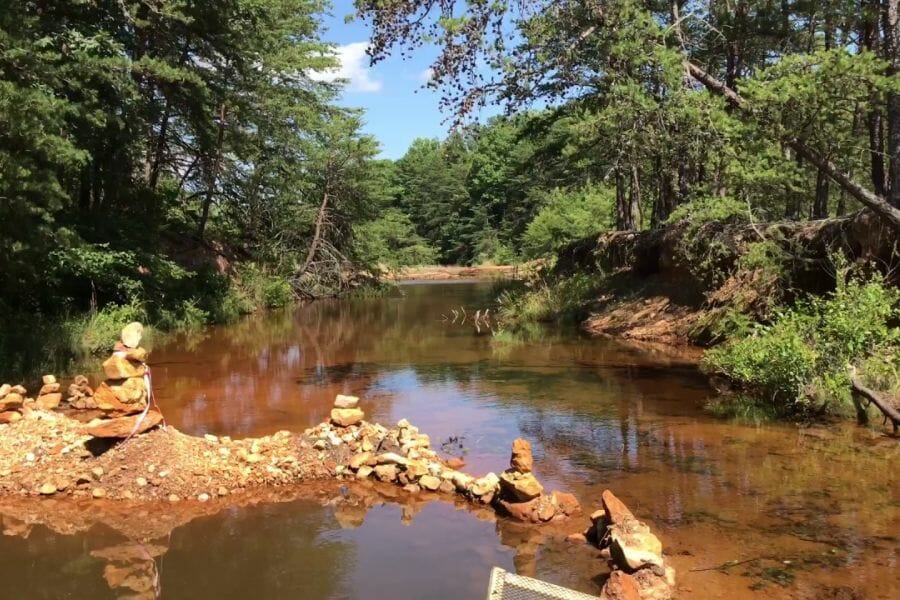
Louisa County, Virginia 23117
Contrary Creek was first discovered in the 1800s, and was mined for its copper and other minerals. However, it wasn’t until the 1960s that rockhounds discovered the creek’s rich crystal deposits. Today, Contrary Creek is a popular spot for crystal hunting, and attracts visitors from all over the country.
The creek is a little off the beaten path, so you won’t have to compete with as many other crystal hunters. Additionally, the creek’s unique geology makes it an ideal location for crystal formation. And with a little bit of luck and a lot of hard work, you just might uncover a real treasure.
Where we found crystals at Contrary Creek
There is an abundance of azurite, calcite, chalcopyrite, galena, garnet, kyanite, malachite, pyrite, quartz, and serpentine crystals upstream of Contrary Creek. We’ve created a detailed guide on how much are crystals worth for additional knowledge.
Hottinger Mine
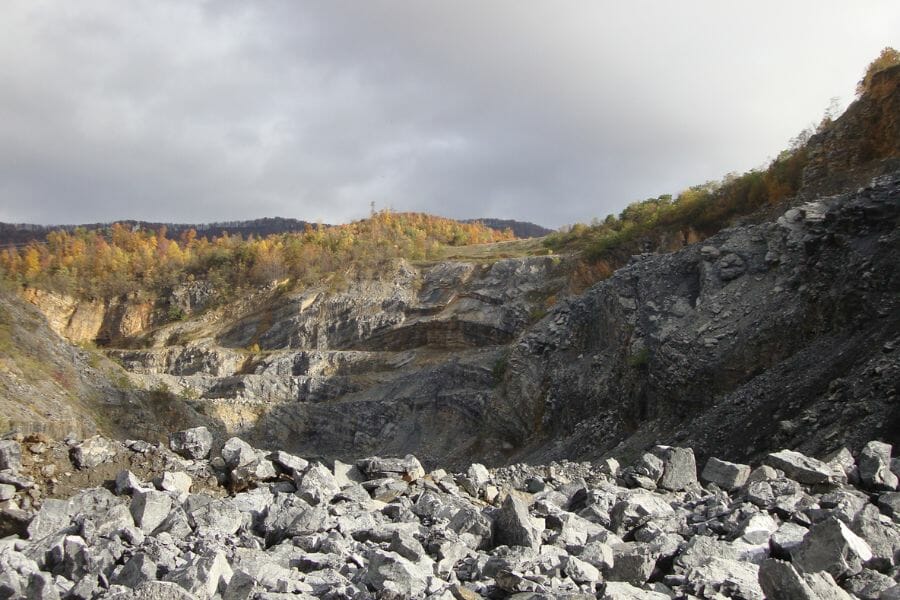
Otter Hill in Bedford County
The Hottinger Mine has been around since the early 1800s, when it was first used for lead and zinc mining. In the 1950s, however, it was discovered that the mine was also rich in quartz crystals, and it became a popular spot for hunters looking to score some amazing specimens.
Geographically, Hottinger Mine is situated in the rolling hills of the Appalachian Mountains, surrounded by lush forests and bubbling streams. The mine’s unique geology has made it a prime spot for crystal hunting, with a variety of quartz crystals and other minerals waiting to be unearthed. The mine’s mineral-rich soil and underground water sources create the perfect environment for crystal growth, resulting in an abundance of beautiful specimens.
Where we found crystals at Hottinger Mine
We mostly found amazonite, garnet, and smoky quartz crystals in the whole area of Hottinger Mine at Bedford.
Morefield Mine
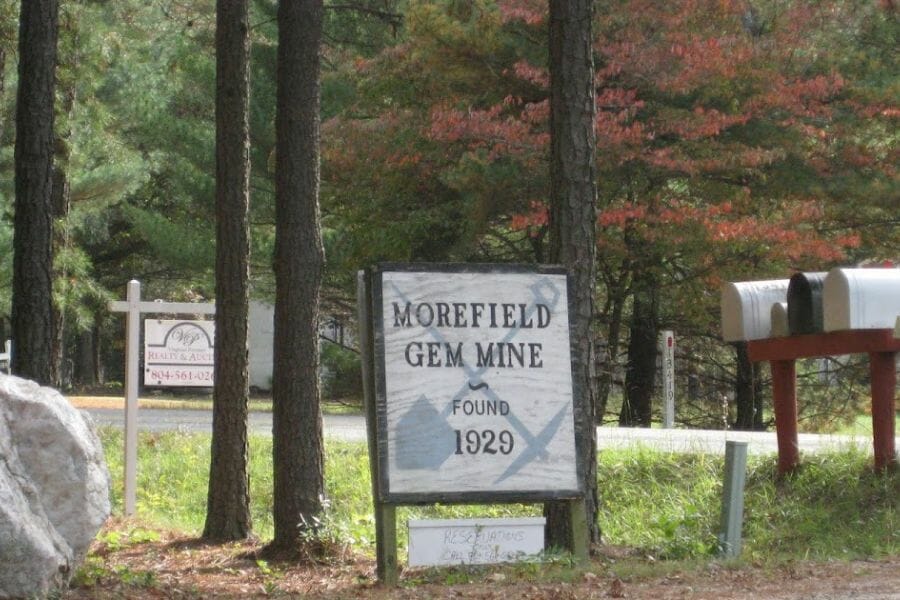
13400 Butlers Rd, Amelia Court House, VA 23002, United States
If you’re a crystal lover, you gotta check out Morefield Mine in Virginia! It’s been around since the 1920s, and it’s become a real hotspot for rockhounds and mineral collectors. This place has a rich history of mining, and it’s been churning out some serious crystal treasure for decades. It’s an absolute gem of a destination for anyone who loves digging for treasures.
Located in Amelia County, Morefield Mine is situated on ancient ocean floor land. That means there’s a lot of cool stuff to be found there and you won’t be disappointed! Whether you’re a beginner or an experienced collector, there’s something for everyone. The guided tours are great for people who want to get the most out of their experience and find some hidden gems.
Where we found crystals at Morefield Mine
Amazonite, amethyst, apatite, aquamarine, beryl, chalcopyrite, fluorite, galena, and quartz crystals are what we mostly found at the surrounding area of Morefield Mine at Amelia Court House.
Willis Mountain Mine
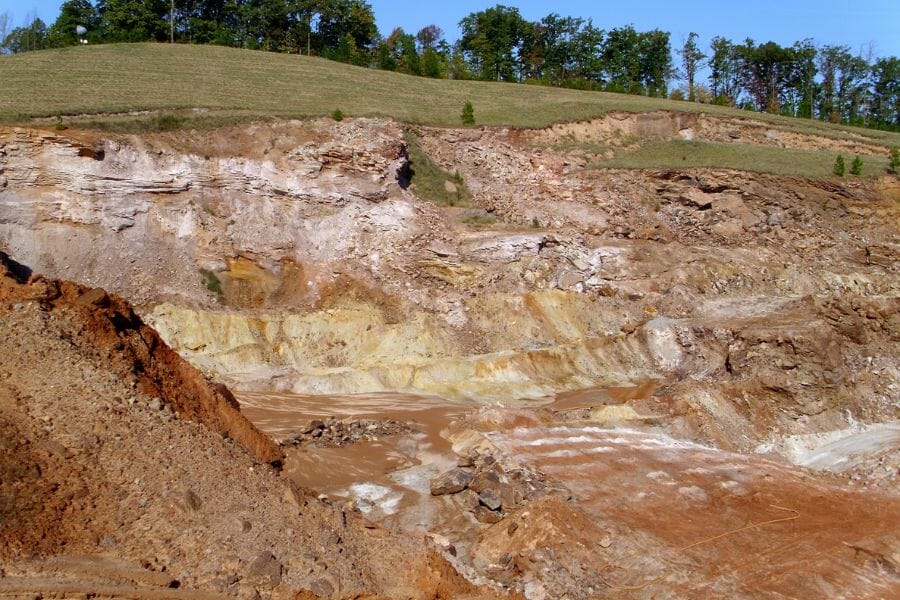
30 Willis Mountain Plant Ln, Dillwyn, VA 23936, United States
Willis Mountain Mine has been around since the late 1800s and has gone through several owners and periods of activity. These days, it’s run by a company called American Kyanite, and they offer tours and opportunities for crystal enthusiasts to come and dig for crystals.
Willis Mountain is made up of a type of rock called kyanite, which is known for its crystal-forming properties. The area around the mine is also rich in other minerals like mica and quartz, which can add some variety to your finds.
And if you’re looking to find some crystals, this is definitely the place to go. The mine has produced some absolutely stunning specimens over the years, including massive kyanite crystals that can be several feet long. Of course, there’s no guarantee you’ll strike it rich on your first visit, but that’s just part of the fun!
Where we found crystals at Willis Mountain Mine
We had the best luck locating apatite, garnet, hematite, kyanite, pyrite, and topaz crystals while going through the whole area of Willis Mountain Mine.
Our Other Favorite Places For Crystal Hunting
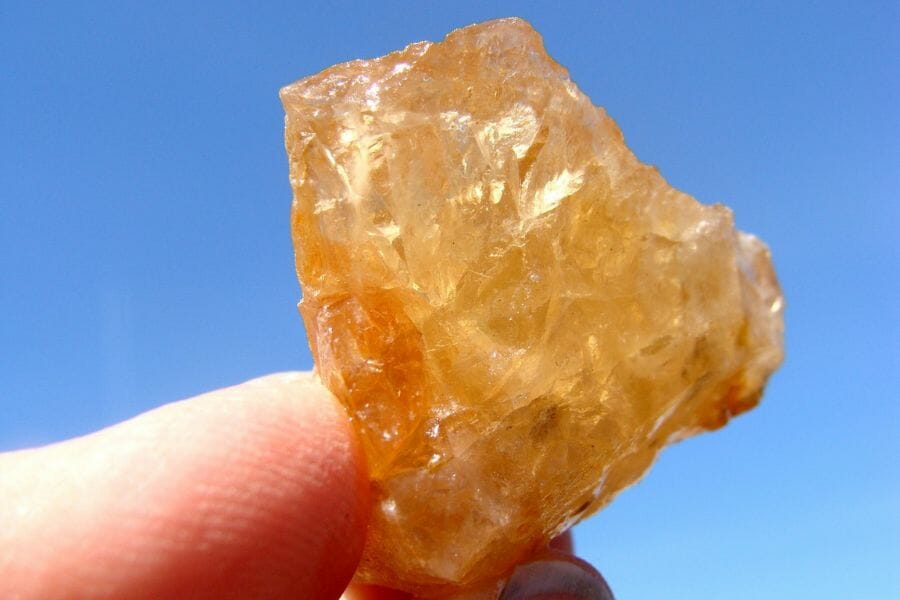
As we previously stated, the top five locations above are not the only ones where you can look for crystals in this area. We have an exceptionally wealthy state, therefore there are tons of different places where you can dig for crystals, as well as locate geodes in Virginia. Here are a few examples:
Where you can find crystals for free in Virginia
While many of the best areas to look for crystals in this state need payment before digging, there are other locations where you won’t need to spend any money looking for these marvels of nature.
| County | Location |
| Ablemarle | At the Charlottesville area, you can find epidotes and unakites at the Red Hill Quarry |
| Ablemarle | Buck Mountain Creek and Moorman River for agate, amethyst, epidote, and jasper |
| Amherst | Fancy Hill Ridge for amethyst and quartz |
| Grayson | In area cut banks, quarries, and gravels of Hanks Knob for garnet, pyrite, and quartz |
| Loudoun | Arlington Quarry for calcite, epidote, fluorite, and quartz |
Other great places to dig for crystals
We’ve also collected a list of some of the locations you may visit if you don’t mind paying to dig for magnificent crystals. Keep in mind that depending on the season, the prices may vary, so be sure to check it out first before going.
| County | Location |
| Ablemarle | Faber Mine for azurite, chalcopyrite, fluorite, and galena |
| Amelia | Rutherford Mine for amazonite, amethyst, muscovite, quartz, and topaz |
| Amelia | Richeson Mica Mine for amazonite and muscovite |
| Amelia | Jefferson, Berry, Winston, Pinchback, and Schlegal Mines for apatite, beryl, fluorite, muscovite, quartz, and tourmaline |
| Bedford | Bells Mine for amazonite, garnet, and smoky quartz |
| Franklin | Franklin Mine and between Chestnut and Snow Creeks for apatite, beryl, garnet, quartz, and tourmaline |
| Grayson | Hampton mine for garnet, kyanite, and tourmaline |
| Hanover | Mica Mine Farm for garnet, kyanite, and tourmaline |
| Henry | Ridgeway Mines for garnet and quartz |
| Prince Edward | Baker Mountain Kyanite Mine and Briery Mine for garnet, kyanite, and topaz |
| Prince William | Cabin Branch Mine for chalcopyrite, garnet, and galena |
| Rockingham | Nearby Lead-Zinc Mine for calcite, chalcopyrite, galena, hematite, pyrite, and tremolie/td> |
How to find crystals in Virginia
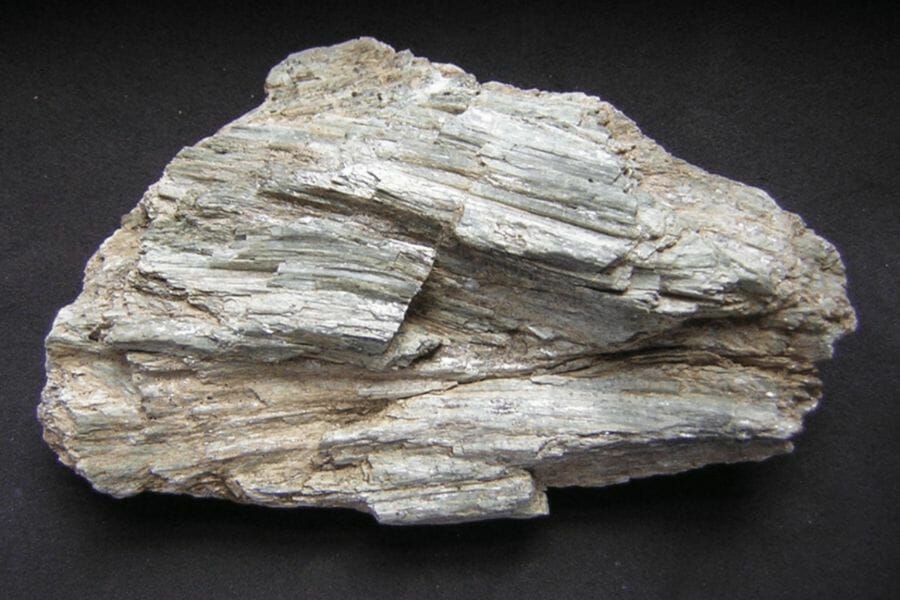
A number of our recommendations encompass broad or extensive areas, therefore to help you narrow down where exactly you should start your hunt on these places, below are some of the usual spots where you might locate crystals.
Mines and mine dumps
Searching in mines and mine dumps can be a real goldmine when it comes to finding some crystal gems. These locations offer a unique opportunity to get your hands on some rare and valuable crystals that you won’t find just lying around on the surface.
But let’s not overlook the fact that searching in mines and mine dumps comes with its own set of risks and challenges. Safety should always be a top priority, as mines can be unstable and dangerous. It’s essential to have the right equipment, including hard hats, gloves, and sturdy footwear.
One thing to keep in mind is that crystals can be found in a variety of different minerals, so it’s crucial to know what to look for. Familiarizing yourself with the different types of rocks and minerals that are commonly found in mines can give you an edge in your search.
Quarries
If you’re looking for a rock-solid way to find some crystal gems, you might want to try your luck searching in quarries. Quarries are man-made sites that are typically used for mining rocks and minerals, and they can be a fantastic source of crystals.
One of the benefits of searching in quarries is that they’re often quite accessible and easy to get to. Unlike natural outcroppings or underground mines, quarries are usually located at ground level and don’t require any special equipment to access.
However, it’s important to keep safety in mind when searching in quarries, as the walls can be steep and unstable. Make sure you have proper footwear and clothing, and avoid areas that look particularly hazardous.
Streams and creeks
Streams and creeks are flowing bodies of water can be a great source of crystals, as they naturally erode rocks and minerals and carry them downstream. One of the benefits of searching in streams and creeks is that you don’t need any special equipment to get started. Just roll up your sleeves, put on some sturdy shoes, and start wading through the water.
However, it’s important to keep safety in mind when searching in streams and creeks. The water can be swift and unpredictable, and there may be hidden hazards like sharp rocks or submerged tree branches. Be sure to watch your step and stay alert.
Virginia Crystal Mining Laws And Regulations
Virginia has a number of regulations in place when it comes to recreational crystal mining. These regulations are designed to protect both the environment and the safety of those who are searching for crystals. A permit is required for all recreational mineral collecting. This permit can be obtained through the Virginia Department of Mines, Minerals and Energy. Certain areas in Virginia may be off-limits to recreational crystal mining. For example, some state parks and wildlife management areas prohibit mineral collecting.
Recreational crystal mining is only allowed in areas where it will not damage the environment or wildlife. It’s important to avoid disrupting natural habitats or damaging streams or other water sources. Mining can be dangerous, so it’s important to take precautions to protect yourself. This may include wearing appropriate safety gear, such as hard hats and gloves, and avoiding steep or unstable areas.
By following these regulations and taking appropriate safety precautions, recreational crystal mining can be a fun and rewarding activity in Virginia. However, it’s important to always be mindful of the impact you are having on the environment and to follow all regulations to ensure the continued availability of this resource for future generations.
The Best Crystal Shops In Virginia
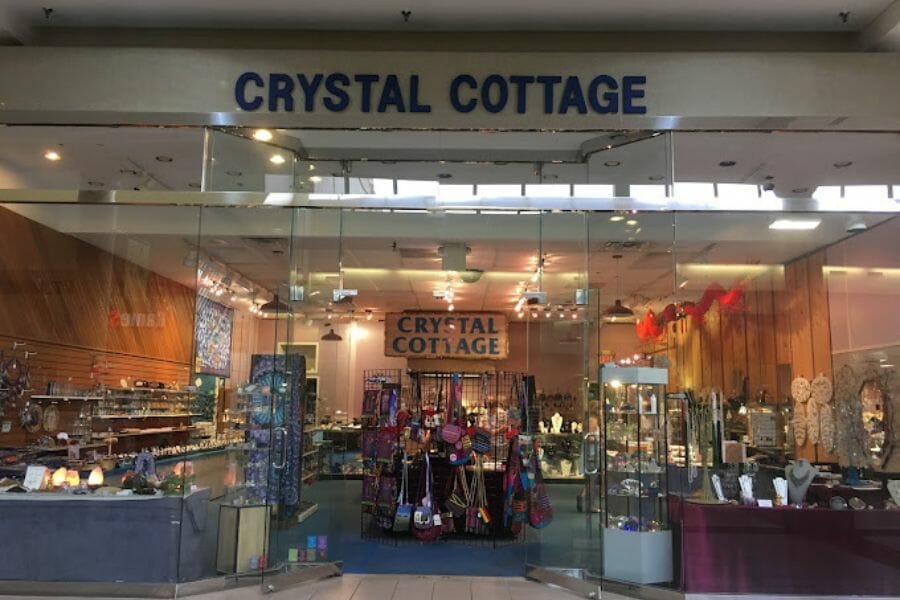
If you lack the time or the desire to embark on a crystal hunting adventure, you might want to think about purchasing crystals from some of Virginia’s best crystal shops. You can choose from various crystals at each of the shops we’ve listed below:
- The Crystal Case Rock Shop – The Barrett Street Antique Mall 2645 Dean Dr Dealer, 2645 Dean Dr # 901, Virginia Beach, VA 23452, United States
- Crystal Cottage – 4310 Electric Rd, Cave Spring, VA 24018, United States
- The Crystal Sunflower – 507 1/2 Botetourt St, Norfolk, VA 23510, United States
- Crystalis Treasures – 306 Elden St, Herndon, VA 20170, United States
- Healing Crystals – 4462 Martinsburg Pike, Clear Brook, VA 22624, United States
- Odyssey Gem and Float – 927 Valley Ave, Winchester, VA 22601, United States
- Rocks to Gems and Crystals – 5344 Mary Ball Rd, Lancaster, VA 22503, United States
- Sticks and Stones Circle – 11023 Lee Hwy, Fairfax, VA 22030, United States
- Stone Goddess Rock Shop – 206 Chesterfield Ave, Colonial Heights, VA 23834, United States
- VaRockShop – 190 Rockfish School Ln, Afton, VA 22920, United States
Additional places to find crystals in nearby states
If you’ve already tried all of our recommendations above or are planning a trip out of the state, you should check out our guides for neighboring states:
- Crystals in Kentucky
- Crystals in Maryland
- Crystals in North Carolina
- Crystals in Tennessee
- Crystals in West Virginia
If you have any recommendations we haven’t covered please leave them in the comments below!