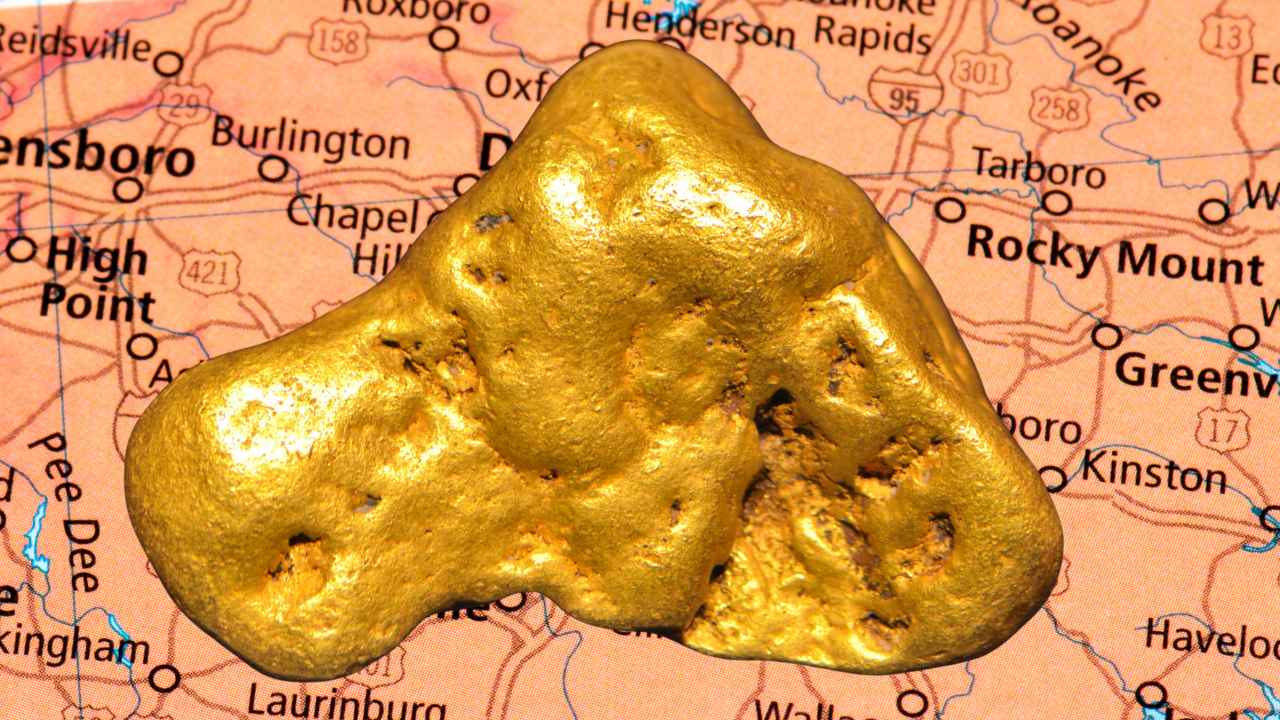
America’s very first gold rush did not start in California. It started in North Carolina in 1799, when a 12 year old farm boy pulled a 17 pound gold nugget out of a Cabarrus County creek. For the next half century this state produced more gold than anywhere else in the country.
With gold trading above $4,000 an ounce, you do not need to find much for a weekend of panning to pay for itself.
Most people who try gold prospecting in North Carolina make the same mistake. They head for the prettiest mountain waterfalls and skip the quiet Piedmont creeks, even though the richest gold belt in the state runs right through that rolling farm country.
Yes, you can still find gold in North Carolina today, especially along the Uwharrie River and the Second Broad River, where placer gold has been panned steadily since the early 1800s. This guide covers every proven spot, from famous pay to pan mines to overlooked old placers, plus the technique that works at each one and the rules that keep your trip legal.
Our team of geologists and experienced rockhounds built this guide the way we approach every gold state. We mapped the gold bearing belts, then matched them against two centuries of documented mines, placers, and prospects. Here is everything you need to plan your first North Carolina gold trip.
Table of Contents
- Biggest Discovery
- Types of Gold
- Where Gold Hides
- Best Places
- Techniques
- Real vs Fool's Gold
- How Gold Got Here
- What To Bring
- Best Seasons
- Other Minerals
- Legal Rules
- FAQ
The Biggest Gold Discovery in North Carolina History
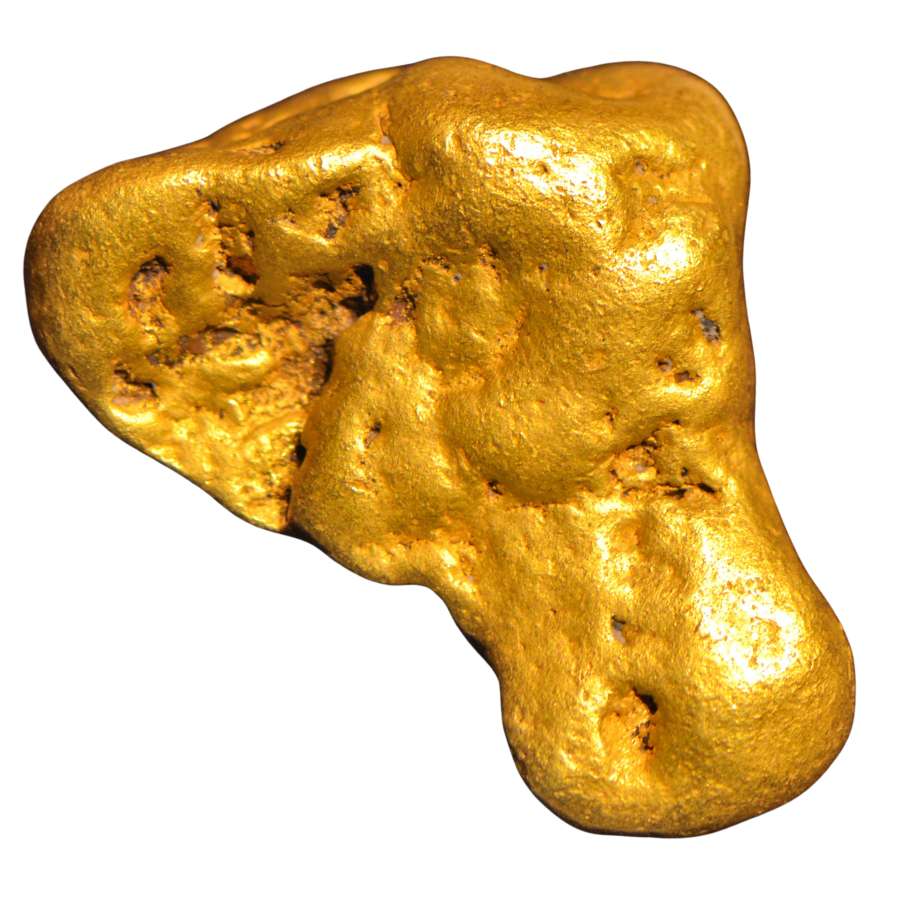
The biggest gold discovery in North Carolina history was made by a kid skipping church. One Sunday in 1799, a 12 year old farm boy went fishing in Little Meadow Creek in Cabarrus County and hauled out a strange yellow rock the size of a small iron. It weighed 17 pounds.
His family had no idea what it was. For three years that nugget sat on the farmhouse floor, where the family used it as a doorstop.
In 1802 a jeweler recognized the doorstop for what it was and bought it for $3.50, about a week’s wages. The gold inside was worth roughly a thousand times that, and at today’s prices a 17 pound nugget holds close to a million dollars in gold.
The family learned fast. A year later a 28 pound nugget came out of the same little creek, the largest ever documented east of the Mississippi. The farm became the Reed Gold Mine, America’s first gold mine, and the rush it sparked made North Carolina the source of essentially all the gold coined by the United States Mint until the late 1820s.
The best part of this story is the ending. That same creek and that same mine are open to the public today, and you can pan the very gravel where American gold fever began.
The Kinds of Gold You Can Find in North Carolina
North Carolina gold comes in more forms than almost any state east of the Rockies, because this state has both hard rock vein gold and stream placer gold. Knowing which kind you are looking at tells you whether to keep panning or start chipping. These are the four forms that actually show up here.
Flour Gold
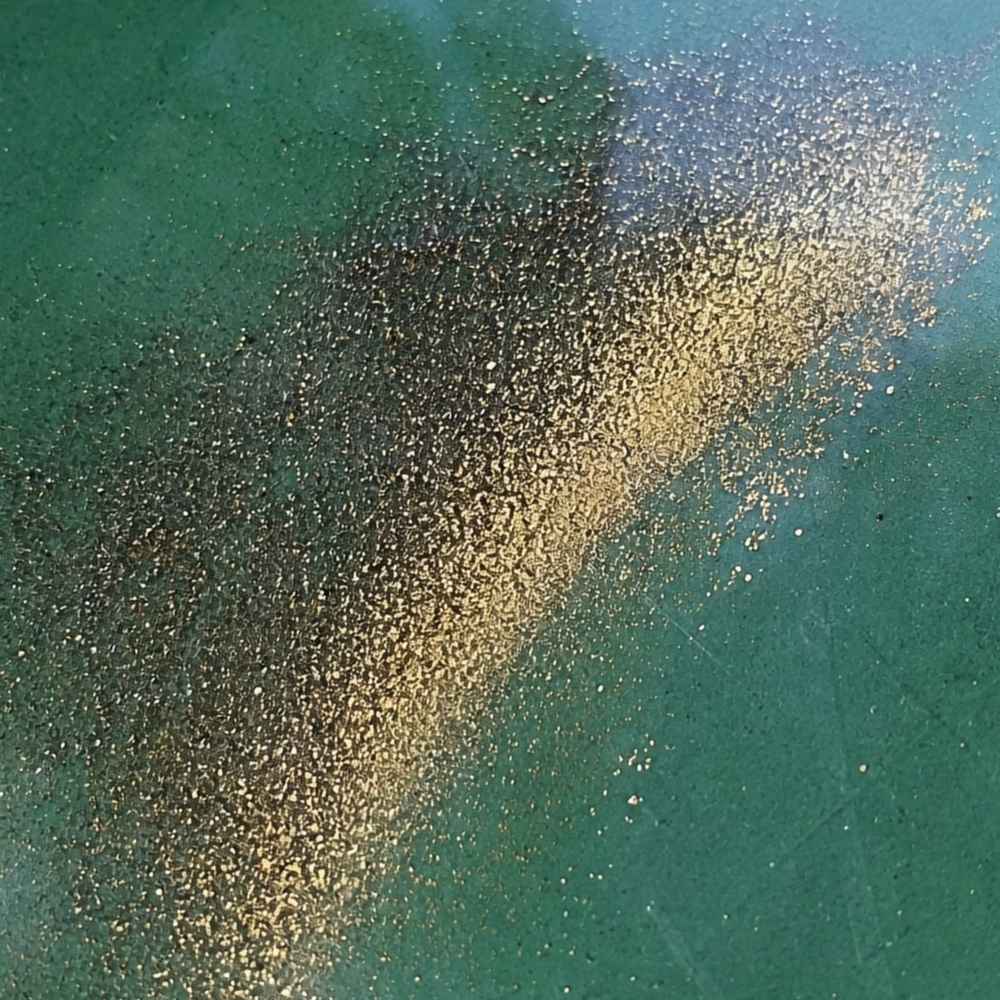
Flour gold is gold ground down to dust sized particles, and it is what most North Carolina pans produce. Two hundred million years of weathering has crumbled the state’s gold veins into its creeks, grinding the gold finer with every mile it travels. It shows up as a bright golden smear in the crease of your pan after the lighter sand washes away.
The mineral that fools people here is mica, and North Carolina streams are absolutely loaded with it. Mica flashes gold in direct sun but it is nearly weightless. Real flour gold sinks straight to the bottom of the pan and stays warm and golden in the shade, while mica floats, flutters, and turns silvery gray the moment your shadow crosses it.
Because flour gold escapes a regular pan so easily, finish your concentrates in a dedicated small pan. The Garrett Prospecting 10 Inch Backpacker Gold Pan is the one our team uses for exactly this job.
This is also the moment a good identification reference pays for itself. The North and South Carolina Rocks and Minerals Field Guide shows you exactly what real gold looks like next to every mineral that imitates it in the Carolinas, so you know what you are looking at while your pan is still wet.
Gold Flakes and Pickers
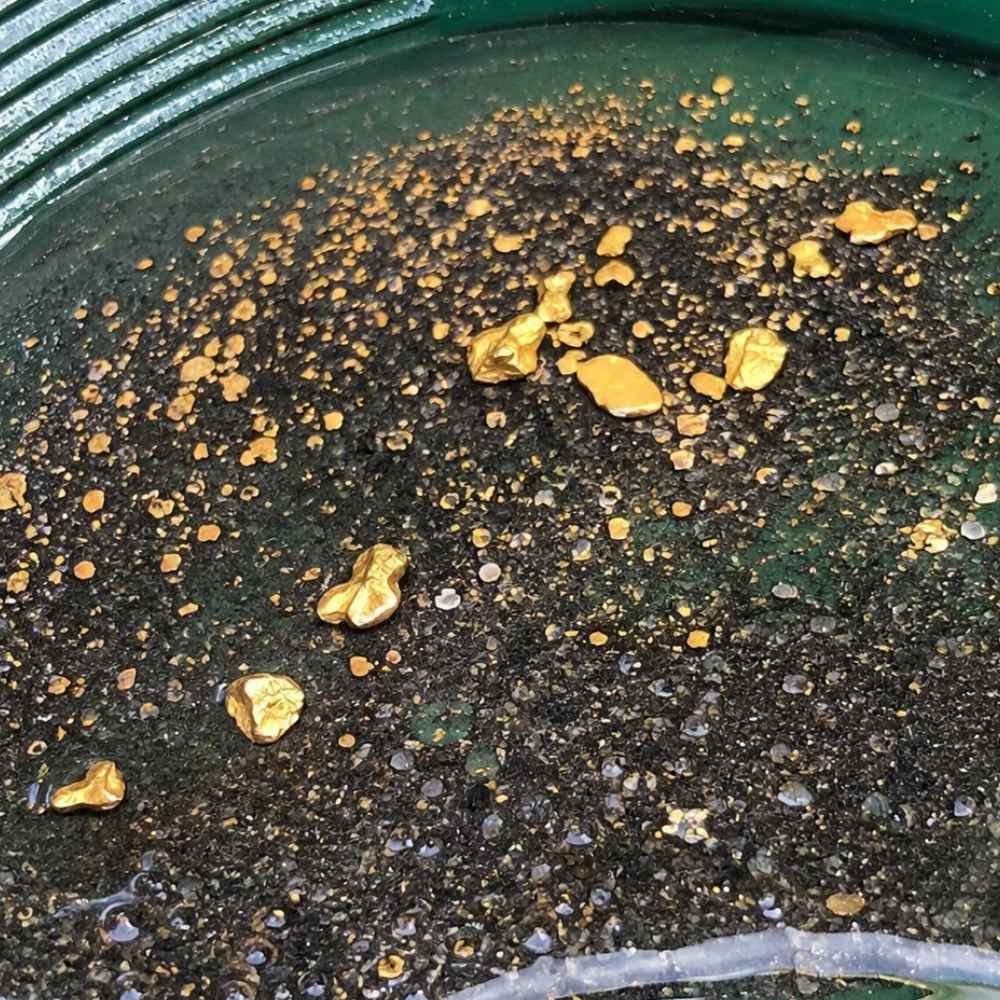
Flakes are flat pieces of gold big enough to see without squinting, and pickers are the chunky ones you can grab with your fingers. North Carolina produces both in creeks that drain old mining districts, where floods have been concentrating gold against bedrock for thousands of years. A pan with two or three solid flakes is a genuinely good Carolina day.
The lookalike at this size is chalcopyrite, a brassy copper mineral common around the state’s old mines. The test takes one second. Poke it with a pin, because gold dents like soft metal while chalcopyrite shatters into glittery crumbs.
Wet flakes are nearly impossible to pick up with your fingers. A snuffer bottle like the Garrett Gold Guzzler Bottle sucks them straight out of the pan without losing a single one.
Small Nuggets
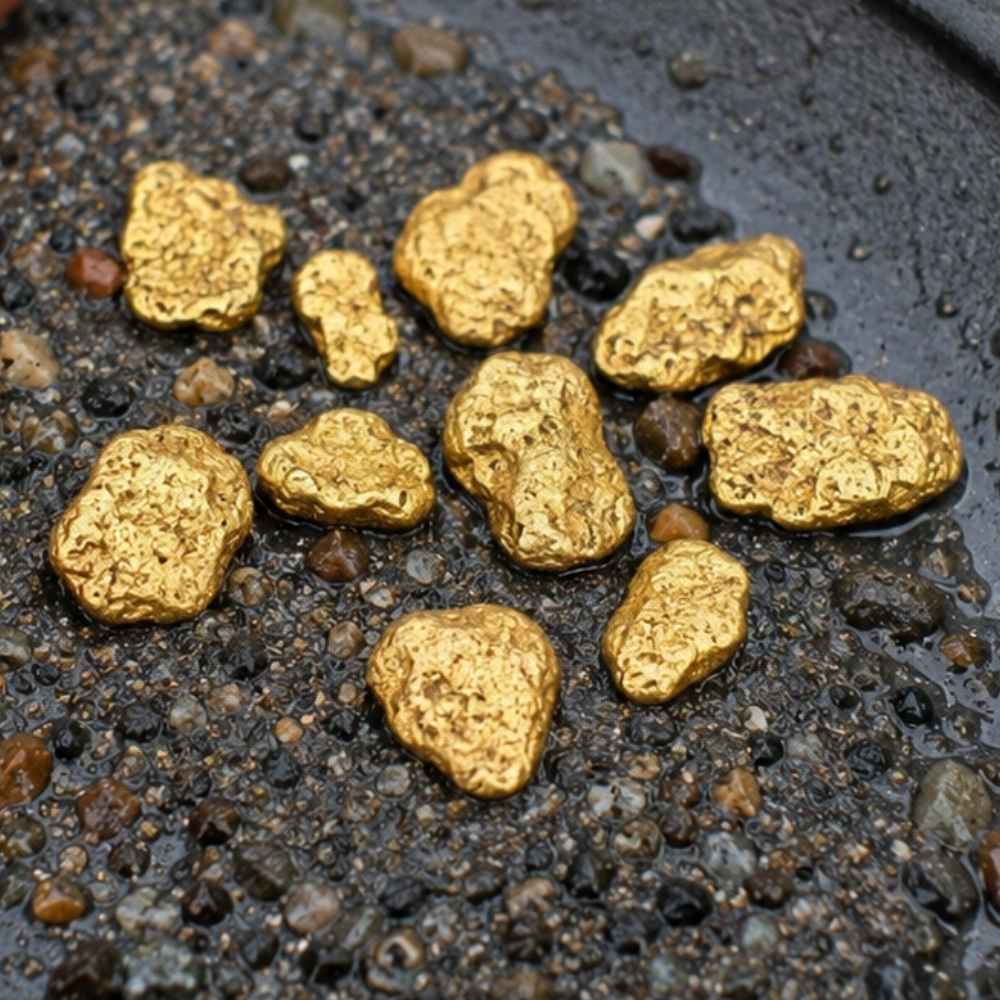
Real nuggets still come out of North Carolina, which is something almost no other eastern state can say. The same districts that produced the famous giant nuggets of the 1800s still give up pea sized and even acorn sized pieces to patient hunters, especially in the old placer grounds of the Uwharries and the South Mountains. Every one is rounded and hammered smooth by its trip down the creek.
Pyrite is the classic false alarm, and Carolina gravel carries plenty of it. Pyrite forms sharp little cubes with flat crystal faces, while a true nugget is worn, dented, and butter colored with no crystal faces at all.
Nugget hunting by pan alone takes luck, so serious hunters go electronic. The Garrett AT Gold Metal Detector is tuned for exactly this kind of small gold and it earns its keep in North Carolina’s old mining districts.
Gold in Quartz
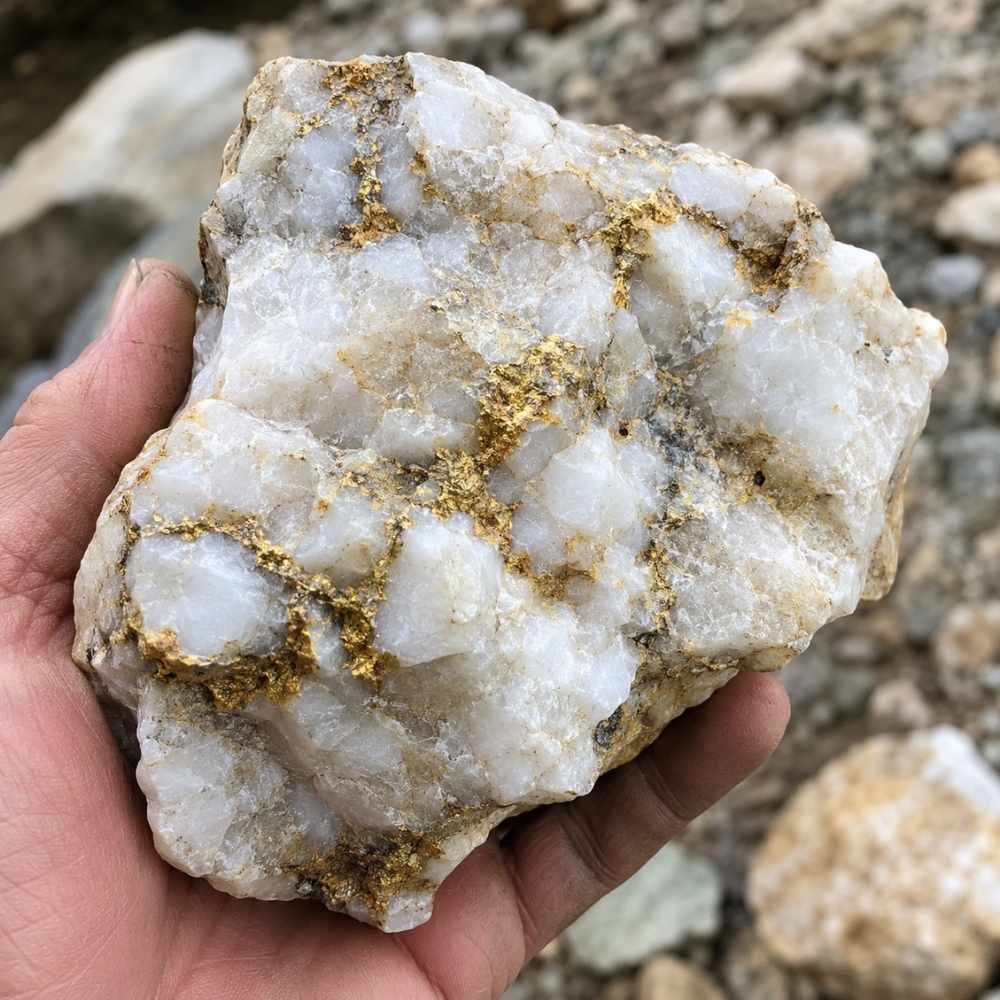
Gold frozen inside white quartz is the form that built North Carolina’s mining towns, and you can still find it in weathered vein material around the old districts. Look for rusty stained quartz in creek gravel downstream of historic mines, because iron staining and gold ride the same veins here. A piece of quartz with visible gold is worth far more to collectors than the gold alone.
The fooler is pyrite or chalcopyrite locked in quartz, and both love to imitate the real thing. Real gold in quartz stays bright and yellow in shade and dents under a pin point, while the imposters glitter, flash, and crumble.
Cracking suspect quartz takes a proper tool. The Estwing Geo Paleo Rock Pick splits weathered vein quartz cleanly so you can check the fresh faces inside.
Knowing what Carolina gold looks like is half the game. The other half is knowing where the water hides it, and that is exactly where this guide goes next.
Where Gold Hides in North Carolina Streams
Gold is about 19 times heavier than water, so it always settles in the lowest, slowest spot the current allows. Learn to read these five stream features and you can walk up to any creek in this guide and know where to dig first.
Inside Bends
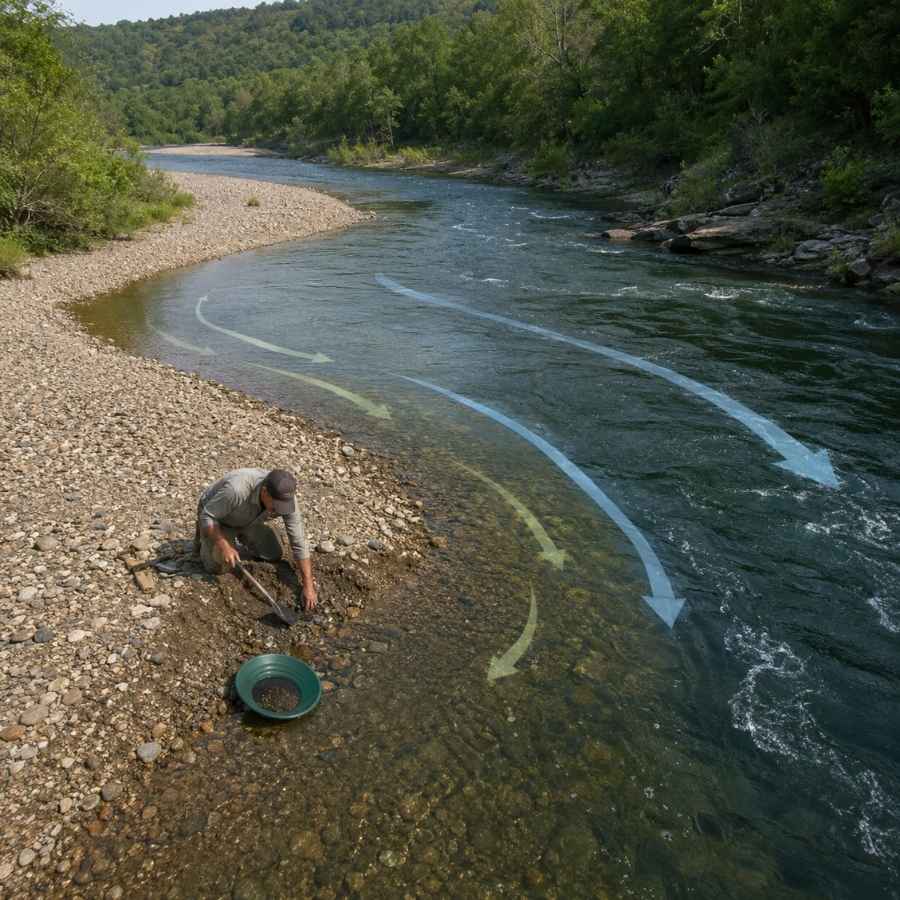
Water slows down on the inside of every curve, and slow water drops its gold. Look for the gravel bar that builds on the inside of a bend and dig where the coarse gravel starts. In the lazy Piedmont creeks of the gold belt, inside bends are the most reliable producers there are.
Digging packed bend gravel goes faster with a big pan built for volume. The Garrett 15 Inch Dual Riffle SUPERSLUICE Gold Pan processes twice the gravel of a standard pan.
Gravel Bars
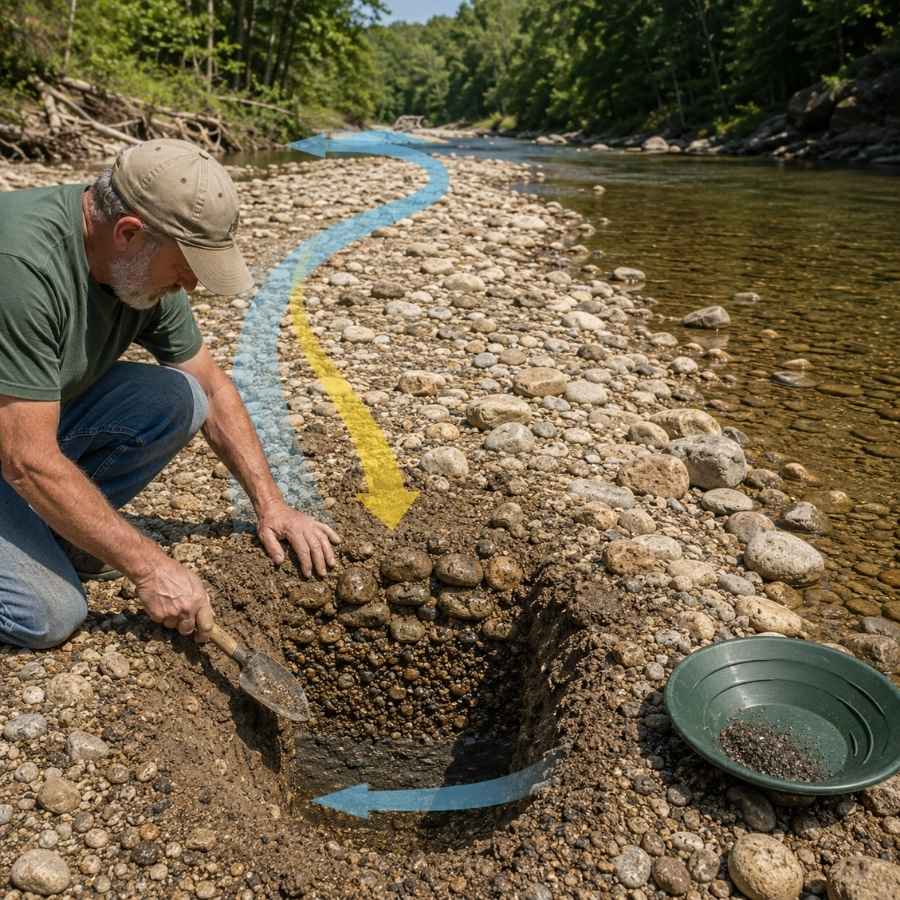
Summer low water exposes bars that were drowned all spring, and the gold hides at the upstream end and down at the base of the bar, not on top. Dig test holes and pan the bottom material where the gravel sits on clay or rock. The Uwharrie and Second Broad rivers are full of bars exactly like this.
Carolina bars are choked with fist sized cobbles that waste pan space. Screening them out with the SE Half Inch Sifting Screen doubles the gravel you can actually wash in a day.
Bedrock Cracks
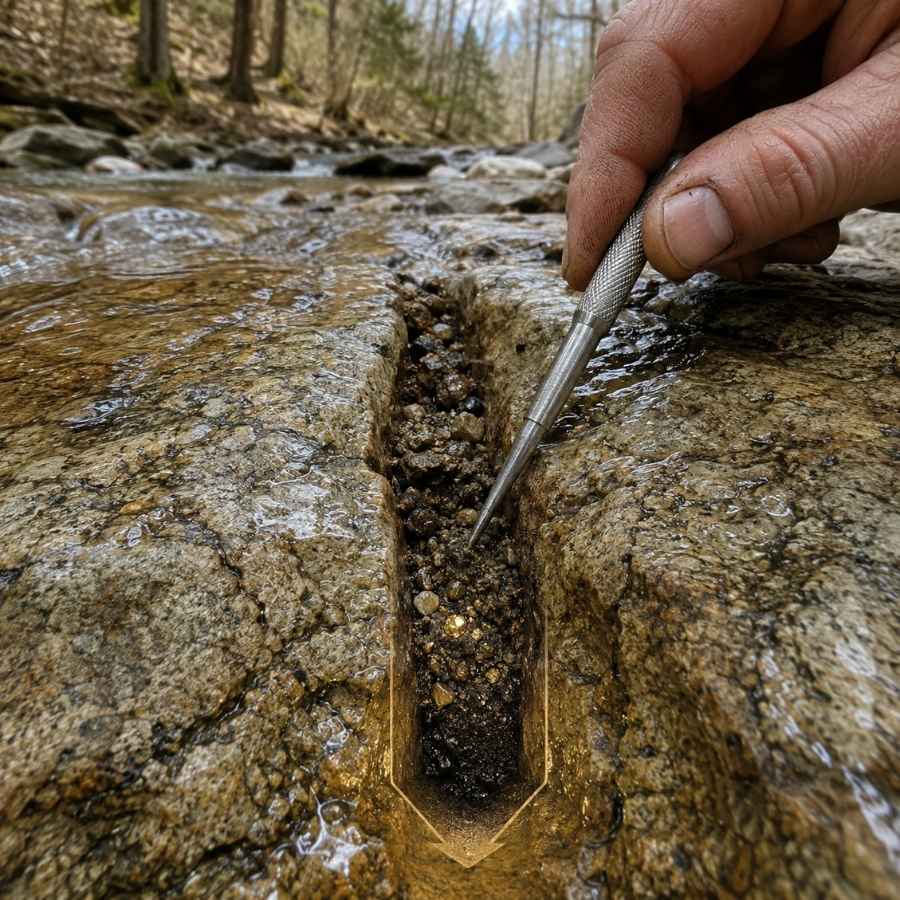
Bedrock is the floor gold cannot sink through, so its cracks fill up like nature’s own sluice box. Where a mountain or foothill creek scours down to solid rock, every joint and crevice has been trapping gold since long before the first prospectors arrived. The bottom inch of packed dirt in a crack is the richest material in the whole creek.
Fingers cannot reach that last inch. A steel crevice tool set like the ASR Outdoor Steel Crevice Tool Set scrapes it out clean.
Behind Boulders
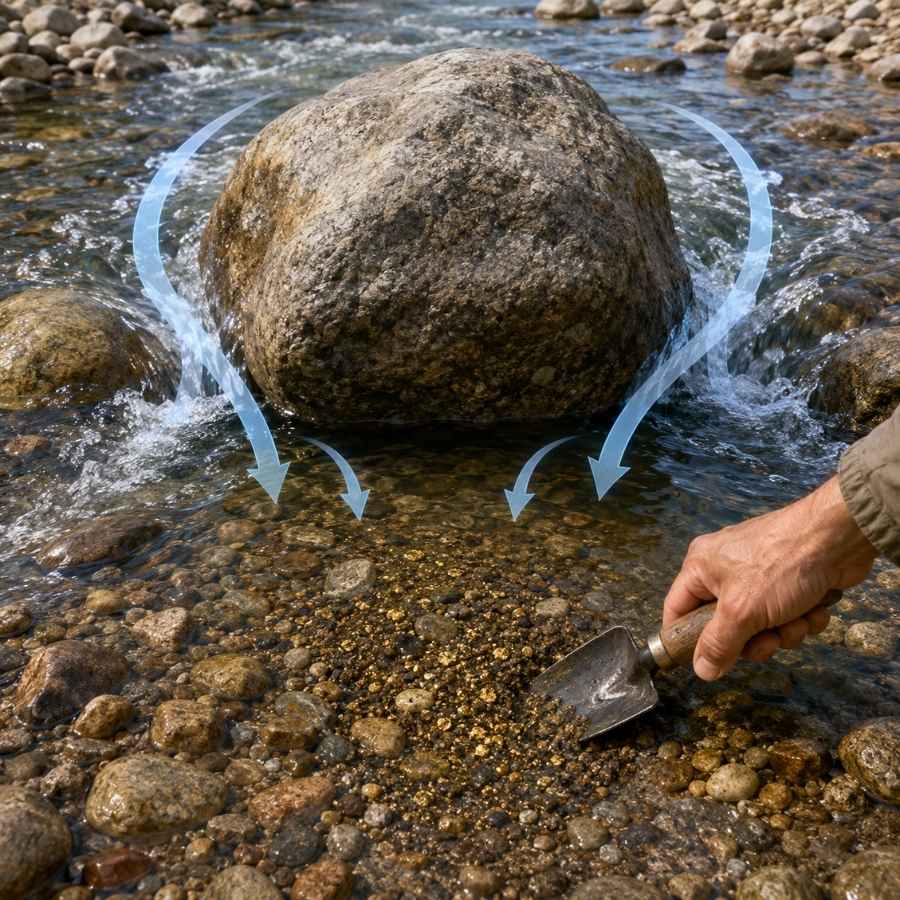
Every big rock in a creek splits the current and creates a calm pocket directly downstream, and gold traveling in a flood drops straight into that pocket. North Carolina’s mountain streams are boulder gardens, which makes them one long chain of gold traps. Feel around the downstream base of big rocks and dig the packed gravel your fingers find there.
That gravel is usually cemented tight. A strong shovel like the Bully Tools 14 Gauge Round Point Shovel breaks it loose without snapping a handle mid trip.
Black Sand Streaks
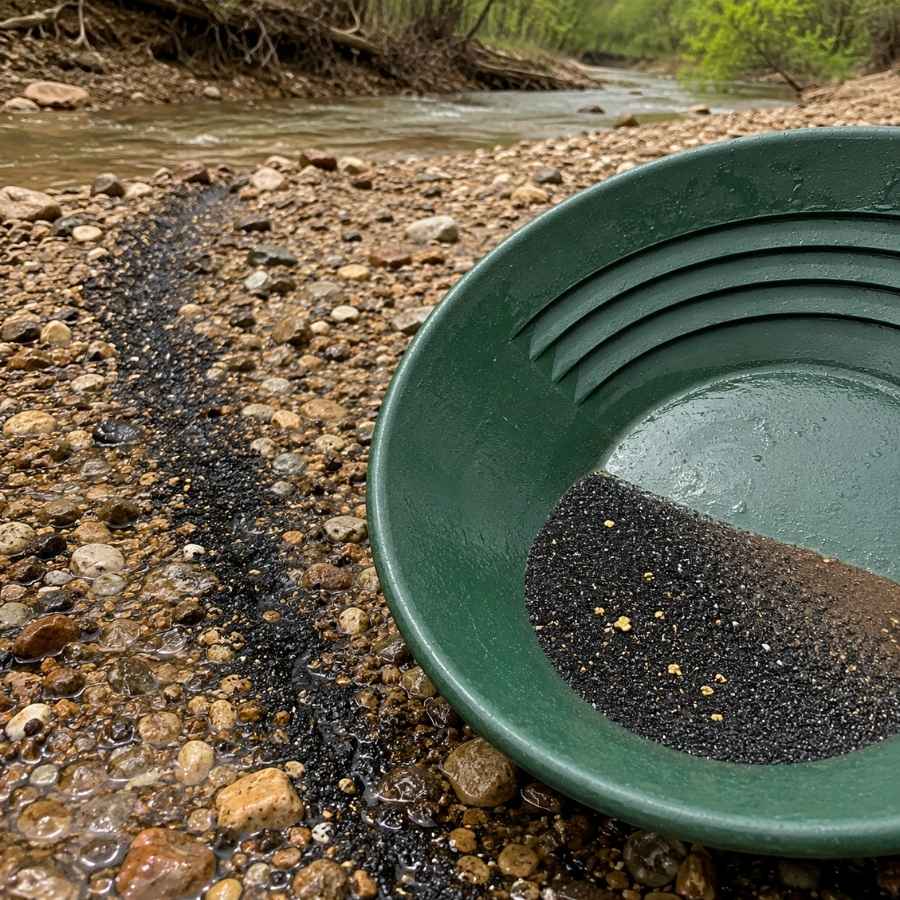
Black sand is mostly magnetite, and it settles in the same slow spots as gold because both are far heavier than common sand. When you see a dark streak in the gravel or a black layer forming in your pan, you are digging in the right place. Carolina prospectors read black sand the way fishermen read ripples.
Separating fine gold from black sand at the end of the day is tedious by hand. A magnetic separator like the SE Magnetic Separator Pick Up Tool with Quick Release pulls the black sand out and leaves your gold behind in seconds.
Always Confirm Access and Collection Rules!
Before heading out to any of the locations on our list you need to confirm access requirements and collection rules for both public and private locations directly with the location. We haven’t personally verified every location and the access requirements and collection rules often change without notice.
Many of the locations we mention will not allow collecting but are still great places for those who love to find beautiful rocks and minerals in the wild without keeping them. We also can’t guarantee you will find anything in these locations since they are constantly changing.
Always get updated information directly from the source ahead of time to ensure responsible rockhounding. If you want even more current options it’s always a good idea to contact local rock and mineral clubs and groups
The Best Places To Find Gold in North Carolina
North Carolina’s gold runs in belts, and this guide follows them across three regions. Central North Carolina holds the famous Piedmont gold belt around Charlotte and the Uwharries, the Western Foothills hold the South Mountains placer country, and the Western Mountains hide placers in high valley streams. Here is every spot worth your gas money.
Central North Carolina
The Piedmont gold belt and the Carolina Slate Belt run through the heart of the state, from Charlotte northeast through the Uwharrie Mountains. This is where American gold mining was born, and it is still the most reliable gold country in the eastern United States.
Reed Gold Mine
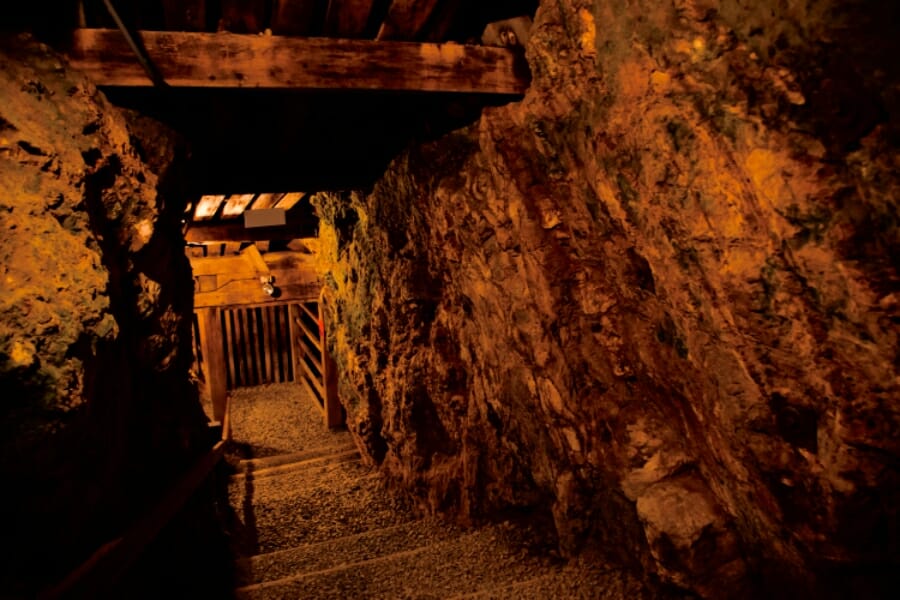
Reed Gold Mine in Cabarrus County is the site of America’s first documented gold find, and it is the single best place in the state to start. Now a State Historic Site near Midland, it offers guided underground tours and seasonal pay panning in gravel from the same Little Meadow Creek that produced the 17 pound doorstop nugget. Access is as easy as it gets, with parking, restrooms, and staff who teach beginners.
The gold is fine placer gold with the occasional flake, and pay panning with the site’s equipment or your own pan is the technique. The staffed troughs make this the best first trip in the state for kids.
Your pan can also show garnet sand, quartz, and glittering pyrite, and this is exactly where beginners toss real treasure back into the trough. A wet unidentified stone looks like nothing, and the North and South Carolina Rocks and Minerals Field Guide lets you check every odd pebble against clear photos before it leaves your hand.
Panning here runs seasonally for a small fee, so check the site’s schedule before you drive. Standard panning gear from the techniques section covers it.
Difficulty: 1 out of 5
Cotton Patch Gold Mine
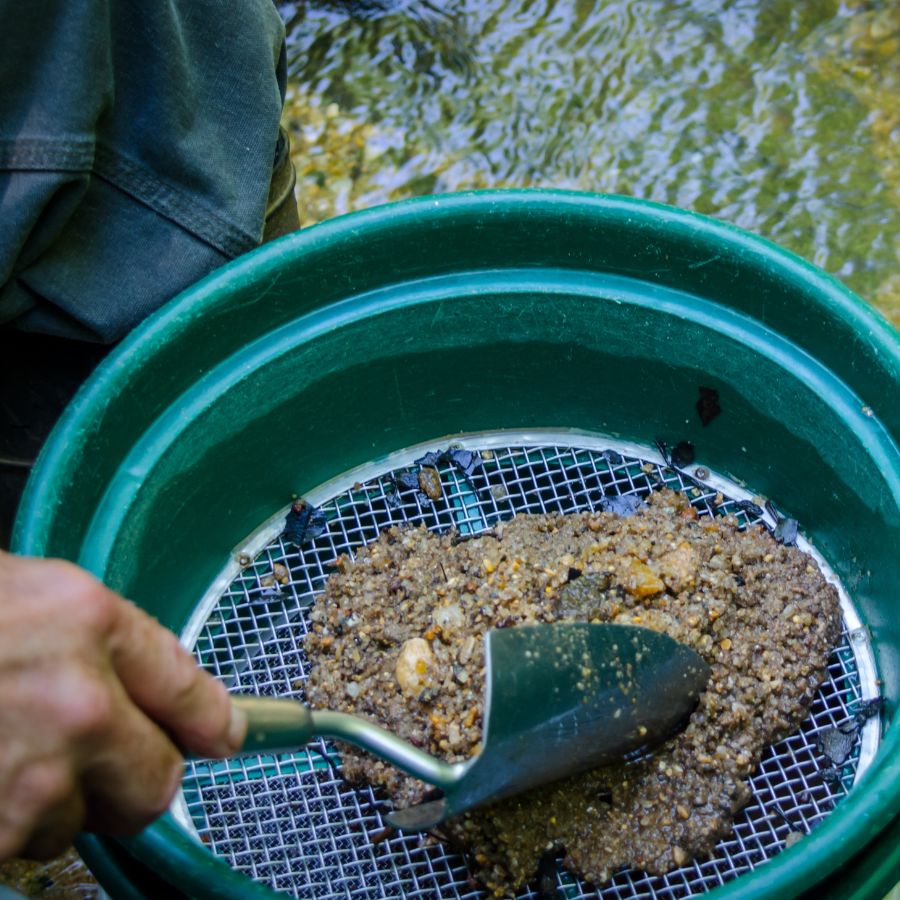
Cotton Patch Gold Mine in New London is Stanly County’s famous pay to prospect operation, sitting right in the heart of the old gold belt. You buy buckets of gold bearing dirt or dig your own from proven ground, then wash it at the water troughs. The mine also offers camping, which makes it an easy weekend basecamp for the whole Uwharrie gold country.
Fine gold, flakes, and the occasional picker come out of the paydirt, and panning or a small highbanker at the troughs is the technique. Staff will show first timers the ropes.
The dirt also carries quartz, garnet, and black sand. Hours and dig options change with the seasons, so call ahead before you load the truck. Bring the finish pan and snuffer bottle from the techniques section.
Difficulty: 1 out of 5
Uwharrie River
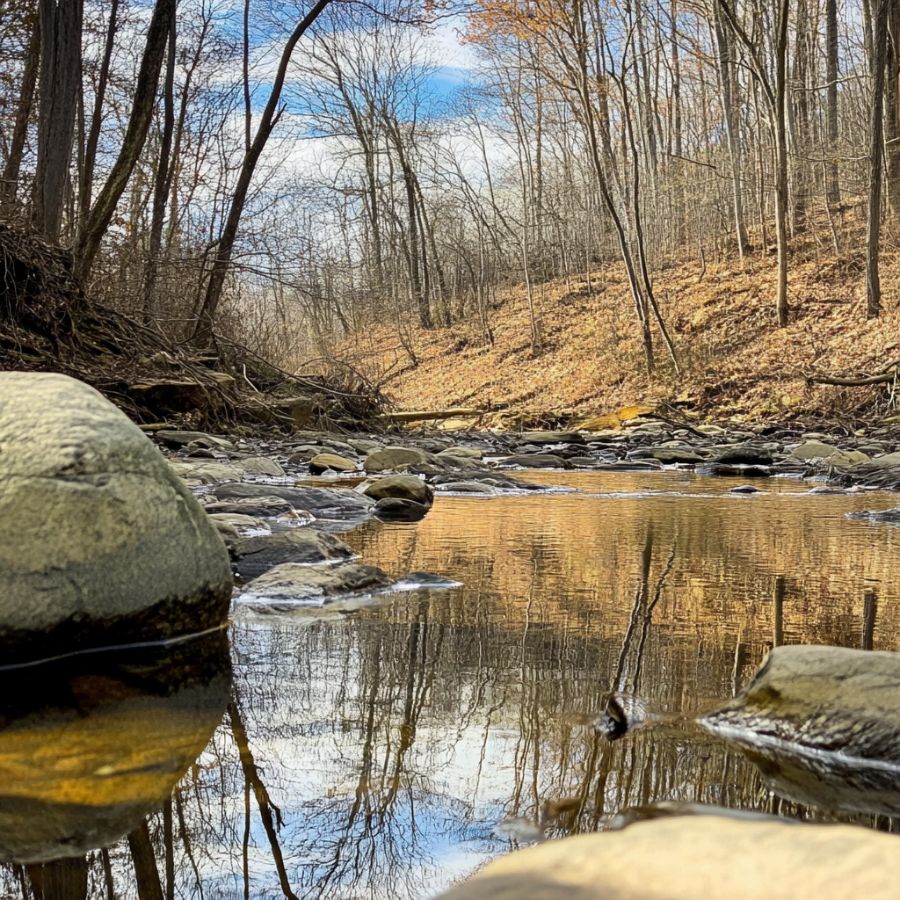
The Uwharrie River is the best free public gold water in central North Carolina. It winds through Montgomery County and the Uwharrie National Forest, draining some of the oldest mountains in North America and the mine dotted hills around them. Low Water Bridge Road is the classic access point, with gravel bars within sight of the parking spots.
Fine gold with occasional flakes is the steady find, and gravel bar panning is the technique. Work the inside bends and pan down to the packed layer where gravel meets clay.
The gravel also shows quartz, garnet sand, and slate belt rock of every color. Hand panning is the accepted practice on national forest land here, but stay out of any posted or wilderness areas and keep it to hand tools. A classifier screen speeds the sorting, linked in the techniques section.
Difficulty: 2 out of 5
Dutch Buffalo Creek
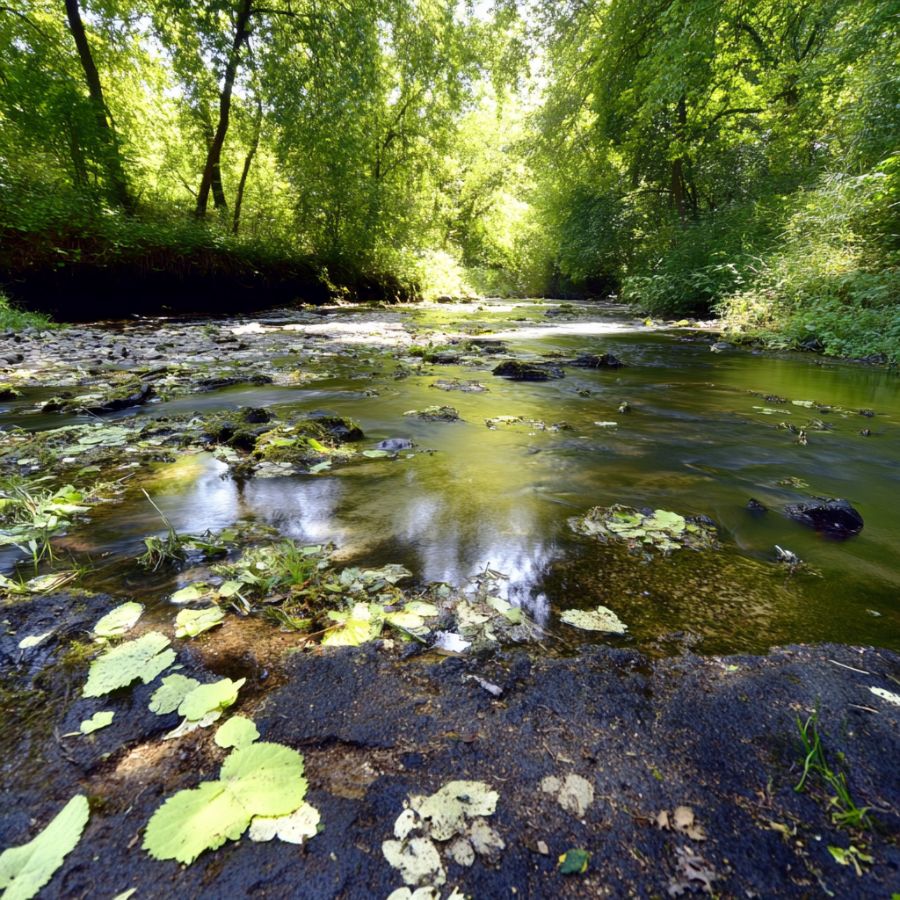
Dutch Buffalo Creek drains the same Cabarrus County gold country as the Reed mine, which puts it on the short list of creeks that have produced gold for more than two centuries. It flows southeast through farm country toward the Rocky River, reworking gold shed from the surrounding old mines and prospects. Quartz veins lace the whole watershed.
Fine gold in gravel bars and inside bends is the pattern, and careful panning is the technique. Focus on gravel sitting on the orange clay hardpan, which acts like false bedrock.
The pan also turns up quartz, pyrite, and garnet sand. Nearly the whole creek runs through private farmland, so a polite knock and permission come before your pan does. Standard panning gear from the techniques section is all you need.
Difficulty: 3 out of 5
Deep River
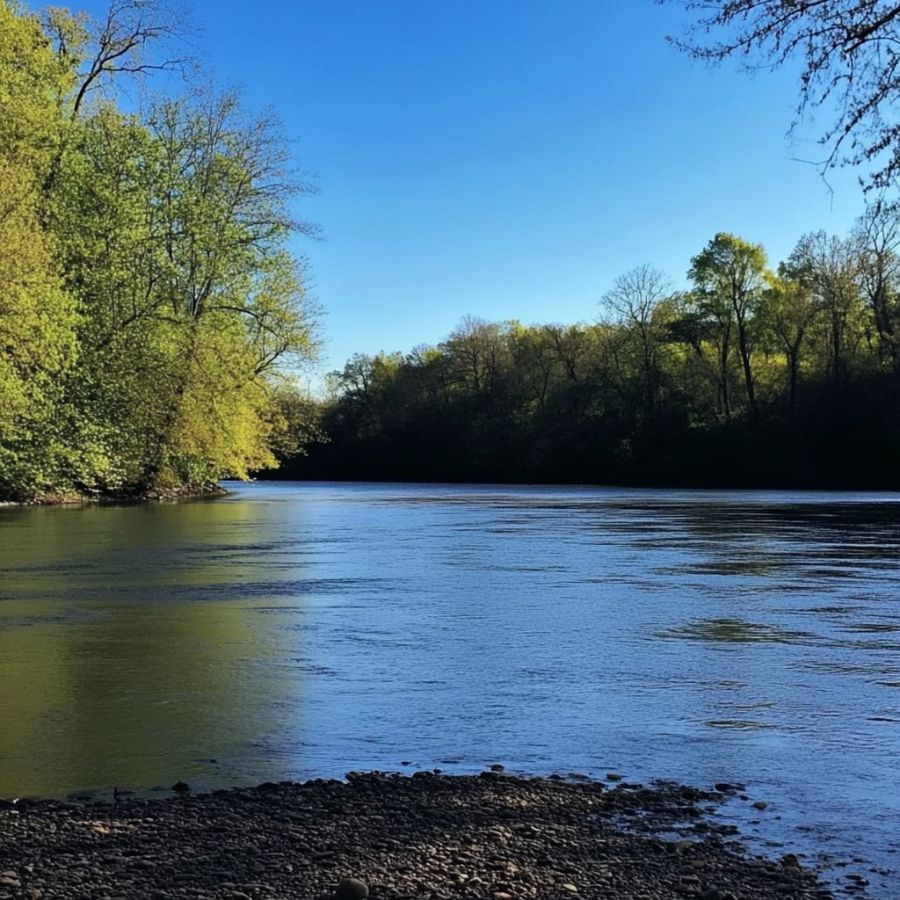
The Deep River carries gold through the Carolina Slate Belt across Moore, Randolph, Lee, and Chatham counties. Old mines and prospects dot its watershed, and its tributary Richland Creek carries its own documented gold. The river is broad and slow, with long gravel stretches exposed at summer low water.
Fine gold in bar gravel is the steady find, and panning the slower sections is the technique. Test where the current slackens and heavy material drops out.
Bycatch includes quartz, slate belt jasper, and pyrite. Access is a patchwork of bridge crossings and private land, so confirm each entry point and ask permission where the banks are posted. Bring the deep riffle pan from the techniques section.
Difficulty: 3 out of 5
Western Foothills
The South Mountains and the foothill counties around them hosted North Carolina’s second great gold rush in 1828, when placer miners swarmed the creeks of Burke, McDowell, and Rutherford counties. The gold never ran out, and this region now holds the state’s best cluster of pay to dig operations.
Thermal City Gold Mine
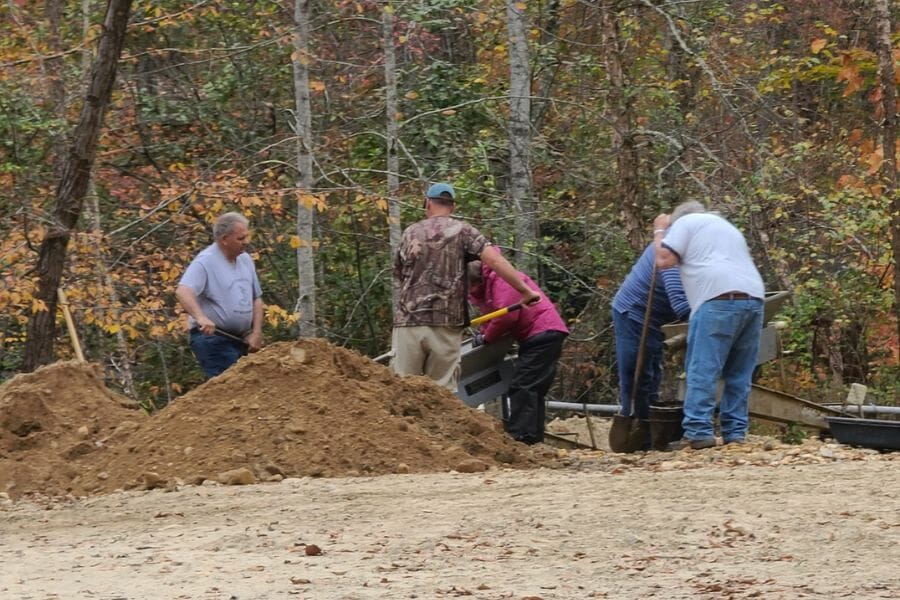
Thermal City Gold Mine sits on the Second Broad River near Union Mills, on ground that has been mined for gold since the 1830s. It is a full service pay operation with paydirt buckets, creek access for panning and sluicing, equipment rental, and riverside camping. Big group digs draw prospectors from all over the Southeast.
Fine gold, flakes, and pickers all come out of this ground, and panning and sluicing are both on the menu here. It is one of the few places in the state where a beginner can legally run a sluice all day with everything provided.
The gravel also carries garnet, quartz, and heavy black sand. Check the schedule before visiting because hours shift by season. The sluicing setup is covered in the techniques section.
Difficulty: 1 out of 5
Vein Mountain Prospecting Area
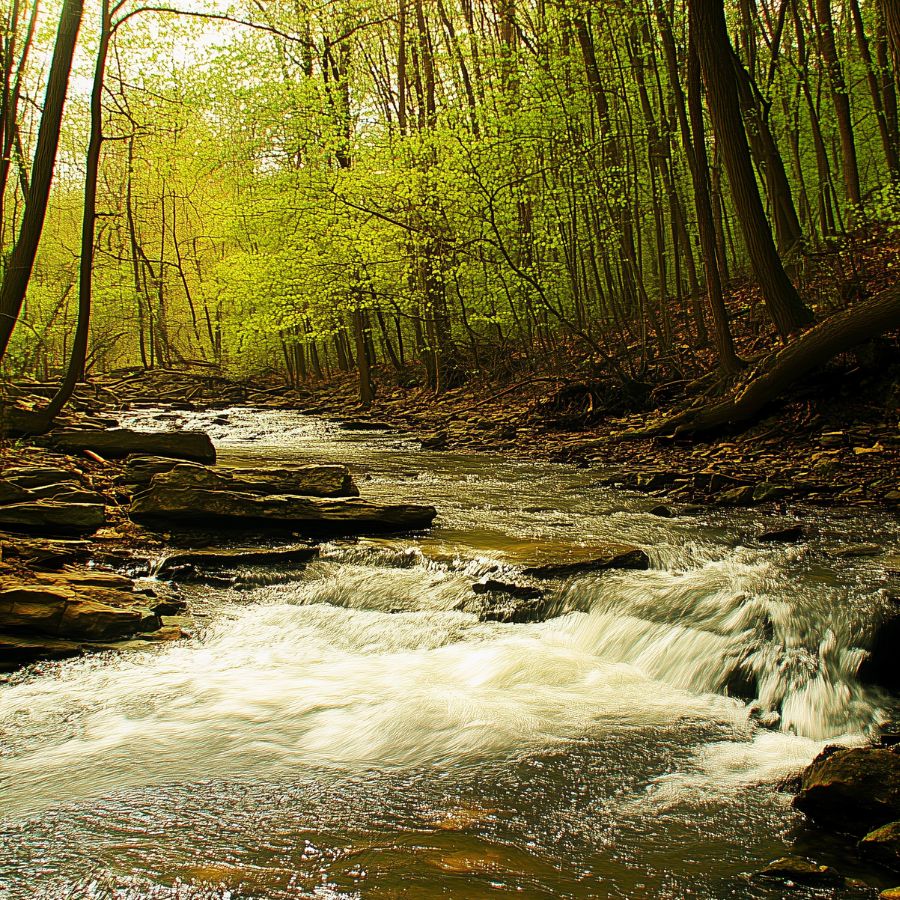
Vein Mountain in southern McDowell County is one of the most storied gold districts in the state, worked continuously since the South Mountains rush. The district’s creeks drain a maze of old placer cuts and vein workings, and prospecting camps in the area have offered member and fee access to proven ground for decades. Prospecting clubs, including GPAA chapters, have held claims in this district.
Fine gold with genuine picker and small nugget potential is the draw, and panning and sluicing where permitted are the techniques. This is also respected metal detecting ground for those with permission.
Expect garnet, quartz, and thick black sand in every pan. Access is through the established camps and clubs, never by wandering onto posted land. Detector gear is covered in the techniques section.
Difficulty: 3 out of 5
Lucky Strike Gold and Gem Mine
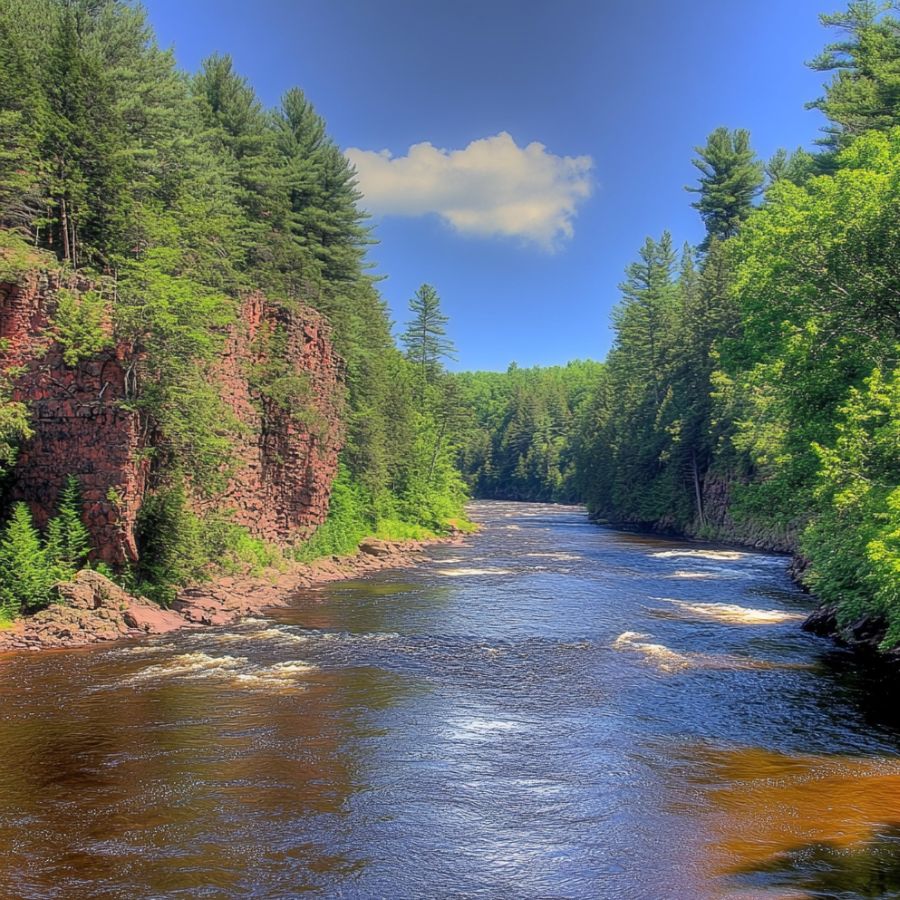
Lucky Strike Gold and Gem Mine near Marion puts you on proven Vein Mountain district ground with a campground attached. The operation offers creek panning, sluicing, and paydirt, and it has hosted major prospecting events for years. It is a favorite of families who want more freedom than a tourist trough but more support than a wild creek.
Fine gold, flakes, and occasional pickers are the finds, and panning and sluicing in the on site creek are the techniques. Staff can point you to recently productive stretches.
The gravel also gives up garnets and the occasional gem gravel surprise, this being ruby country’s doorstep. Confirm hours and camping before you go. Standard gear from the techniques section covers it.
Difficulty: 2 out of 5
Second Broad River
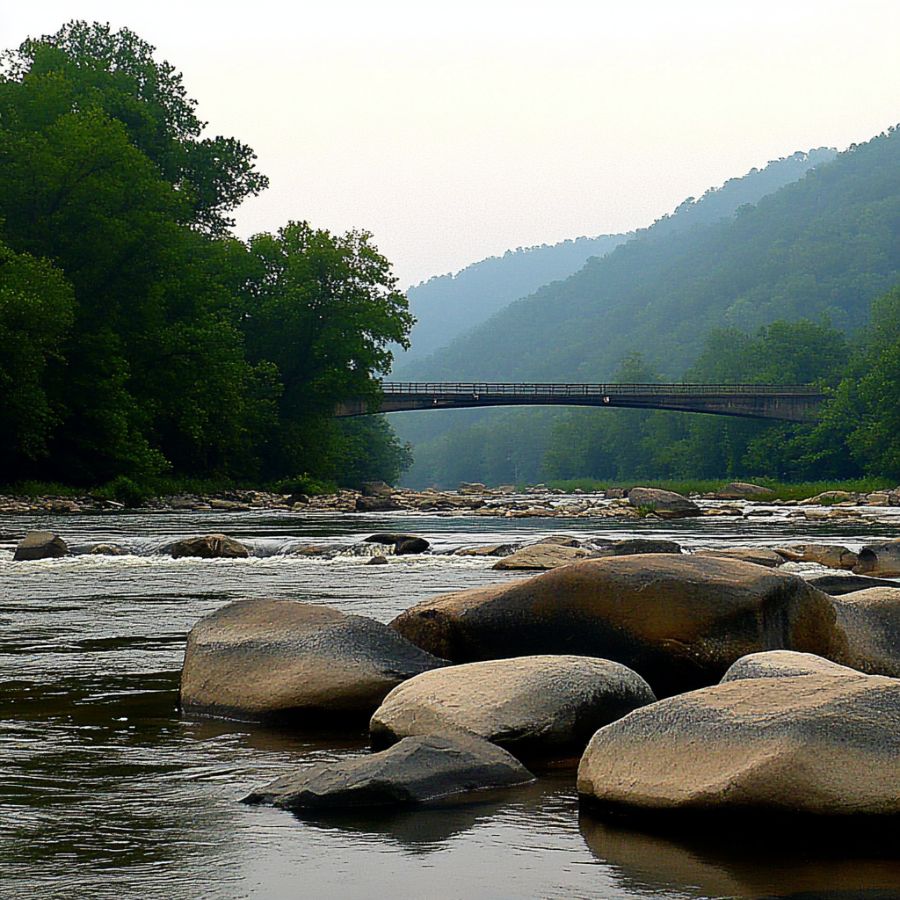
The Second Broad River drains the gold rich southern slope of the South Mountains through McDowell and Rutherford counties. Gold from this river and its neighbors was so plentiful in the 1830s that a private mint in Rutherfordton struck it into coins, including the first gold dollar in America. The river still gives up color to weekend panners today.
Fine gold in bar gravel and inside bends is the pattern, and panning is the technique. Low summer water exposes the best bars.
The pan also shows garnet, quartz, and black sand. Outside the pay mines, the banks are mostly private, so ask before you dig. Bring the deep riffle pan from the techniques section.
Difficulty: 2 out of 5
Brindletown Creek

Brindletown Creek in Burke County was the epicenter of the 1828 South Mountains gold rush, when thousands of miners washed its gravels. The creek drains the north slope of the South Mountains near the community the rush built, and its placers were among the richest ever worked in the state. Patient panners still pull color from it nearly two centuries later.
Fine gold with occasional flakes is the find, and panning the gravel down to bedrock is the technique. The old timers skimmed the surface gravel, so the deep cracks still hold gold they never reached.
Expect garnet, monazite sand, and quartz in the pan. The valley is almost entirely private land today, so permission is essential, and some stretches are simply off limits. Crevice tools earn their keep here, linked in the techniques section.
Difficulty: 4 out of 5
Western Mountains
The high mountains west of Asheville hide placer gold in valley streams that most tourists drive right past. The settings are spectacular and the competition is thin, which means fresh gravel for anyone willing to make the drive.
Valley River
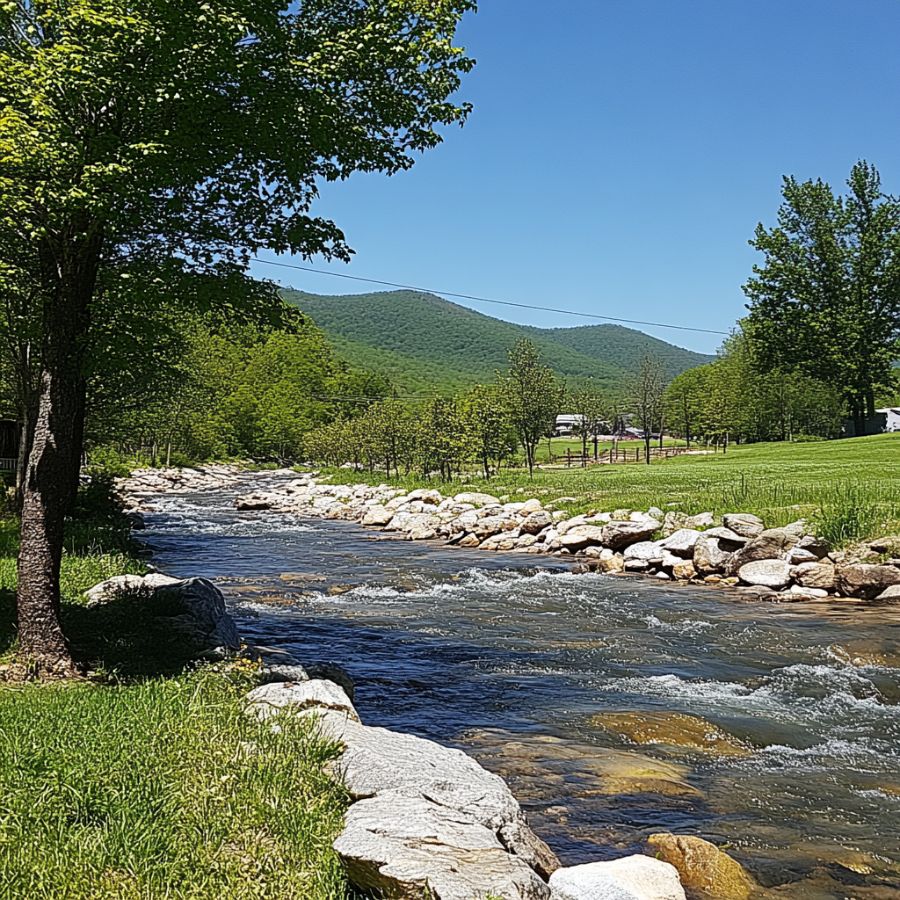
The Valley River drains the Snowbird Mountains through Cherokee County, dropping nearly 3,000 feet on its run to Murphy. That drop gives the river real concentrating power, and its placers have been worked since the 1830s. Long stretches run beside roads, which makes access scouting easy.
Fine gold and small flakes are the steady finds, and panning the boulder pockets and inside bends is the technique. The river bed is rocky, so crevicing pays here too.
The gravel also carries garnets and staurolite from the surrounding metamorphic rock. Much of the valley is private, with some national forest reaches, so sort out land status before you dig. Crevice tools are linked in the techniques section.
Difficulty: 2 out of 5
Cowee Creek
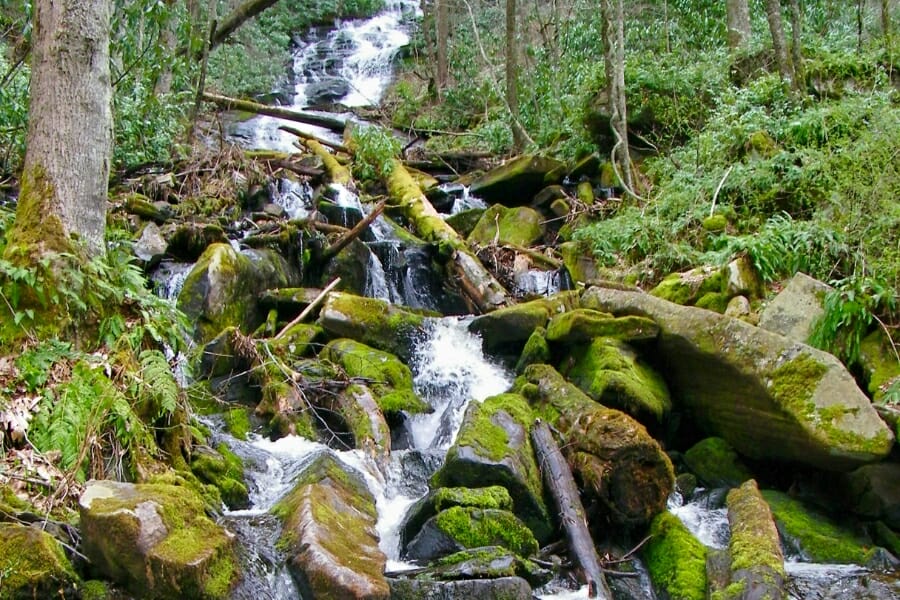
Cowee Creek in Macon County is famous for rubies and sapphires, but its gravels carried documented placer gold long before the gem mines opened. The creek drains the Cowee Valley north of Franklin, and gold turns up in the same heavy black sand layers that hold the corundum. Every pan here is a double lottery ticket.
Fine gold is the find here, and panning the valley’s pay to dig gem mines is the easiest legal access. Several operations in the valley let you wash native gravel, and our guide to the state’s gem mining spots covers the best of them.
Bycatch is the whole show here, with ruby, sapphire, garnet, and rutile in the gravel. Outside the pay mines the creek is private, so stick to the operations that welcome diggers. A finish pan handles the fine gold, linked in the techniques section.
Difficulty: 3 out of 5
More Proven Places To Find Gold in North Carolina
The twelve spots above are where we would send a friend first, but two centuries of mining left proven gold ground all over this state. The spots below come from state geological records, federal mine databases, and generations of prospecting club experience, and every one of them earns a trip too. Most sit on private land, and access changes constantly, so confirm current rules and get permission before visiting any of them.
Central North Carolina

Hamilton Mine (Anson County). This historic mine worked slate belt gold southeast of the main Charlotte belt. The surrounding creeks drain the old workings and can carry fine gold. The site is private farmland today, so ask before exploring.
Allman Prospect (Cabarrus County). A documented gold prospect in the same county that started it all. Creeks draining the area rework gold from the belt that fed the Reed mine. Private land, permission required.
Little Buffalo Creek (Cabarrus County). Prospectors have panned color from this creek since the height of the Cabarrus rush. It drains classic gold belt ground east of Concord. The banks are private farm country, so knock first.
Conrad Hill Mine (Davidson County). One of the state’s major historic lode mines, worked for gold and copper east of Lexington. Fine gold shows in streams draining the old workings. The mine land is private and the shafts are dangerous, so stay on the creeks with permission.
Sechrist Prospect (Davidson County). A documented gold prospect in the Davidson County section of the belt. Nearby drainages can carry fine colors. Private land throughout.
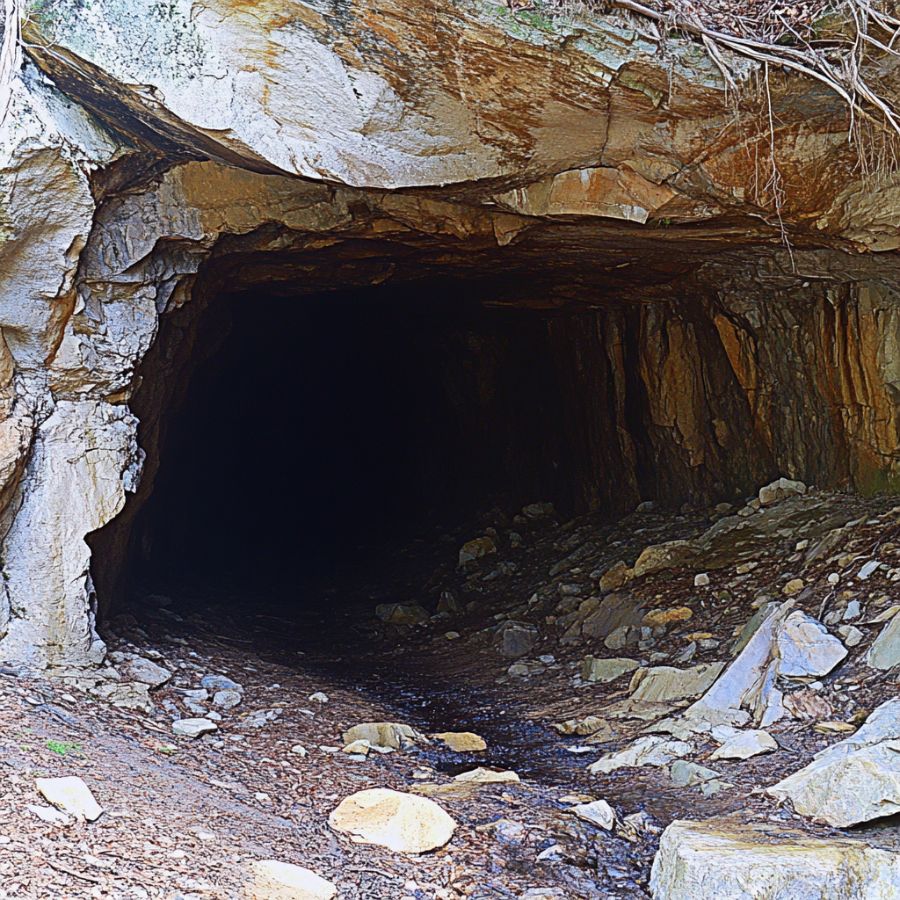
McLean Deposit (Gaston County). A recorded gold occurrence in the Kings Mountain belt west of Charlotte. Local creeks concentrate what erosion frees from the belt. Ask landowners before panning.
Alexander Mine (Mecklenburg County). Charlotte was literally built on gold mines, and this is one of the documented workings in the county. Suburban development covers much of the ground now, so the play is small creeks with explicit landowner permission.
Elliotte Brothers Prospects (Mecklenburg County). Documented prospects from Charlotte’s gold mining heyday. Any color today hides in neighborhood creek gravels on private land. Permission is non negotiable this close to the city.
Frank Wilson Prospect (Mecklenburg County). Another recorded Mecklenburg prospect from the belt that made Charlotte a mint city. Treat it like the others, private land, polite ask, hand pan only.
Coggins Mine (Montgomery County). In the early 1900s this was the leading gold producer in the state, working a big vein system near Eldorado. Streams draining the district still carry fine gold. The mine property is private and the workings are hazardous, so stay out of the ruins.
Dutchmans Creek Placer (Montgomery County). This Uwharrie National Forest creek is a longtime favorite of local panners. It drains the same gold country as the Uwharrie River and gives up fine gold to patient work. Follow current forest rules and keep to hand tools.
Island Creek Placer (Montgomery County). A documented placer in the Uwharrie gold country. Fine gold concentrates where the creek crosses harder rock. Check land status carefully because forest and private parcels interleave here.
Little River (Montgomery County). This slate belt river gathers gold from a swarm of old mines and prospects upstream. Prospectors report fine colors from its gravel bars. Access is a mix of bridges and private land, so scout and ask.
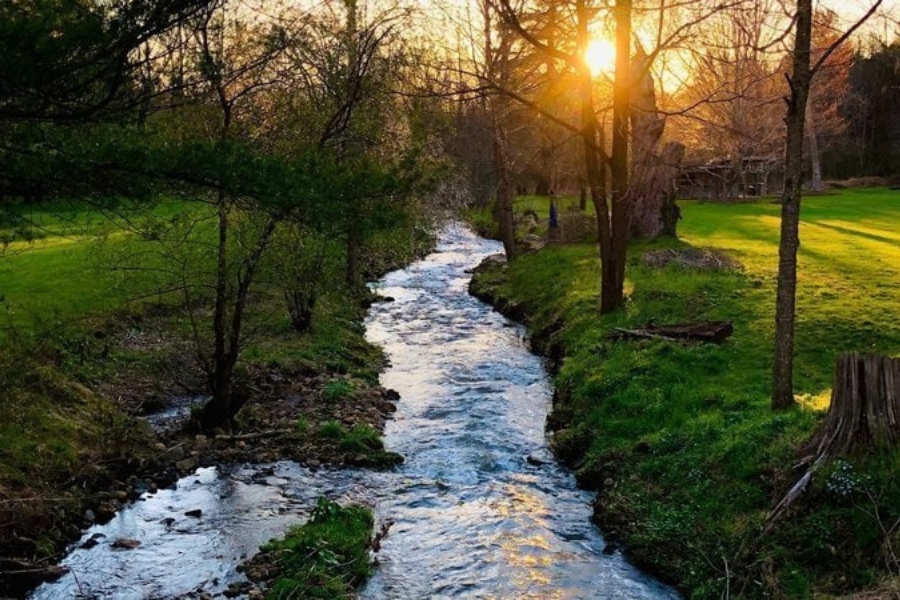
Cabin Creek (Moore County). An old placer stream in the Carolina Slate Belt, panned since the 1800s. Fine gold settles in its bends and bar gravel. The banks are private, so permission comes first.
Richardson Mine (Moore County). A documented historic gold mine in Moore County’s slate belt hills. Nearby branches can show fine colors below the old workings. Private land throughout.
Sewell Prospect (Moore County). A recorded gold prospect in the same district. The proven play is panning the little drainages downstream with landowner permission. Fine gold concentrates in their quiet bends.
Kindley Prospect (Randolph County). A documented prospect on the northern edge of the Uwharrie gold country. Small creeks below it can carry colors. Ask before you dig.
Merrill Prospect (Randolph County). Another recorded Randolph County prospect in the slate belt. Fine gold is the target here. Private farm country, so knock first.
Gold Hill District (Rowan County). In the 1840s Gold Hill was the richest mining district east of the Mississippi, with shafts running hundreds of feet deep. The historic village and park preserve the story today, and area creeks still drain the old district. Collecting around the historic park is restricted, so pan only where you have explicit permission.
Honeycutt Mine (Rowan County). A documented mine in the Gold Hill belt. Streams below the old workings can rework its gold. Private land, permission required.
Barringer Mine (Stanly County). This mine claims the first underground gold vein mining in the country, starting in the 1820s. The surrounding drainages still shed fine gold from the vein system. The site is private, so stick to permitted creeks.
Eudy Prospect (Stanly County). A recorded prospect in the Stanly County gold belt near the Cotton Patch grounds. Fine gold in nearby branch gravel is the target. Ask the landowner first.
Folger Hill (Union County). A documented gold locality in Union County’s slate belt. Small creeks draining the hill can show colors. Private farmland, so permission is essential.
Howie Mine (Union County). One of the most productive gold mines in state history, worked near Waxhaw into the 1940s. Its old tailings and nearby branches still carry gold. The property is private, fenced, and hazardous, so the way in is asking permission for the creeks below.
Western Foothills

Bailey Fork Placer (Burke County). A documented South Mountains placer worked since the 1828 rush. Fine gold still hides in its bedrock cracks and bar gravel. The valley is private, so ask before panning.
Carolina Queen Mine (Burke County). A historic mine in the South Mountains gold district. Streams below the workings rework its gold. Private land throughout.
Miller Mine (Caldwell County). A documented gold mine in the Caldwell County foothills. Nearby creek gravel can carry fine colors. Permission required.
Peach Tree Mine (Catawba County). A recorded gold mine east of the South Mountains. The proven play is panning small drainages below the old site. Private farm country.
Kings Mountain Mine (Cleveland County). This historic mine in the Kings Mountain belt produced gold for decades and has drawn modern exploration interest. The mine land is private and off limits, but area creeks drain the same belt. Pan only with landowner permission.
Cane Creek Placer (McDowell County). A documented placer in the Vein Mountain gold country. Fine gold and occasional pickers reward deep digging. Access is private, so ask first.
South Muddy Creek (McDowell County). One of the most consistently mentioned placer creeks in the South Mountains country, worked from the rush days to now. Prospectors report steady fine gold from its gravel. The banks are private farmland, so a knock and a handshake come first.
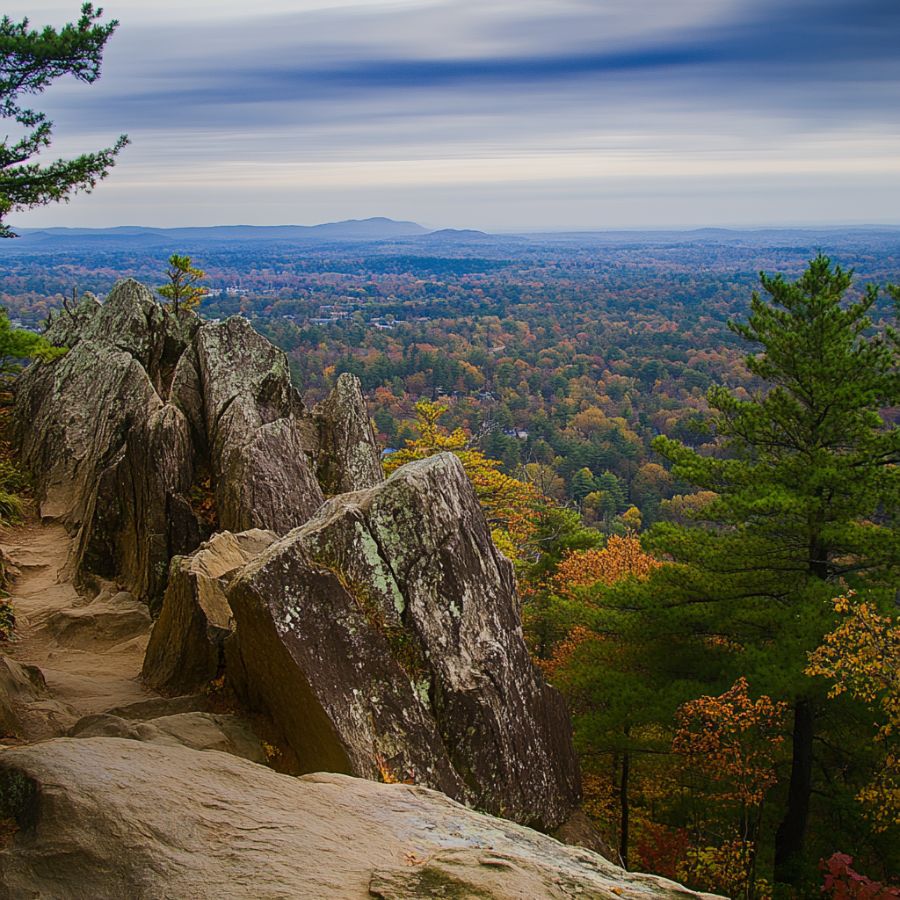
Carpenter Mine (Polk County). A documented gold mine in the Polk County foothills. Small streams below it can show colors. Private land, permission required.
Stony Creek Placer (Rutherford County). A recorded placer in the same district that fed the Rutherfordton mint. Fine gold settles in its bends and gravel bars. Ask before you dig.
Roaring River Placer (Wilkes County). A documented placer on the Roaring River drainage in the northwestern foothills. Patient panning turns up fine gold. The banks are mostly private, so get permission.
Gross Mine (Yadkin County). A recorded gold mine in the Yadkin County hills. Nearby branch gravel is the place to test first. Private farm country throughout.
Western Mountains
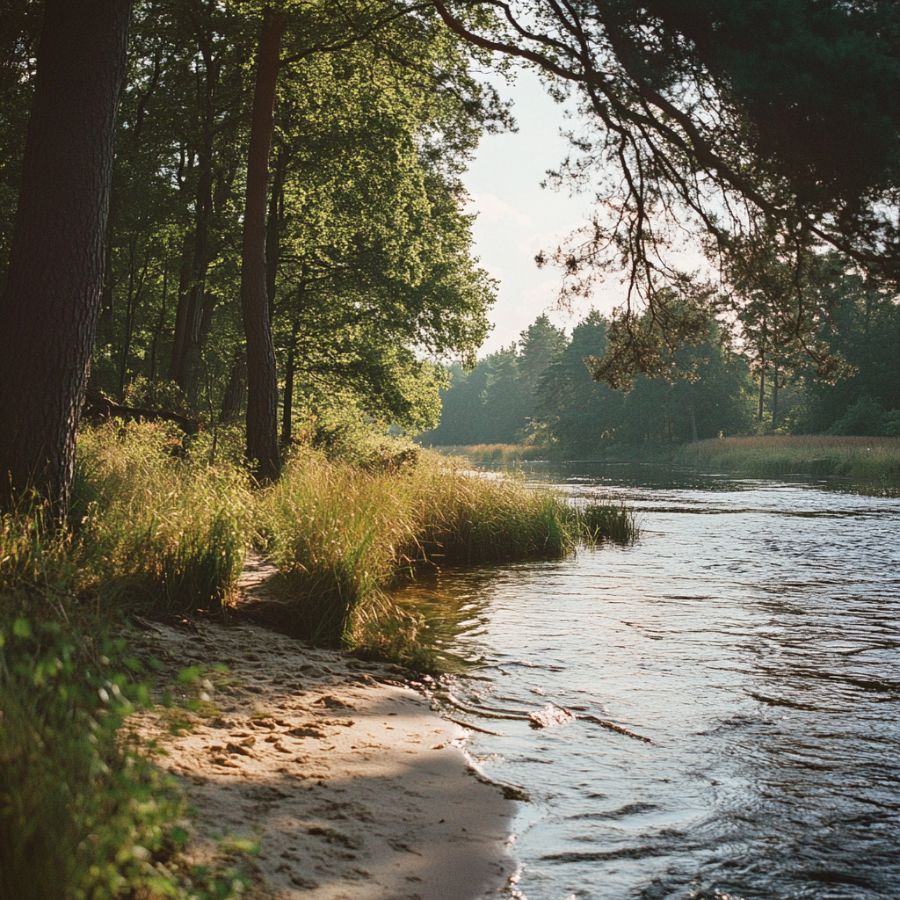
Copper Knob Mine (Ashe County). A historic gold and copper mine in the high northwestern mountains. Streams draining the old workings can carry fine gold. The site is private, so stick to permitted waters.
Parker Mine (Cherokee County). A documented gold mine in the Valley River country near Murphy. The river and its feeders rework the district’s gold. Ask landowners about creek access.
Cashiers Valley Placers (Jackson County). Placer gold was documented in the high Cashiers valley in the 1800s. Fine colors still turn up in valley stream gravel. The area is heavily developed resort land now, so permission is essential.
Ammons Branch Placer (Macon County). A documented placer near Highlands in the high Blue Ridge. Fine gold hides in its small pockets and bedrock cracks. Check land status, because private and national forest parcels mix here.
Fairfield Valley Placers (Transylvania County). Recorded placers in the Fairfield and Sapphire valley country. The same streams carry the corundum that named Sapphire Valley. Resort and private land dominate, so ask before panning.
Northern and Eastern North Carolina
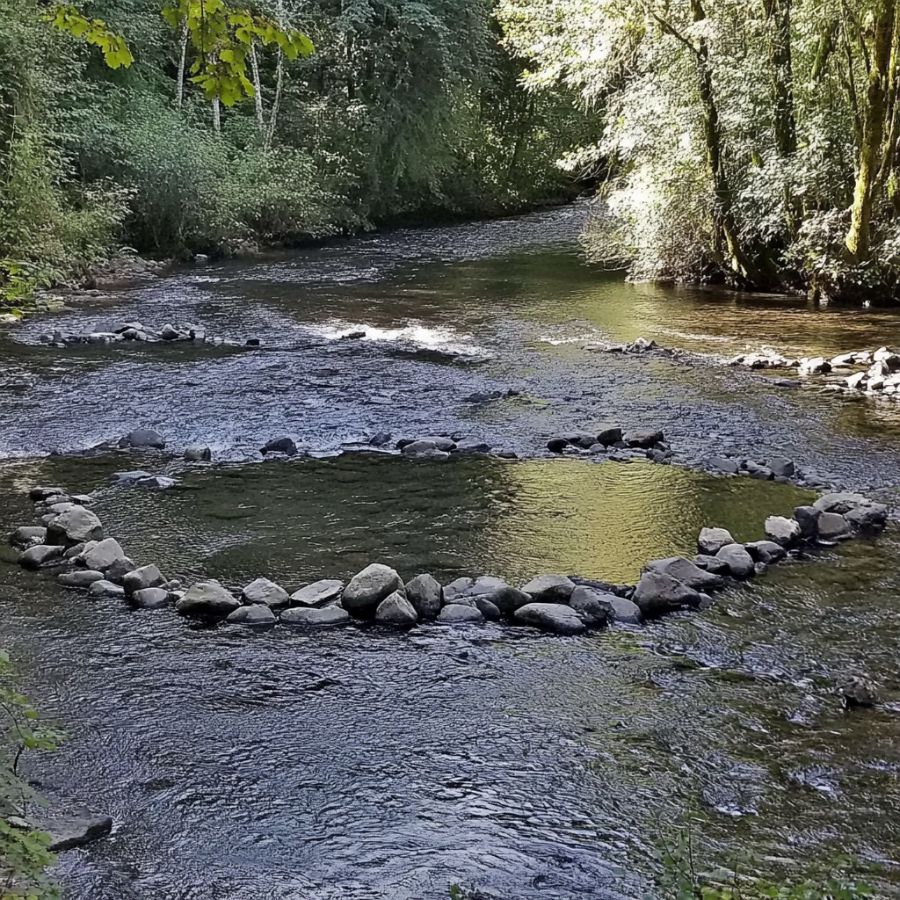
Braxton Prospect (Alamance County). A documented prospect in the northern slate belt. Small creeks below it can show fine colors. Private farmland, permission required.
Robeson Prospect (Alamance County). Another recorded Alamance County gold prospect. The draw is fine gold in nearby branch gravel. Ask before you dig.
Portis Mine (Franklin County). The eastern belt’s most famous gold ground, a placer field so rich it was worked from the 1830s into the modern era, and for years it welcomed fee panners. Fine flat gold spreads through deep gravel across the old workings. Current access changes hands, so confirm the property’s status before making the drive.
Jacks Hill Mine (Guilford County). A documented mine in the Guilford County section of the belt. Streams draining the hill can carry colors. Private land throughout.
J. F. Hughes Prospect (Guilford County). A recorded gold prospect in the same county. Pan the small drainages below with landowner permission. Fine gold is the prize here.
Bradsher Prospect (Orange County). A documented prospect in the northern slate belt near Hillsborough. Nearby creeks can show fine colors. Ask first, this is horse farm country.
Ray Prospect (Orange County). Another recorded Orange County prospect. The play is patient panning in small branches on permitted land. Fine colors reward the panners who work them slowly.
Alston Mine (Warren County). A historic gold mine in the state’s northeastern belt. Area streams rework its gold through farm country gravel. Private land, so permission comes first.
The Best Gold Hunting Techniques in North Carolina
North Carolina rewards more techniques than any other eastern state, because it has fine placer gold, old vein districts, and real nugget country all at once. These are the four methods that actually put Carolina gold in a vial, ordered from easiest to hardest.
Gold Panning (Difficulty: 1 out of 5)
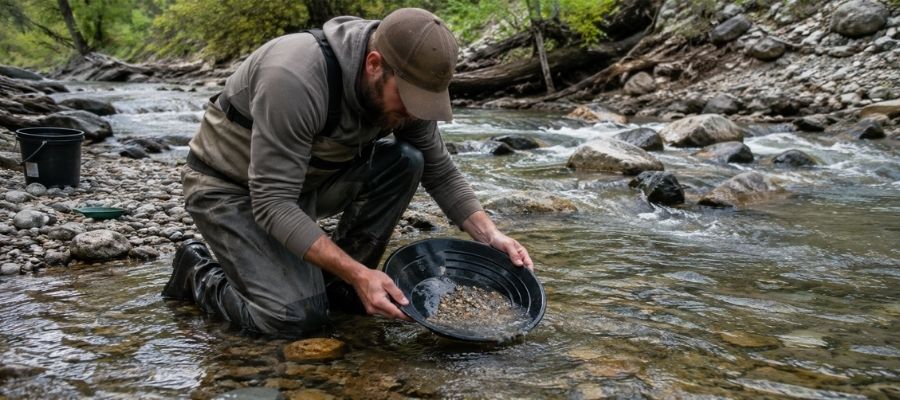
Panning is the foundation of everything in this state. Fill your pan with gravel, submerge it, shake hard so the heavy gold sinks, then tilt and swirl the light material off the top until only the heavy concentrate line remains. Finish slowly, because Carolina flour gold escapes a careless swirl.
It works everywhere in this guide, from the troughs at Reed Gold Mine to the bars of the Uwharrie. If you learn one skill for this state, learn this one.
Essential Tools:
- Deep riffle gold pan: Garrett 15 Inch Dual Riffle SUPERSLUICE Gold Pan
- Finish pan: Garrett Prospecting 10 Inch Backpacker Gold Pan
- Snuffer bottle: Garrett Gold Guzzler Bottle
- Storage vials: SE Glass Vials with Caps
Crevicing (Difficulty: 2 out of 5)
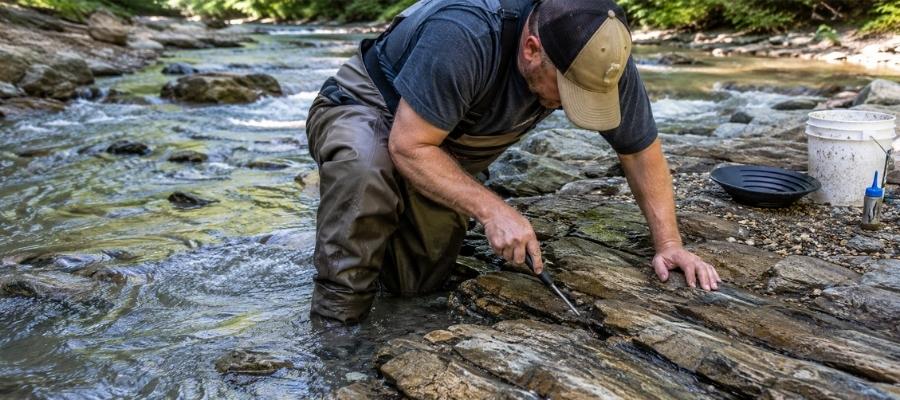
Crevicing means cleaning out the cracks in exposed bedrock and panning what you scrape loose. It shines in North Carolina’s rocky mountain and foothill streams, where bedrock has been trapping gold since before the first rush. The Valley River and the South Mountains creeks are prime crevicing water.
Work every crack down to its very bottom, because the last spoonful of packed dirt holds most of the gold.
Essential Tools:
- Crevice tool set: ASR Outdoor Steel Crevice Tool Set
- Hand trowel: Edward Tools Bend Proof Trowel
- Magnifying loupe: JARLINK 30X 60X Illuminated Loupe
- Finish pan: linked in the panning list above
Metal Detecting (Difficulty: 2 out of 5)
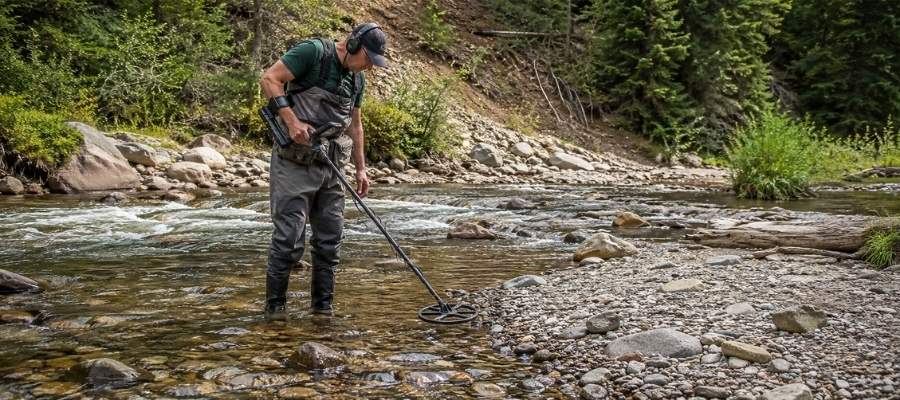
North Carolina is the best nugget detecting ground east of the Rockies, because its old districts produced real nuggets and its soil still hides them. Swing slow and low over old placer ground, dig every soft repeatable signal, and check the hole with a pinpointer. Pay operations in the Vein Mountain country and permitted private ground in the old districts are the places to swing.
Never detect on state historic sites, state parks, or national forest land where it is prohibited, and always confirm the rules first.
Essential Tools:
- Gold metal detector: Garrett AT Gold Metal Detector
- Pinpointer: Garrett Pro-Pointer AT
- Digging shovel: Bully Tools 14 Gauge Round Point Shovel
Sluicing (Difficulty: 3 out of 5)
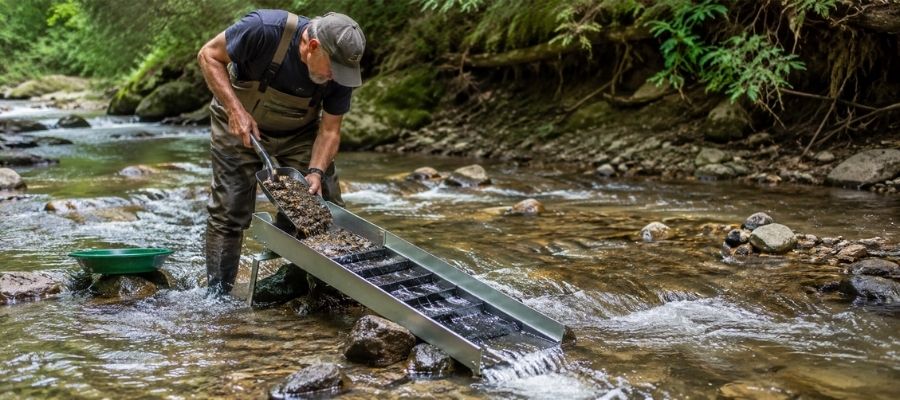
A hand sluice is a riffled channel you set in the current and feed with gravel while the stream does the panning for you. It processes ten times what a pan can, which matters when Carolina gold runs fine. The pay mines at Thermal City and Lucky Strike are the easiest legal places to run one, with the water rights already sorted.
On other waters, check the legal section first, because anything beyond a pan gets a closer look from regulators and always needs the landowner’s specific okay.
Essential Tools:
- Hand sluice: Keene A52 Hand Sluice
- Classifier screen: SE Half Inch Sifting Screen
- Fine classifier: SE 1/8 Inch Mesh Sifting Screen
- Black sand magnet: SE Magnetic Separator Pick Up Tool with Quick Release
How To Tell Real Gold From Fool’s Gold
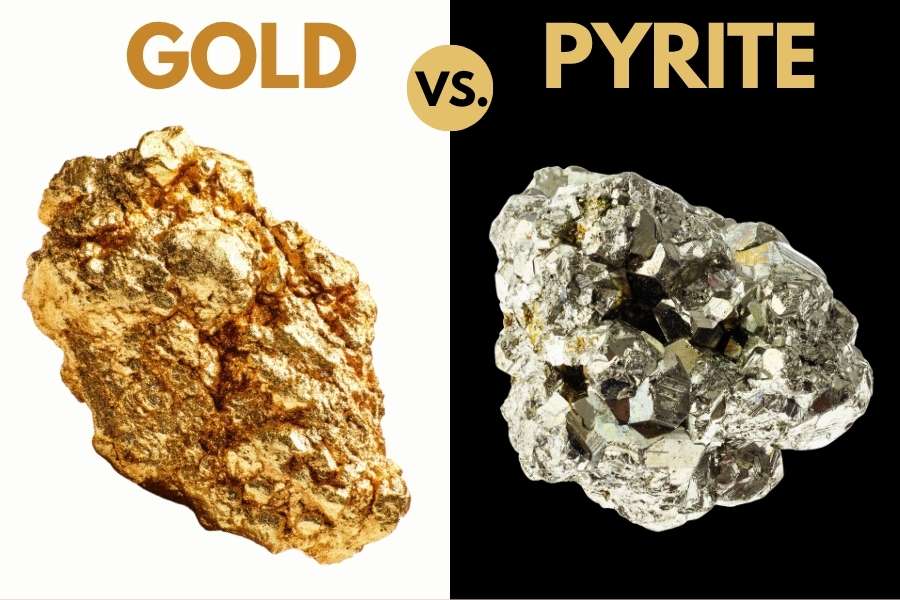
Carolina gravel carries pyrite, mica, and chalcopyrite right alongside its gold, and each one has fooled plenty of new panners. Learn two quick tests and they will never fool you. They sort the real thing out every time.
The shadow test takes one second. Shade your pan with your hand and watch the sparkle. Real gold stays rich and golden in shadow, while pyrite and mica go gray and lifeless the instant direct light leaves them.
The poke test settles anything the shadow test misses. Press a pin firmly into the particle. Gold is soft metal, so it dents and holds the mark, while pyrite shatters and mica slides apart in sheets.
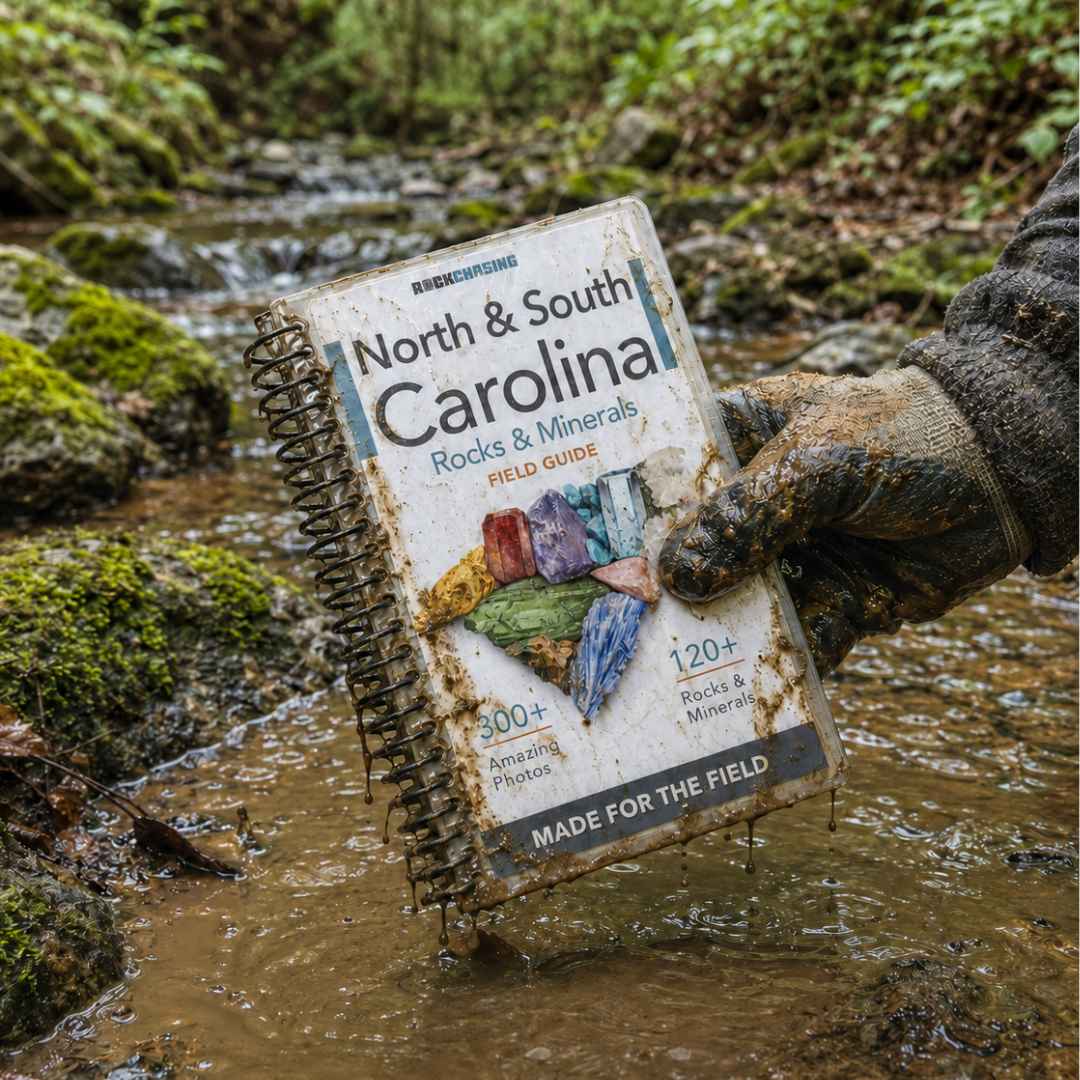
The reason to get this right is simple. Knowing the difference on sight means real gold never leaves your pan unnoticed. The North and South Carolina Rocks and Minerals Field Guide is the insurance policy, with side by side photos of gold and every one of its Carolina imitators, printed on waterproof pages you can hold right over your wet pan.
How Gold Got Into North Carolina
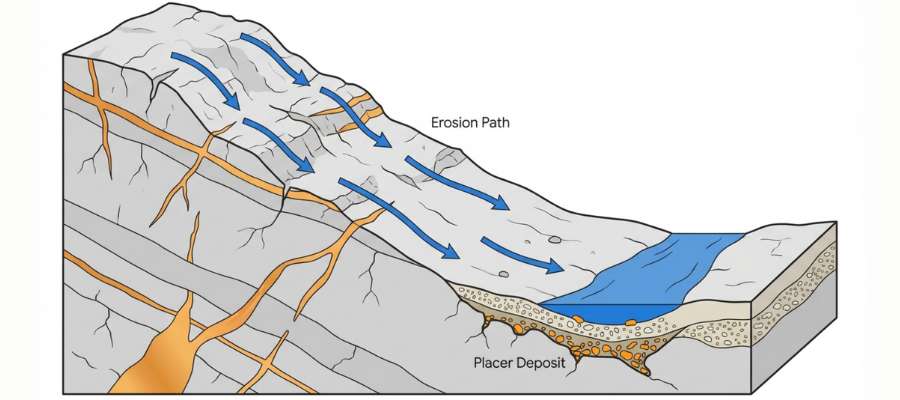
Every spot in this guide sits where it sits because of a chain of ancient volcanoes. More than 500 million years ago, a string of volcanic islands formed far out in an ancient ocean, and hot fluids rising through those volcanoes carried dissolved gold up from deep in the crust.
As the fluids cooled, the gold locked itself into quartz veins threading the volcanic rock. When those island chains slammed into the ancient edge of North America, they became the bedrock of the Piedmont, including the belt geologists call the Carolina Slate Belt. That collision welded some of the richest gold ground in eastern America onto the state.
Then the weather went to work. Hundreds of millions of years of warm, wet Carolina climate rotted the surface rock into deep red clay, freeing the gold from its veins. Rain and rivers carried it downhill, and every creek in the gold belt became a natural sluice, concentrating the heavy flakes into bends, bars, and bedrock cracks.
That is why this guide keeps pointing you at the same belts. The mountains hold the deep roots of old gold systems, the Piedmont holds the weathered veins, and the creeks between them hold everything the rain has stolen from both ever since.
What To Bring for a North Carolina Gold Day Trip
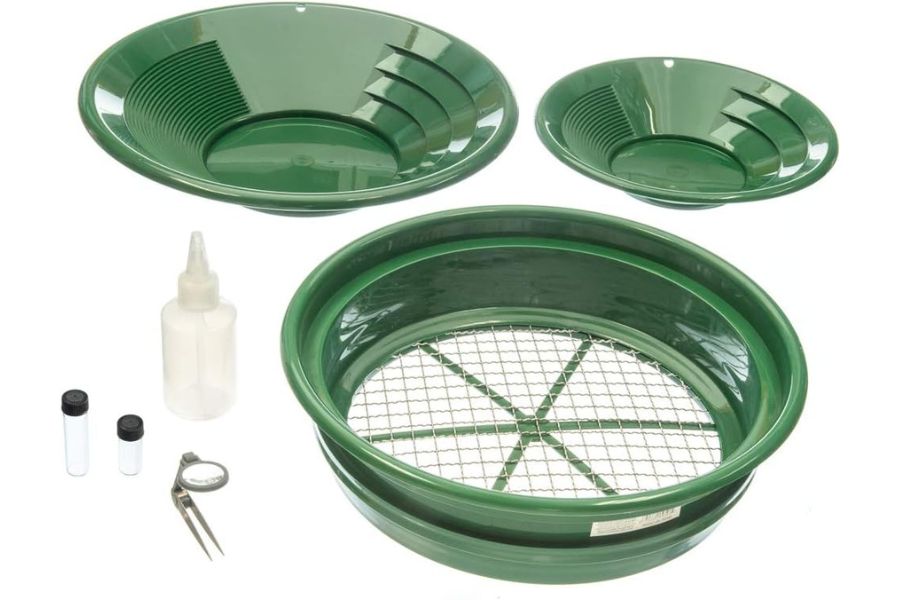
Here is the full checklist. Screenshot this section before you head for the creek.
- Gold pans and snuffer bottle, covered in the techniques section
- Crevice tools and trowel, same place
- Classifier screen and vials
- Rubber boots or wading shoes with real tread
- Drinking water, snacks, and bug spray, Carolina creek bottoms are humid country
- Sunscreen and a brimmed hat
- Printed landowner permission and a paper map of property lines
- Cash for pay mine fees and paydirt buckets
- A dry change of clothes
If you are starting from zero, one box solves it. The Garrett Deluxe Gold Pan Kit has the pans, classifier, snuffer, and vials in one purchase, and it is the kit we hand to every beginner who joins us.
The Best Time of Year To Hunt for Gold in North Carolina
Timing a Carolina gold trip is about water levels and heat, because the gold does not move but the creeks and the humidity sure do. Here is the calendar, region by region.
Central North Carolina
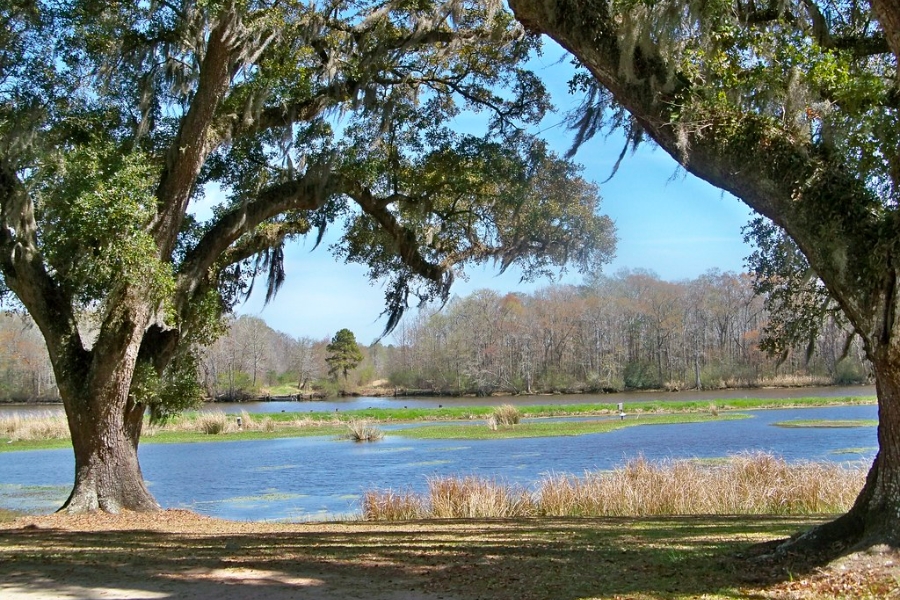
Fall is prime time in the Piedmont gold belt. September through November brings low, clear water, exposed gravel bars, and relief from the summer heat. The pay mines run long hours in this window too.
Spring works well right after high water recedes, when floods have freshly restocked the bends. Skip the muddy weeks after big storms.
Western Foothills

Late spring through fall is the window in the South Mountains country. The big group digs at the pay mines cluster in spring and fall, when the weather is kind and the rivers behave. Summer works if you start early and stand in the water.
Winter panning is possible in mild spells, but cold fronts turn these creeks icy fast. Watch the forecast, not the calendar.
Western Mountains
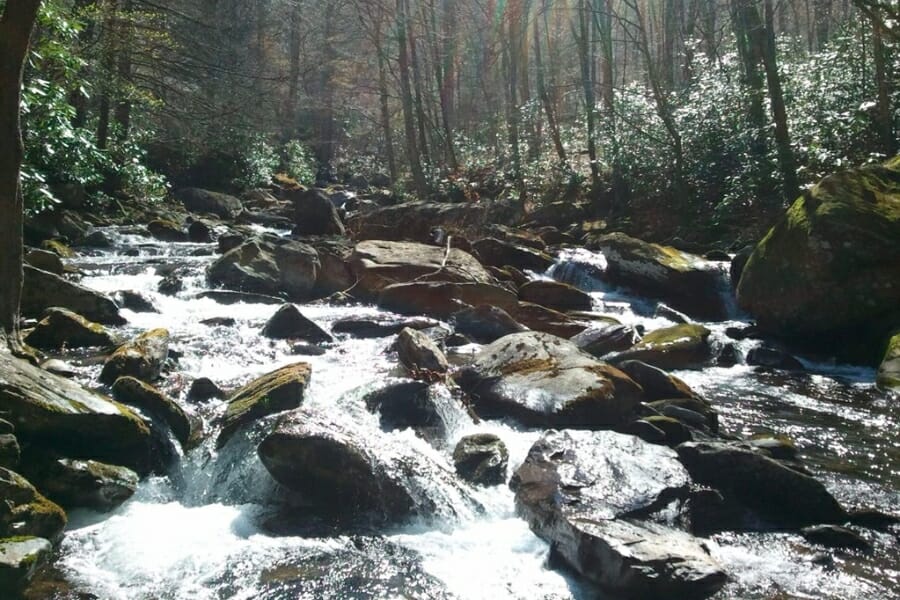
June through October is the mountain season. High country streams run cold and high with snowmelt and spring rain, then settle into wadable summer flows. October adds fall color that makes the drive a reward all on its own.
Afternoon thunderstorms are the summer hazard. Mountain creeks can rise fast, so keep an eye upstream.
Northern and Eastern North Carolina
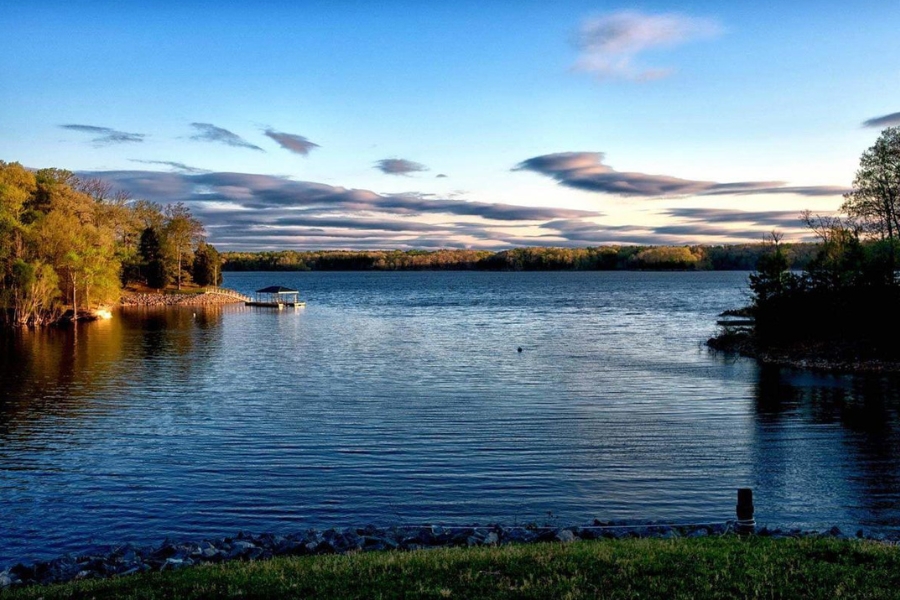
The eastern belt fishes best in fall and winter. Cooler months knock down the vegetation, drop the water table, and make farm country access easier after harvest. Summer here is snake and mosquito season in the creek bottoms.
Whatever the season, rain rules everything. Give any Piedmont creek a few days to clear after a storm.
Other Valuable Rocks and Minerals You Can Find in North Carolina
The same ground that hides North Carolina’s gold is some of the richest gem ground in America, and some of what shares the gravel is worth more than the gold. Our full guide to North Carolina rocks, minerals, and gems covers the whole treasure list, but keep your eyes open for these while your pan is working.
Emerald
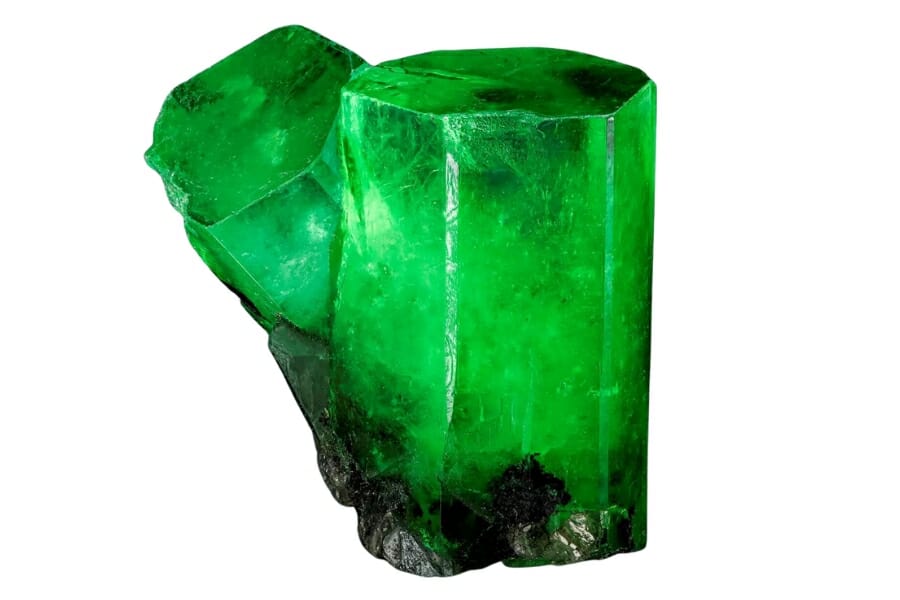
North Carolina is the only state that has produced major gem quality emeralds, including stones worth millions. They come from pegmatites in the Hiddenite area northwest of the gold belt. Our guide to emeralds in North Carolina covers where to dig them.
Hiddenite
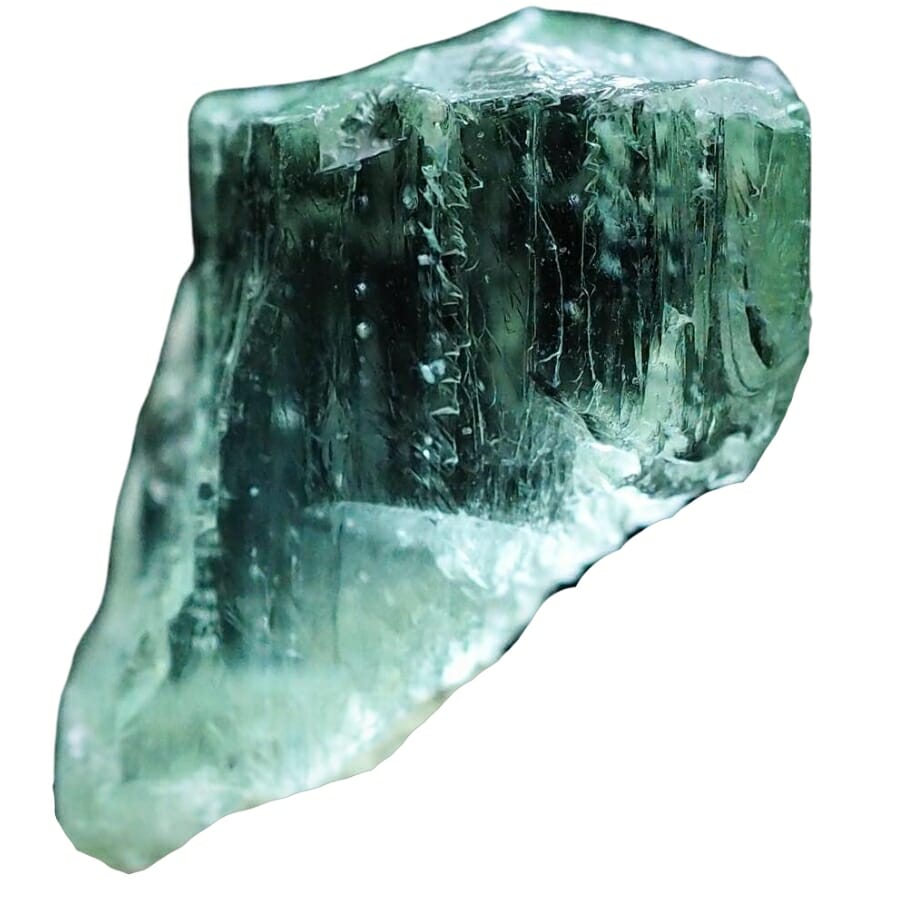
Hiddenite is a rare green gemstone discovered in this state and named for the town where it was found. It is found in only a few places on Earth, and this is the original one. Our guide to North Carolina crystals tells the full story.
Rubies and Sapphires
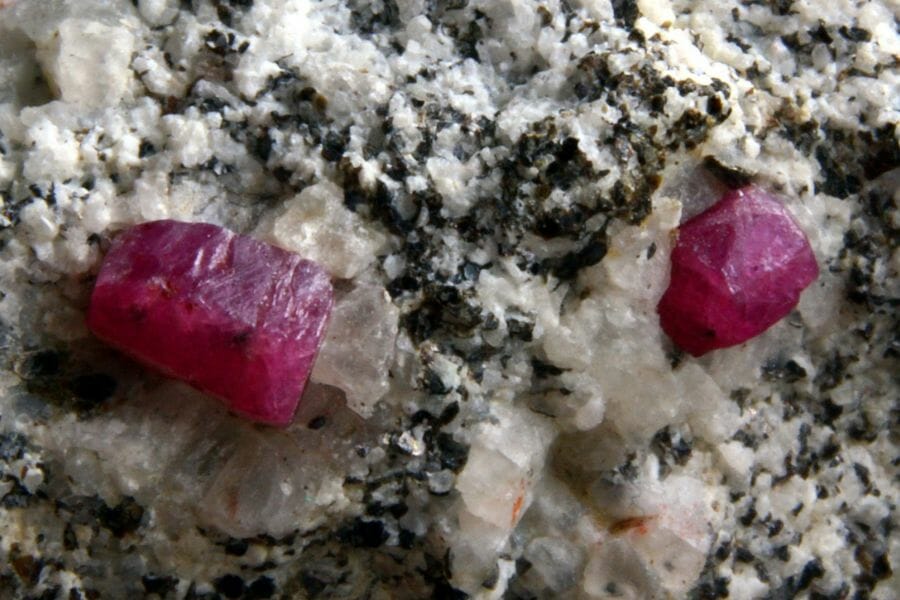
The Cowee Valley’s gravels carry real rubies and sapphires, sometimes in the same pans that show gold. Wet corundum looks like dull pink or blue pebbles, which is exactly how it gets thrown away. Our guide to gem mining in North Carolina lists the mines that let you dig them.
Quartz Crystals
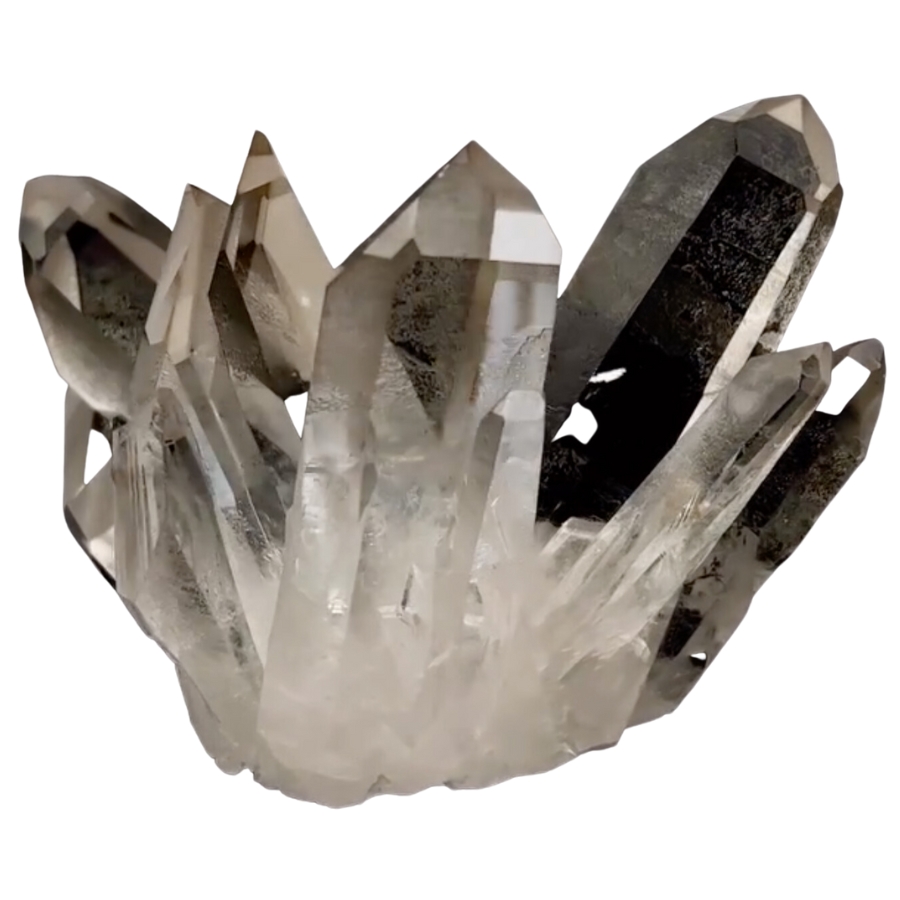
Quartz is gold’s favorite roommate, and Carolina creeks are full of it, from milky vein chunks to clear crystal points. Any quartz with rusty staining deserves a close look for gold. Our guide to quartz in North Carolina shows where the best crystals hide.
Garnet
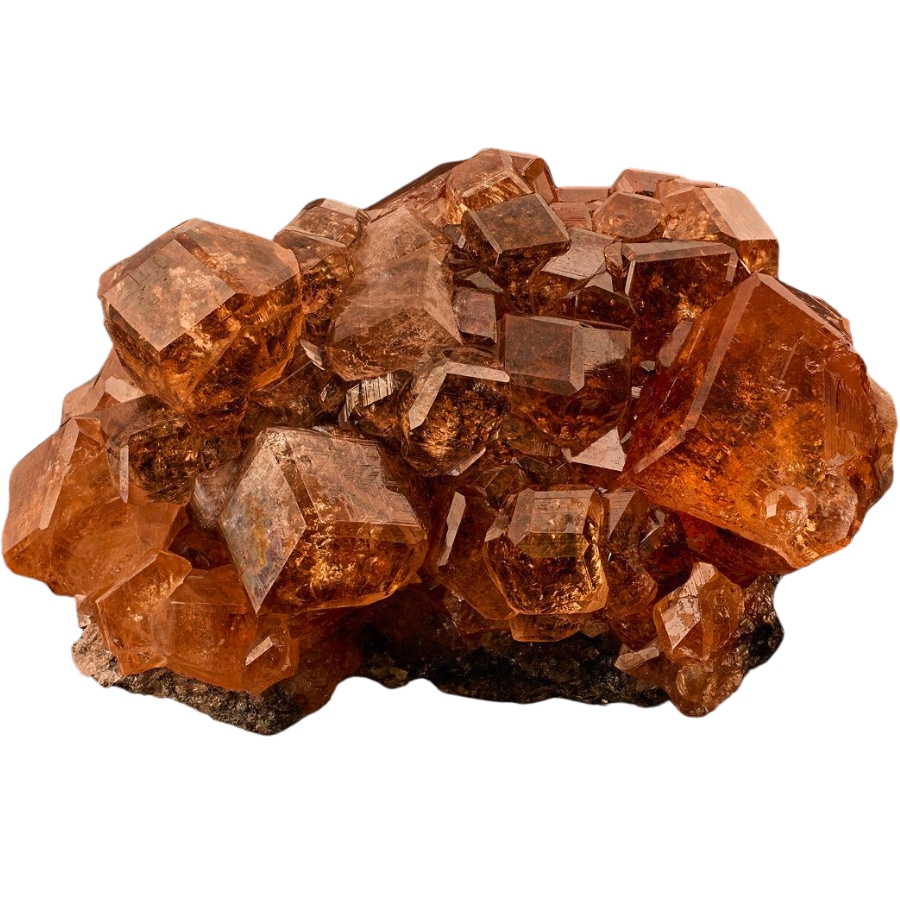
Those tiny red grains glittering in your black sand are garnets, and they are one of the most reliable gold indicators in the state. Most are sand sized, but the mountain counties produce cuttable stones. Save the biggest ones your pan shows you. Our guide to North Carolina rocks, minerals, and gems shows where the best ones turn up.
Kyanite
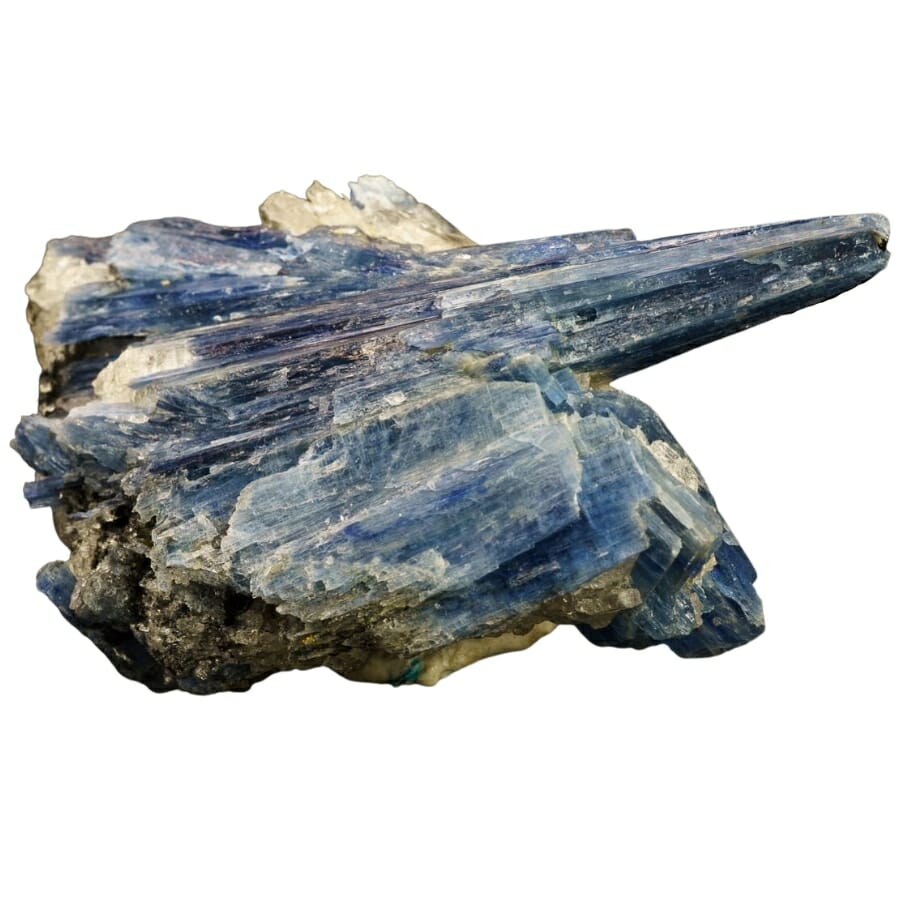
Kyanite forms sleek blue crystal blades, and it turns up all along the state’s metamorphic belts. Good blue blades are worth keeping for collectors. Our North Carolina rockhounding guide covers the best kyanite country.
Silver
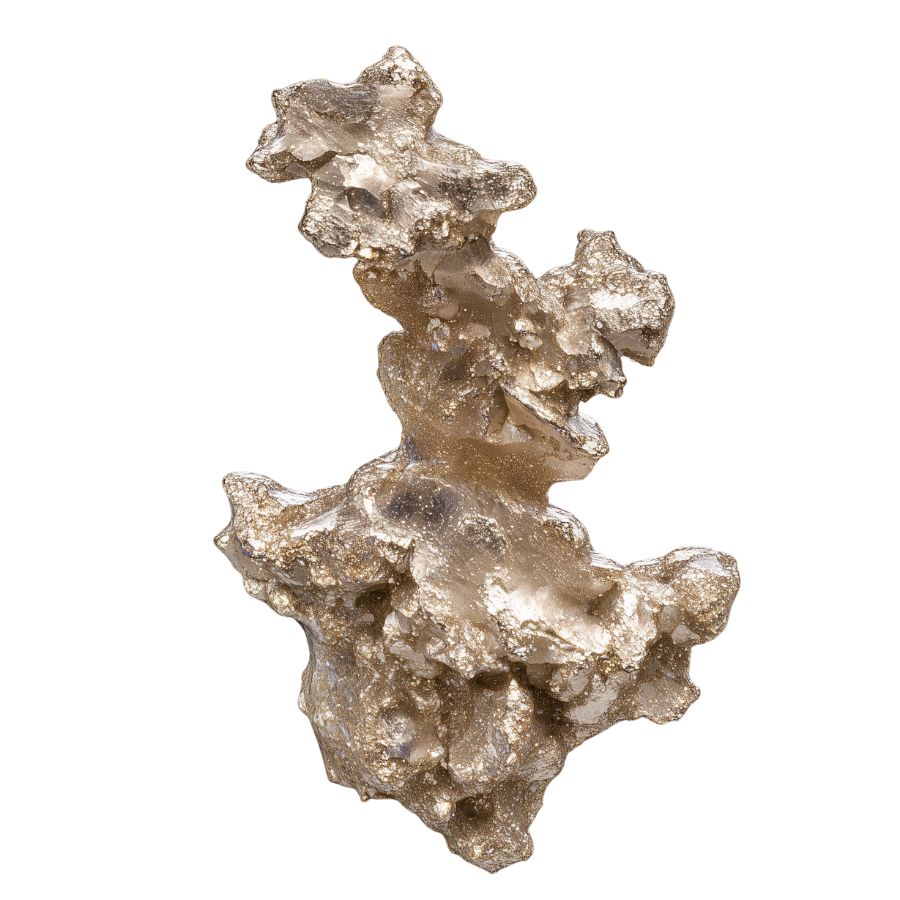
The state’s old mining belts produced silver alongside gold, most famously at the Silver Hill mine in Davidson County. Gray, heavy, tarnished metal in your pan deserves a second look. Our guide to silver in North Carolina covers where it hides.
Diamonds

A handful of small diamonds have reportedly come from North Carolina placer gravels, found by gold panners in the 1800s, including in Burke County’s gold country. They look like greasy glass pebbles, not sparkling gems. The full story is in our guide to diamonds in North Carolina.
Agate
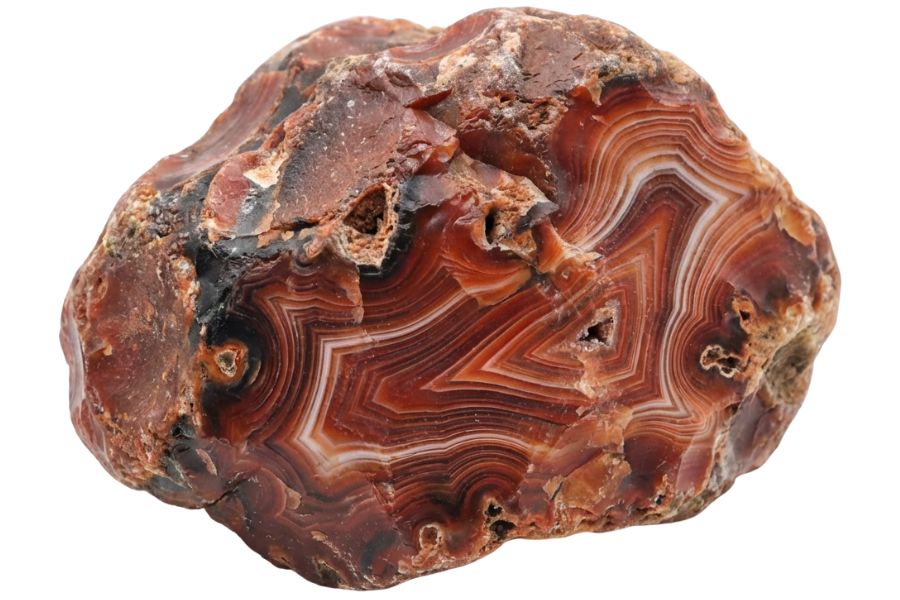
Banded agates turn up in creek gravel and plowed fields across the Piedmont. Wet agates glow with bands that dry rock hides, so check your oversized rocks before tossing them. Here is our full guide to finding agates in North Carolina.
Pyrite
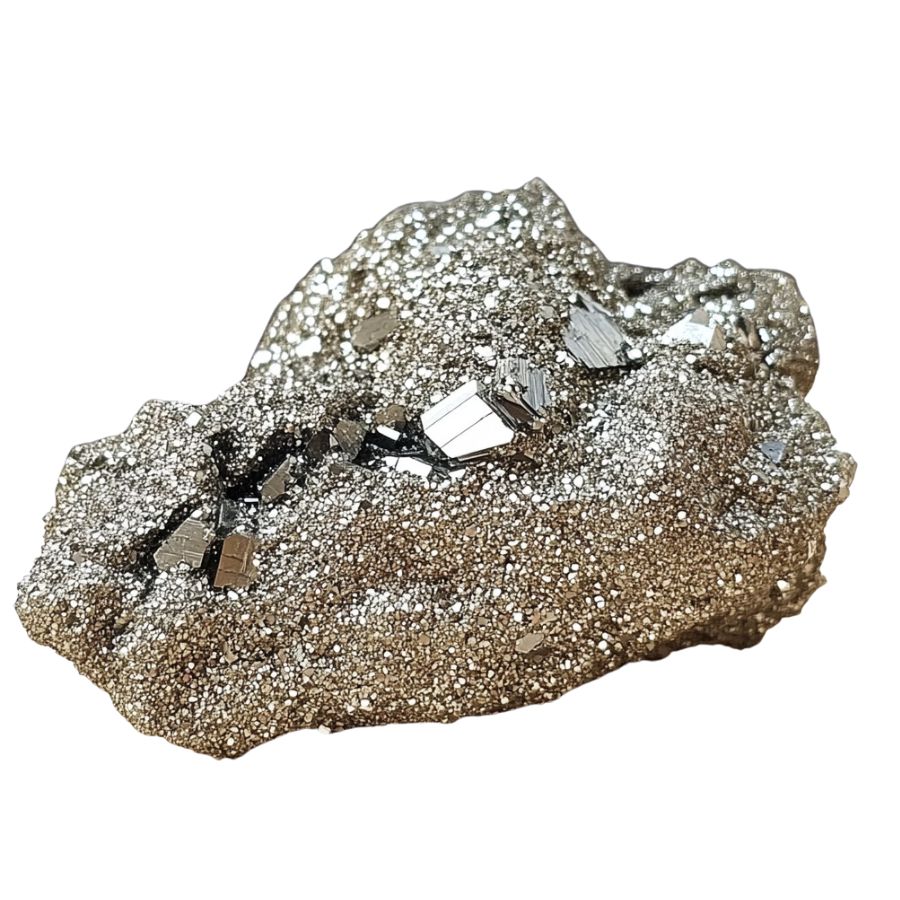
Yes, fool’s gold itself is worth keeping when it forms sharp brassy cubes. Good crystal clusters sell to collectors and look fantastic on a shelf. The old mining districts produce plenty, so save the best pieces you pan up.
Here is the thing about every mineral on this list. In a wet pan, half of them look like gray or dull pebbles, and people flick real treasure back into Carolina creeks every single weekend. The North and South Carolina Rocks and Minerals Field Guide exists so that never happens to you, with photo identification for more than 120 rocks and minerals you can check creekside in seconds.
Legal Rules for Gold Prospecting in North Carolina

Before you touch a pan to gravel, read this section. We are rockhounds, not lawyers, and nothing here is legal advice. Rules change, and staying legal is entirely your responsibility.
Private Property
Nearly the entire North Carolina gold belt is private land, and the landowner generally controls the streambed too. Wading up a creek without permission is trespassing even if you entered at a public bridge. Written permission is the most valuable tool you can carry, and in our experience rural landowners often say yes to a polite, specific ask.
State Parks, Historic Sites, and Public Land
North Carolina state parks prohibit collecting, which rules out places like Morrow Mountain and South Mountains state parks even though they sit in gold country. Reed Gold Mine allows panning only through its official paid program, never freelance digging. On national forest land, recreational hand panning is generally tolerated in the Uwharrie National Forest, but rules vary by district, wilderness areas are off limits, and the mountain forests have their own restrictions, so call the ranger district before you dig.
Equipment Restrictions
Hand pans and hand tools are the safe baseline everywhere panning is allowed. Suction dredges and other motorized equipment in streams trigger state water quality permitting and are effectively off the table for casual prospecting. Keep it to a pan, a shovel, and hand tools and you stay inside the hobby lane.
Play it safe on every trip. Confirm access directly with the landowner or managing agency before you dig, because boundaries and rules change without notice.
Some locations in this guide sit on land where collecting is limited, seasonal, or banned outright. When in doubt, treat a spot as look but do not take until you have confirmation in hand.
The best shortcut is local knowledge. North Carolina’s active prospecting community, including Gold Prospectors Association of America chapters with claims in the state, knows which landowners welcome panners, and a club membership pays for itself in access alone.
North Carolina Gold FAQ
Where can I find gold in North Carolina?
The best gold in North Carolina is in the Piedmont gold belt through Cabarrus, Stanly, and Montgomery counties, the South Mountains foothills, and the western mountain valleys. The Uwharrie River, Second Broad River, and Dutch Buffalo Creek are proven public favorites, along with pay mines like Reed Gold Mine, Cotton Patch, and Thermal City. The best places section above breaks down access for every spot.
Can you still find gold in North Carolina?
Yes, you can still find gold in North Carolina, and it was the leading gold producing state in America before the California rush. Fine placer gold, flakes, and even small nuggets still come from creeks draining the old mining belts. Pay to pan mines make it easy for beginners to find their first color in a day.
Is it legal to pan for gold in North Carolina?
Gold panning is legal in North Carolina with the landowner’s permission on private land, and recreational hand panning is generally tolerated in parts of the Uwharrie National Forest. State parks and state historic sites prohibit freelance collecting, though Reed Gold Mine runs an official paid panning program. Motorized dredging requires permits most hobbyists never pursue.
What is the largest gold nugget found in North Carolina?
The largest documented nugget was a 28 pound piece pulled from Little Meadow Creek at the Reed farm in Cabarrus County in 1803. The same creek produced the famous 17 pound nugget in 1799 that a farm family used as a doorstop for three years. Both finds sparked America’s first gold rush.
Do you have to pay to pan for gold in North Carolina?
No, but pay sites are the easiest way to start. Public options like the Uwharrie River cost nothing, while operations like Cotton Patch, Thermal City, and Lucky Strike charge modest fees for access to proven ground with equipment and help on site. Beginners usually find more gold faster at the pay mines.
Get Every Find In Your Pan Identified In Seconds
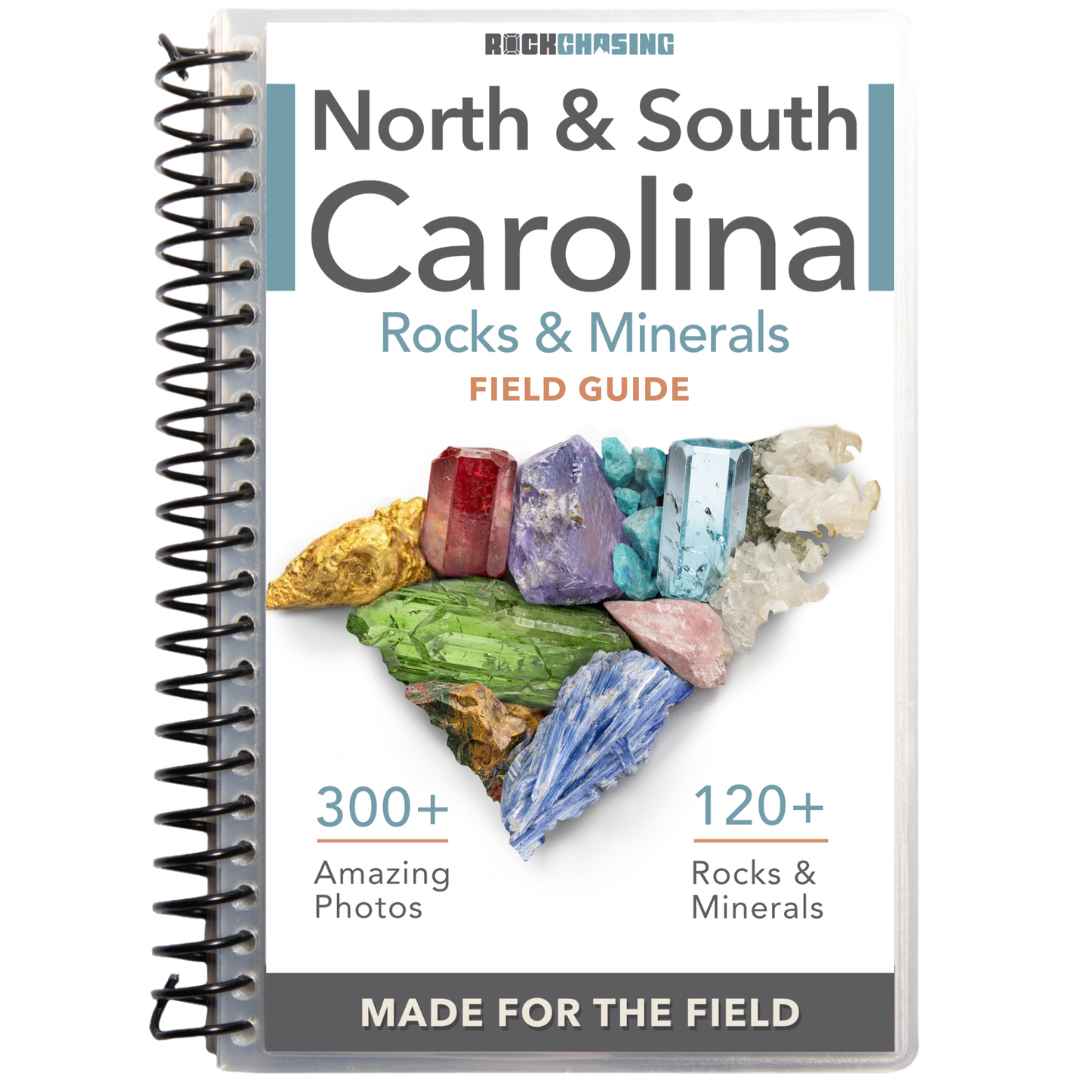
Every pan you pull out of a Carolina creek is a mystery until you can name what is in it, and in this state the mystery pebble might be a ruby, an emerald, or gold in quartz. The North and South Carolina Rocks and Minerals Field Guide identifies more than 120 rocks, minerals, and gemstones from the Carolinas with over 300 clear photos, printed waterproof so it works right at the water’s edge.