You can save yourself a lot of time and frustrating guesswork just by knowing where to find crystals in Washington. You have to zero in on the river valleys and mountain passes that actively produce quartz, striking amethyst scepters, and colorful agates.
Whether you are searching the dense Cascade foothills or exploring remote gravel bars, heading toward the right area guarantees you spend your day actively gathering specimens instead of exploring unproductive locations. Putting yourself in the right zone from the very beginning prevents a lot of unnecessary physical fatigue.
You want to dig where the crystals actually are. We are going to make your search much easier by pointing you in the right direction.
- The extensive local experience and understanding of our team
- Input from multiple local crystal hunters and crystal collecting groups
- The accessibility of the crystal mining locations
- Safety and potential hazards when collecting
- Private and public locations
- A desire to include locations for both experienced crystal hunters and those who are just starting out
Using these weights we think we’ve put together the best list out there for those who love finding new crystals for our collections!
The Types of Washington Crystals You Can Find
The crystals you’ll find in Washington are as beautiful as they are unique. From the stunning amethyst to the shimmering quartz, there’s something for every collector to covet. And the best part? You don’t need to be a geologist to find these precious stones. All you need is a keen eye, patience, and a sense of adventure! With so many crystal-rich locations to choose from, you’re sure to find your very own treasure trove in no time!
Calcite
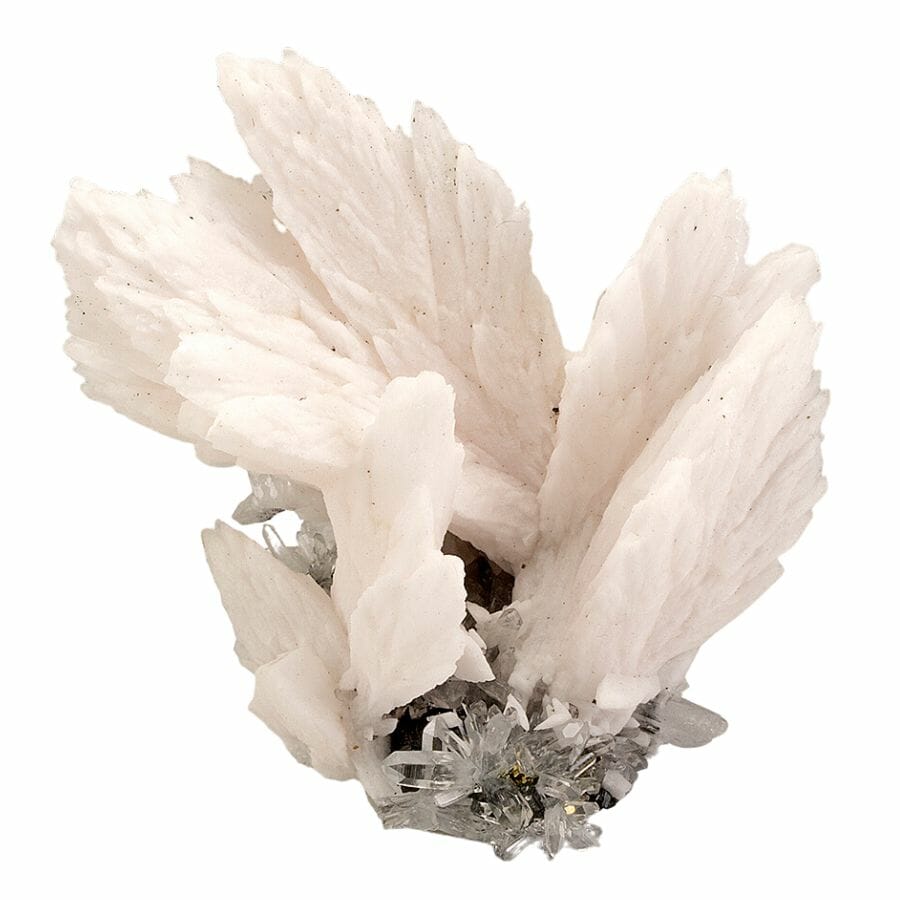
Calcite forms when limestone or marble changes under heat and pressure, or when hot water containing calcium and carbonate gets into cracks in the earth. In Washington State, you’ll often find clear or white calcite.
It can also be found in a bunch of other colors too, like red, yellow, and even blue.
Because it comes in different shapes and colors, calcite is great for collection and decoration. Its smooth texture and shiny surface can really catch the eye.
But calcite’s got more tricks up its sleeve! If you look through a clear piece of calcite, it can split light into two rays. This is called double refraction and it’s a neat party trick!
Calcite is also used in construction. It’s used to make cement and is even ground up to be used in the paint used to create white lines on the road!
Another interesting thing about calcite is that it reacts with a common acid, vinegar. It fizzes up when you drop vinegar on it! This reaction helps us identify it out in the field.
Where you can find calcite in Washington
Calcite can be found in the following places:
- Pullman area quarries, Pullman
- Lovitt Mine, Wenatchee Mining District
- Mount Vernon Mine, Skagit County
Epidote
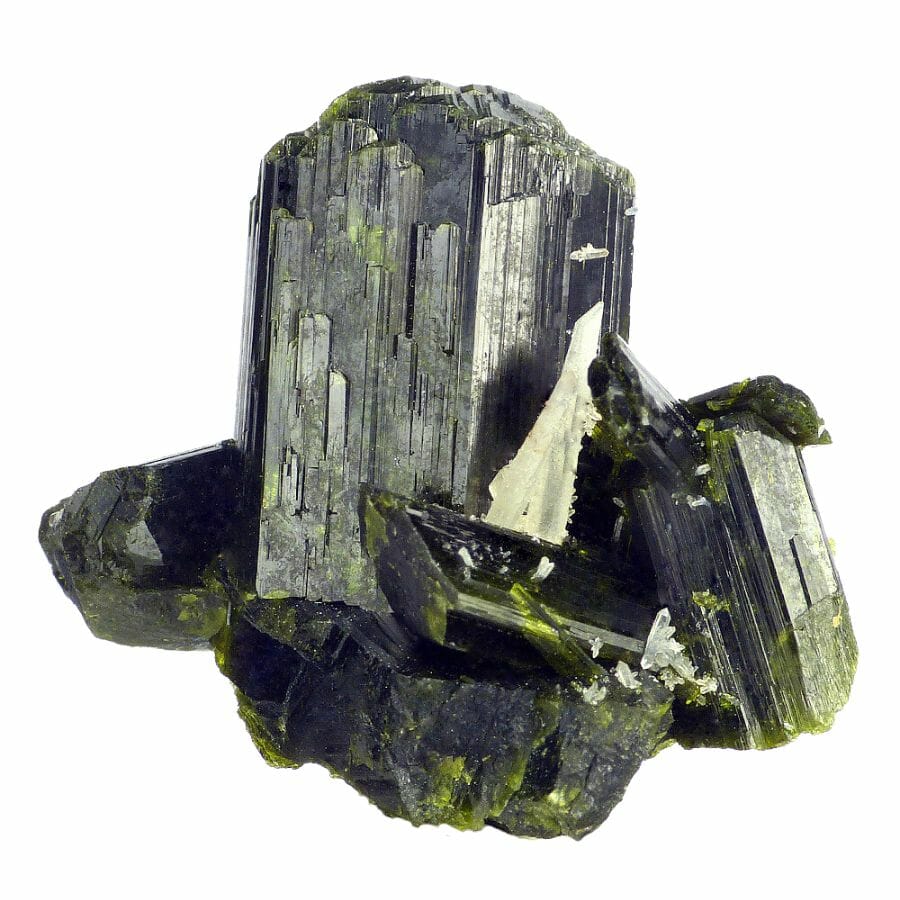
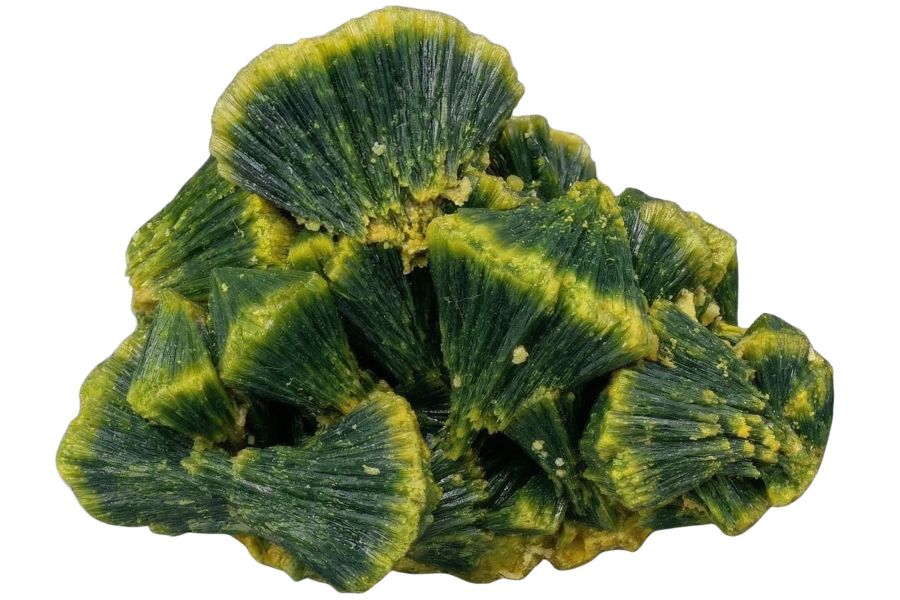
Epidote is one of the coolest crystals found in Washington. It forms when rocks like basalt and gabbro get altered by heat and fluids.
Over in Washington State, you’ll often find epidote in its green version. It can range from a yellow-green to a dark, bottle-green color. No two pieces of epidote are exactly the same, which makes it really interesting!
These pretty green hues make it a popular choice for people who love collecting minerals. They love its distinctive color and how different each piece can look. It’s a little bit like having a piece of the great outdoors right in your pocket!
Gem enthusiasts also sometimes use it to make jewelry. Its greenish glow can be the centerpiece of a necklace or the sparkle of a ring. Plus, it can form alongside other minerals.
Where you can find epidote in Washington
Look in the following areas to find epidote:
- Belcher Mine, Belcher Mining District
- Humpback Mountain Slump Zone, Hansen Creek, Snoqualmie Mining District
- Nevada Mine, Chewelah Mining District
Celestite
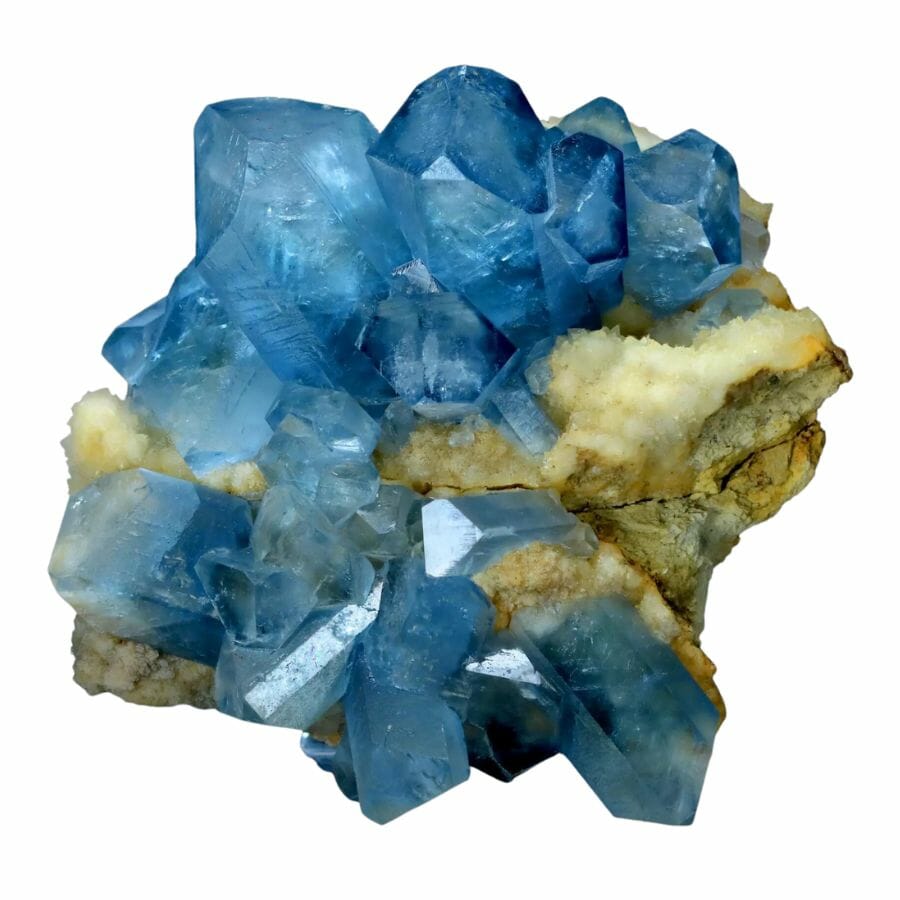
Celestite, also known as celestine, is one of those minerals that truly earns its name. Its name comes from the Latin word for “heavenly,” and boy, does it live up to that! It often comes in a sky-blue color, but it can also be colorless, white, or pale green.
Here’s the cool part: celestite forms in sedimentary rocks, usually in cavities and cracks. When groundwater packed with the right minerals gets into these spaces, it leaves behind celestite as it evaporates.
It’s not surprising that people are fascinated by celestite. For one thing, its color is something special, with its calming, sky-like hue. It’s a favorite among mineral collectors and is sometimes even used in jewelry.
But that’s not all! Celestite is also a scientific superstar. It’s rich in the element strontium, which is used in making fireworks and flares. When you see red fireworks, that’s strontium at work!
Where you can find celestite in Washington
Celestite can be found in these areas:
- Alverson Mine, Fidalgo Island
- Excelsior Creek Celestine Occurrence, Index Mining District
Realgar
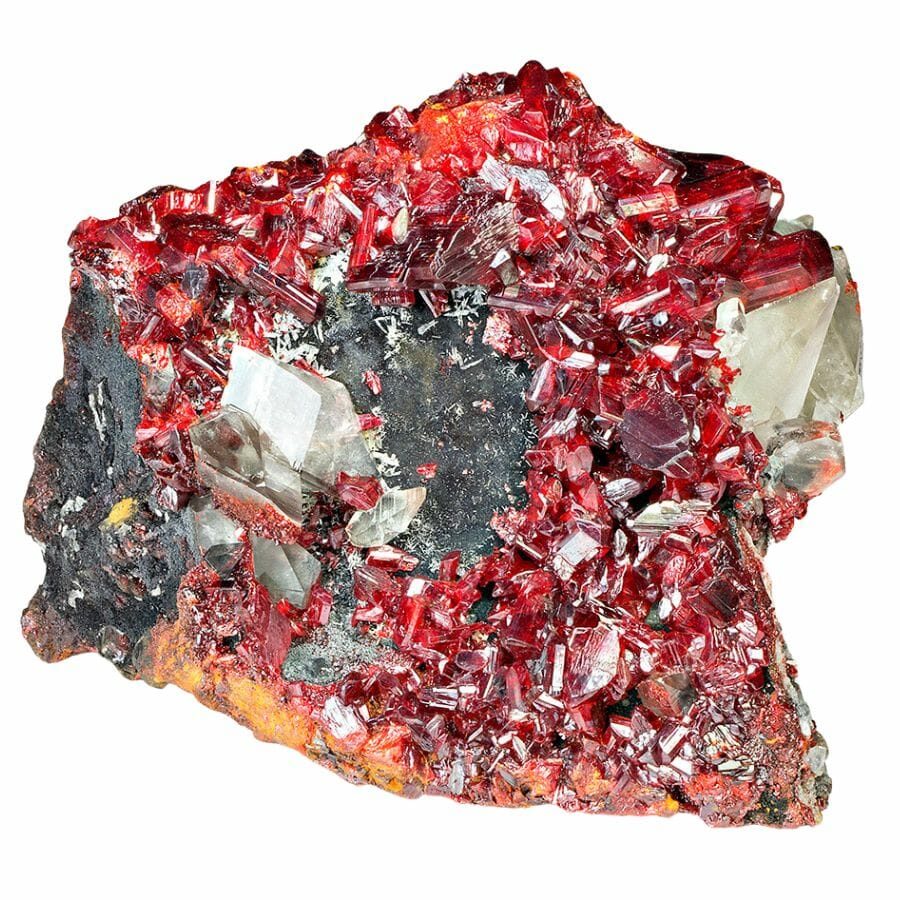
Realgar has a vibrant red-orange color that really makes it stand out. And guess what? It glows under ultraviolet light!
Realgar usually pops up in low-temperature hydrothermal veins. This means that hot water, packed with different minerals, pushes its way into cracks in the rocks. As the water cools down and evaporates, it leaves behind minerals like realgar.
In Washington State, realgar might be found alongside other cool minerals like orpiment and stibnite.
Realgar isn’t just pretty to look at. It’s also got some practical uses. In the past, it was used to make a bright red paint. But here’s a tip: you wouldn’t want to paint your bedroom with it because realgar contains arsenic, which can be harmful.
For us rock lovers and scientists, realgar is also a neat clue about what’s going on underground. By studying where and how it forms, we can learn more about the geological conditions of the area.
Where you can find realgar in Washington
Look in these spots if you want to find realgar:
- Royal Reward Mine Area, Green River Area
- Mineral Creek Mine, Lewis County
- Mystery Mine, Monte Cristo Mining District, Snohomish County
Fluorite
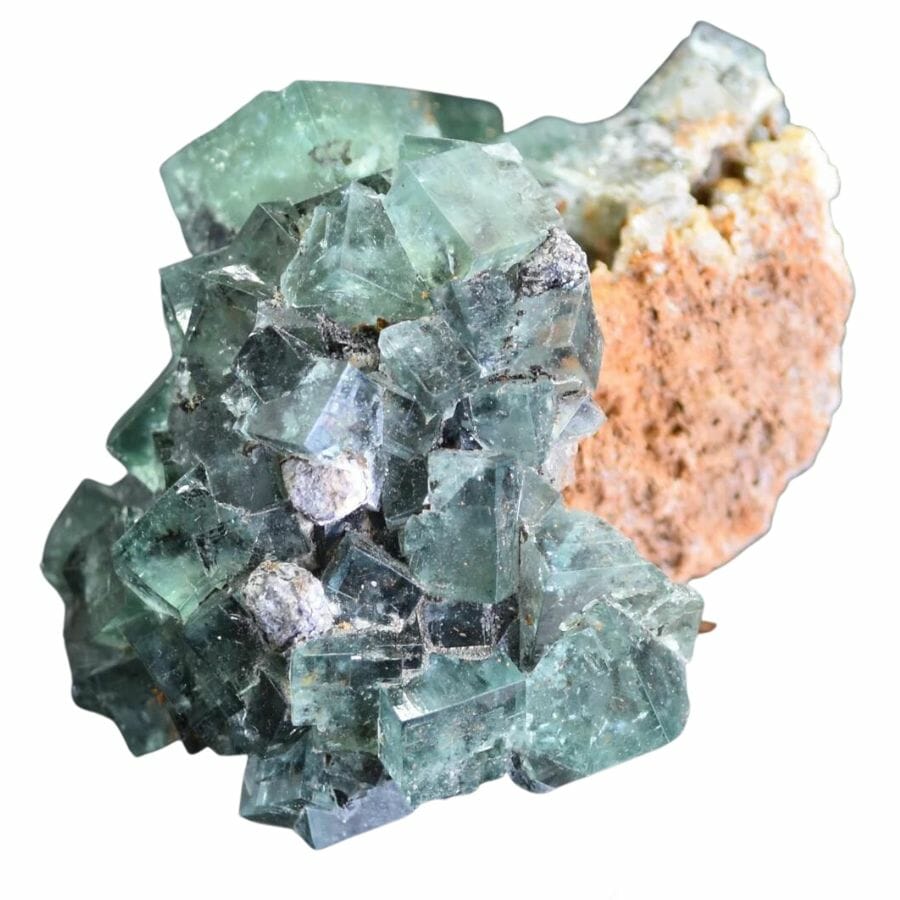
Time to explore a spectacular mineral: fluorite! It’s famous for its range of colors that include purple, blue, green, yellow, and more. It’s like a rainbow hiding in a rock!
Fluorite usually forms in places where rocks are heated up by the earth’s natural heat, causing different minerals to dissolve into hot water.
As this water cools, the minerals start to solidify and fluorite is born. It’s kind of like how you can see sugar crystals form when you make rock candy!
In Washington State, we find fluorite in a range of places. It could be in veins of other rocks or in large chunks, like a buried treasure. The cool thing about fluorite in Washington is that it can show a huge range of colors, making it a real feast for the eyes!
People value fluorite for a bunch of reasons. Its many colors make it a hit for jewelry and decoration.
But this mineral is more than just a pretty face! Fluorite is used in making special lenses for telescopes and cameras, because it can help reduce distortion and make the picture clearer.
Where you can find fluorite in Washington
You can find fluorite if you look in these areas:
- Quartz Creek Roadcut, Lewis River
- Mitchem Mine, San Poil Mining District
- Phalen Lake Molybdenite Prospect, Northport Mining District
Amethyst
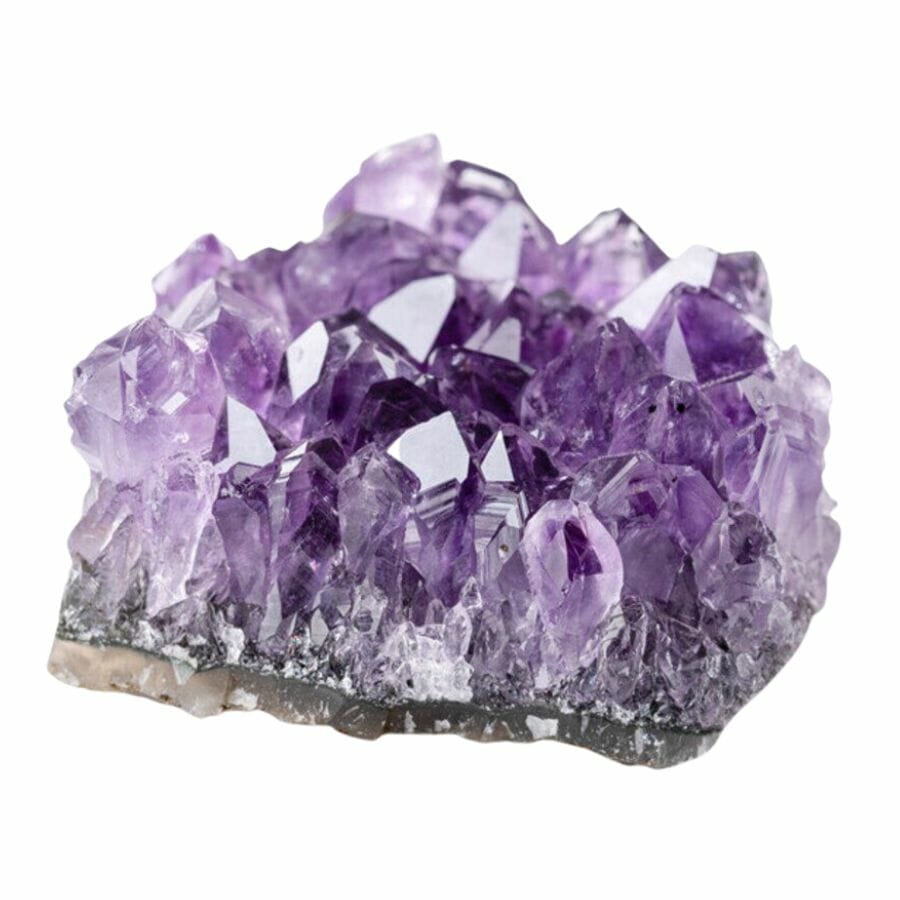
Amethyst is a type of quartz, but it has a magical purple color that ranges from light lavender to deep violet. This hue comes from iron and other trace elements that get caught up in the mix as the crystal forms.
Imagine water that’s rich with dissolved quartz seeping into empty spaces in rocks, then slowly cooling and crystallizing over thousands, or even millions, of years. That’s how we get these gorgeous amethyst crystals!
Amethyst is one of the most popular rocks and minerals found in Washington for many reasons. First, its stunning purple color makes it a favorite for jewelry and decoration. It’s also the birthstone for February, so it makes a great gift.
Some folks believe it has special properties, like bringing calm and balance.
And it’s not just about beauty or beliefs. Amethyst can also give scientists clues about the geological conditions of the past. So, it’s not just a pretty face – it’s a little purple history book too!
Where you can find amethyst in Washington
The following places can be good spots to find amethyst:
- Abernathy Pit, Cowlitz County
- Red Top Mountain, Swauk Mining District
- Walker Valley, Skagit County
Washington has a wealth of amethyst. See our guide to the best spots to find this crystal:
Zircon
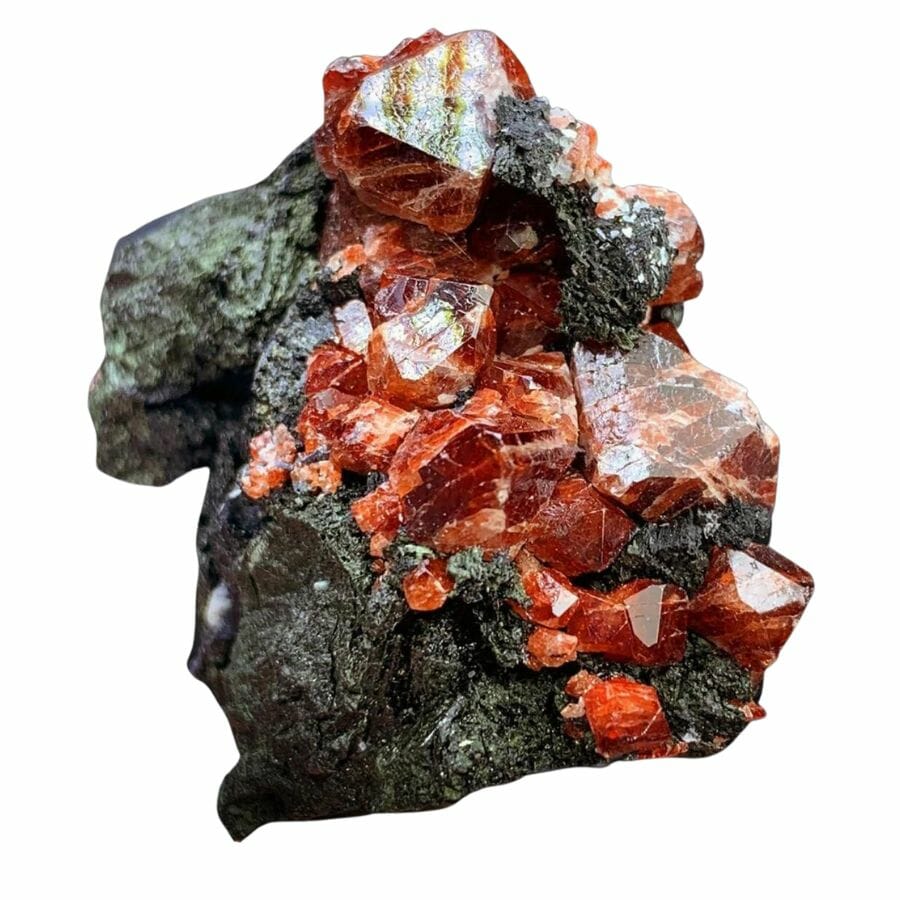
Zircon is an amazing gemstone that sparkles and shines in a way that can easily be mistaken for diamonds!
This gem has been around for a long time and is known for its striking colors, which can range from clear to deep red, blue, green, and many shades in between.
This crystal forms in molten rock, or magma. When this magma cools and hardens into rock, zircon crystals begin to form. The magic ingredient that helps make zircon is zirconium, a special element that’s mixed into the molten rock.
Zircon is one of the most popular crystals found in Washington, and for good reason. First, it’s durable. It can last a long time without getting scratched or damaged.
Second, because of its brilliance, it’s often used in jewelry as an affordable alternative to more expensive stones.
If you like diamonds but not their price tag, zircons are a great alternative. They’re not as tough as diamonds, but they’re tough enough to be worn semi-regularly.
Where you can find zircon in Washington
You can find zircon deposits in these places:
- Snake River placer, Clarkston
- Cedar Creek Placer, Clallam County
- Crawfish Lake Area, Okanogan County
Tourmaline
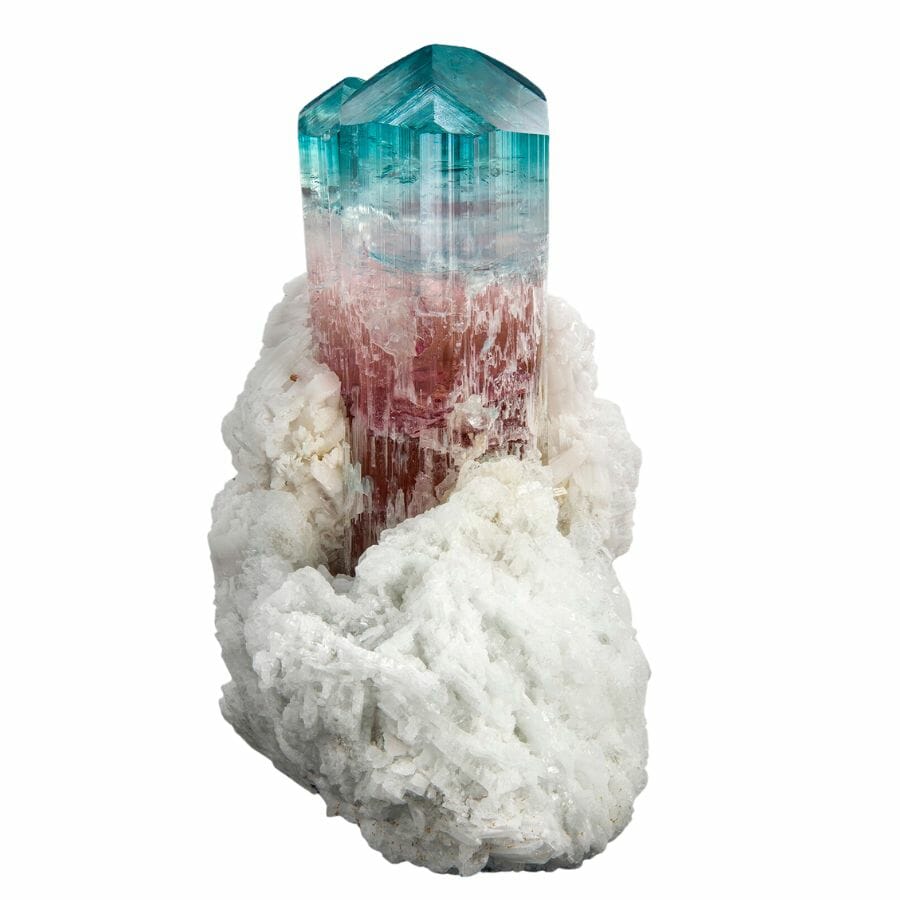
Tourmaline is one of the most vibrant gemstones found in Washington. It can come in almost every color you can think of, and even a single crystal can show multiple colors!
It forms in many types of rocks when elements like boron get together with silica, the stuff that makes up sand.
In Washington State, you’ll find different colors of tourmaline, like green, black, and sometimes pink. Each one has its own unique shade and sheen, making each piece of tourmaline one-of-a-kind!
There are a lot of reasons why tourmaline is valued by many. With so many colors, it’s a favorite for jewelry.
But that’s not all. Tourmaline has an interesting trick up its sleeve. When you heat it or squeeze it, it can generate electricity. This property is used in some pressure-measuring equipment.
Where you can find tourmaline in Washington
You can find tourmaline in these areas:
- Washington Metals Mine, Stevens County
- Sunrise Mine, North Fork of the Sultan River, Sultan Mining District
- Polar Star Mine, Black Falls
Rhodonite
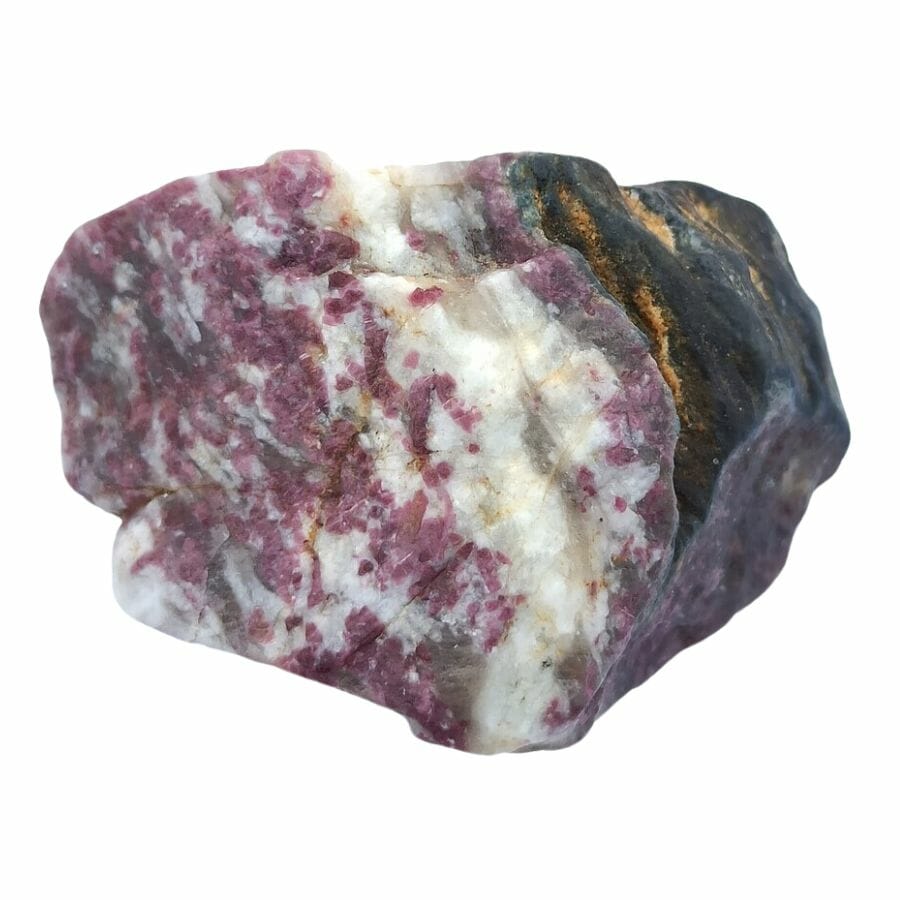
If you’ve never seen rhodonite before, picture a stone that’s a rosy pink color with black veins running through it. These colors make for quite an interesting combination!
Rhodonite is a manganese silicate mineral. Here’s how it forms: when magma from deep inside the Earth cools down, the molten rock starts to solidify. Some minerals crystallize faster than others. Manganese is one of the elements that crystallize last.
With time, if there’s manganese, silica, and a few other ingredients around, they can join together and form rhodonite.
There are many reasons why rhodonite is pretty popular. First off, it’s just plain beautiful. That pink and black color combination is really something else. People love to use it for jewelry and decorative items.
But there’s also a practical side to rhodonite. It’s quite a tough mineral, which means it’s good for things that need to withstand a bit of wear and tear.
Where you can find rhodonite in Washington
Here are the places where you can find rhodonite:
- Great Western Mine, Nespelem Mining District
- Skunk Creek 19 Mine, Quinault Lake
- Hurricane Mine, Clallam County
Pyrite
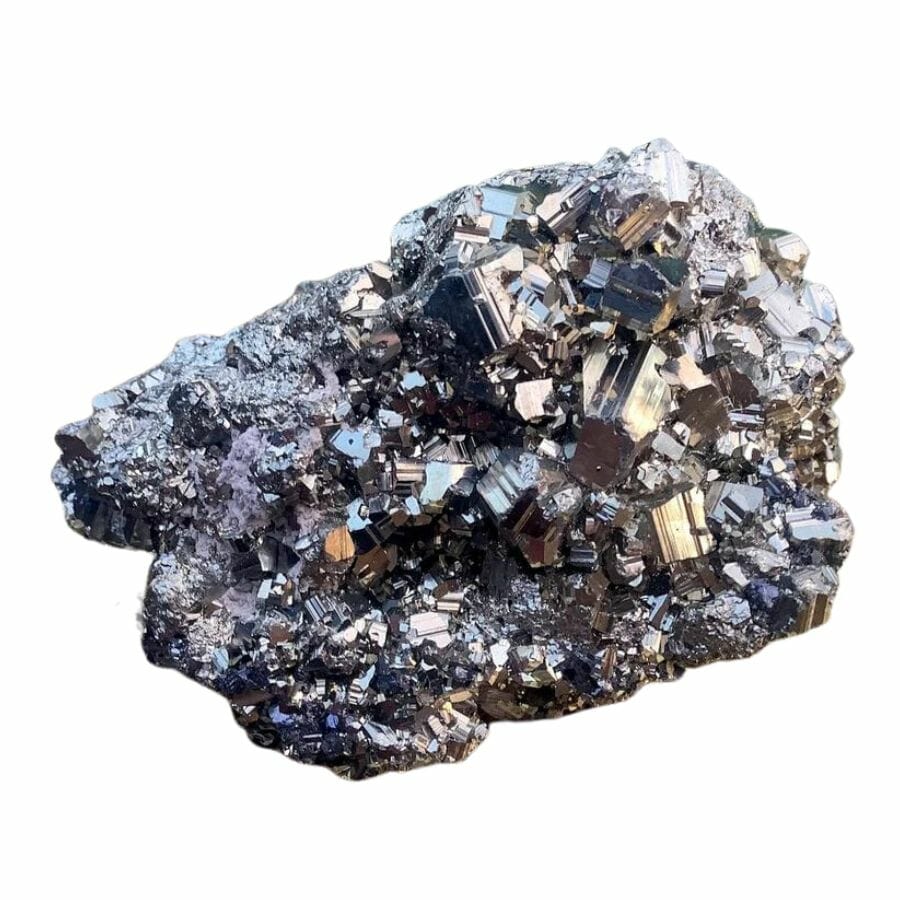
Pyrite is a mineral that really knows how to shine! Often called “Fool’s Gold,” it’s not as valuable as real gold, but it still has its own special sparkle. Pyrite forms when sulfur and iron get together in the earth under just the right conditions.
You’ll probably find pyrite in a couple of different shapes. It can look like little cubes or nuggets, and at first glance, it does look a bit like gold!
Because of its metallic sheen, pyrite can be used in jewelry. However, it’s often mixed with silver because it’s too brittle on its own.
It also has other practical uses. It can be used to make sulfuric acid, which is used in all kinds of industries, from making fertilizers to cleaning metals.
And here’s a fun fact: in the old days, pyrite was used to create sparks. If you struck it against flint, it would spark and could be used to start a fire!
Where you can find pyrite in Washington
Jasper can be found in these areas:
- Silver Hill Mine, Silver Hill
- Cadman Quarry, Monroe
- Weyerhaeuser Lincoln Creek Quarry, Doty Hills
Quartz
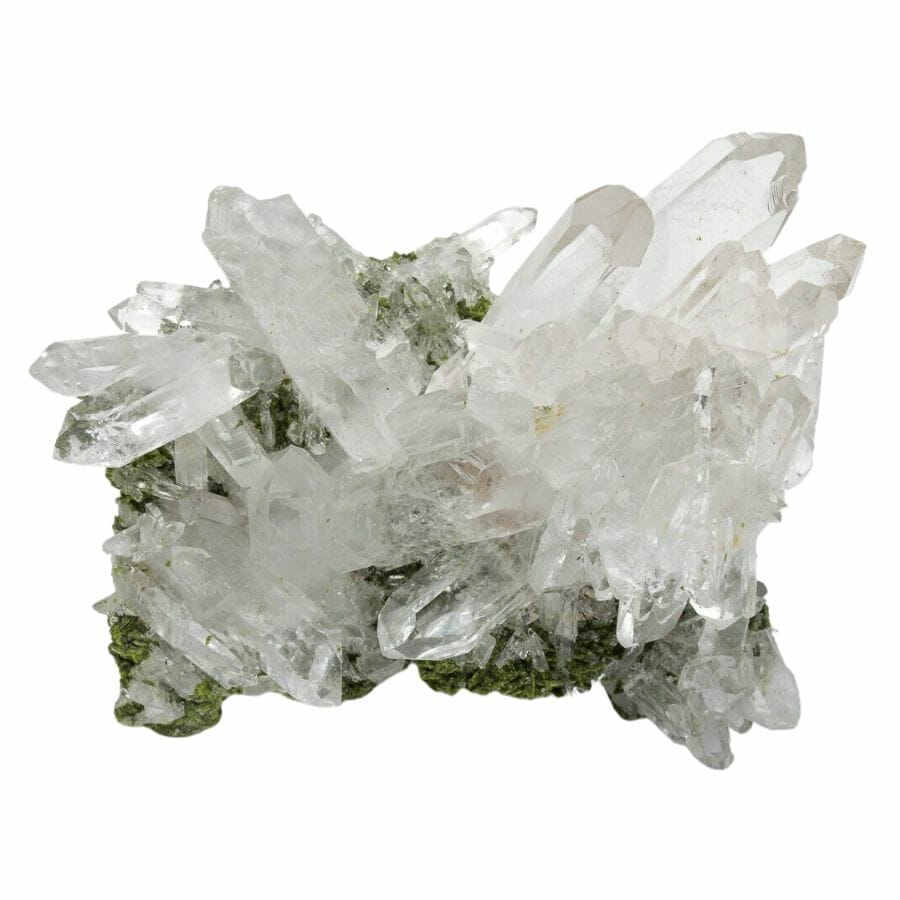
Quartz is like the all-star player in the rock and mineral world. It’s super common, but that doesn’t make it any less awesome. Quartz forms when silicon and oxygen, two of the most abundant elements on Earth, team up.
This can happen in many different environments, like inside volcanic rocks, or when hot, mineral-rich water cools down.
In Washington State, there are a few different kinds of quartz that you might come across. There’s milky quartz, which is white and kind of looks like a cloud trapped in a rock.
Then there’s clear quartz, which you can see right through, just like a piece of glass.
Quartz is beautiful and versatile, and you can use it in a variety of ways. It can be carved and polished into all sorts of shapes for jewelry and home decorations. And since it’s pretty tough, it doesn’t scratch or break easily.
It’s also used in electronics because it can generate electricity when pressure is applied, a feature known as piezoelectricity.
There are a lot of similarities between quartz and calcite, which means that they can be difficult to tell apart at times. This guide can tell you the differences and similarities between the two:
Where you can find quartz in Washington
Explore the spots below to find quartz:
- Hall Creek Basin Prospect, Covada Mining District
- Wildcat Creek Claim, Yakima County
- Lawrence Prospect, Skagit County
Malachite
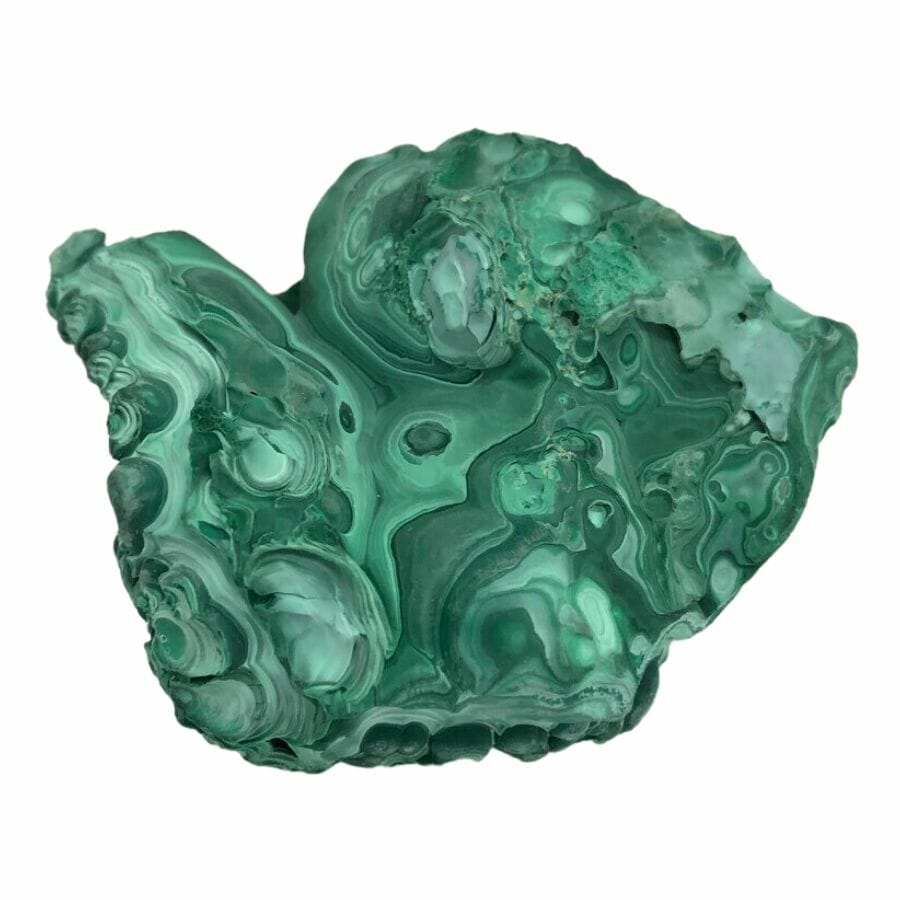
Malachite is a green gem known for its vibrant color and intricate patterns that can remind you of a peacock’s feathers. It’s formed when copper minerals are changed by water and carbon dioxide in the ground.
In Washington State, you can usually find malachite in the form of green crusts or round shapes called “botryoidal” formations. This means that they look a bit like a bunch of grapes.
It’s easy to see why malachite is so popular. For starters, it’s downright beautiful. Its green color and unique patterns make it a favorite for jewelry and ornaments. It can be cut and polished into beautiful shapes that are sure to turn heads!
But malachite isn’t just good-looking. It’s also a valuable clue for finding copper deposits, because remember, it forms from copper minerals. That makes it really interesting to miners and geologists.
Plus, malachite has been used since ancient times for pigments in paint!
Where you can find malachite in Washington
These are the places where you can find malachite:
- Madsen Quarry, Chewelah Mining District
- Johnsburg Mine, Cascade River, Cascade Mining District
- Margaret Mine, Goat Mountain
The Best Locations For Crystal Mining in Washington
We’ve narrowed down Washington’s wonderful spots where you can find crystals to our top 5, and we know you’ll get excited to visit them!
Always Confirm Access and Collection Rules!
Before heading out to any of the locations on our list you need to confirm access requirements and collection rules for both public and private locations directly with the location. We haven’t personally verified every location and the access requirements and collection rules often change without notice.
Many of the locations we mention will not allow collecting but are still great places for those who love to find beautiful rocks and minerals in the wild without keeping them. We also can’t guarantee you will find anything in these locations since they are constantly changing.
Always get updated information directly from the source ahead of time to ensure responsible rockhounding. If you want even more current options it’s always a good idea to contact local rock and mineral clubs and groups
Bell Mountain Mine is Our Favorite Crystal Mine in Washington
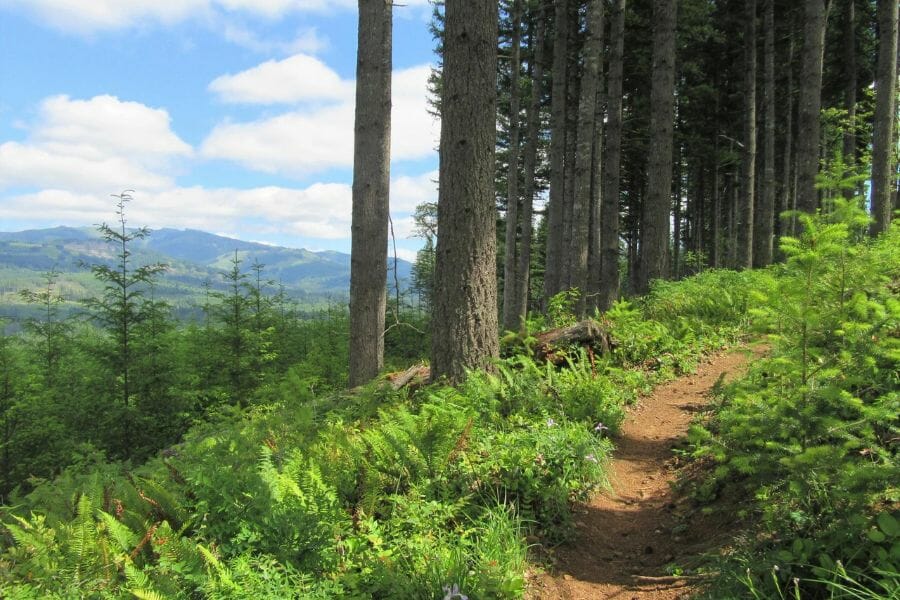
Grays Harbor County, WA
Bell Mountain Mine is a well-known location in Washington for finding beautiful and unique crystals. It has a rich history dates back to the early 1900s when it was first discovered by miners looking for copper. Although the mine is no longer operational, it has become a popular spot for rockhounds and crystal enthusiasts worldwide. It’s among the top locations for gem mining in Washington.
Visitors to Bell Mountain Mine can expect to find some truly unique and stunning crystals. The colors and shapes of the crystals found here are unlike any other, and they make for excellent additions to any rock collection. With so many minerals to discover, it’s no wonder Bell Mountain Mine is such a popular destination for crystal hunters.
Where we found crystals at the Bell Mountain Mine
The area surrounding Bell Mountain Mine was where we found the most agates.
If you want REAL results finding incredible rocks and minerals you need one of these 👇👇👇

Finding the coolest rocks in isn’t luck, it's knowing what to look for. Thousands of your fellow rock hunters are already carrying Rock Chasing field guides. Maybe it's time you joined the community.
Lightweight, mud-proof, and packed with clear photos, it’s become the go-to tool for anyone interested discovering what’s hidden under our red dirt and what they've already found.
Join them, and make your next rockhounding trip actually pay off.
What makes it different:
- 📍 Find and identify 140 incredible crystals, rocks, gemstones, minerals, and geodes across the USA
- 🚙 Field-tested across America's rivers, ranchlands, mountains, and roadcuts
- 📘 Heavy duty laminated pages resist dust, sweat, and water
- 🧠 Zero fluff — just clear visuals and straight-to-the-point info
- ⭐ Rated 4.8★ by real collectors who actually use it in the field
Crescent Beach
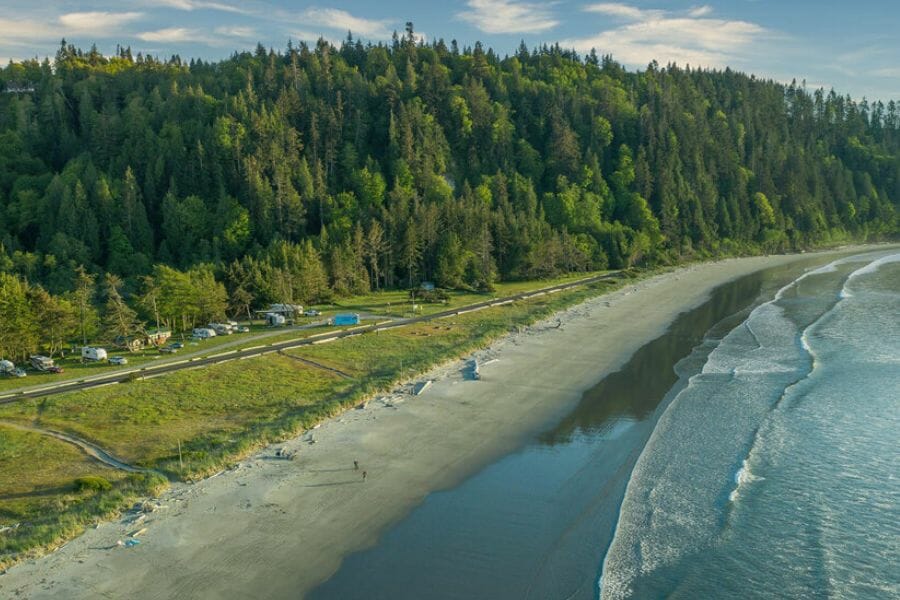
Clallam County, WA
Crescent Beach is a picturesque location in Washington that is beloved by crystal hunters and beachgoers alike. Located on the Olympic Peninsula, Crescent Beach has a rich history that dates back to the early 1900s when it was first discovered as a site for crystal hunting. The beach is known for its vast stretches of sand, towering cliffs, and beautiful tide pools, making it a popular destination for adventurers and nature lovers.
The geology of Crescent Beach is diverse and fascinating. The area is home to a mix of sedimentary and volcanic rocks, creating the perfect environment for crystal formation. The colors and patterns of the crystals found here are truly unique and stunning.
Where we found crystals at Crescent Beach
There are numerous agate and jasper crystals in the gravels of Crescent Beach. You can check how much is crystal worth through this guide.
Gifford Pinchot National Forest
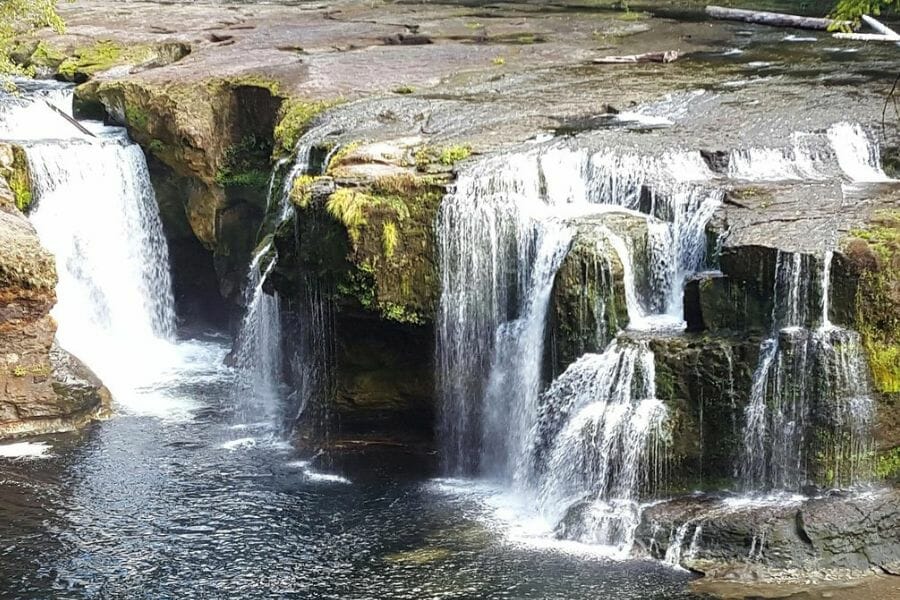
Skamania County, WA
Gifford Pinchot National Forest is a hidden gem in Washington that nature enthusiasts and crystal hunters alike love. Named after the first Chief of the United States Forest Service, Gifford Pinchot, the forest has a rich history that dates back to the early 1900s when it was established as a national forest. Located in the southwestern part of the state, Gifford Pinchot National Forest is a prime destination for adventurers and explorers.
The Gifford Pinchot Nationa Forest has a rich and fascinating geology and geography. A mixture of volcanic and sedimentary rocks found in the forest has produced the ideal conditions for crystal growth. The crystals that have been discovered here have really amazing colors and patterns.
Where we found crystals at the Gifford Pinchot National Forest
Most of the crystals we discovered in the Gifford Pinchot National Forest area were made of agates, carnelians, chalcedony, jaspers, and quartz.
Greens Creek
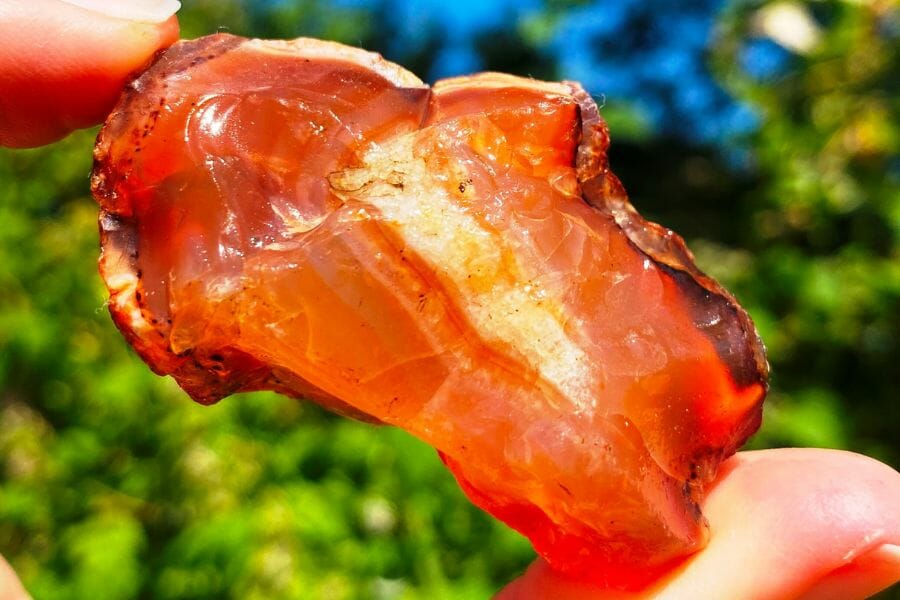
Pacific County, WA
If you’re a crystal fanatic looking for your next adventure, you’ll definitely want to check out Greens Creek in Washington state. This locale boasts an abundance of precious minerals and gemstones, making it a prime destination for crystal hunting.
Located in the Cascade Mountains, Greens Creek is surrounded by rugged terrain and narrow valleys formed by the mountains’ uplift and subsequent erosion. The area’s geology is mainly composed of volcanic and metamorphic rocks, like gneiss and schist, that are thought to have been formed during the Late Cretaceous to early Tertiary magmatic and hydrothermal activity.
The area’s unique geological conditions make Greens Creek an ideal place to find crystals. With some digging and patience, you can uncover some stunning gems that will make any rock collection shine.
Where we found crystals at Greens Creek
You will find agate, carnelian, chalcedony, and jasper crystals at every creek bank and bed along Greens Creek.
Forty-Five Mine
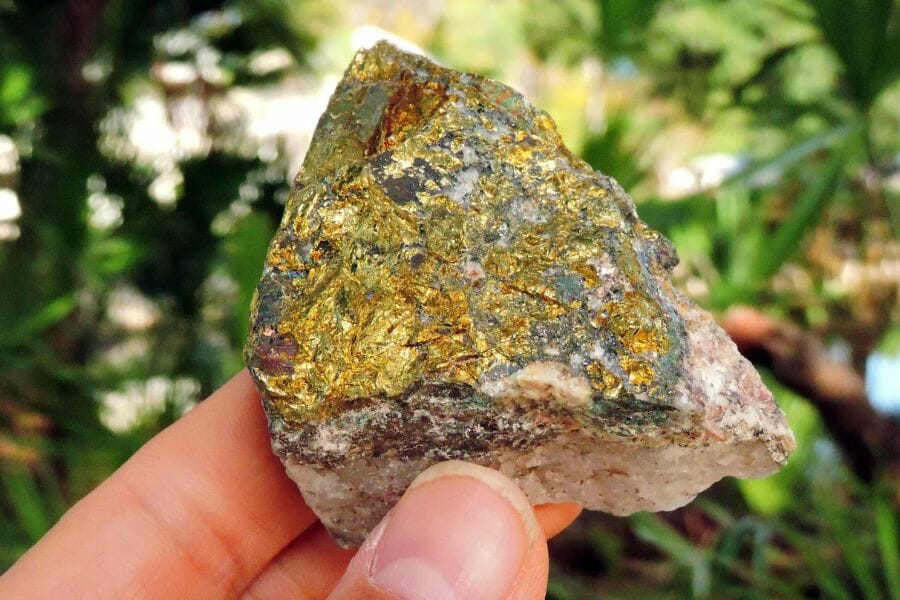
Sultan Mining District in Snohomish County
Forty-Five Mine is a hotspot for rockhounds and crystal enthusiasts. The area is known for its unique geology, with various minerals and crystals in the region. The mine is on a quartz vein, responsible for abundant beautiful and rare crystals.
Forty-Five Mine is the perfect spot to get your hands dirty! The mine allows you to dig for your crystals and minerals, creating an exciting and rewarding experience. Forty-Five Mine also offers stunning views of the surrounding mountains and valleys, making for a picturesque setting to spend the day.
Where we found crystals at Forty-Five Mine
We had the best luck finding chalcopyrite crystals at Forty-five Mine.
Our Other Favorite Places For Crystal Hunting
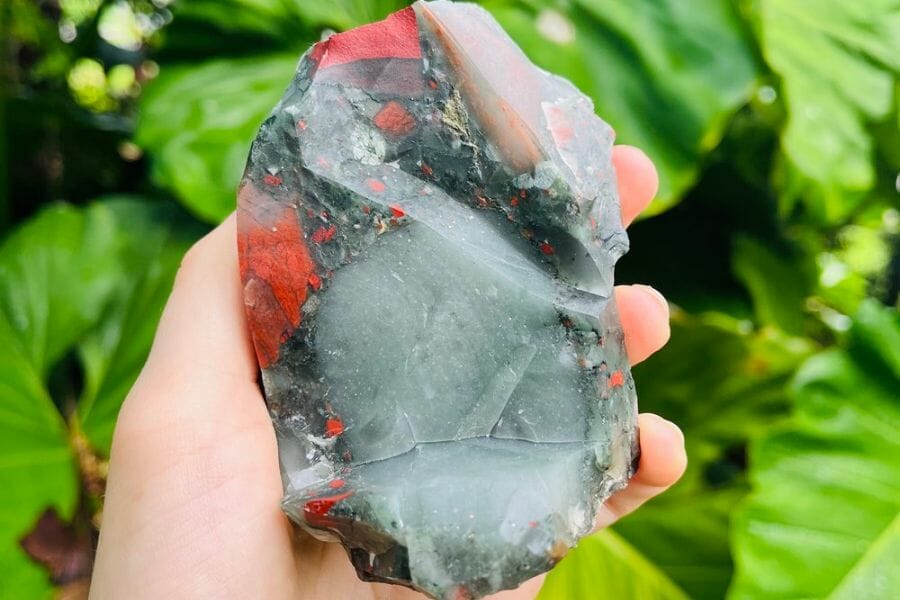
You can look for crystals in this area in addition to the top five spots mentioned above. This state is very prosperous, thus, there are many different locations where you can look for crystals and find geodes in Washington.
Where you can find crystals for free in Washington
The finest places to find crystals in this state often need payment before digging, but there are certain places where you won’t have to pay anything to seek these natural wonders.
| County | Location |
| Chelan | Railroad Creek for agate and jasper |
| Clallam | Gravels of the Dungeness River for agates and jasper |
| Clallam | Lake Crescent and ocean beach gravels of Soleduck River for agate and jasper |
| Cowlitz | Walter Swift farmhouse for bloodstone and carnelian |
| Douglas | Rock Island Dam for pyrite |
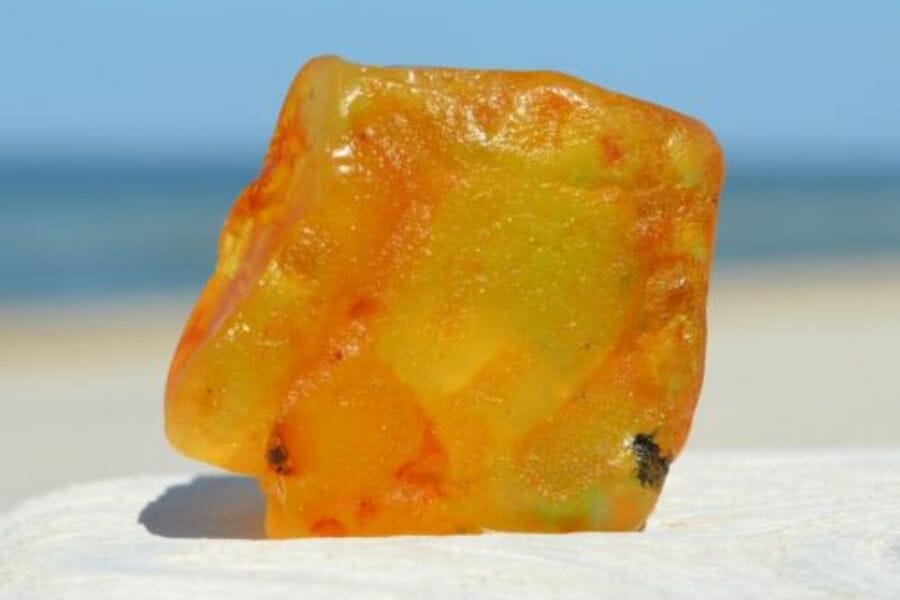
| Kings | Fifteen Mile Creek for amber |
| Lewis | Area road cuts and banks of Lucas Creek for agate, carnelian, chalcedony, and jasper |
| Okanogan | Salmon River and Happy Hill for aventurine and quartz |
| Pend Oreille | Sacheen Lake for garnet |
| Pierce | Sigmund Ranch for amethyst |
| Snohomish | Deer Creek for jade |
| Spokane | Little Spokane River for garnet and quartz |
Other great places to dig for crystals
We’ve compiled a list of several places you could go to if you don’t mind spending to search for amazing crystals. Remember to verify the costs before going because they may change depending on the season.
| County | Location |
| Lewis | Mercury Mines for chalcedony |
| Pierce | Carbon River mines for pyrite |
| Skagit | Skagit River mines for hematite |
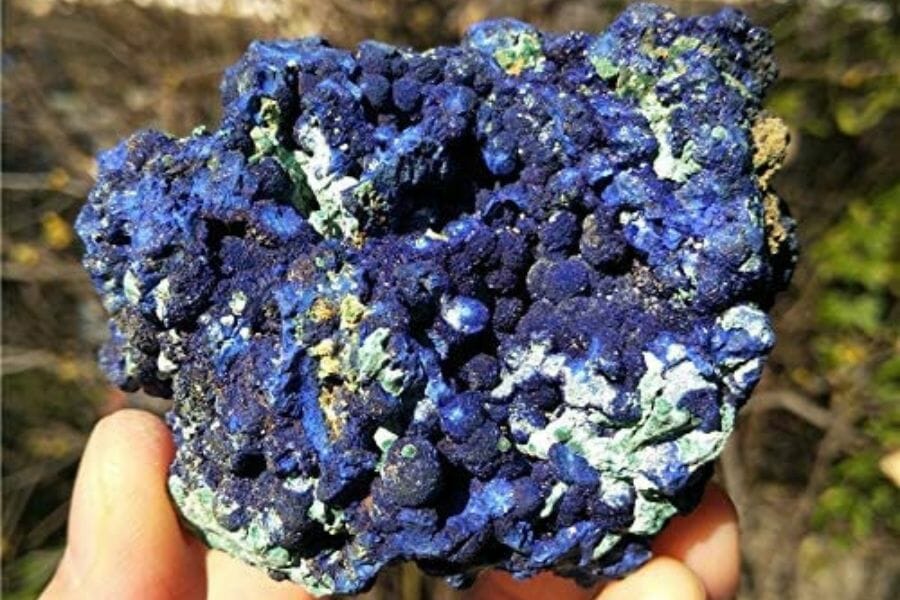
| Stilaguamish | Sultan River mines for azurite, garnet, and malachite |
How to find crystals in Washington
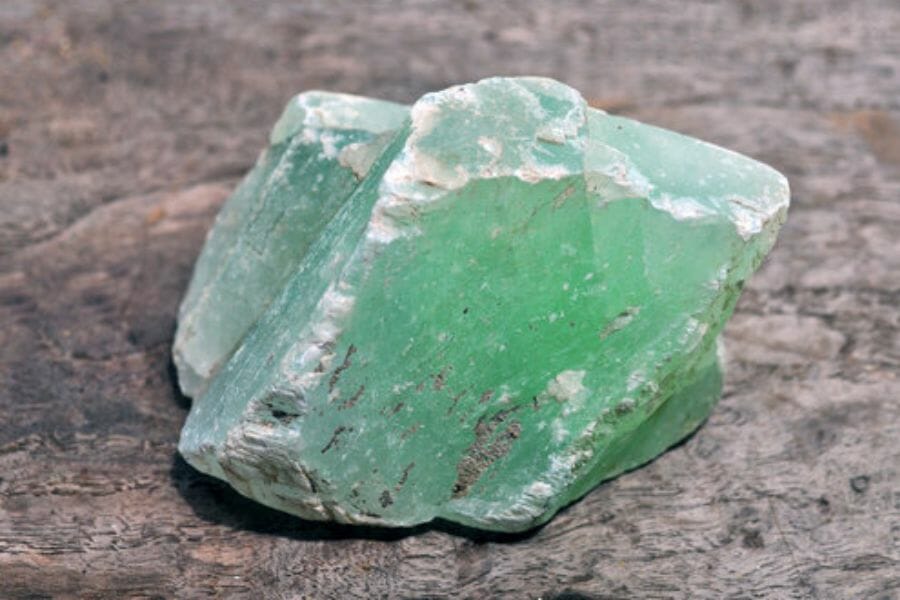
Given that several of our suggestions pertain to broader areas, we’ve listed some of the top locations below to help you narrow your search. These areas typically contain the greatest amount of crystals in a given area.
Beaches
Beaches are a great location to find crystals for a few reasons. Firstly, the constant movement of the waves and tides means that the sand always shifts, revealing new treasures to discover. Additionally, the erosion from the waves can expose rocks and minerals that may be hidden deeper in the ground, making them easier to spot and collect.
When searching for crystals on the beach, it’s important to take some special considerations. First, check with local regulations before you start your search, as some beaches may have restrictions on collecting rocks and minerals. Secondly, be aware of the tides and never turn your back on the ocean. Getting caught up in the search and forgetting about the waves is easy, so be mindful and stay safe.
Rivers and riverbanks
When searching for crystals in rivers and riverbanks, looking for areas where water has been flowing and eroding rocks is important. You may also want to check areas where rocks and boulders have been exposed or overturned, as this can reveal new layers of rocks and minerals.
One benefit of searching in rivers is that the moving water can help to wash away dirt and debris, leaving behind cleaner, shinier crystals. Additionally, riverbanks can be great places to find larger crystals and minerals that may be too heavy or deep to find in other locations.
Streams and creeks
Streams and creeks are great locations to find crystals because the water is constantly flowing, which can help to wash away dirt and debris and reveal sparkling treasures. Additionally, the smaller size of these bodies of water means they are often overlooked by other rockhounds, making them a great spot to search for crystals.
When searching for crystals in streams and creeks, looking for areas where water has been moving rocks and minerals around is important. Look for exposed bedrock, gravel or sand areas, and any flow changes in the stream. These can all be signs that crystals may be present.
Washington Crystal Mining Laws And Regulations
In Washington State, recreational crystal hunting is allowed on certain public lands. However, it’s important to be aware of regulations and guidelines to ensure you follow the rules and protect the environment.
One of the most important things to remember when crystal hunting in Washington is to always check with the land management agency or owner before you start digging. Some areas may be off-limits or have specific rules about collecting rocks and minerals.
Another important consideration is to avoid damaging the environment. Stay on established roads and trails, and avoid disturbing vegetation or wildlife. Additionally, it’s important to properly dispose of any trash or debris you may generate during your search.
There are a few things to be aware of when it comes to specific regulations. For example, on Washington Department of Natural Resources (DNR) lands, visitors can collect up to 250 pounds of rocks and minerals annually. However, there are restrictions on what can be collected, and some areas may be off-limits to rockhounding.
The Best Crystal Shops In Washington
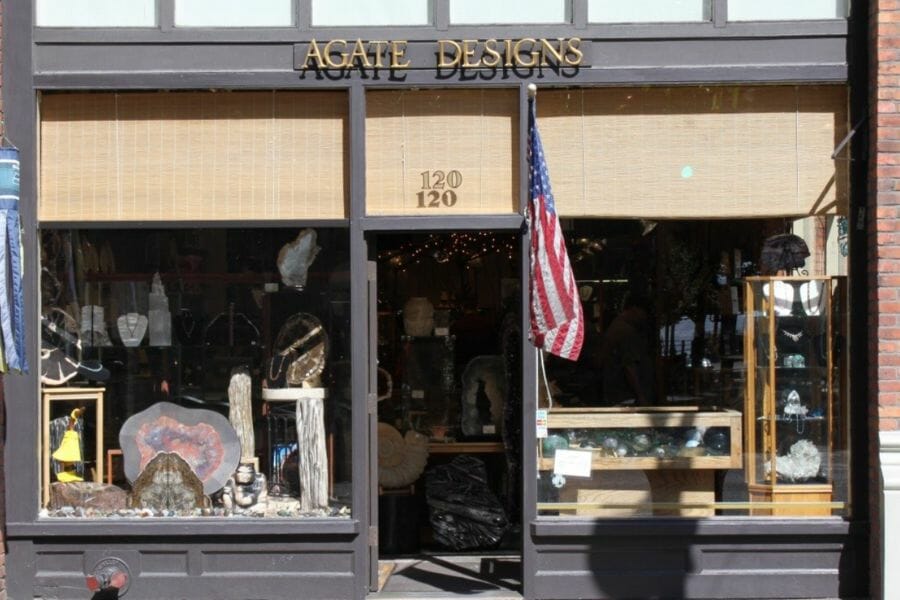
You might want to consider buying crystals from some of Washinton state’s greatest crystal shops if you don’t have the time or the desire to go on a crystal hunt. At each of the shops we’ve listed below, you can select from a variety of crystals:
- Agate Designs – 317 NW Gilman Blvd ste 15, Issaquah, WA 98027, United States
- All Good Things, Crystals, and Rocks – 1630 N Wenatchee Ave #3, Wenatchee, WA 98801, United States
- Celestial Awakenings – 6610 NE Hwy 99, Vancouver, WA 98665, United States
- Cove Crystals and Gifts – 510 SE Old Arcadia Rd, Shelton, WA 98584, United States
- Crystallography Gems – 650 S Orcas St Ste 218, Seattle, WA 98108, United States
- Earthlight Gems and Minerals – 46 Lakeshore Plaza, Kirkland, WA 98033, United States
- Gem Heaven Spiritual Store – 1501 Pike Place Hillclimb Walk # 408, Seattle, WA 98101, United States
- Jerry’s Rock and Gem – 804 W Valley Hwy, Kent, WA 98032, United States
- Magickal Earth – 1522 Cole St, Enumclaw, WA 98022, United States
- Starseed Crystals – 1201 S Union Ave Suite 3, Tacoma, WA 98405, United States
Additional places to find crystals in nearby states
If you’ve already tried all of our recommendations above or are planning a trip out of the state, you should check out our guides for neighboring states:
If you have any recommendations we haven’t covered please leave them in the comments below!