To successfully find Oklahoma crystals, you must know exactly which specific areas to target. Rockhounding requires plenty of physical stamina, so you definitely want to ensure your efforts happen in the correct locations.
Digging holes and moving heavy stones all day gets exhausting when you are standing in barren dirt. Far too many people simply pick a spot on a map and hope they get lucky. You have to actively avoid unproductive land by focusing strictly on known productive zones.
Doing a little research beforehand drastically improves your chances of a truly successful outing. Discovering the prime spots to explore will absolutely transform the way you prepare for your upcoming weekend out in the dirt very soon.
- The extensive local experience and understanding of our team
- Input from multiple local crystal hunters and crystal collecting groups
- The accessibility of the crystal mining locations
- Safety and potential hazards when collecting
- Private and public locations
- A desire to include locations for both experienced crystal hunters and those who are just starting out
Using these weights we think we’ve put together the best list out there for those who love finding new crystals for our collections!
The Types of Oklahoma Crystals You Can Find
Oklahoma is known for its vast natural resources and diverse landscapes, which prove to be great areas for crystal hunting enthusiasts to enjoy. You can find various types of crystals here that come in varying colors, shapes, and sizes, making each find unique and exciting. Here are some of them:
Dolomite
Dolomite is a unique and important mineral that can be found among the valuable rocks in Oklahoma. It’s composed of calcium magnesium carbonate, and it often forms in a sedimentary environment.
Dolomite can look quite similar to limestone but has some different properties due to its magnesium content. It typically forms when magnesium-rich water interacts with limestone, causing a chemical change that results in dolomite.
However, this mineral is harder than limestone, which means it doesn’t scratch as easily and can withstand weathering better. This quality makes dolomite a popular choice for the production of cement and as a building material.
Other than construction, dolomite is also important in agriculture. It’s used to adjust the pH of soil, helping plants grow.
Where you can find dolomite in Oklahoma
- Picher Field, Ottawa County
- Fairview, Major County
- Wichita Mountains, Comanche County
Hematite
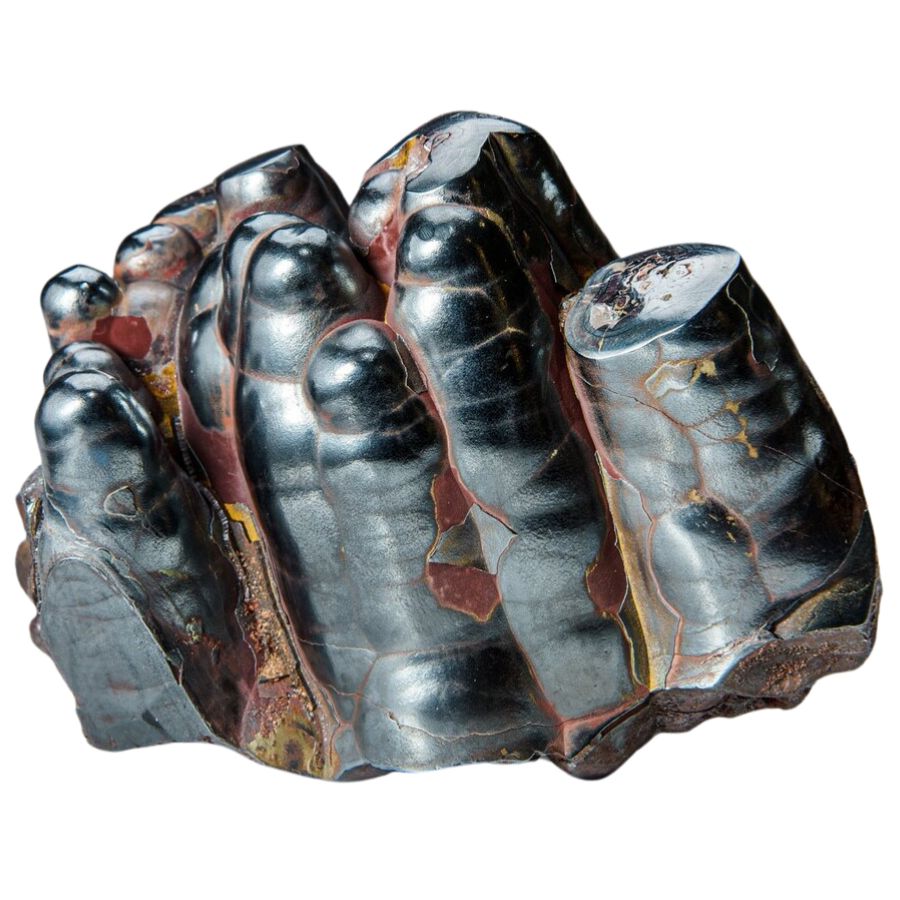
Hematite is a common and significant mineral, known for its shiny, metallic appearance and reddish-black color. This mineral is an iron oxide, and it forms in a variety of geological environments, often in places with lots of iron and water.
It can be found in sedimentary rocks, where it forms as a result of the oxidation, or rusting, of iron minerals. It’s typically found in the form of small, shiny crystals or as smooth, rounded pebbles.
One of the most interesting things about hematite is that it leaves a reddish streak when scratched across a hard surface. This unique property makes it easy to identify, even for amateur rock collectors.
Hematite is also known for being quite heavy for its size, which is a giveaway of its high iron content.
It’s a major ore of iron, which makes it incredibly important in the steel-making industry
Where you can find hematite in Oklahoma
- Perry, Noble County
- Kenton, Cimarron County
- Granite Mountains, Kiowa County
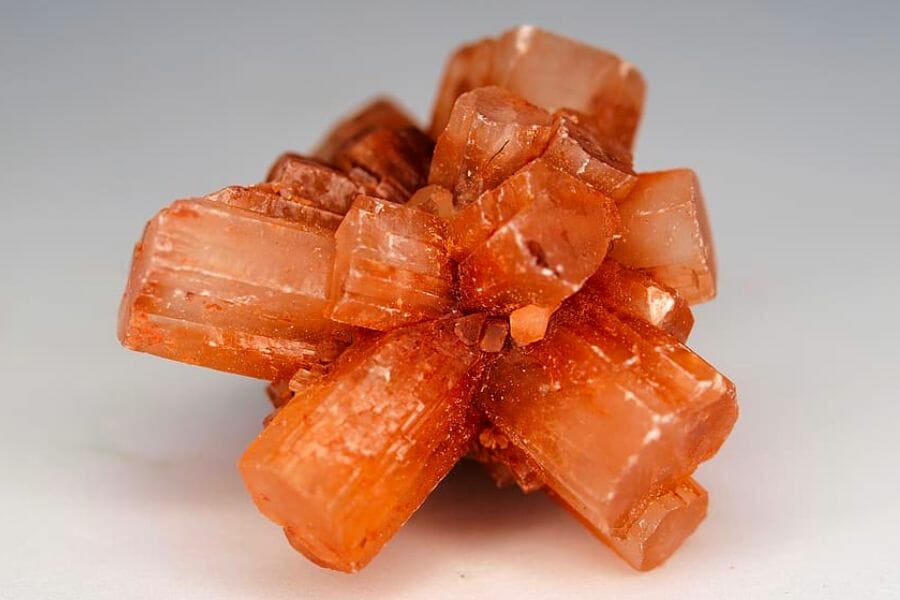
Aragonite
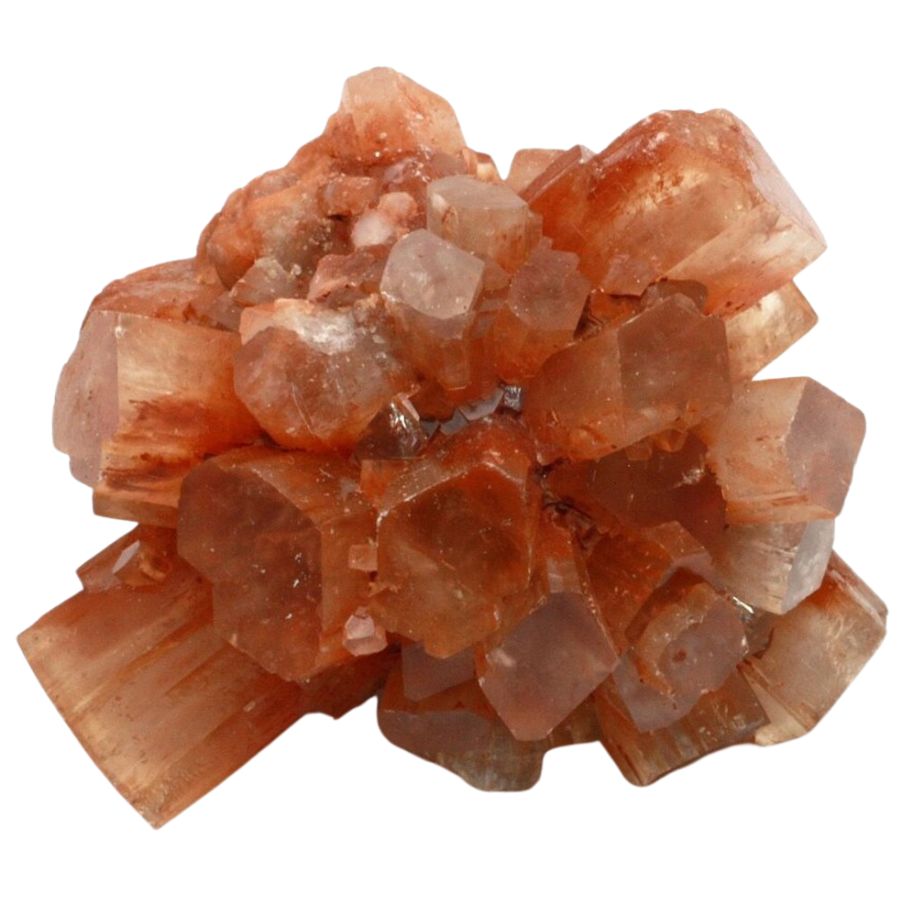
Aragonite is a unique and interesting mineral that can be found in Oklahoma’s diverse geological landscape. This mineral is made of calcium carbonate, the same material that forms limestone and marble.
Unlike these other forms, aragonite crystallizes in a different pattern, giving it distinct properties. Aragonite forms in various environments, including near hot springs and in caves as stalactites and stalagmites.
Its crystals are often small and needle-like, and they can be white, yellow, or even light green. What’s really cool about aragonite is that it can also form “twins,” which are mirror-image crystals growing together.
Aragonite crystals can thus be visually striking. With their unique shapes and colors, they’re a favorite among rock collectors.
However, aragonite is also used in the making of certain types of cement and as a soil conditioner. Aragonite’s role in Earth’s carbon cycle also makes it important for scientific study.
Where you can find aragonite in Oklahoma
- Cherry Canyon, Cotton County
Brochantite
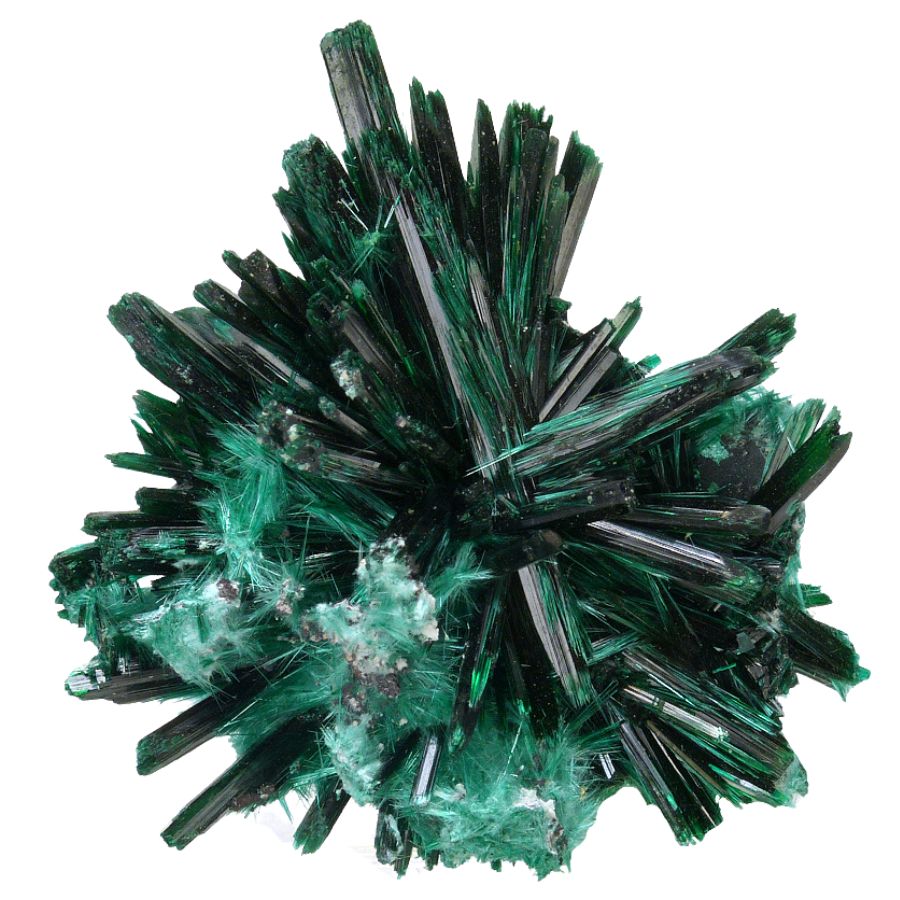
Brochantite is made up of copper sulfate hydroxide, with a striking, rich green color that comes from the copper content.
It typically forms in arid regions where copper-containing rocks are exposed to oxygen and sulfur, often in the upper parts of copper ore deposits.
This process allows brochantite to crystallize, sometimes in needle-like forms or as fine, velvety coatings on rocks. These green crystals are usually small but can be quite eye-catching due to their bright color and shiny luster.
Brochantite offers insight into the process of oxidation in copper ores. This mineral is also studied for its potential in environmental applications, like removing pollutants from water.
Where you can find brochantite in Oklahoma
- Paoli, Garvin County
Brookite
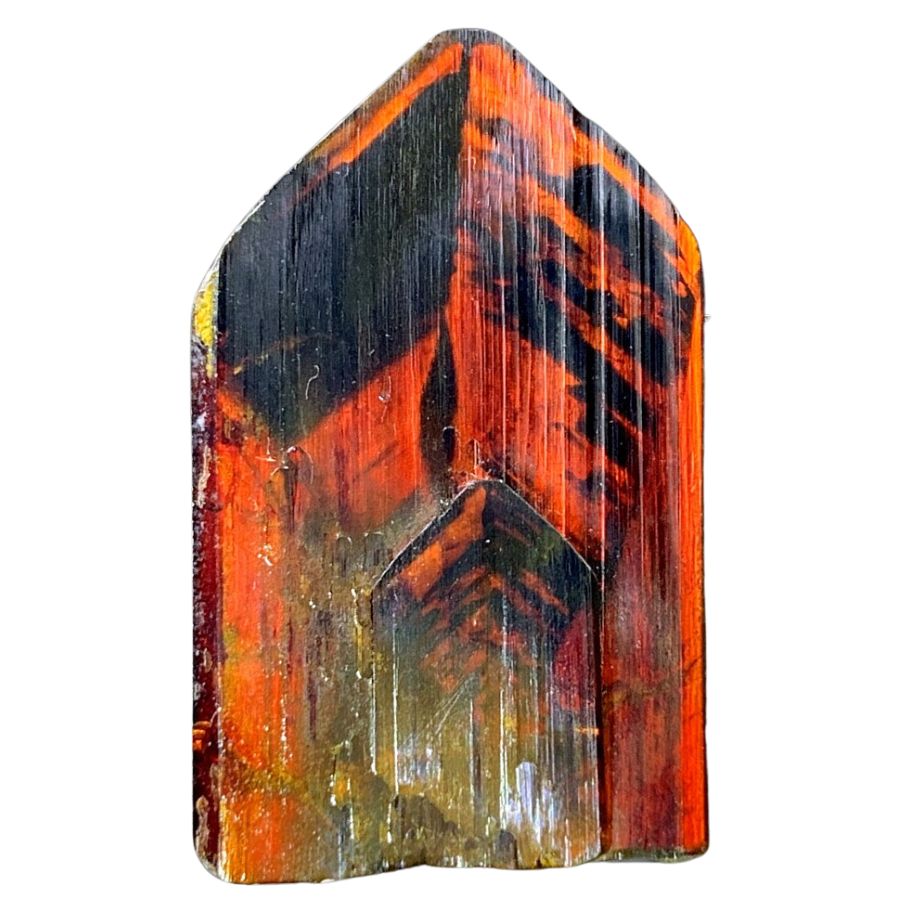
Brookite is a form of titanium dioxide and is often seen alongside other minerals like quartz and rutile. It forms under high temperatures and pressures, typically in mountainous regions where the Earth’s crust is changing and moving.
The unique thing about brookite is its crystal structure. It often forms thin, flat crystals that have a metallic or silky sheen. These crystals can be quite striking when they catch the light.
Brookite is not as common as some other minerals, which makes finding it in Oklahoma an exciting experience for rock enthusiasts.
Because of its rarity and unique crystal formation, brookite is a sought-after specimen for mineral collectors.
It’s also valuable for scientific study, helping researchers understand more about how titanium minerals form and change under different conditions.
In addition, brookite is studied for its potential use in certain technologies, like in photovoltaic cells for solar panels.
Where you can find brookite in Oklahoma
- Lugert, Kiowa County
Chalcopyrite
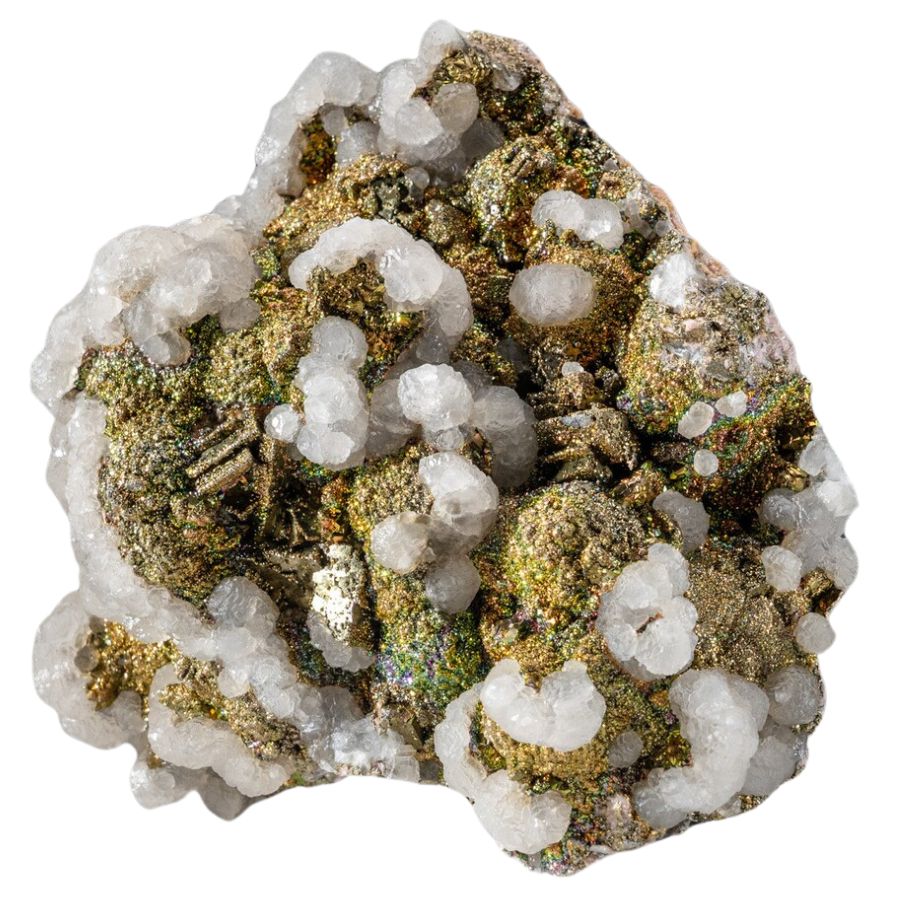
Chalcopyrite is a copper iron sulfide, and it’s the most common source of copper in the world. It’s known for its shiny, brass-yellow color that can sometimes tarnish to a dull, greenish hue.
It usually forms in high-temperature environments, like in and around volcanic activities. This mineral can also form deep underground where hot fluids circulate through cracks in the rocks.
These fluids carry the elements needed to form chalcopyrite, and when they cool down, the mineral starts to crystallize.
In Oklahoma, chalcopyrite can often be found in association with other minerals like quartz and pyrite.
Because it’s a major source of copper, chalcopyrite is very important in the mining industry. Copper is used in so many things in our daily lives, like electrical wiring and plumbing.
The bright, metallic luster of chalcopyrite also makes it attractive for mineral collectors. It’s often collected for its beauty and interesting crystal shapes.
Where you can find chalcopyrite in Oklahoma
- Picher Field, Ottawa County
Faden quartz
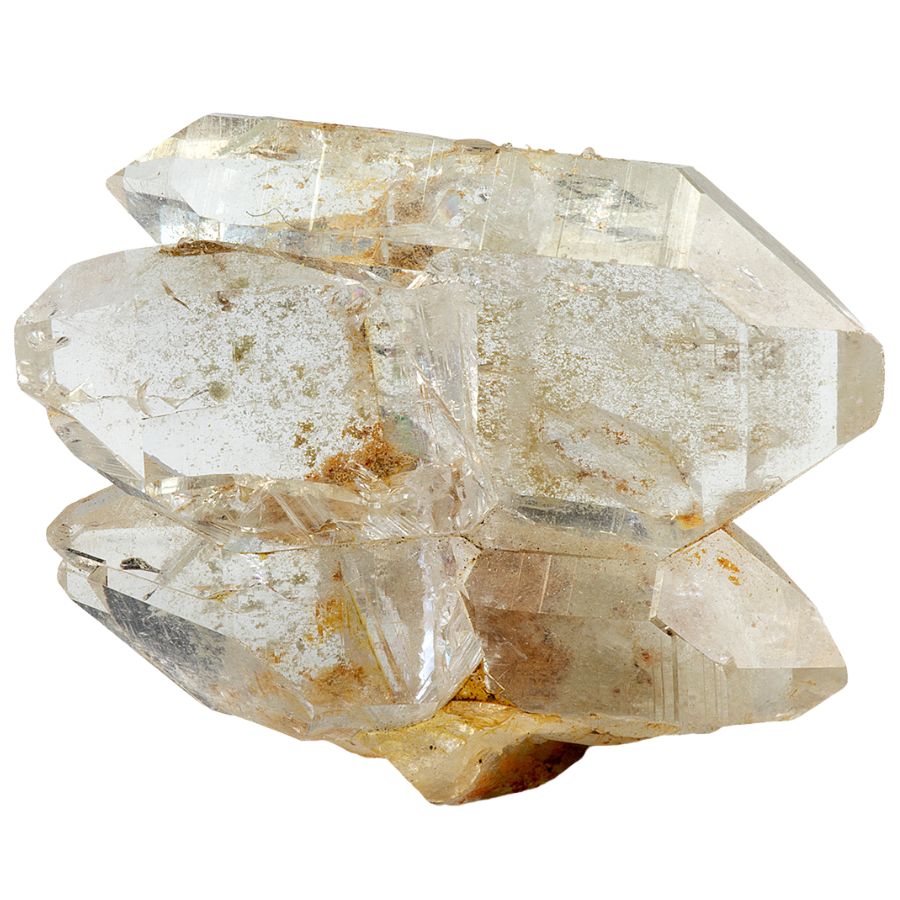
Faden quartz is a unique type of quartz crystal that’s part of the rich variety of crystals found in Oklahoma. These crystals are easily identified by the white, thread-like line running through them, which is known as a “faden line.”
In Oklahoma, faden quartz is often found in areas with geological activity, such as near faults or shifting plates. These crystals can vary in size, with some being quite small and others growing to several inches long.
Faden quartz forms in fissures or cracks in the Earth where the crust is stretching and moving. As these cracks open and close, the quartz crystals grow around the faden line, creating their distinctive appearance.
The clarity of faden quartz can range from completely clear to cloudy, and this variety adds to their appeal.
Collectors and enthusiasts often seek out faden quartz for its distinctive look and the story it tells about geological processes. For scientists, these crystals are important for studying the history of Earth’s crust and the movements that shape it.
Where you can find Faden quartz in Oklahoma
- Stovall Trail, McCurtain County
Sphalerite
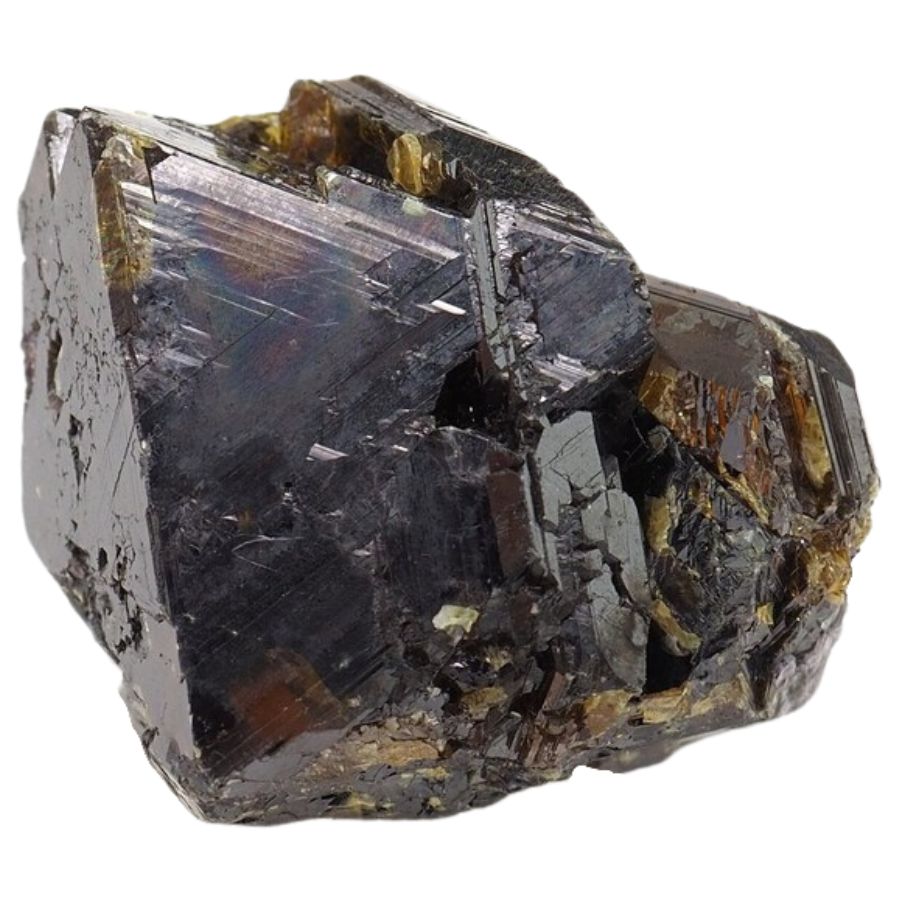
Sphalerite is primarily composed of zinc sulfide, but often contains traces of other elements like iron, which can change its color and appearance. Typically, sphalerite can be found in a range of colors, from yellow and brown to red and black.
It’s often found in association with other minerals like galena (lead sulfide) and chalcopyrite (copper iron sulfide).
Sphalerite is the primary ore of zinc, which means it’s the main source of this important metal used in galvanizing steel and making brass. It’s also used in batteries.
For mineral collectors, sphalerite is prized for its bright luster and interesting crystal forms. Its range of colors and association with other minerals make it a fascinating subject for collection and study.
Where you can find sphalerite in Oklahoma
- Picher Field, Ottawa County
Strontianite
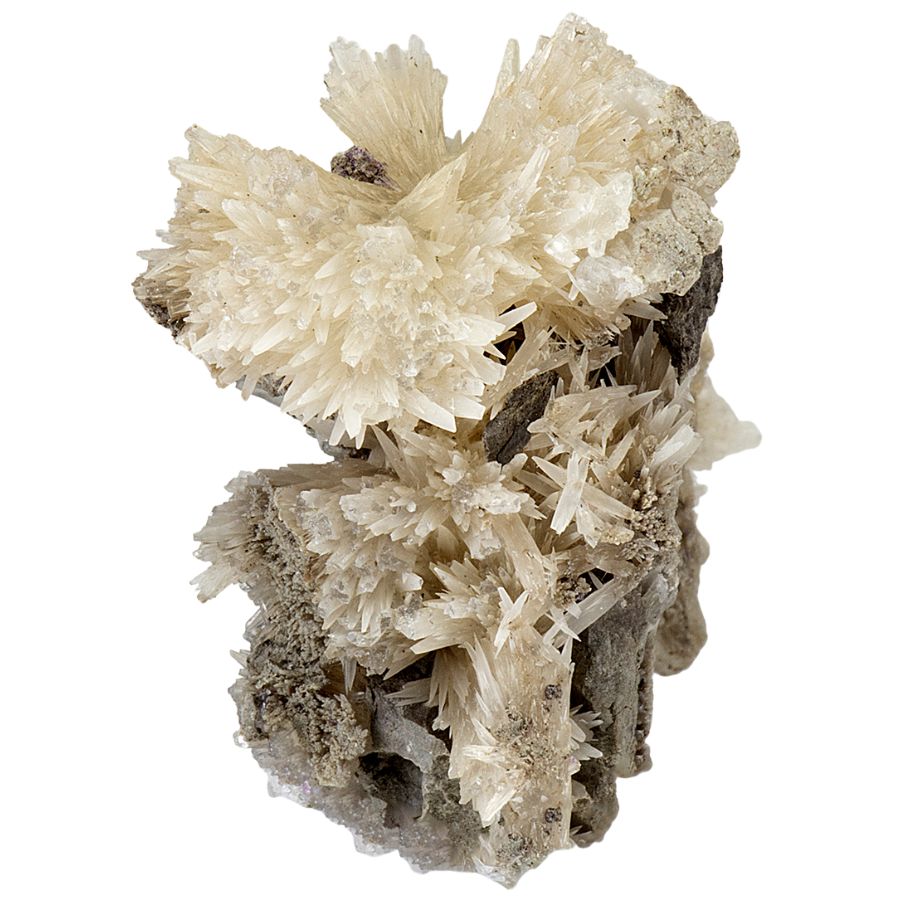
Strontianite is composed of strontium carbonate and often forms in small, white, or pale green crystals. The crystals of strontianite are often small, but they can form into beautiful, intricate shapes.
It typically develops in sedimentary rocks and can be found in areas with limestone formations, as limestone is a common place for it to form.
One of the interesting things about strontianite is its reaction to acids. When you put a drop of acid on strontianite, it fizzes, which is a cool reaction to watch.
This reaction is due to the carbonate part of strontianite breaking down and releasing carbon dioxide gas.
Strontianite is valuable because it’s an important source of strontium. Strontium is used in making certain kinds of fireworks, where it creates bright red colors.
Where you can find strontianite in Oklahoma
- Corn, Washita County
Zircon
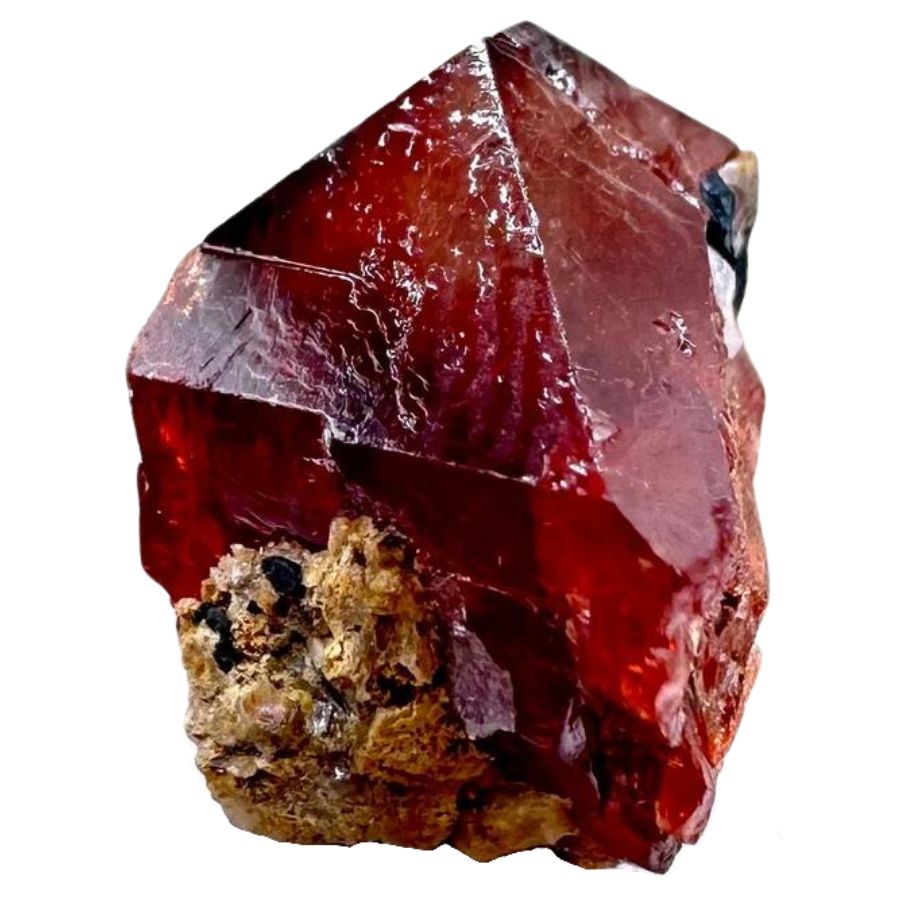
Zircon is a zirconium silicate, known for its high resistance to heat and corrosion. it typically forms in igneous rocks and metamorphic rocks.
In Oklahoma, zircon is often discovered in small, colorful crystals. These crystals can range in color from clear to a variety of shades like blue, yellow, red, and brown.
One of the most interesting things about zircon is that it’s the oldest known mineral on Earth. Some zircon crystals are even billions of years old!
Zircon’s durability and resistance to wear and tear make it a popular choice for jewelry. The range of colors and its ability to reflect light beautifully add to its appeal.
It’s also used in various industrial applications, such as in the manufacturing of ceramics and as a component in abrasives.
Where you can find zircon in Oklahoma
- Wichita Mountains, Comanche County
- Quartz Mountain, Greer County
- Granite Mountains, Kiowa County
Celestine
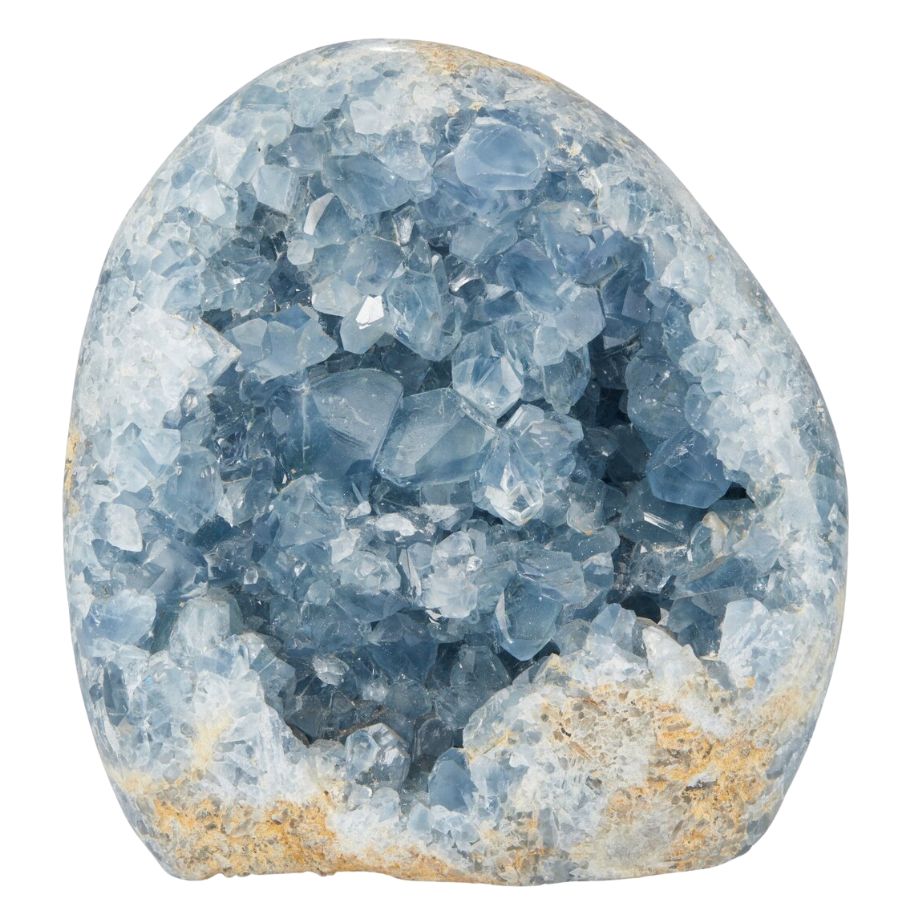
Celestine, also known as celestite, is primarily composed of strontium sulfate. It’s well-known for its striking blue color, although it can also be colorless, white, or pale green.
It forms in sedimentary rocks, particularly in areas where gypsum and limestone are present. Mineral-rich water flows through these types of rocks, leaving behind celestine crystals as the water evaporates.
Thus, celestine is typically found in small pockets or cavities within rocks. These crystals can be quite large and transparent to translucent, with a glassy luster.
The striking blue color of this gem makes it a favorite among collectors and those who use minerals for decorative purposes. Celestine is also important in industrial applications, as strontium extracted from it is used in making fireworks and in certain metal alloys.
Where you can find celestine in Oklahoma
- Washita County
- Southard, Blaine County
- Buffalo, Harper County
Malachite
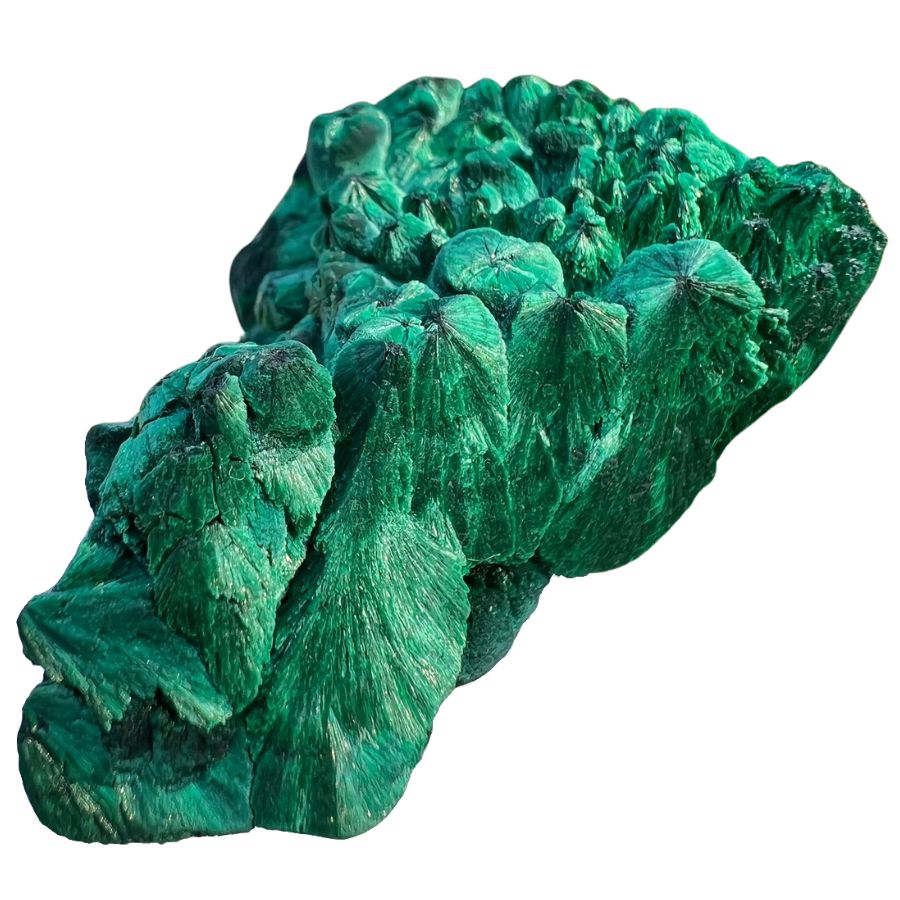
Malachite is made up of copper carbonate hydroxide, and it’s known for its bright green hue and beautiful banded patterns. It forms in the upper parts of copper deposits where copper minerals are exposed to oxygen and water.
This process creates malachite’s unique green color and layered appearance.
It often grows as crusts or botryoidal masses, which means it looks like a bunch of grapes. The rich green color of malachite varies from light to dark, and it often has natural bands or circles, which make each piece unique.
When polished, malachite’s bands create stunning patterns, making it a favorite for jewelry and decorative items.
Where you can find malachite in Oklahoma
- Eagle Picher Mine, Jackson County
- Red Bed Mining District, Garvin County
- Flat Top Mountain, Kiowa County
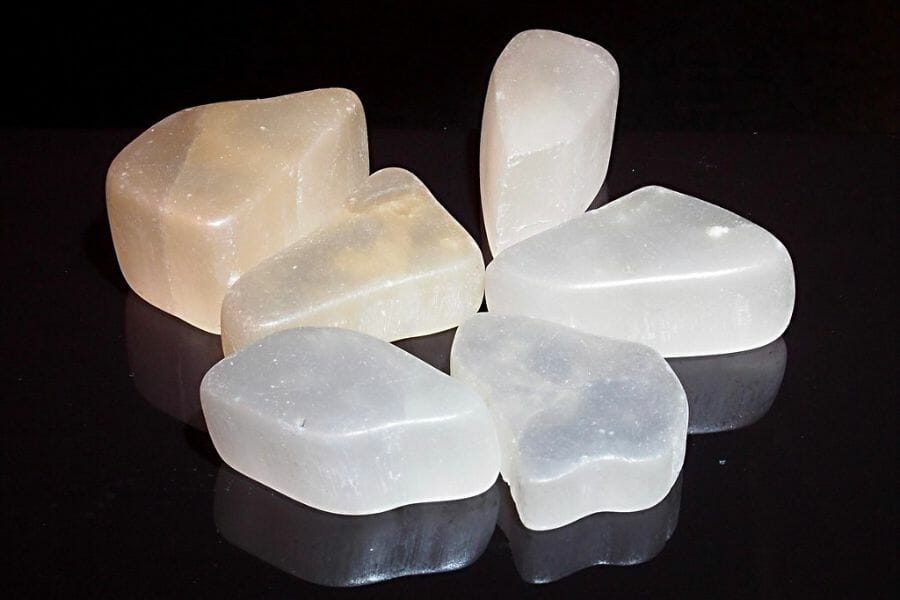
Selenite
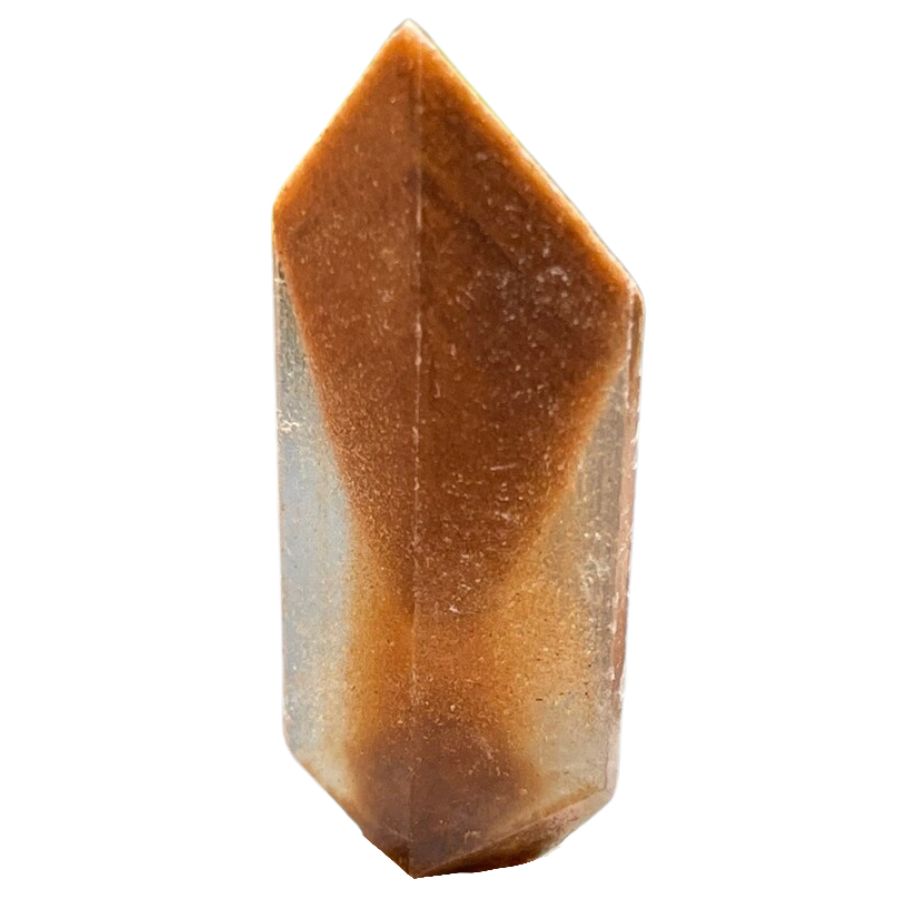
Selenite, a crystal-clear form of gypsum, is one of the fascinating gemstones found in Oklahoma. This mineral, composed of calcium sulfate dihydrate, is celebrated for its transparency and delicate, pearly luster.
It forms in evaporative environments, where salty water evaporates and leaves behind minerals. Selenite is also soft, making it easy to scratch with just a fingernail.
In Oklahoma, particularly in the Great Salt Plains, selenite crystals form unique hourglass shapes. This is a rare phenomenon.
Hourglass selenite adds to the state’s geological richness. Its rarity and the unique conditions required for its formation make it a prized find for anyone interested in geology.
Where you can find selenite in Oklahoma
- Great Salt Plains, Alfalfa County
- Greer County
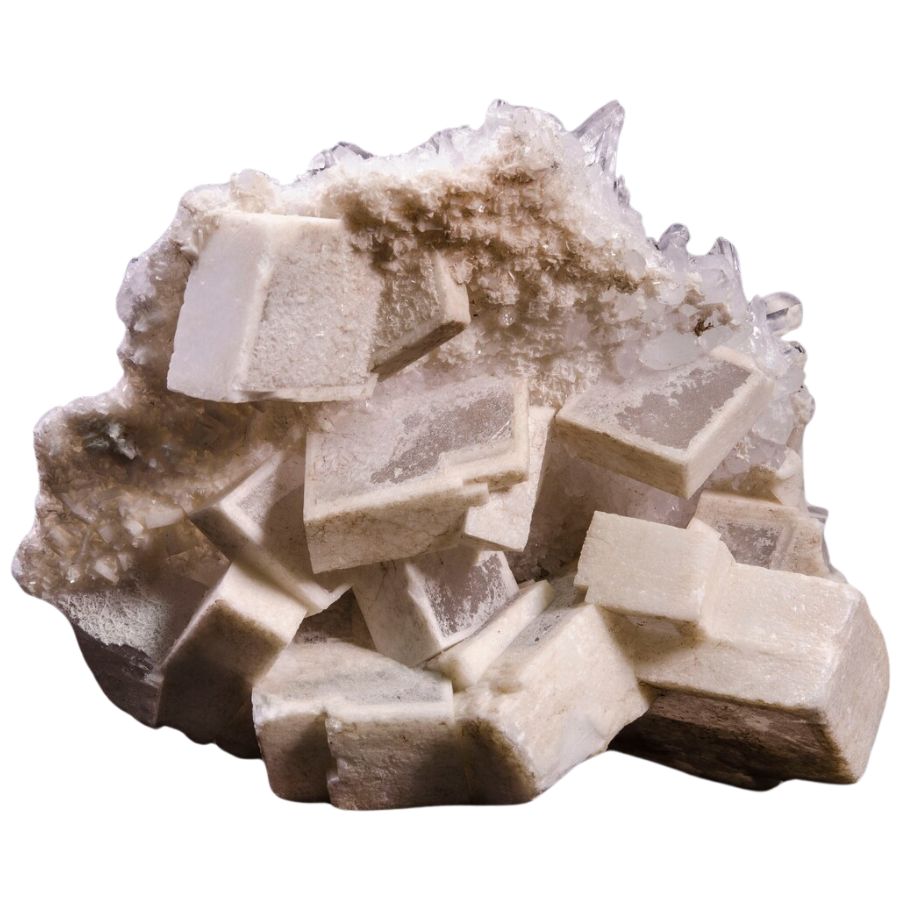
Adularia
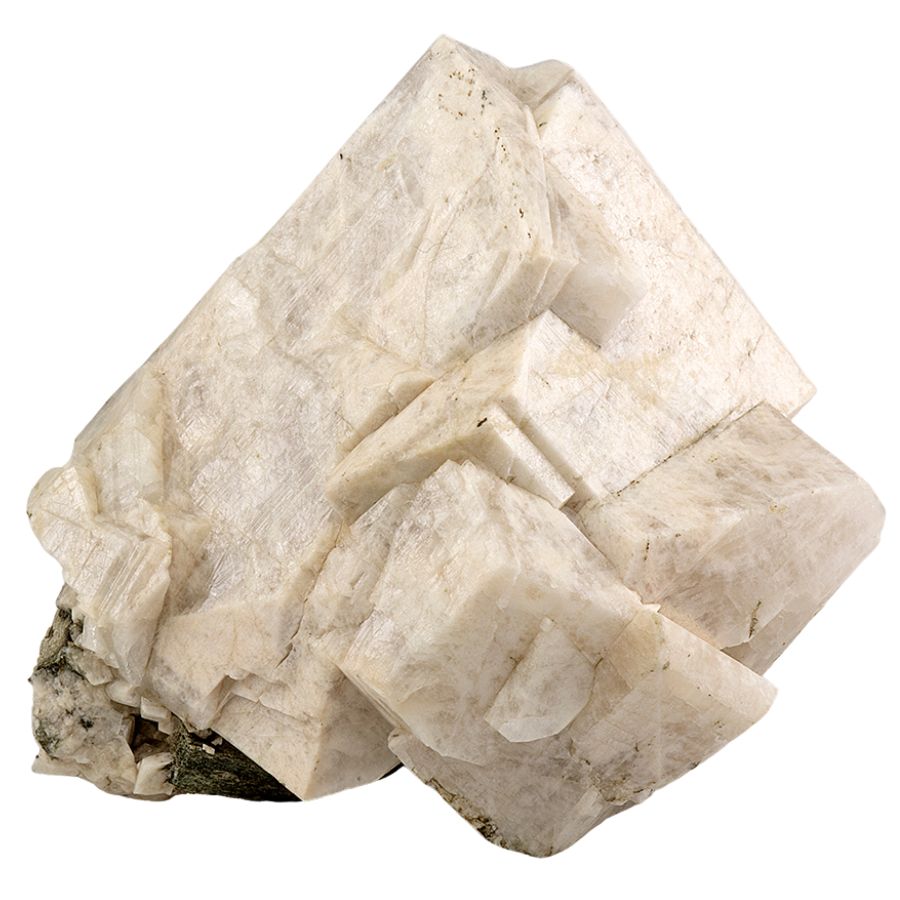
Adularia is a variety of orthoclase, which is a type of feldspar. It’s known for its creamy or pearly luster, and it often has a beautiful, milky sheen. This mineral is usually white or colorless, but it can also have shades of gray, yellow, or pink.
It forms in low-temperature environments, typically in cracks and cavities within rocks, where it grows slowly over time.
One of the most interesting things about adularia is the way it reflects light. This effect, known as adularescence, gives it a glowing, moon-like appearance, especially when the mineral is cut and polished.
This unique luster makes adularia attractive for jewelry and decorative items, making it popular among collectors and artisans.
Where you can find adularia in Oklahoma
Calcite
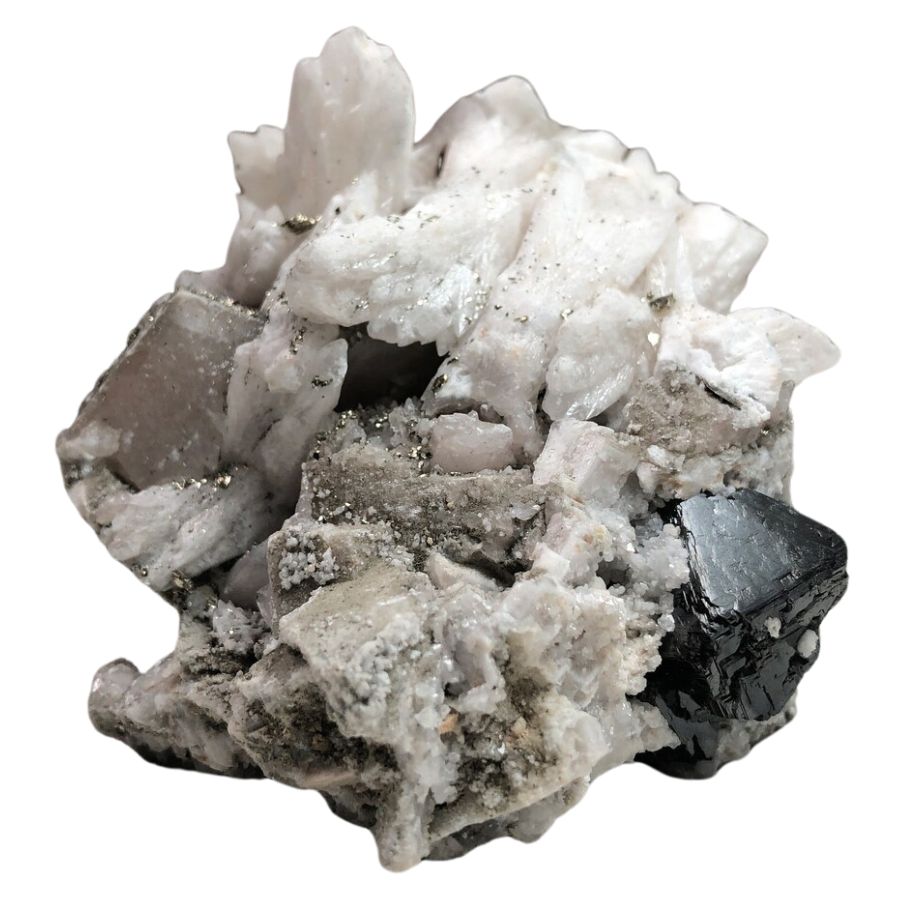
Calcite is a common yet fascinating mineral. It’s made up of calcium carbonate, the same material that’s in chalk and limestone.
It forms in many different geological environments; it can grow in sedimentary rocks like limestone, form from hot water in underground spaces, or even in the shells of sea creatures.
What’s remarkable about calcite is its wide range of colors and forms. It can be clear, white, or colorful, and it can grow into crystals of various shapes and sizes.
Another cool thing about calcite is how it reacts to acid. If you put a drop of vinegar on calcite, it will fizz and bubble.
The variety of colors and crystal forms of calcite make it attractive for collectors. Also, its unique properties, like its reaction to acid, make it an interesting mineral to study and learn about.
It’s also important in many industries. It’s used in making cement and lime for construction, and it’s ground up into a white powder for use in products like toothpaste and paint.
Where you can find calcite in Oklahoma
- Picher Field, Ottawa County
- Cherry Canyon, Cotton County
- First National, Ottawa County
Fluorite
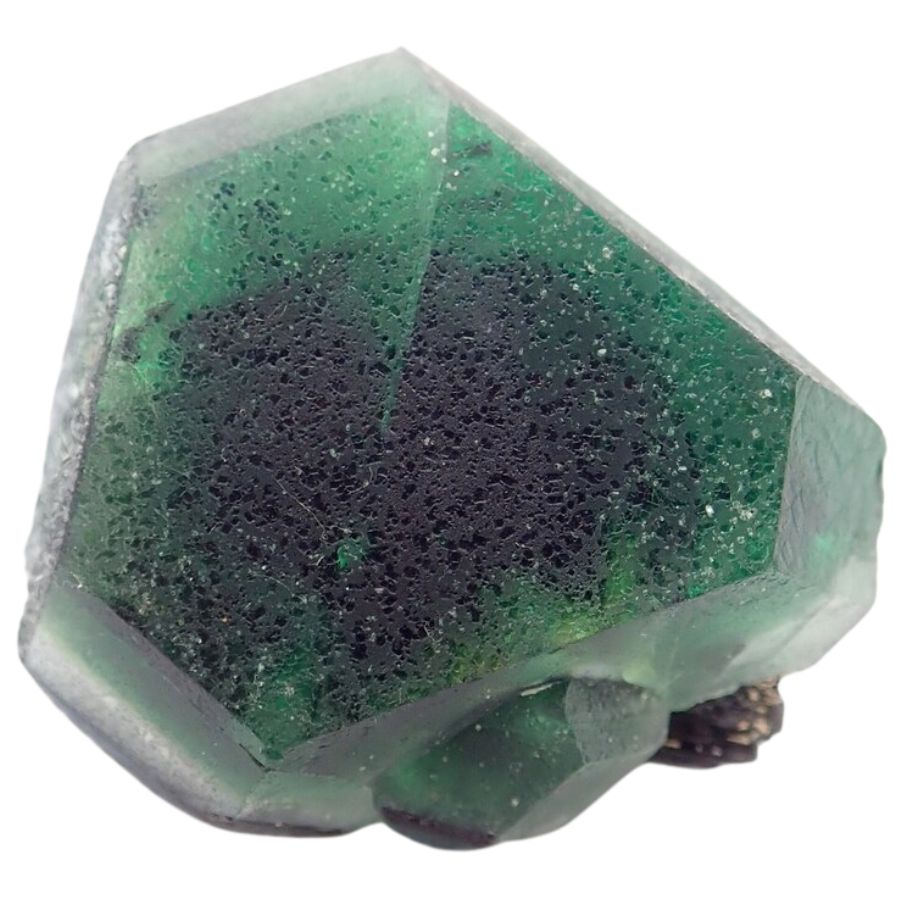
Fluorite is a vibrant and versatile mineral that adds a splash of color to Oklahoma’s geological palette. Made of calcium fluoride, it’s most famous for its wide range of colors, which can include purple, blue, green, yellow, or even a mix of these.
Fluorite usually forms in veins within rocks, especially in areas with a lot of geological activity. It crystallizes from hot fluids that move through the rocks and cool down, leaving behind these colorful crystals.
The crystals of fluorite are typically cubic, which means they form in the shape of cubes or sometimes octahedrons, which look like two pyramids stuck together.
The colors of these crystals come from different impurities in the mineral, and sometimes, when you shine a UV light on them, they can glow! These qualities make fluorite a favorite among rock collectors and enthusiasts.
Fluorite is also used in industry, particularly in the manufacturing of steel and aluminum, and in the production of certain types of glass and enamel. It’s even used in the making of hydrofluoric acid.
Where you can find fluorite in Oklahoma
- Davis, Murray County
- Wichita Mountains, Comanche County
- Troy, Johnston County
Galena
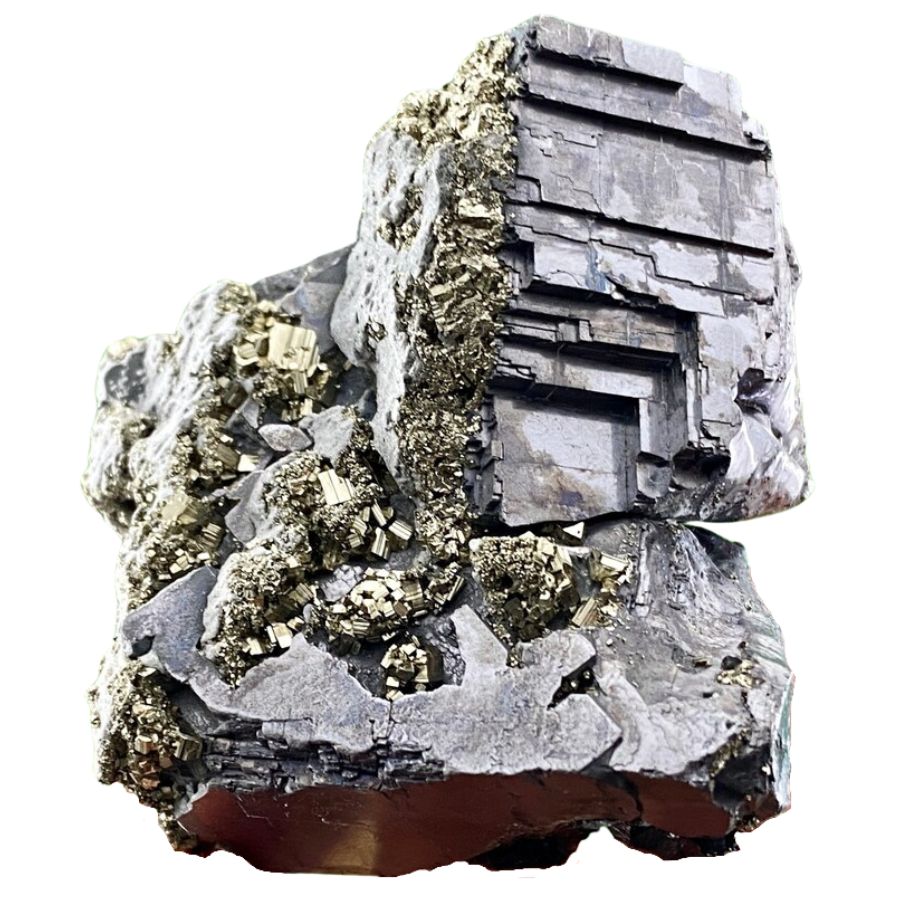
Galena is a fascinating mineral, especially among the rocks and minerals found in Oklahoma. It’s known for its shiny, metallic luster and its crystal form.
Galena is mainly lead sulfide, and it often forms cube-shaped crystals. These crystals can be quite shiny and are very heavy for their size because of the lead content.
This mineral typically forms in low-temperature ore veins. These are places underground where hot fluids carrying minerals move through cracks and spaces in rocks. When these fluids cool down, minerals like galena start to form.
More importantly, galena is the main source of lead, which is used in batteries, radiation shields, and in the past, in pencils and paint. Galena also contains silver sometimes, which enhances its value.
For mineral collectors, the distinct cubic shape and bright metallic luster make galena a desirable specimen. It’s a favorite among collectors for its unique look and heavy feel.
Where you can find galena in Oklahoma
- Picher Field, Ottawa County
- Granite Mountains, Kiowa County
- Eagletown, McCurtain County
Halite
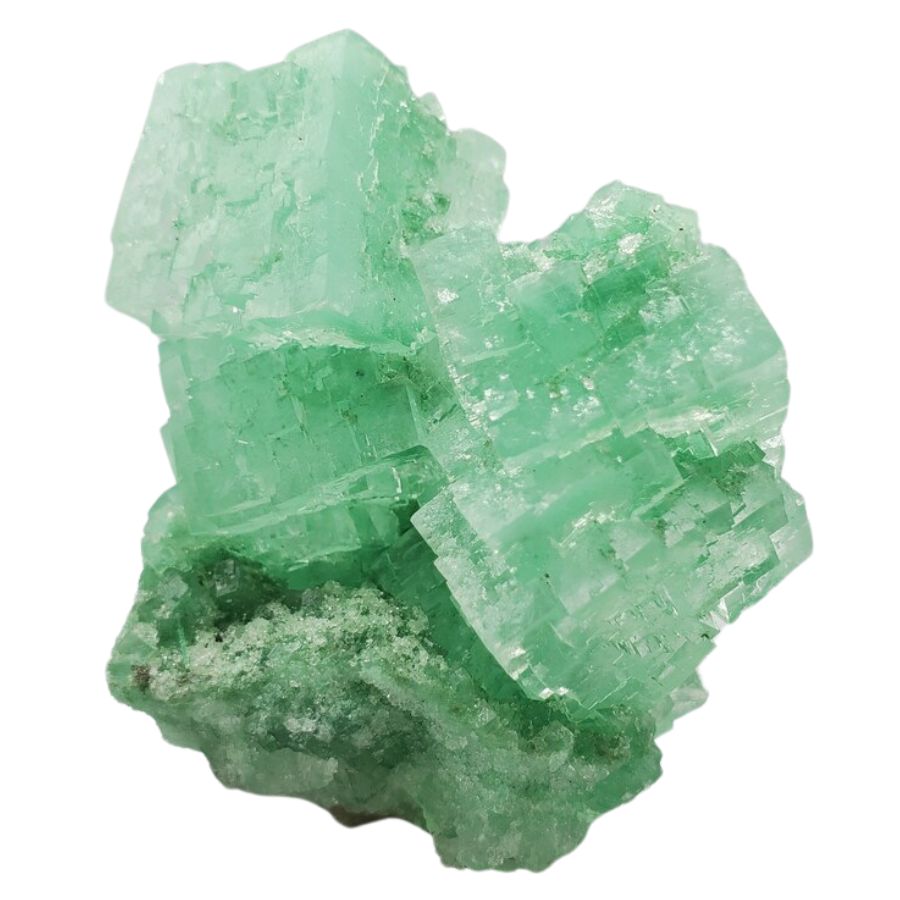
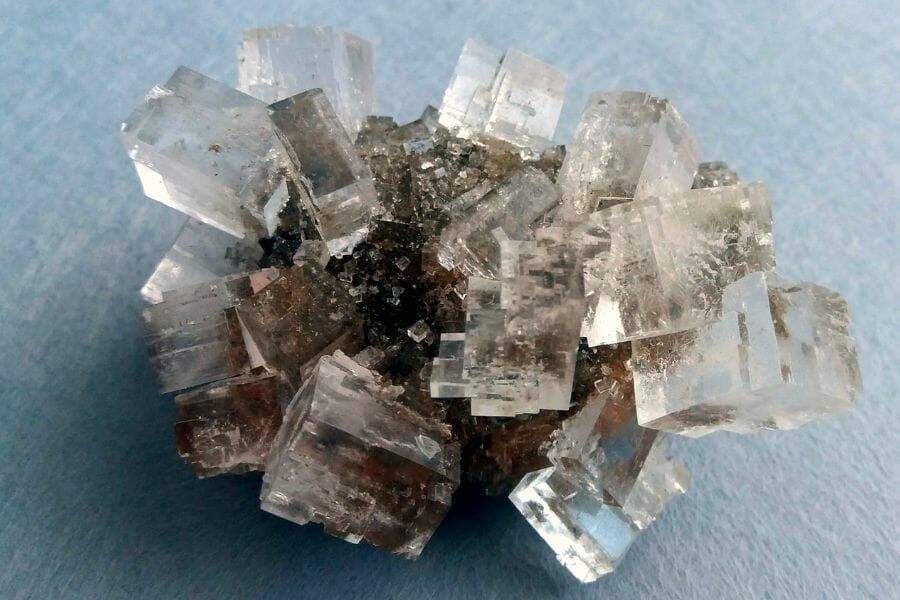
Halite, commonly known as rock salt, is an interesting mineral found in various parts of Oklahoma. It’s made entirely of sodium chloride, the same stuff that’s in table salt.
It forms when salty water, like from a sea or a salt lake, evaporates and leaves the salt behind. When halite forms close to the surface, it can create vast beds of salt, which are mined for various uses.
This mineral is usually clear or white, but it can also be blue, purple, pink, or yellow depending on impurities.
Halite often forms cubic crystals, which can be really cool to see. These crystals can range in size from very small to quite large, sometimes even several feet across.
The value of halite comes from several different areas. First, it’s a major source of salt, which is used in cooking and preserving food. Salt is also important for de-icing roads in winter and in the chemical industry.
For collectors, halite’s crystals are attractive and interesting, especially the colored varieties. It’s also a great mineral for learning about how evaporation can form minerals.
Where you can find halite in Oklahoma
- Freedom, Woods County
- Harper County
- Washington County
Magnetite
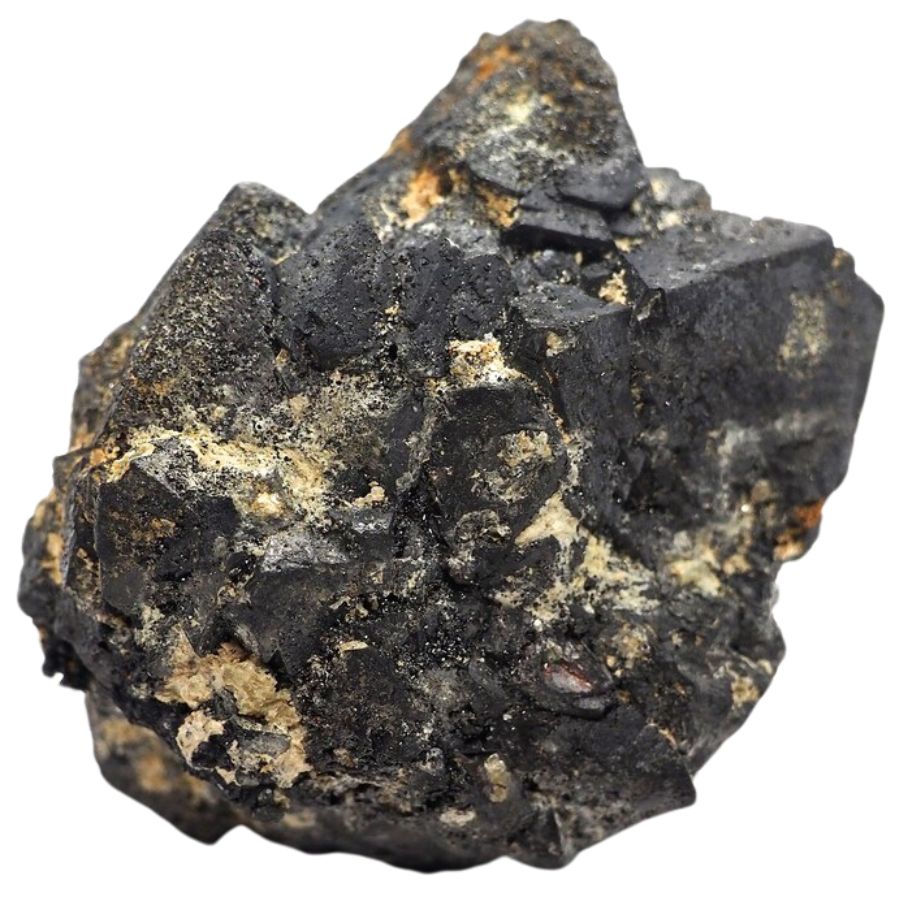
Magnetite is known for its strong magnetic properties. It’s made up of iron and oxygen, forming iron oxide, and is often black or brownish-black in color.
It forms in various ways, but most commonly, it’s found in igneous and metamorphic rocks. In Oklahoma, it can be found in the state’s mountainous regions, where these types of rocks are more common.
One of the coolest things about magnetite is its natural magnetism. If you hold a magnet near it, the magnetite will stick to the magnet, which is pretty neat to see. This property is due to the way iron atoms are aligned in the mineral.
These magnetic properties make magnetite useful in many industrial applications, like in the production of iron and steel. It’s also used in certain types of electronics and as a catalyst in chemical reactions.
Where you can find magnetite in Oklahoma
- Wichita Mountains, Comanche County
- Quartz Mountain, Greer County
- Granite Mountains, Kiowa County
Pyrite
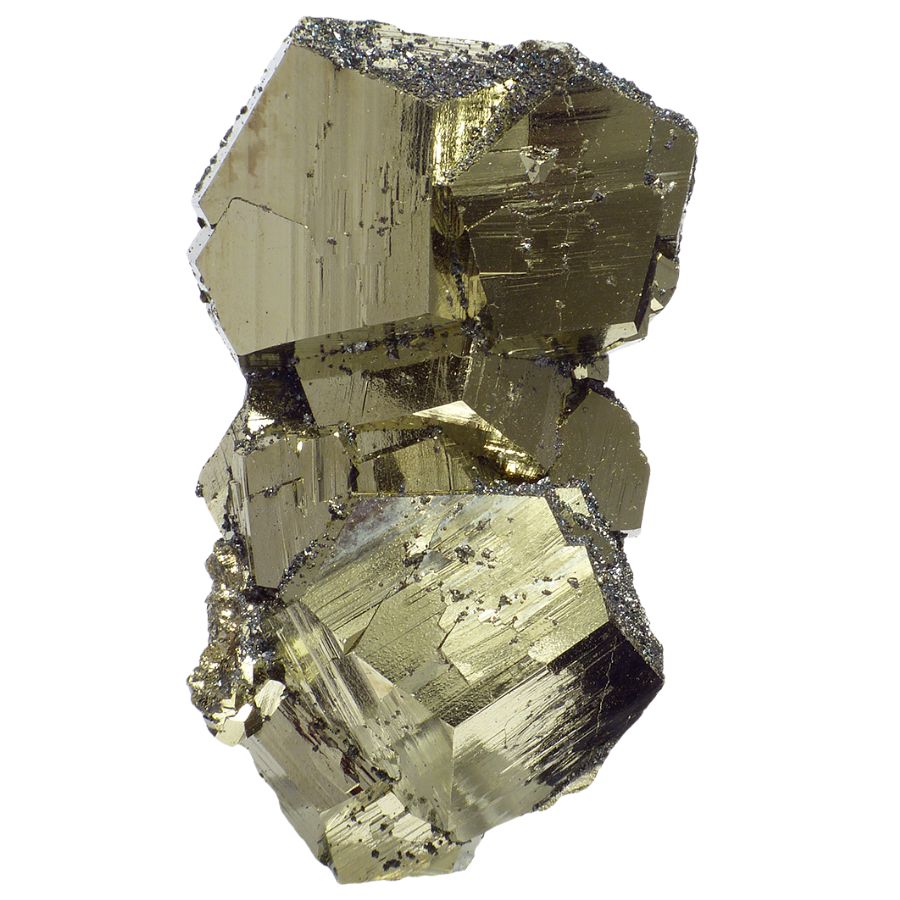
Pyrite, often called “fool’s gold,” is a shiny, metallic-looking mineral that’s found in various places in Oklahoma. The shiny, gold-like appearance of pyrite is what gives it its nickname, but unlike real gold, pyrite is harder and more brittle.
This mineral often forms in square or nearly perfect cube shapes, which is pretty unique and cool to see. It’s made of iron and sulfur, forming a compound called iron sulfide.
Pyrite forms in several ways, but most commonly, it’s found in areas where there’s been volcanic activity or where hot, mineral-rich fluids move through rocks underground.
These fluids carry sulfur and iron, which then come together to form pyrite crystals.
In Oklahoma, pyrite is often found alongside other minerals like quartz and galena.
Aside from its striking appearance, pyrite has some practical uses. It’s sometimes used in the production of sulfuric acid and in the manufacturing of paper. In the past, pyrite was even used to create sparks for starting fires.
Where you can find pyrite in Oklahoma
- John Beaver Mine, Ottawa County
- Lake Texoma, Bryan County
- Quay North, Pawnee County
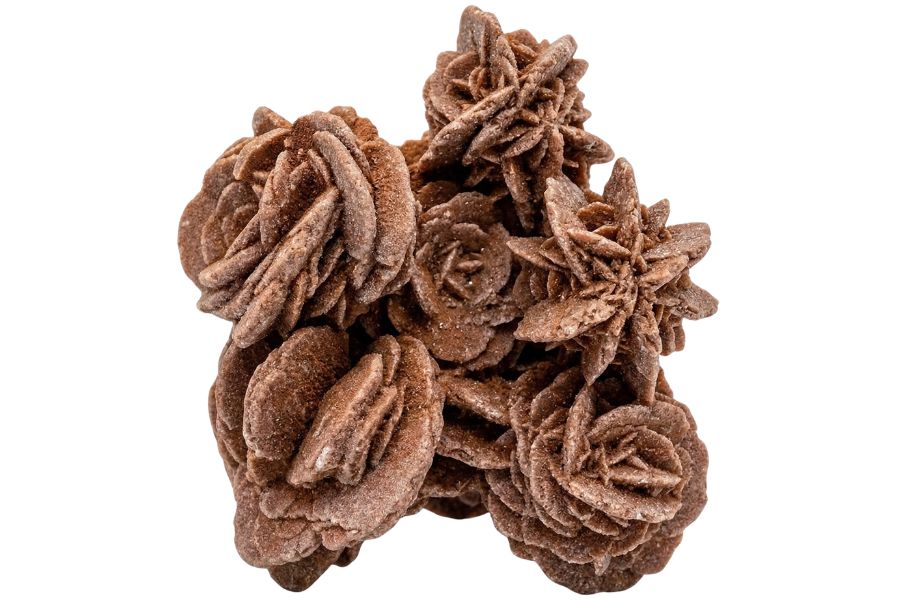
Rose rock
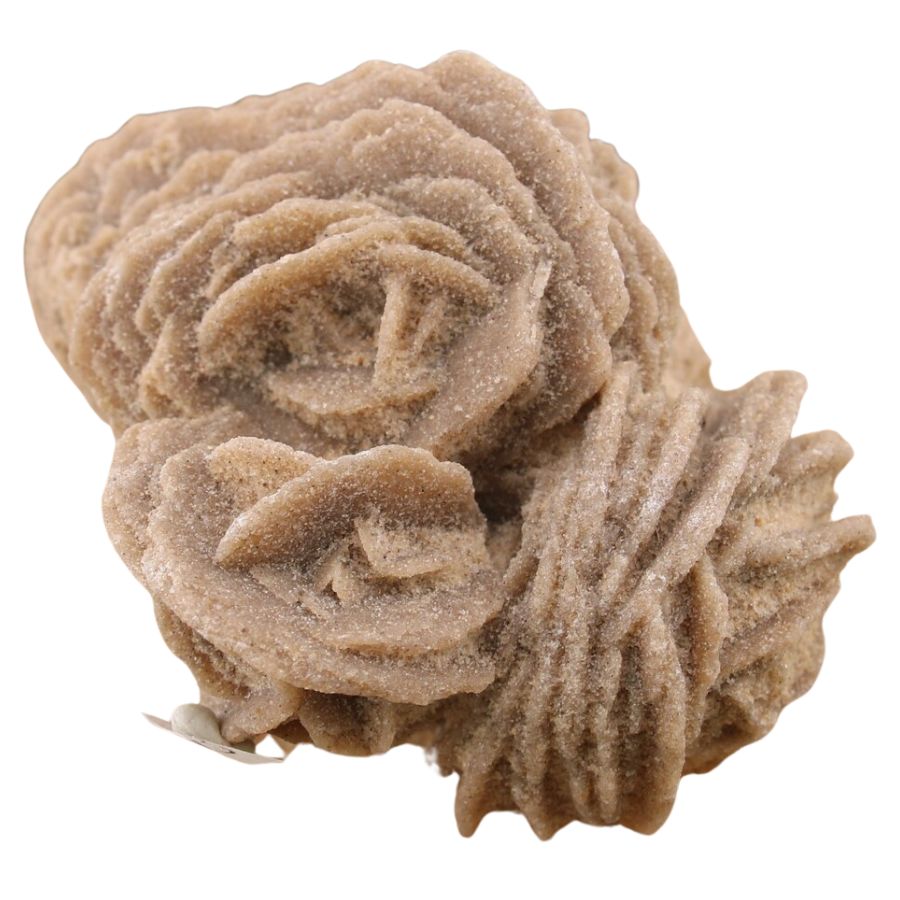
Rose rock, or barite rose, is a symbol of Oklahoma’s unique geology and a fascinating natural formation. These rocks look like rose petals, but they are actually made of barite, a mineral, and sand grains.
Rose rocks form when barite from underground water crystallizes around sand grains. As the water evaporates, these crystals grow in the shape of a rose.
The size of rose rocks can vary, some being as small as a pea, while others are as big as a few inches across. These rocks also have a reddish-brown color, which comes from the sand particles.
The way these barite crystals cluster together is what makes each rose rock unique. No two is exactly the same, which adds to their charm.
The rarity of rose rocks in other parts of the world adds to their value. While they are not the rarest rocks, their unique shape and the specific conditions required for their formation make them a special find.
Where you can find rose rock in Oklahoma
- Lake Thunderbird area, Norman, Cleveland County
- Red Bed Mining District, Garvin County
- Picher Field, Ottawa County
The Best Locations For Crystal Mining in Oklahoma
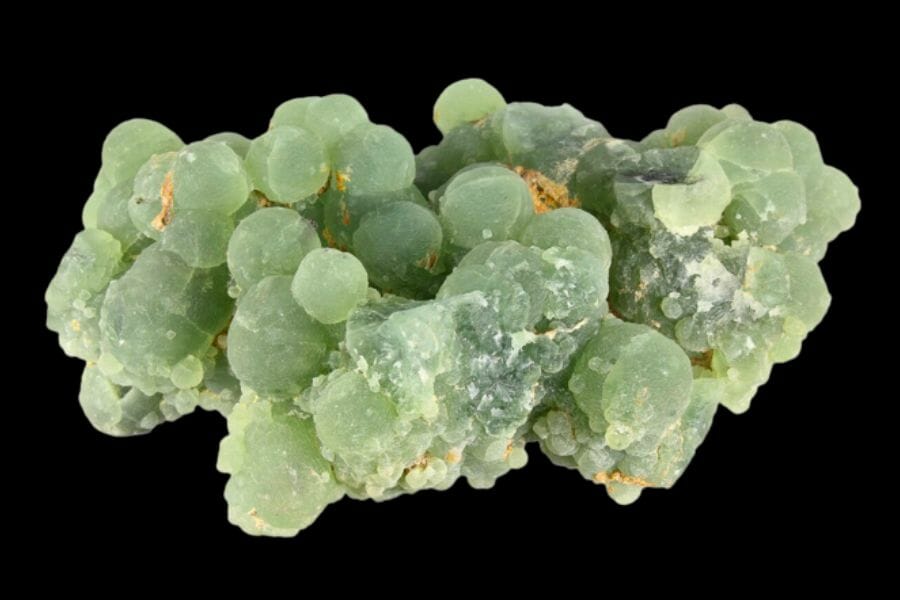
First, let’s discuss our top recommended places to find Oklahoma crystals. If you only have enough time to visit a few areas, then these classic sites should be on top of your list, too.
Always Confirm Access and Collection Rules!
Before heading out to any of the locations on our list you need to confirm access requirements and collection rules for both public and private locations directly with the location. We haven’t personally verified every location and the access requirements and collection rules often change without notice.
Many of the locations we mention will not allow collecting but are still great places for those who love to find beautiful rocks and minerals in the wild without keeping them. We also can’t guarantee you will find anything in these locations since they are constantly changing.
Always get updated information directly from the source ahead of time to ensure responsible rockhounding. If you want even more current options it’s always a good idea to contact local rock and mineral clubs and groups
Great Salt Plains State Park is Our Favorite Crystal Mine in Oklahoma
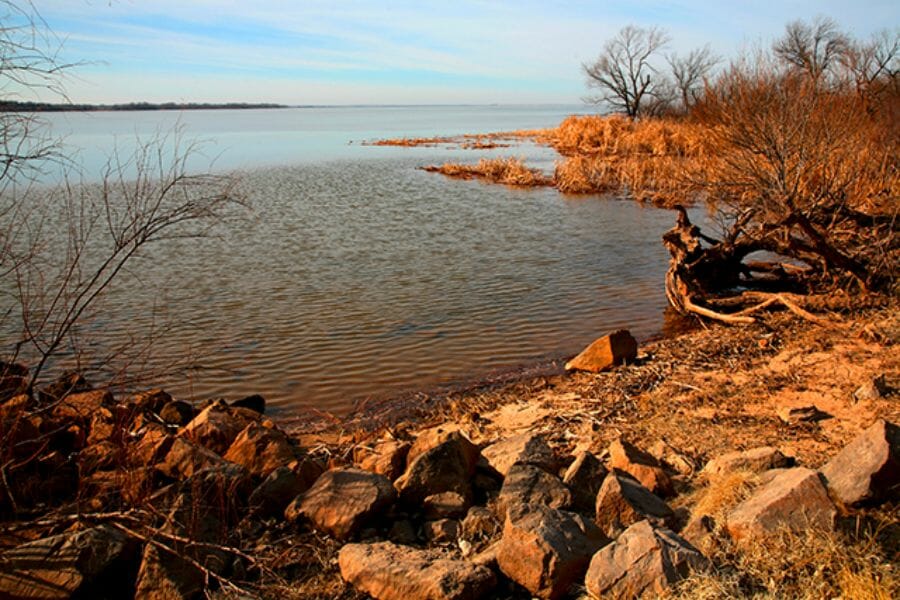
Rt 1 Box 28, Jet, OK 73749
Covering an area of about 9,000 acres, Great Salt Plains State Park is located in Alfalfa County. It’s home to the largest salt flat in the central United States, which was formed around 250 million years ago when an ancient ocean evaporated, leaving behind a thick layer of salt. The park was established in 1941 and has since become a popular destination for crystal hunters. In fact, it’s a well-known site for gem mining in Oklahoma, too.
The salt flat is covered with shallow saltwater ponds that are rich in Selenite crystals known for its clear, glass-like appearance. These crystals form as the saltwater evaporates, leaving behind deposits of Selenite. The crystals range in size, from small shards to large, impressive pieces.
When you visit here, you can dig in the shallow waters to find these beautiful specimens. Additionally, the park allows visitors to collect up to 10 pounds of crystals per day, which is more than enough to start or add to your collection.
Where we found crystals at Great Salt Plains State Park
Basically, you can find different types of crystals in the different parts and areas of the Great Salt Plains State Park. Most likely, though, you’ll be able to find high quality, hourglass Selenite crystals and Halite crystals here.
If you want REAL results finding incredible rocks and minerals you need one of these 👇👇👇

Finding the coolest rocks in isn’t luck, it's knowing what to look for. Thousands of your fellow rock hunters are already carrying Rock Chasing field guides. Maybe it's time you joined the community.
Lightweight, mud-proof, and packed with clear photos, it’s become the go-to tool for anyone interested discovering what’s hidden under our red dirt and what they've already found.
Join them, and make your next rockhounding trip actually pay off.
What makes it different:
- 📍 Find and identify 140 incredible crystals, rocks, gemstones, minerals, and geodes across the USA
- 🚙 Field-tested across America's rivers, ranchlands, mountains, and roadcuts
- 📘 Heavy duty laminated pages resist dust, sweat, and water
- 🧠 Zero fluff — just clear visuals and straight-to-the-point info
- ⭐ Rated 4.8★ by real collectors who actually use it in the field
Carrizozo Creek
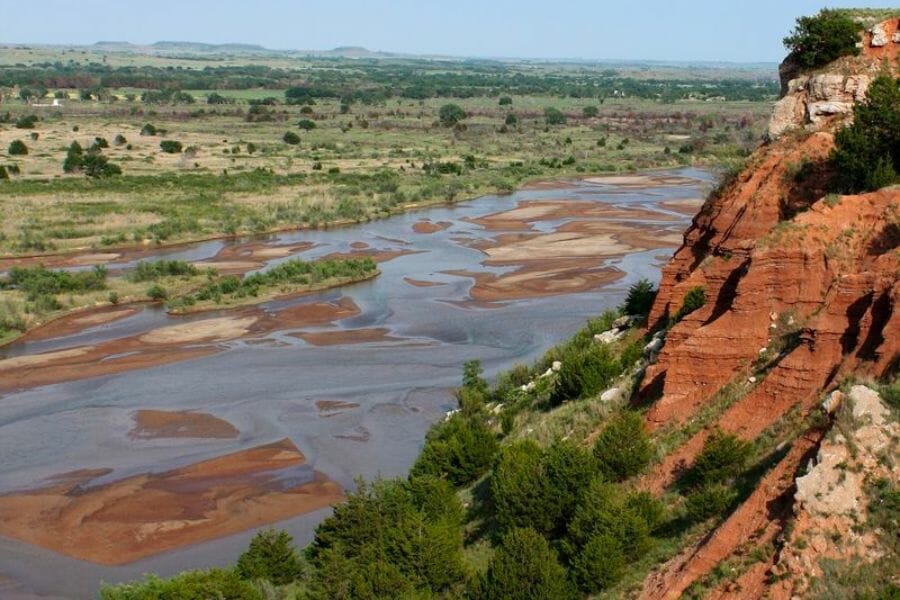
Kenton, Cimarron County, OK
Carrizozo Creek is known for its unique geology and crystal formations. The area has been a popular spot for rockhounds for many years due to the abundance of minerals found here. In fact, it’s among the best sites in Oklahoma to find crystals.
The surrounding hills at the creek are made up of limestone and shale, while the waters of the creek itself runs through a sandstone bed. This combination of rocks creates the perfect environment for crystal formation.
Carrizozo Creek rightfully belongs to our to recommendations because, firstly, it’s easily accessible and doesn’t require any strenuous hiking. Secondly, the crystal formations found here are unique and beautiful and make for great additions to any rock collection. Lastly, the creek bed provides a great opportunity for rockhounds to find specimens that have been washed down from the surrounding hills.
Where we found crystals at Carrizozo Creek
You can find some very interesting and fascinating samples of Rose Agates if you explore the gravels of Carrizozo Creek. Wondering how much does this crystal cost? Read our article on that!
Miami
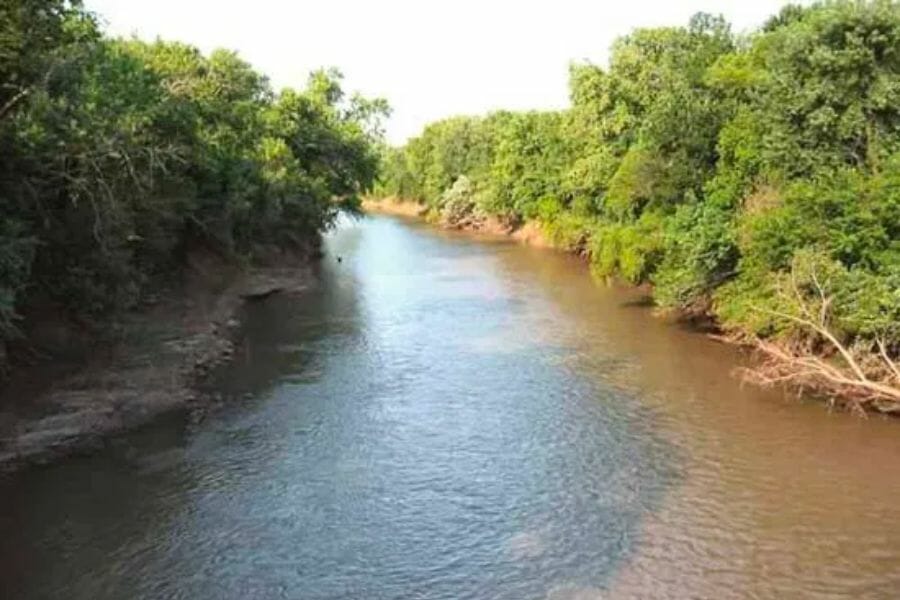
Ottawa County, OK
Miami is located in the northeastern part of our state. Aside from its abundant crystals and minerals, this place is also known for its rich mining history dating back to the late 1800s, when Lead and Zinc were discovered in this area. Today, Miami is home to several abandoned mines and quarries that have become popular spots for rockhounds.
This region is characterized by rolling hills and valleys, and the surrounding rocks are mostly made up of limestone, shale, and sandstone. Because of these combination of rocks, crystals were formed.
Since the area has a rich mining history, there are plenty of abandoned mines and quarries to explore here. The surrounding hillsides and creek beds also provide great opportunities for rockhounds to find specimens that have been washed down from the mines and quarries. And if you’re planning to go here, it would be easy since it’s located in close proximity to other popular rockhounding destinations like Joplin, Missouri and the Tri-State Mining District.
Where we found crystals in Miami
We highly recommend exploring the Lead-Zinc district mines and quarries in Miami, which are are important contributors to the Tri-State District Mineral production. Within 25 to 30 miles of Miami, specifically in around the mining towns of Picher, Cardin, Century, and Quapaw, you can also explore some major producing mines. Here, you can find amazing samples of Aragonite, Calcite, Chalcopyrite, Galena, Pyrite, and Quartz crystals, among others.
Spavinaw Lake
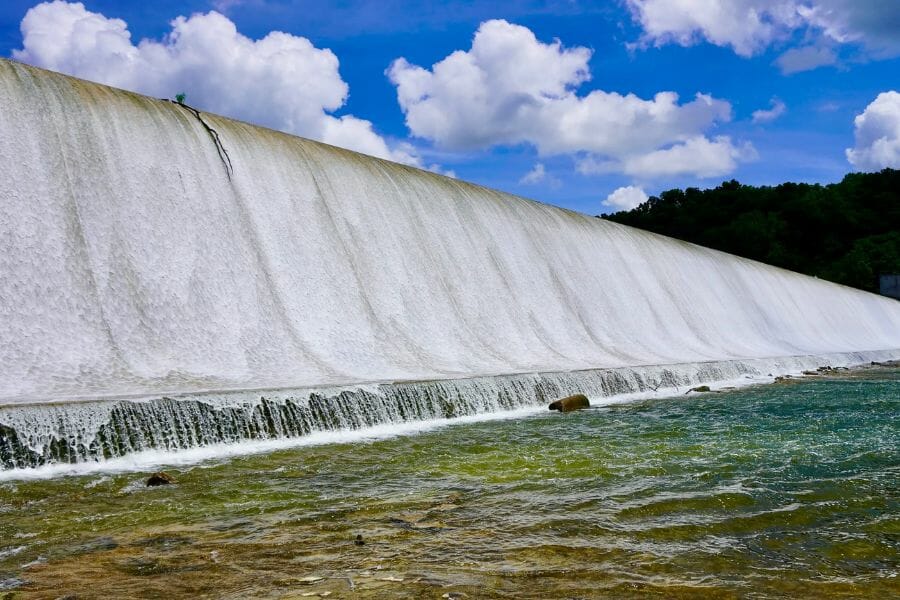
Mayes County, OK
With its beautiful scenery and rich resources, Spavinaw Lake belongs to our top recommended classic crystal hunting sites. It was created as a source of drinking water for nearby cities and is surrounded by rolling hills and scenic vistas, making it a popular destination for outdoor enthusiasts. But what makes Spavinaw Lake particularly interesting for rockhounds is the abundance of crystals that can be found here.
The lake is surrounded by limestone and sandstone, which create the ideal environment for crystals to form. The area is easily accessible and is located within driving distance of major cities like Tulsa and Joplin, so if you’re planning to visit, know that you won’t have a hard time reaching it. The surrounding hillsides and creek beds also provide great opportunities to find specimens that have been washed down from the surrounding hillsides. And as cherry on top, the lake itself is a beautiful backdrop for rockhounding adventures.
When you visit here, be prepared to do some light hiking as the best specimens are often found on the surrounding hillsides. It’s also important to be cautious when exploring the area, as it is a popular spot for outdoor enthusiasts and there may be restrictions on where you can collect specimens.
Where we found crystals at Spavinaw Lake
You can get your hands on the best samples of Galena, Pyrite, and Quartz crystals in our state if you search for them in area to the west of the dam in Spavinaw Lake.
Tahlequah
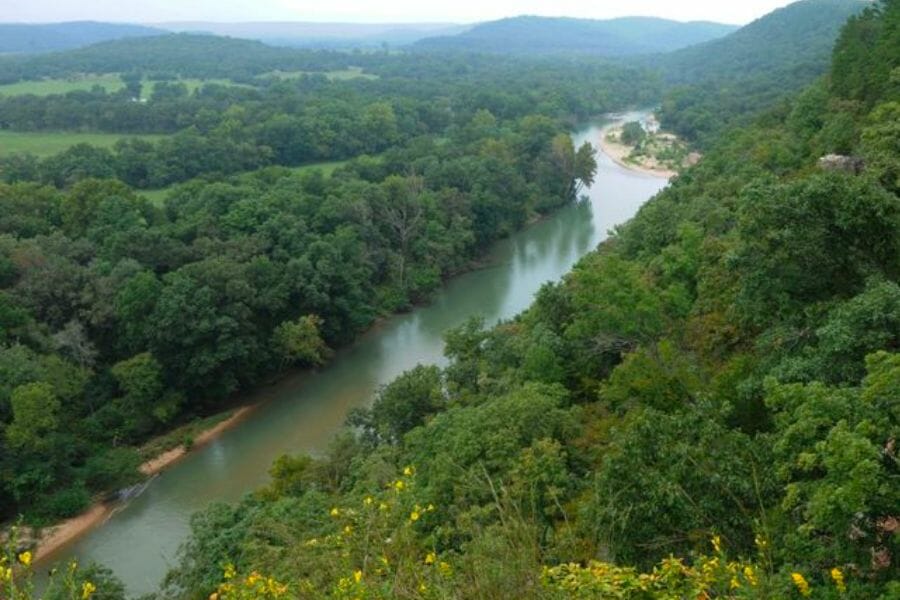
Cherokee, OK
Tahlequah is a charming city located in the northeastern part of our state. It’s not only rich in history and culture, but also offers great opportunities for rockhounds to find beautiful crystals and minerals.
This city has a long and fascinating history, as it was once the capital of the Cherokee Nation. It’s located in the foothills of the Ozark Mountains, which is known for its unique geology and abundance of crystals. The surrounding hillsides and creeks provide rockhounds with a variety of opportunities to find different crystal specimens.
The area is comprised of limestone, sandstone, and shale formations, which aids in crystal formation. That’s why rockhounds can often find pockets of crystals hidden within the rocks. You can also find Oklahoma crystals along the creek bed of Illinois River, which is very near Tahlequah.
So why would Tahlequah be a great place to find crystals? Aside from its accessibility and richness in crystals, the city itself offers a variety of accommodations and restaurants, making it a great base camp for your rockhounding adventures.
Where we found crystals at Tahlequah
The road cut west of Illinois River proves to be the best area here to find interesting crystals, like Pyrites. We would suggest exploring there first before going through the other parts of the city.
Our Other Favorite Places For Crystal Hunting
A state as big— and as well-endowed— as Oklahoma doesn’t easily run out of classic sites to find crystals, so aside from our top 5 recommended places, here are some more spots that you can explore for crystals. Many of these spots also prove to be amazing sites to find Oklahoma geodes.
Where you can find crystals for free in Oklahoma
You may be aware that, more often than not, the best places to explore for crystals often require some fee. So we decided to separate and discuss with you first the areas that you can visit for free. Of course, finding crystals here is free, too!
| County | Location |
| Alfalfa | 0.5 miles south at the Cherokee Gravel Pit |
| Beckham | Area quarries of Elk City |
| Caddo | On the Canadian River at the Tindel Company Gravel Pit |
| Canadian | At the Dolese County Gravel Pit |
| Dewey | At Seiling, Taloga area |
| Ellis | Gravel pits and sand pits along Wolf Creek |
| Grant | At copper prospect in Salt Fork area |
| Harmon | 0.75 miles south of McKnight area at the Wilkerson Gravel Pit |
| Johnston | Ravia, Reagan, Tishomingo, and Troy area gravel pits |
| Kiowa | Along the south shore of the Washita River |
| Major | In tablelands of the Glass Mountains |
| Noble | At abandoned copper prospect at Perry area |
| Osage | In quarry just west of Gray Horse area |
| Pushmataha | Antlers area |
| Stephens | In the cut banks of Little Beaver Creek |
| Tulsa | At the Tiger Quarry |
| Woods | 10 miles north-northwest of Tegarden area |
Other great places to dig for crystals
Meanwhile, here are the classic sites that require some fee if you want to find crystals in them. Usually, these fees vary depending on the season (sometimes, it could even be free!), so make sure to reach out to these places first before heading out.
| County | Location |
| Craig | 2 miles east-southeast at the Bill Patch Strip Coal Mine |
| McCurtain | 1 mile from the Arkansas border at the Johnson Copper Mine, at the Eades Mine on Mountain Fork, and at the Buffalo Creek mines and prospects |
| Okfuskee | Mine road going southeast from Prague |
| Ottawa | Picher area mines |
| Pawnee | At abandoned copper mine in Pawnee area |
How to find crystals in Oklahoma
Many of our recommended sites cover large bases, so to help you focus your search on the most productive spots here in terms of crystal resources, here are the usual areas that contain them. Take note, there may be one or more of these areas in one location, so always allot enough time for your search.
Quarries
Quarries are locations where large amounts of rocks and minerals are extracted from the earth for commercial purposes. While they may not seem like an ideal location for crystal hunting, they can actually be a treasure trove of stunning crystals. In quarries, there is a constant digging up of new material from the earth. As a result, crystals that have been hidden underground for millions of years are exposed, making it a prime location for crystal hunting.
Another great thing about quarry hunting is that it’s relatively easy to access. Most quarries have public access areas, so you don’t need to have any special permissions or permits to search for crystals there. However, it’s always best to check with the quarry owner or operator before heading out to ensure you’re not trespassing.
Streams and Creeks
These natural bodies of water are a fantastic location to find beautiful crystals that have been washed downstream over time. Streams and creeks are often located in areas where the ground is rich in minerals, which means that crystals can be found here in abundance. One of the best things about searching in streams and creeks is that it’s a fun and relaxing activity that can be enjoyed by people of all ages. You can spend the day exploring the great outdoors and bonding with family and friends while hunting for beautiful crystals.
Railroad Cuts
A railroad cut is a man-made feature created when a railroad company needs to make a path through a hill or mountain. They are often found near railroads and can be easily accessible. Railroad cuts can be great for finding crystals because they expose layers of rock that are typically hidden underground. As trains pass through the area, the vibration can loosen rocks, making it easier for crystal specimens to be exposed. In addition, the excavation process during construction can also expose crystals that were previously buried.
Oklahoma Crystal Mining Laws And Regulations
The great news is that crystal mining is perfectly legal in Oklahoma, provided that you follow our state’s local laws governing this activity, especially those from the Oklahoma Department of Mines. Generally, you need to obtain any necessary permits or permission from concerned offices and individuals, like government agencies for government lands and land owners for private lands. Also, pay respect to any regulations in place to protect the environment and wildlife in our state. By following these rules, we are helping promote responsible crystal mining practices that ought to be emulated.
The Best Crystal Shops In Oklahoma
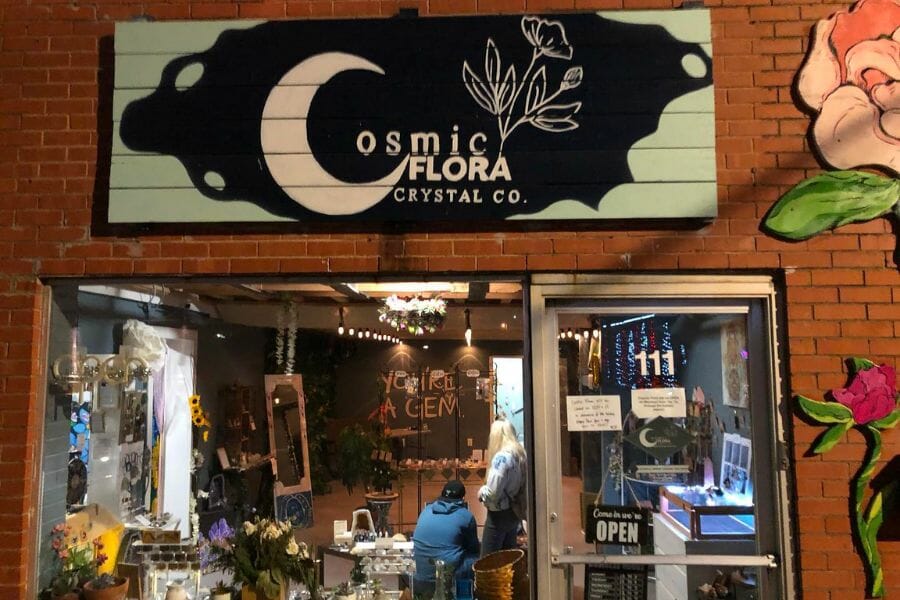
If you simply want to find a specific crystal that will complete your collection, you may opt to visit the local crystal shops here that offer the best selections of crystals. Who knows, you might find the next crystals that will belong to your collection in some of these shops:
- Good Earth Rocks Gallery – 824 N Broadway Ave, Oklahoma City, OK 73102
- Cosmic Flora Crystals – 111 N Broadway Ave, Moore, OK 73160
- Nature’s Treasures – 6223 SE 15th St, Midwest City, OK 73110
- Earthy Girl – 3027 SE 44th St, Oklahoma City, OK 73135
- The Spunky Cauldron – 1020 NW 192nd St Suite F, Edmond, OK 73012
- UnearthedOKC – 4700 S Bryant Ave, Oklahoma City, OK 73135
- Earth and Soul – 128 N Main St, Sand Springs, OK 74063
- Crystal Cactus Lifestyle Shop – 45 Foley Ave, Eufaula, OK 74432
- Craig’s Curious Emporium – 1209 NW 23rd St, Oklahoma City, OK 73103
- The Celtic Moon – 124 W Main St Suite#2, Ardmore, OK 73401
Additional places to find crystals in nearby states
If you’ve already tried all of our recommendations above or are planning a trip out of the state, you should check out our guides for neighboring states:
- Crystals in Kansas
- Crystals in Missouri
- Crystals in Arkansas
- Crystals in Texas
- Crystals in New Mexico
- Crystals in Colorado
If you have any recommendations we haven’t covered, please leave them in the comments below!