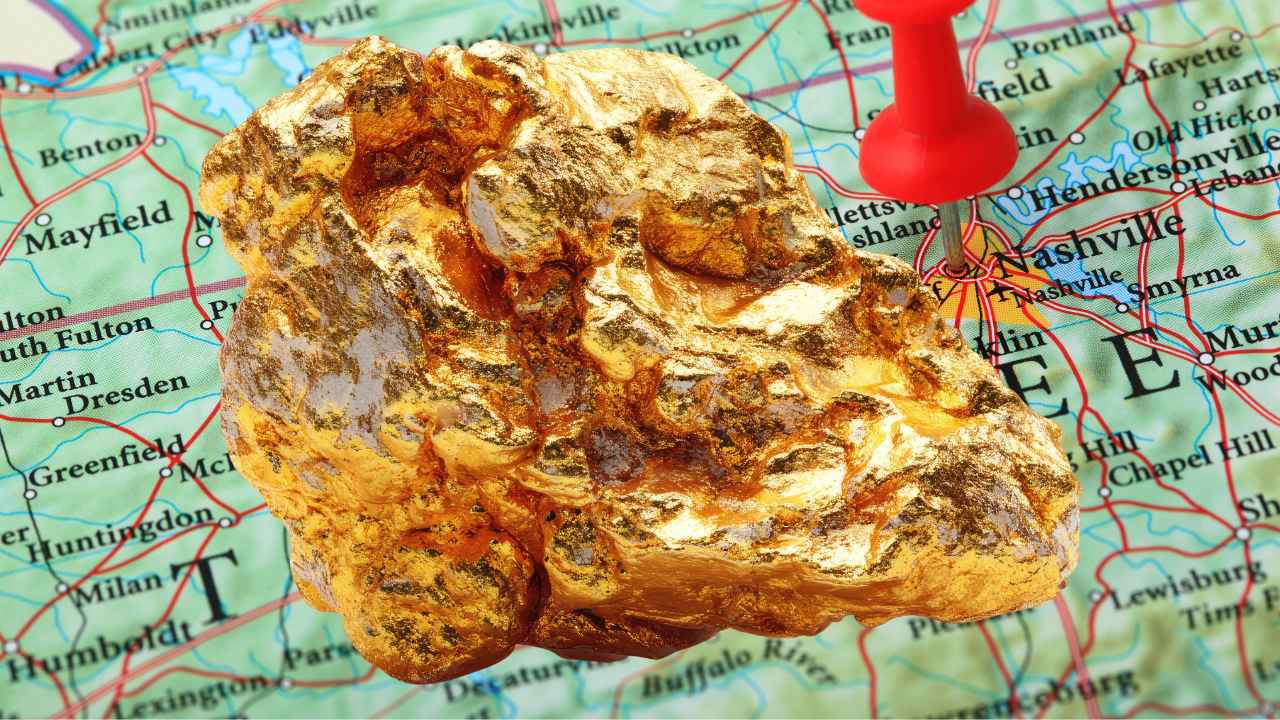
Gold turned up in Tennessee’s Coker Creek in 1827, two years before the famous Georgia gold rush, while the land still belonged to the Cherokee Nation. Nearly two centuries later, that same creek and its neighbors still give up real color to patient panners.
With gold trading above $4,000 an ounce, you do not need to find much for a weekend of panning to pay for itself.
Most people who try gold prospecting in Tennessee make the same mistake. They pan the big rivers of Middle and West Tennessee instead of heading straight for the one corner of the state where the gold actually waits.
The gold lives in the mountains of the southeast. Yes, you can still find gold in Tennessee today, especially along Coker Creek and the Tellico River in Monroe County, where placer gold has been worked since the 1820s. This guide covers every proven spot, the technique that works at each one, and the rules that keep your trip legal.
Our team of geologists and experienced rockhounds put this guide together the same way we approach every gold state. We mapped the gold bearing rock of the Blue Ridge, then matched it against nearly two centuries of documented finds. Here is everything you need to plan your first Tennessee gold trip.
Table of Contents
- Biggest Discovery
- Types of Gold
- Where Gold Hides
- Best Places
- Techniques
- Real vs Fool’s Gold
- How Gold Got Here
- What To Bring
- Best Seasons
- Other Minerals
- Legal Rules
- FAQ
The Biggest Gold Discovery in Tennessee History
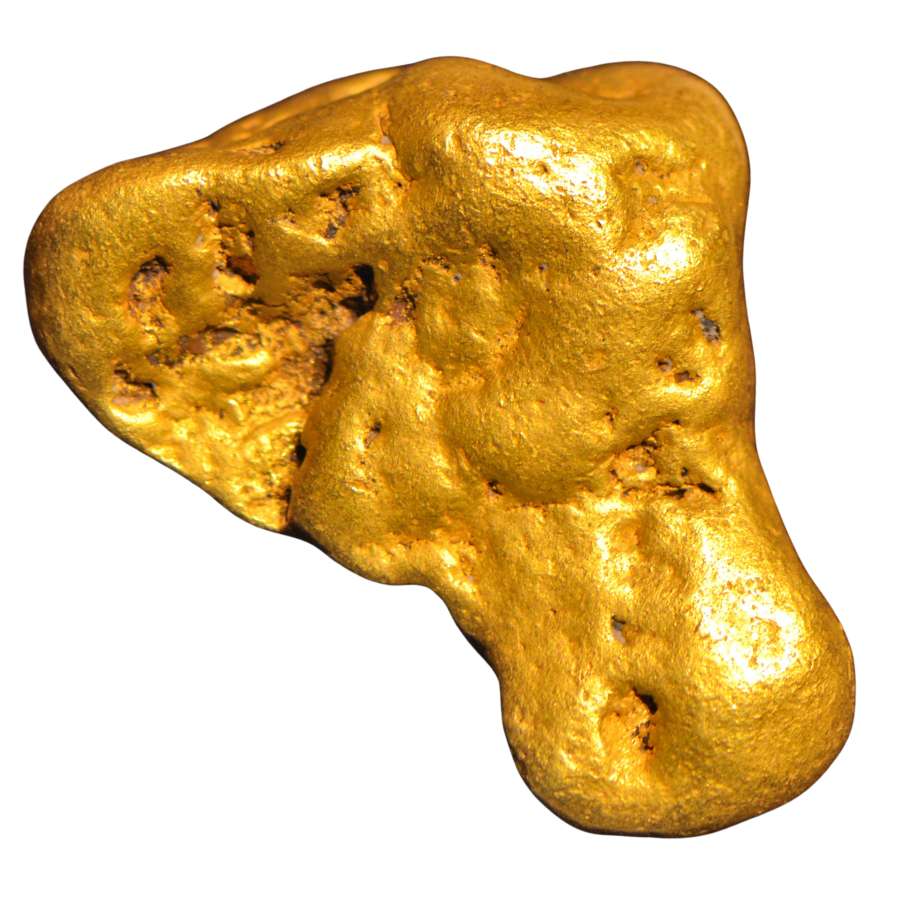
Tennessee’s gold story started as a secret. In 1827 prospectors began pulling gold out of Coker Creek in the mountains of Monroe County, on land that was still Cherokee Nation territory, which made every pan of gravel legally off limits to the miners washing it.
The secret did not keep. When Tennessee’s first state geologist visited the creek in 1831, he found hundreds of miners already washing the gravels of every rivulet and gully in the valley.
The rush peaked in the late 1850s, when 600 to 700 miners worked the district with pans, hydraulic hoses, dredges, and tunnels. United States Mint records show about $269,000 in Coker Creek gold officially received between 1831 and 1921, which works out to well over 13,000 ounces, worth more than 50 million dollars at today’s prices.
The source veins that fed the creek have never been found, and that is the exciting part. The gold that keeps showing up in Coker Creek pans today is still coming from somewhere up in those hills.
The Kinds of Gold You Can Find in Tennessee
Tennessee gold is Appalachian placer gold, shed from ancient quartz veins into mountain streams, and knowing what it looks like is how you make sure every bit of it ends up in your vial. Almost all of it hides in a narrow belt of Blue Ridge rock along the North Carolina line. Here are the forms it actually takes in a Tennessee pan.
Flour Gold
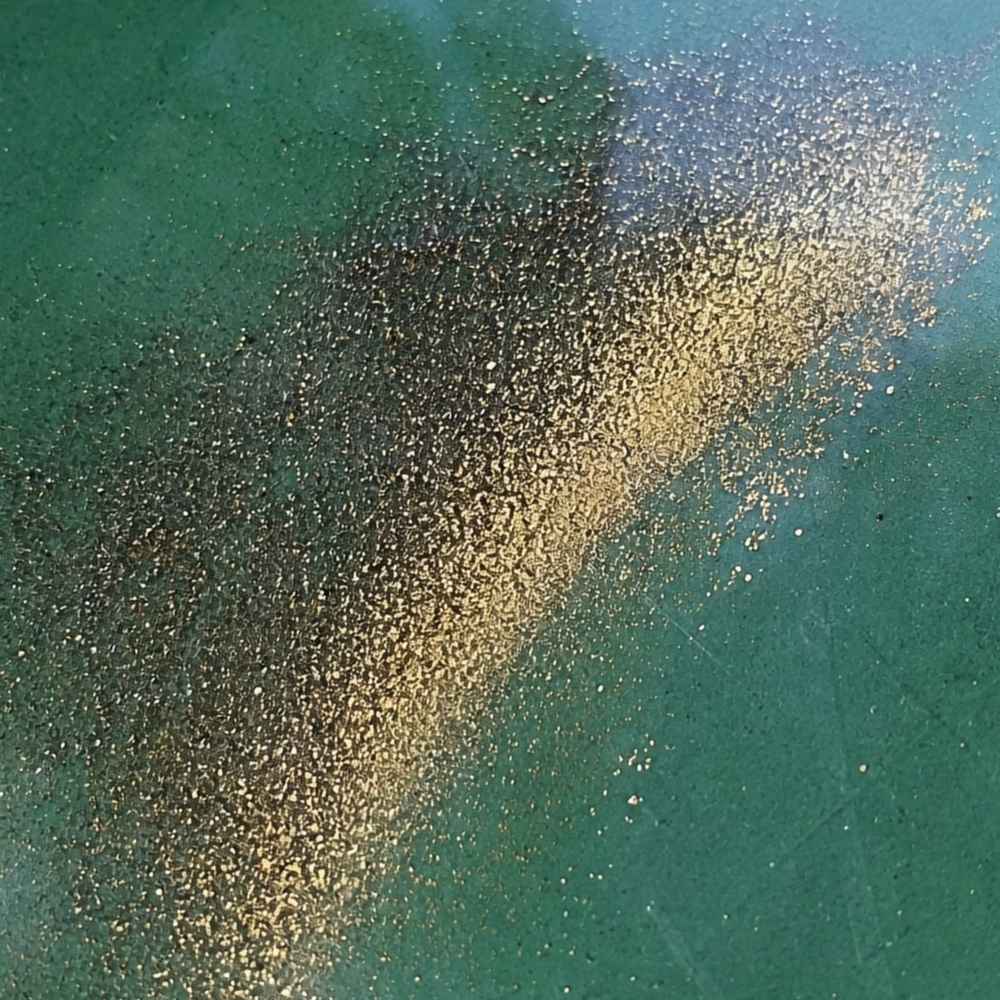
Flour gold is gold ground down to particles smaller than grains of sugar, and it is what fills most Tennessee vials. Millions of years of mountain streams have hammered the district’s gold into dust. It shows up as a bright golden smear in the crease of your pan after everything lighter washes away.
The mineral that fools people here is mica, and Tennessee’s metamorphic rock sheds it into every creek by the ton. Mica flashes gold in sunlight but it is nearly weightless. Real flour gold sinks straight to the bottom of your pan and stays golden in the shade, while mica floats, flutters, and goes dull the moment the light changes.
Because flour gold washes out of a normal pan so easily, you want a dedicated finish pan for your final concentrates. The Garrett Prospecting 10 Inch Backpacker Gold Pan is the one our team uses for exactly this job.
This is also the stage where a good identification reference saves your whole trip. The Rocks and Minerals of the United States Field Guide shows you exactly what real gold looks like next to every mineral that imitates it in these mountains, so you know what you are looking at while your pan is still wet.
Gold Flakes and Pickers
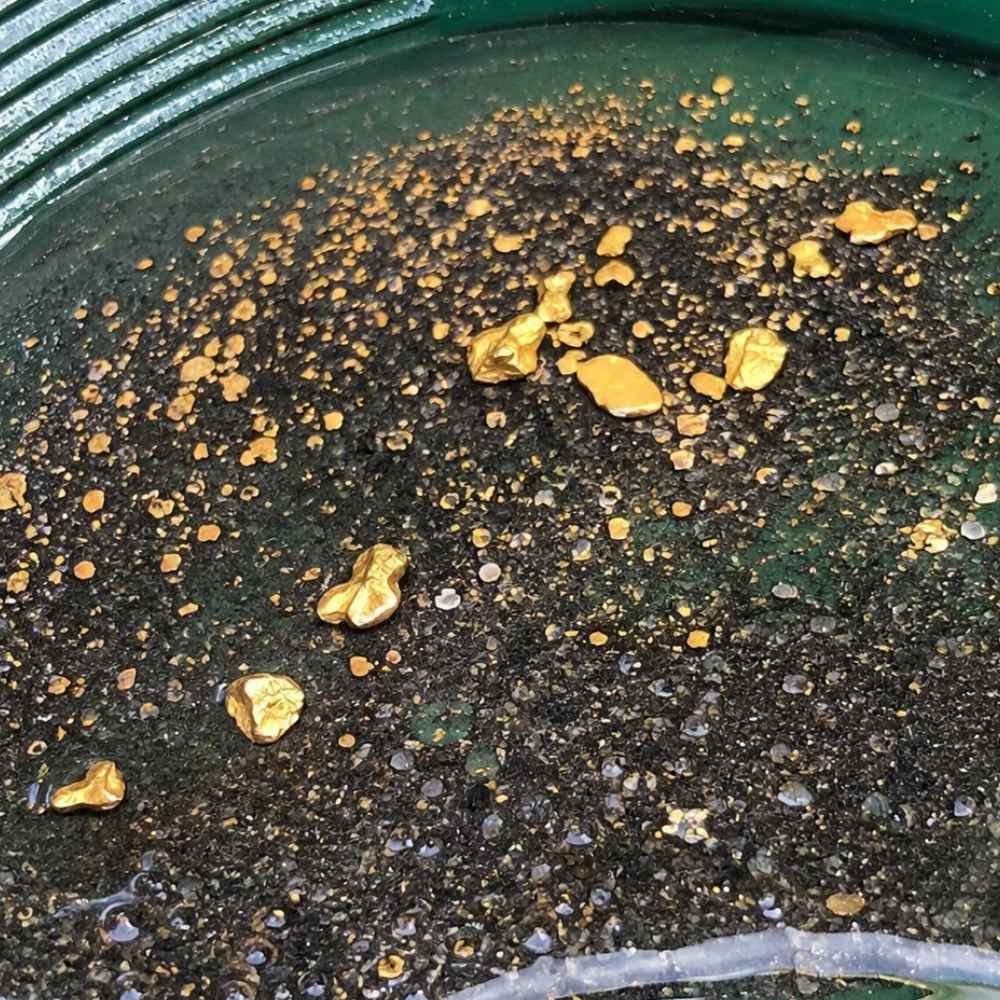
Flakes are flat pieces about the size of a grass seed, and pickers are the chunky ones big enough to grab with your fingers. In Tennessee they turn up where creeks have concentrated gold against bedrock and hard clay for thousands of years, especially in the Coker Creek district. A pan with two or three solid flakes is a genuinely good Tennessee day.
The lookalike here is chalcopyrite, the brassy copper mineral that made Ducktown famous, and it glitters in streams all over the southeast corner. The test takes one second. Poke it with a pin, because gold dents like soft metal while chalcopyrite shatters or flakes apart.
Flakes are nearly impossible to pick up with wet fingers. A snuffer bottle like the Garrett Gold Guzzler Bottle sucks them straight out of your pan without losing a single one.
Small Nuggets
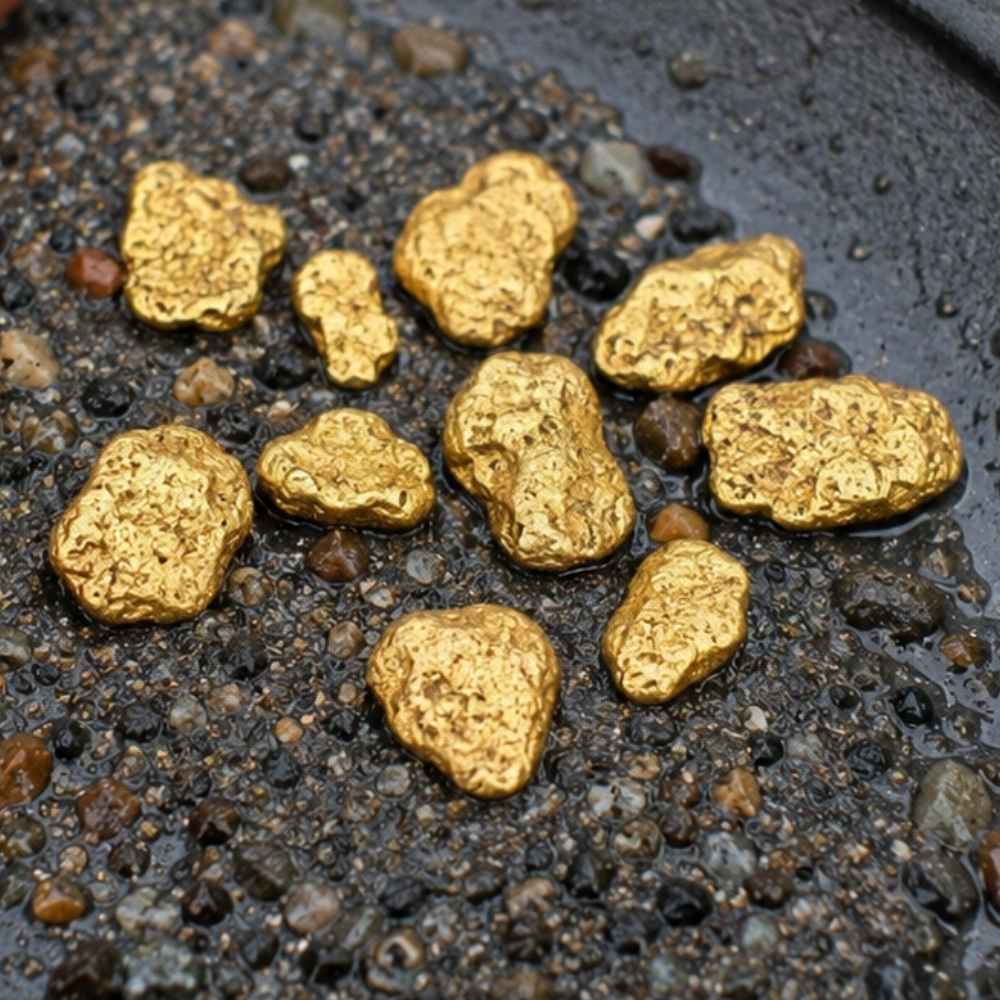
Real nuggets come out of Tennessee, and they are the state’s top prize. Prospectors still report pieces around a gram from the bench gravels and terraces above Coker Creek, worn smooth by their trip down the mountain. Every one is a souvenir of a vein nobody has ever found.
Pyrite is the classic false alarm, and Tennessee gravel carries plenty of it. Pyrite forms sharp little cubes with flat glittering faces, while a true stream nugget is rounded, dented, and butter colored with no crystal faces at all.
Serious nugget hunters tip the odds their way by going electronic. The Garrett AT Gold Metal Detector is tuned for exactly this kind of small gold, and it handles Tennessee’s iron rich mountain ground with ease.
Gold in Quartz
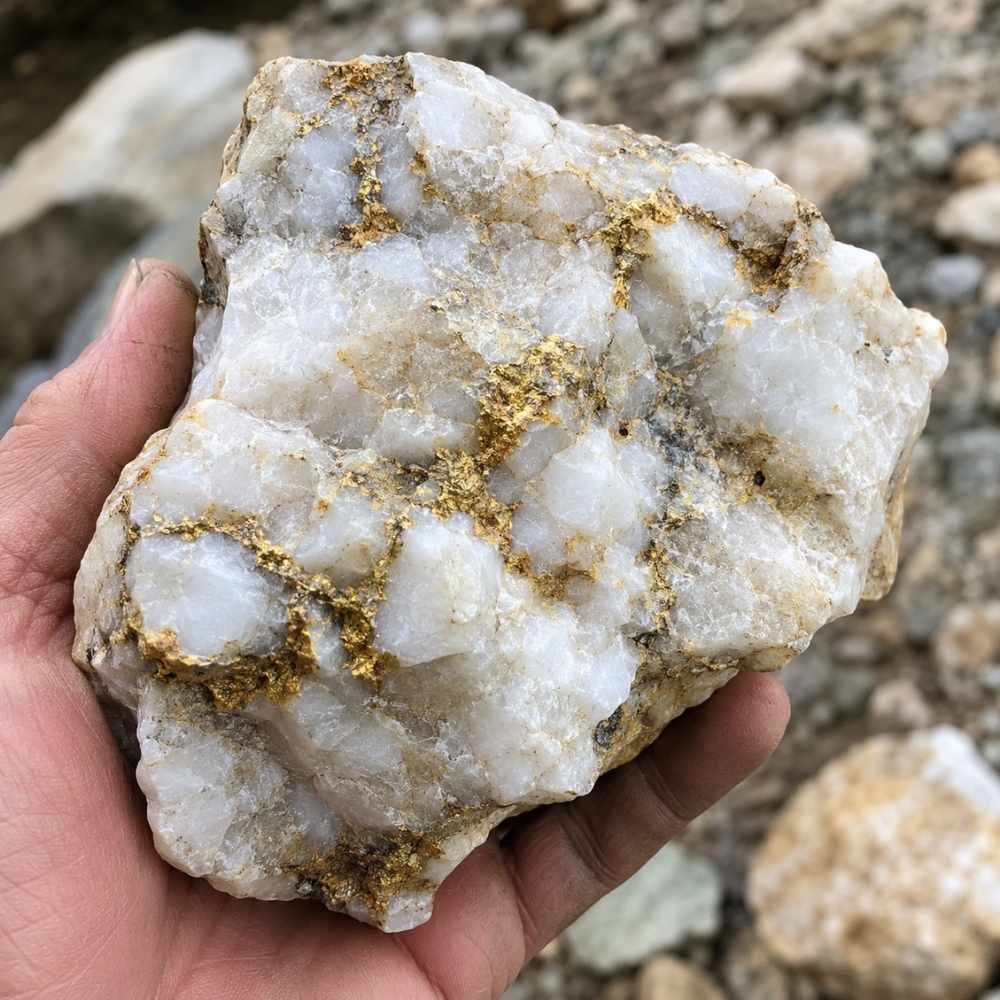
The source of every flake in a Tennessee pan is gold locked inside white quartz veins in the hillsides. Weathered chunks of that vein quartz wash into the creeks, and once in a while a piece still carries visible specks and stringers of gold. Old timers called this float, and following it uphill is how they hunted for the mother lode.
The fool here is a quartz pebble freckled with pyrite or flashing with mica. Wet the rock and shade it with your hand, because real gold keeps its warm color in shadow while the imposters go pale and silvery.
Cracking suspect quartz is the fun part. The Estwing Geo Paleo Rock Pick opens a fist sized piece with one clean strike.
Knowing what the gold looks like is half the game. The other half is knowing where the creek hides it and how to get it out, and that is exactly where this guide goes next.
Where Gold Hides in Tennessee Streams
Gold is about 19 times heavier than water, so it always sinks to the lowest, slowest spot the current allows. Tennessee’s mountain creeks are steep and flashy, which makes their gold traps easy to read once you know these five features.
Inside Bends
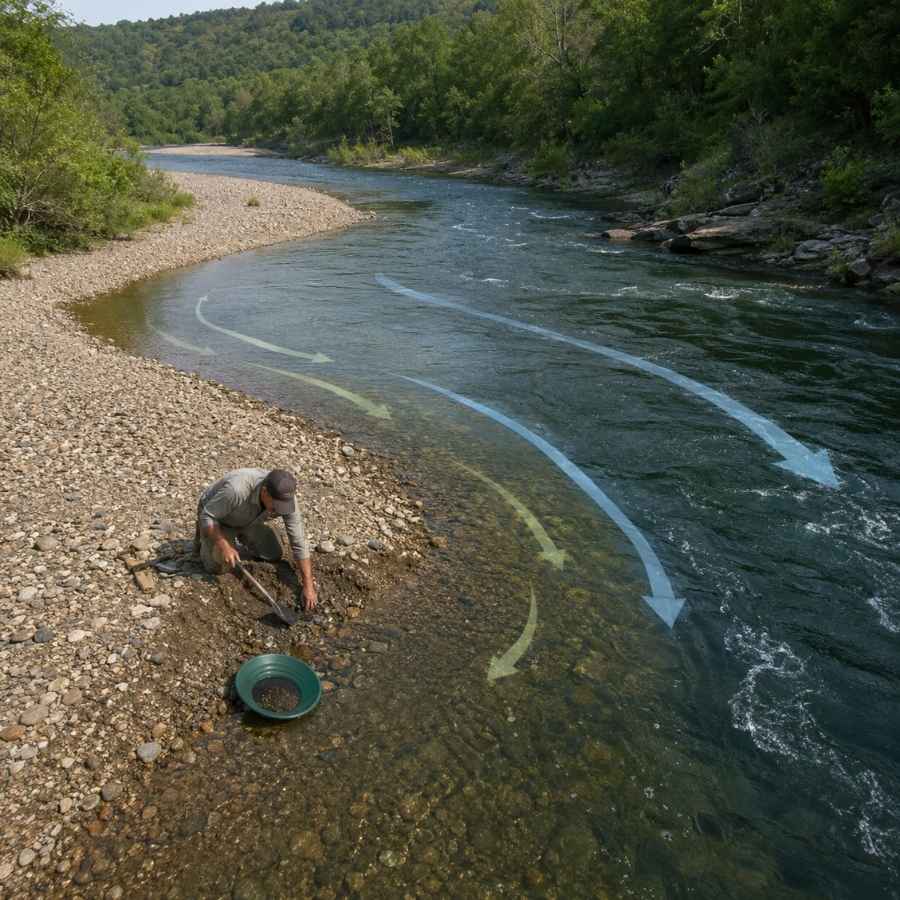
Water slows down on the inside of every curve, and slow water drops its gold. Look for the gravel bar that builds up on the inside of a bend and dig where the coarse gravel starts. On Coker Creek and the Tellico, the inside bends below fast narrow chutes are the most reliable producers.
Digging here means moving packed mountain gravel, and a wide pan with deep riffles catches the fine gold as you work. The Garrett 15 Inch Dual Riffle SUPERSLUICE Gold Pan is built for exactly this kind of high volume panning.
Gravel Bars
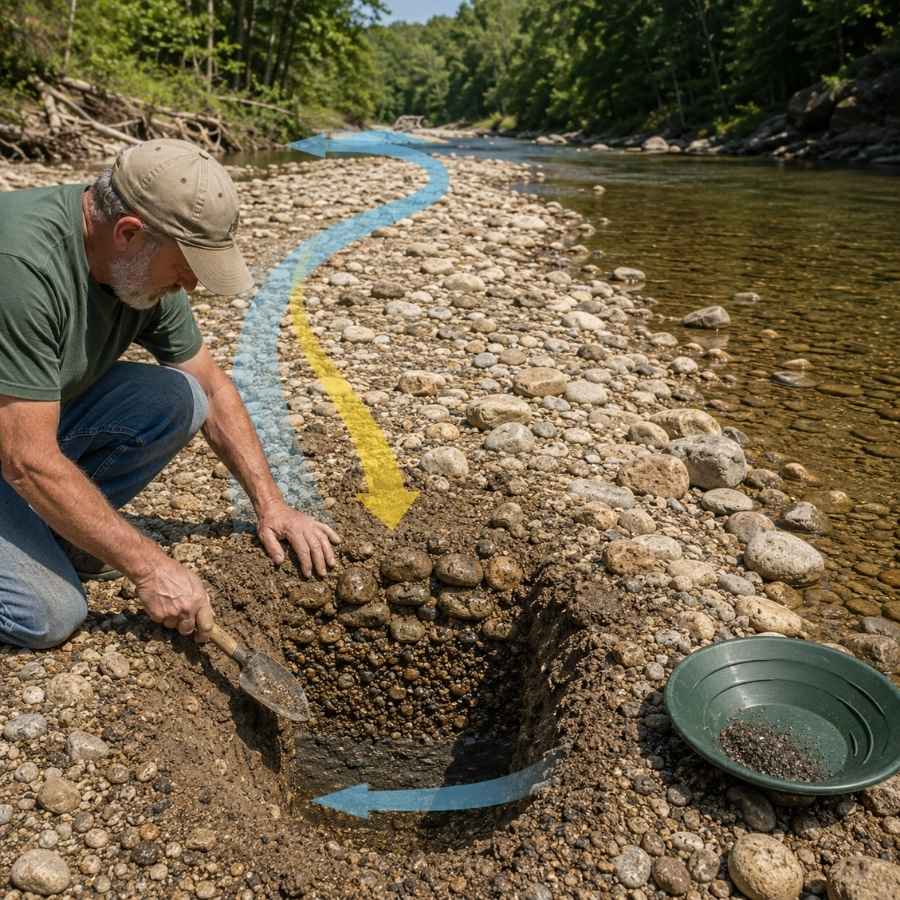
Summer low water exposes gravel bars that were underwater all spring. The gold in a bar concentrates at its upstream end and down at its base, not on the surface. In Tennessee the base of a bar often sits on hard orange clay, and that clay acts like false bedrock, so pan the gravel sitting right on top of it.
Bars are full of oversized cobbles that waste pan space. Screening them out first with the SE Half Inch Sifting Screen doubles the gravel you can actually process in a day.
Bedrock Cracks
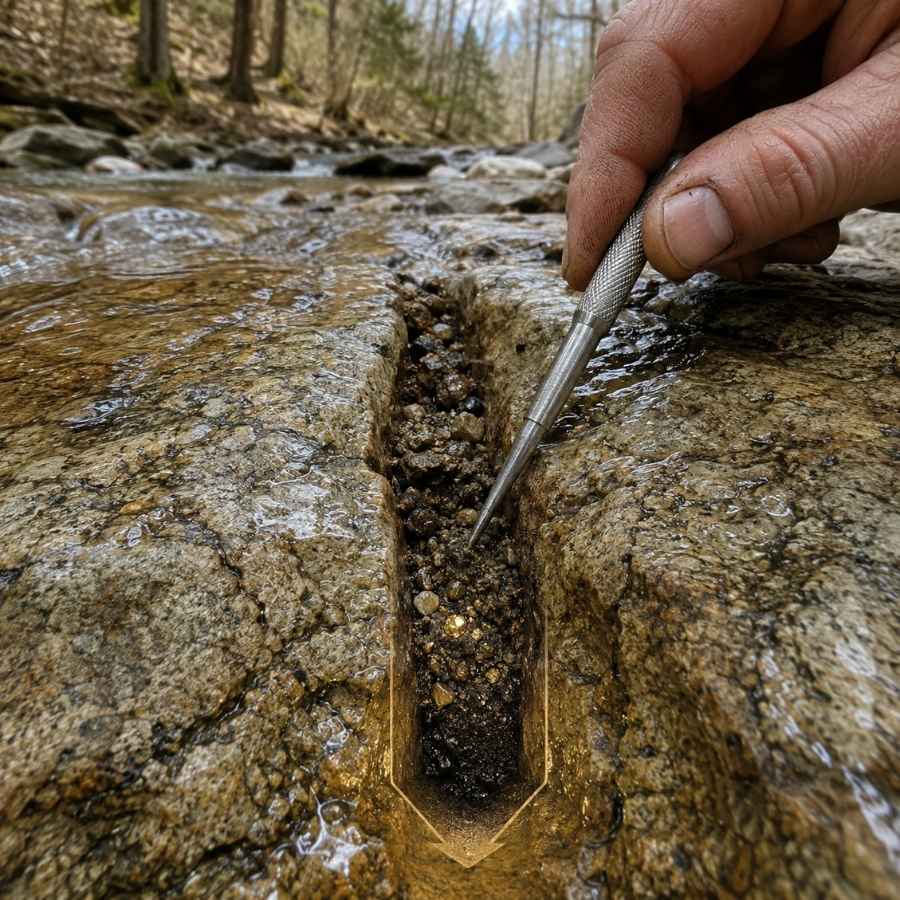
Bedrock is the floor gold cannot sink through, so its cracks fill up like nature’s own sluice box. Tennessee’s gold creeks run over tilted slate and quartzite, and every joint and crack facing upstream is a trap that has been collecting since long before the miners came. The bottom inch of packed dirt in a crack is the richest material in the creek.
A steel crevice tool set like the ASR Outdoor Steel Crevice Tool Set scrapes out material your fingers cannot reach.
Behind Boulders
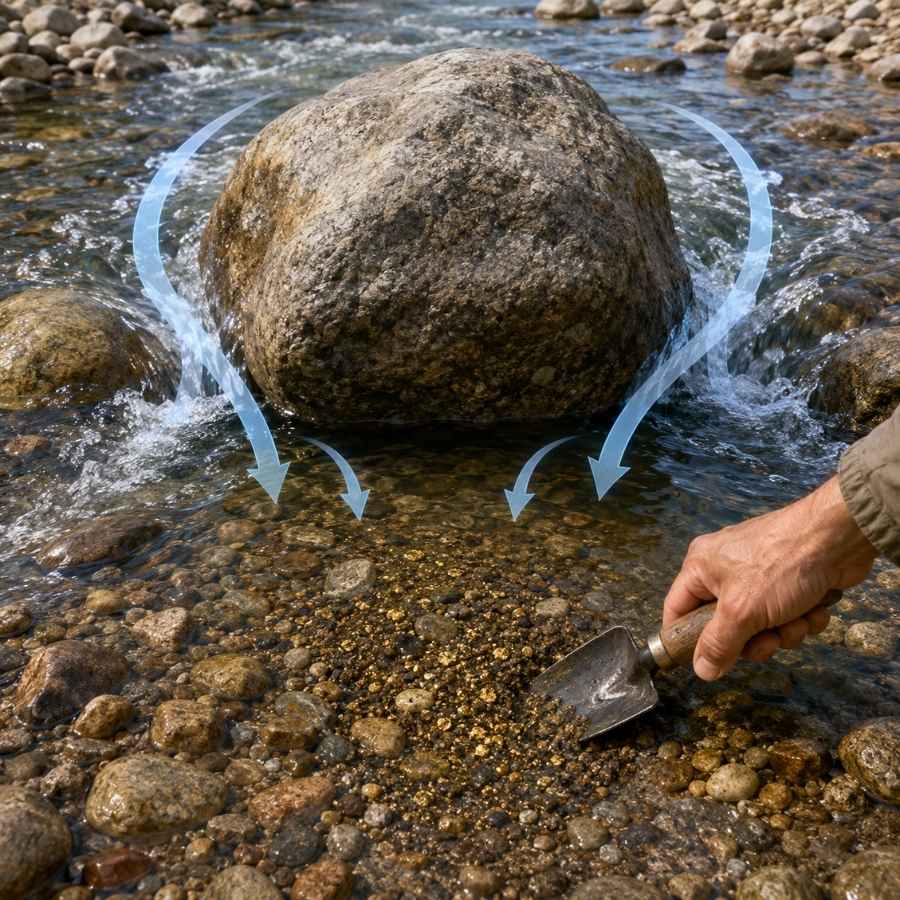
Mountain creeks like the Tellico are paved with boulders, and every one splits the current to create a calm pocket directly downstream. Gold traveling in a flood drops right into that pocket. Feel around the downstream base of big rocks and dig the packed gravel your fingers find there.
That gravel is usually cemented tight. A strong shovel like the Bully Tools 14 Gauge Round Point Shovel breaks it loose without snapping a handle mid trip.
Black Sand Streaks
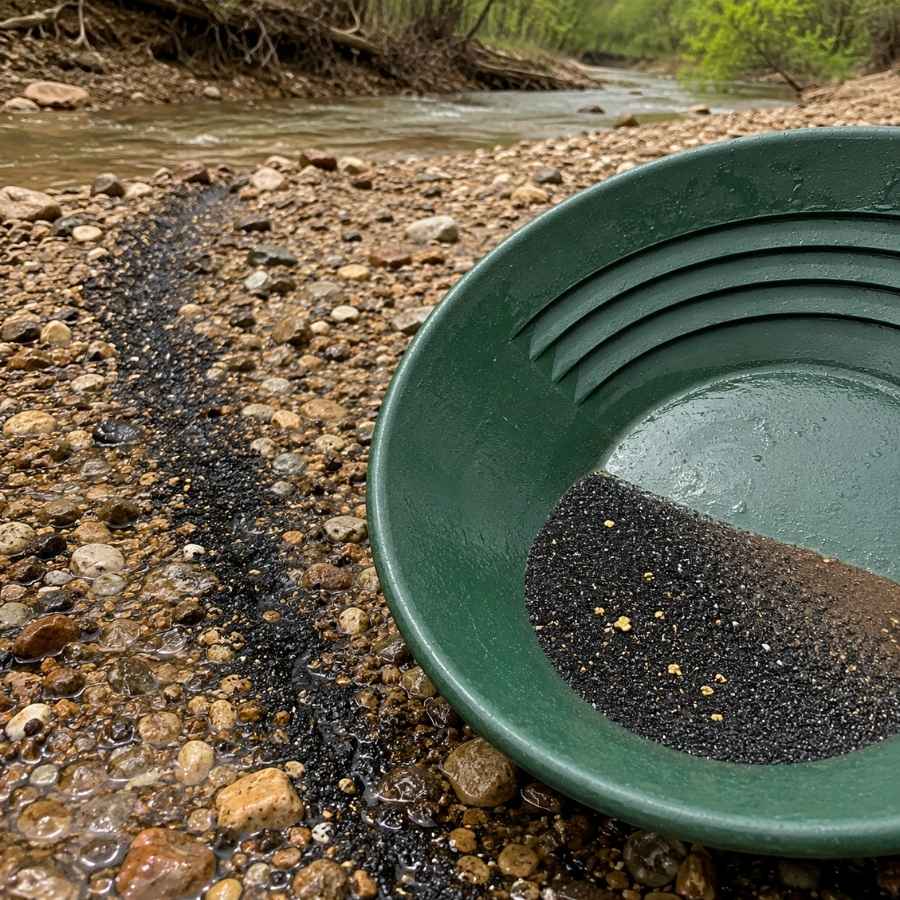
Black sand is crushed magnetite and other heavy iron minerals, and it is the number one gold indicator in Tennessee. It erodes out of the same mountain rock as the gold and settles in the same slow spots. When you see a dark streak in the gravel or a black layer in your pan, you are digging in the right place.
Separating fine gold from black sand at the end of the day is tedious by hand. A magnetic separator like the SE Magnetic Separator Pick Up Tool with Quick Release pulls the black sand out and leaves your gold behind in seconds.
Always Confirm Access and Collection Rules!
Before heading out to any of the locations on our list you need to confirm access requirements and collection rules for both public and private locations directly with the location. We haven’t personally verified every location and the access requirements and collection rules often change without notice.
Many of the locations we mention will not allow collecting but are still great places for those who love to find beautiful rocks and minerals in the wild without keeping them. We also can’t guarantee you will find anything in these locations since they are constantly changing.
Always get updated information directly from the source ahead of time to ensure responsible rockhounding. If you want even more current options it’s always a good idea to contact local rock and mineral clubs and groups
The Best Places To Find Gold in Tennessee
Tennessee’s gold clusters in two zones, the Coker Creek gold belt of the southeastern mountains and the Smoky Mountain foothills to the northeast of it. Here is every spot worth your gas money, grouped by region.
Southeastern Tennessee
The mountains of Monroe and Polk counties hold nearly all of Tennessee’s documented gold. This is Cherokee National Forest country, laced with creeks that have been producing color for two centuries.
Coker Creek

Coker Creek is the most famous gold water in Tennessee, the heart of the historic district that started the state’s gold rush in 1827. It tumbles through the Cherokee National Forest and private mountain land in southern Monroe County before dropping into the Hiwassee River. The gold is real and still coming, but access takes planning, because the Forest Service currently allows panning on Coker Creek itself only on private property.
Fine gold, flakes, and the occasional small nugget from bench gravels are the finds, and careful panning is the technique. The Coker Creek Gold Camp along Highway 68 offers pay to pan access, and the Gold Prospectors Association of America chapter based here holds member property on the creek.
Your pan will also turn up garnet sand, mica, pyrite, and quartz pebbles that sometimes carry their own surprises. This is exactly the moment people throw away good finds, because a wet unidentified stone looks like nothing. The Rocks and Minerals of the United States Field Guide lets you check every odd stone against clear photos before it goes back in the creek.
Bring the finish pan and snuffer bottle from the techniques section below.
Difficulty: 2 out of 5
Tellico River

The Tellico River is the biggest water in Tennessee’s gold belt, pouring out of the Unicoi Mountains through a rocky Cherokee National Forest gorge east of Tellico Plains. The river drains the same mineral rich rock as the Coker Creek district, and prospectors have pulled fine gold from its bars and bedrock for generations. It is big, cold, and gorgeous, with plenty of room to spread out.
Fine gold with occasional flakes is the find, and panning the gravel bars and boulder pockets is the technique. Much of the gold rides on hard clay layers instead of true bedrock, so dig down to the orange hardpan and pan what sits on it.
The gravel also carries garnets, mica, magnetite, and vein quartz. Check with the Tellico Ranger District before you pan, because rules differ stretch by stretch on the forest. A crevice tool set earns its keep in the bedrock runs, linked in the techniques section.
Difficulty: 3 out of 5
Cane Creek

Cane Creek is a small mountain stream in Polk County near the North Carolina line, and old reports credit it with gold going back to the district’s earliest days. Small water like this concentrates gold fast, because every flood squeezes the whole flow over the same few gravel patches. It is an intimate creek, more crawl than hike.
Fine gold and small flakes in bedrock pockets are the target, and crevicing plus careful panning is the combination that works. Work the cracks and gravel seams where the creek narrows.
Expect mica, pyrite, and black sand in every pan. The creek crosses a patchwork of national forest and private land, so confirm exactly where you are standing and get permission for the private stretches. Crevice tools are the key gear, linked in the techniques section.
Difficulty: 3 out of 5
Hiwassee River

The Hiwassee River is the collector of the whole gold belt, because Coker Creek and its gold bearing neighbors all drain into it in Polk County. Prospectors report fine color in the bars downstream of the creek mouths, where the big river has been reworking the district’s tailings for a century. Long stretches through the national forest are easy to reach off the river road near Reliance.
Fine flood gold on bar tops and behind boulders is the find, and panning is the technique. Test the upstream ends of the big gravel bars after spring water drops.
The pan also shows garnets, mica, and heavy black sand. The Hiwassee is a state scenic river with its own rules, so keep it to a pan and hand tools and check current regulations before digging. A classifier screen speeds the sorting, linked in the techniques section.
Difficulty: 3 out of 5
Ducktown and the Copper Basin

Ducktown is proof that Tennessee gold did not only come from creeks. The Copper Basin mines of Polk County pulled millions of tons of copper ore from these hills for over a century, and that ore paid a steady bonus in gold and silver recovered at the smelters. The basin’s moonscape days are over, and the reforested hills now hide one of the South’s great mining stories.
The mine lands themselves are private or preserved, so treat the historic sites as look but do not take. The Ducktown Basin Museum at the old Burra Burra Mine is the best way to stand in the middle of the district, and prospectors report occasional fine color in area streams for those who secure private permission.
Bycatch in this corner of the state runs to chalcopyrite, pyrite, and quartz, which is exactly the glittery mix that fools new panners. A magnifying loupe settles arguments fast, linked in the techniques section.
Difficulty: 5 out of 5
Smoky Mountain Foothills
The foothill counties northeast of the gold belt carry their own gold reports, shed from the same ancient mountain rock. The creeks are beautiful, the history is real, and patient panners keep finding color here.
Little River

The Little River drains the high heart of the Great Smokies before settling into Blount County farm country near Maryville, and prospectors have long reported fine gold in its lower gravels. The catch is the boundary line, because everything upstream inside Great Smoky Mountains National Park is completely off limits to panning. The legal water is the private land stretch below Townsend.
Fine flour gold in bar gravel is the find, and patient panning is the technique. Work the inside bends and pan down to the packed layer.
The gravel carries mica, garnet sand, and quartzite pebbles off the mountains. Every productive stretch crosses private land, so a polite knock comes before your pan. Standard panning gear from the techniques section covers it.
Difficulty: 3 out of 5
Chilhowee Mountain Streams

Chilhowee Mountain is the long wall of ridges standing between the Smokies and the Tennessee Valley, running through Blount County toward the Little Tennessee River. Its quartzite and sandstone layers carry quartz veins, and old reports put traces of gold in the small streams draining its flanks. This is prospecting on the frontier of the state’s gold country, with more hiking and fresh ground few panners have touched.
Fine gold in small stream gravels is the target, and crevicing the little bedrock runs is the technique that fits water this size. Test where the streams leave the steep slopes and slow down.
Expect quartz, mica, and iron stained gravel in the pan. The mountain is a mix of national forest, state land, and private tracts, so map your spot and get the right permission before digging. A hand trowel and crevice tools do the work, linked in the techniques section.
Difficulty: 4 out of 5
More Proven Places To Find Gold in Tennessee
The seven spots above are where we would send a friend first, but the old district holds more names worth knowing. These next spots come from federal mineral records, Forest Service designations, and prospecting club experience, and every one of them earns a trip too. Rules and access change, so check current regulations and get permission before visiting any of them.
Southeastern Tennessee

Boyd Placer Workings (Monroe County). Federal mineral records list the Boyd placer among the historic workings of the Coker Creek district. The old cuts and gravels sit in the same drainage that fed the district’s richest pans. The ground is a mix of national forest and private land, so confirm ownership with the Tellico Ranger District before you dig.
Brannon Prospect (Monroe County). The Brannon prospect is a recorded gold prospect in the Coker Creek district, one of the many places old timers chased the district’s missing source veins. Weathered quartz float in the nearby drainages is the draw for modern visitors. Treat the workings themselves as look but do not take until you confirm access.
Citico Creek (Monroe County). Prospectors have long reported fine gold in Citico Creek, which drains the wild country north of the Tellico River. Much of its upper watershed lies in the Citico Creek Wilderness, where prospecting is not allowed, and the creek is sensitive habitat for rare native fish. Check with the Tellico Ranger District before panning any stretch of it.
Cooper Mine (Monroe County). The Cooper mine appears in federal mineral records among the Coker Creek district’s historic gold workings. Like the rest of the district’s mines, it never found the mother lode, but its drainages fed gold downstream for decades. The site is on private and forest land, so confirm access first.
El Tigre Placer (Monroe County). The El Tigre placer is another recorded placer working in the Coker Creek district’s gravels. Bench and terrace deposits like these are where the district’s occasional small nuggets still come from. Confirm ownership before working any of the old ground.
Lyons Creek (Monroe County). Lyons Creek is one of the few streams where the Forest Service currently designates hand panning as an allowed activity in this part of the Cherokee National Forest. Expect fine gold and plenty of black sand. Hands and pan only, no mechanized equipment of any kind.
Tobe Creek (Monroe County). Prospecting community sources list Tobe Creek among the secondary gold streams of the Coker Creek and Tellico Plains area. Fine gold in small bedrock pockets is the target. The creek runs through remote forest country, so map your access and check current forest rules first.
Turkey Creek (Monroe County). Turkey Creek drains the mountains near Tellico Plains and shows up on the same community lists of gold bearing waters as Tobe Creek. Prospectors report fine color for those willing to work small water. Confirm land ownership before panning, since the creek crosses private tracts.
Wildcat Creek (Monroe County). Wildcat Creek is the second stream currently designated by the Forest Service for hand panning in the Coker Creek area. It drains the same gold bearing slopes as the famous creek next door. Bring a pan, hand tools, and nothing motorized.

Burra Burra Mine (Polk County). The Burra Burra mine at Ducktown was the flagship of the Copper Basin, and its copper ore returned gold and silver at the smelter for decades. Today it is a state historic site and home to the Ducktown Basin Museum. This one is strictly look but do not take, and it is worth the stop anyway.
Calloway Mine (Polk County). The Calloway mine was another of the Copper Basin’s big producers, and federal records credit its ores with byproduct gold. The reclaimed mine lands are private, so enjoy this one through the district’s museum and overlooks. The story alone earns the visit.
Smoky Mountain Foothills

Montvale Springs (Blount County). Old accounts report traces of gold in the streams around Montvale Springs, the historic resort community at the foot of Chilhowee Mountain. The little creeks drain the same quartz veined ridges covered earlier in this guide. The land is nearly all private, so permission comes first.
Blue Hills (Cocke County). The Blue Hills near Newport appear in old lists of Tennessee gold localities, on the far northeastern edge of the state’s gold country. The color here runs fine, and every speck comes off ground almost nobody has tested. Treat it as an exploring day with a pan in the pack, and get landowner permission before testing any stream.
Pigeon River (Sevier County). Prospectors report occasional fine color in the Pigeon River system, which drains the northern flank of the Smokies. Everything inside Great Smoky Mountains National Park is off limits, so the legal water is downstream on private land. A polite ask ahead of time keeps every flake you find 100% yours.
The Best Gold Hunting Techniques in Tennessee
Tennessee’s fine mountain gold rewards patient technique over expensive machinery, and the rules here keep it simple anyway. These are the four methods that actually put Tennessee gold in a vial, ordered from easiest to hardest.
Gold Panning (Difficulty: 1 out of 5)
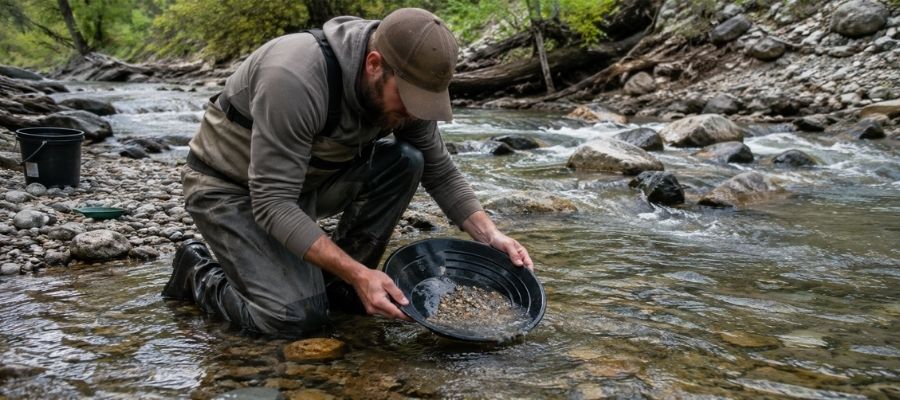
Panning is the whole game in Tennessee, and it is the only method allowed on most public water here. Fill your pan with gravel, submerge it, shake hard so the heavy gold sinks, then tilt and swirl the light material off the top until only the heavy concentrate line remains. With gold this fine, finish each pan slowly, because one careless swirl sends a day of gold back into the creek.
It works everywhere in this guide, and it is the only method you need at the Coker Creek Gold Camp and the designated forest streams.
Essential Tools:
- Deep riffle gold pan: Garrett 15 Inch Dual Riffle SUPERSLUICE Gold Pan
- Finish pan: Garrett Prospecting 10 Inch Backpacker Gold Pan
- Snuffer bottle: Garrett Gold Guzzler Bottle
- Storage vials: SE Glass Vials with Caps
Crevicing (Difficulty: 2 out of 5)
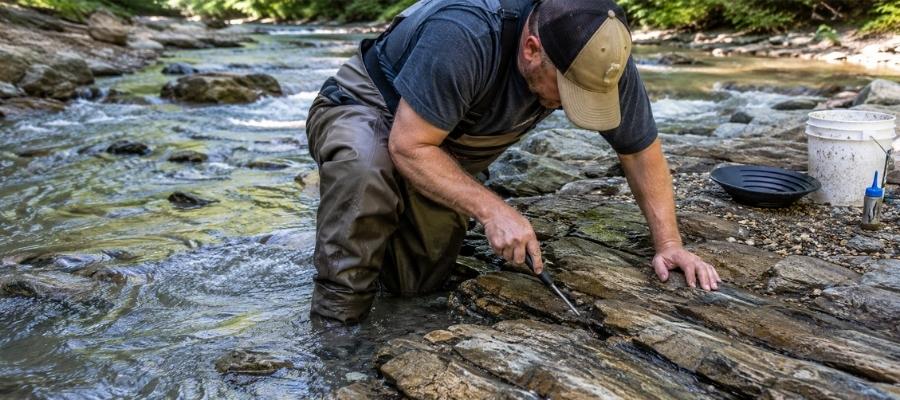
Crevicing means cleaning out the cracks in exposed bedrock and panning what you scrape loose. It is slow, surgical, and it produces some of the best gold in Tennessee, because these mountain creeks have been packing their bedrock joints with gold for thousands of years. The Tellico River’s rocky runs and the small creeks of the gold belt are the state’s crevicing headquarters.
Work every crack down to its very bottom, because the last spoonful of packed dirt holds most of the gold.
Essential Tools:
- Crevice tool set: ASR Outdoor Steel Crevice Tool Set
- Hand trowel: Edward Tools Bend Proof Trowel
- Finish pan: linked in the panning list above
- Magnifying loupe: JARLINK 30X 60X Illuminated Loupe
Metal Detecting (Difficulty: 2 out of 5)
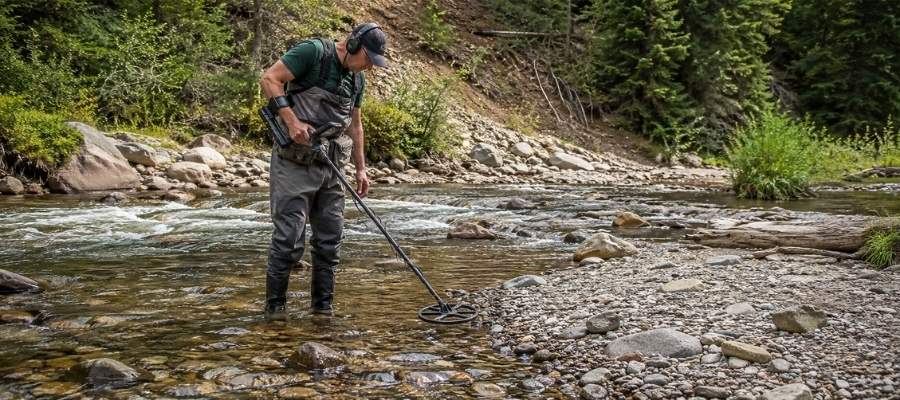
A gold detector listens for the nuggets and quartz locked gold that panning misses, and the Coker Creek district’s bench gravels are exactly the kind of ground where it pays off. Swing slow over old placer workings and dry terraces above the creeks, and dig every soft repeatable signal. Detecting for minerals is restricted on national forest land, so this is a private property method in Tennessee, with written permission in your pocket.
Iron trash from a century of mining is everywhere, which is actually good news, because it means few people have worked the ground patiently.
Essential Tools:
- Gold metal detector: Garrett AT Gold Metal Detector
- Pinpointer: Garrett Pro Pointer AT
- Digging shovel: Bully Tools 14 Gauge Round Point Shovel
Sluicing (Difficulty: 3 out of 5)
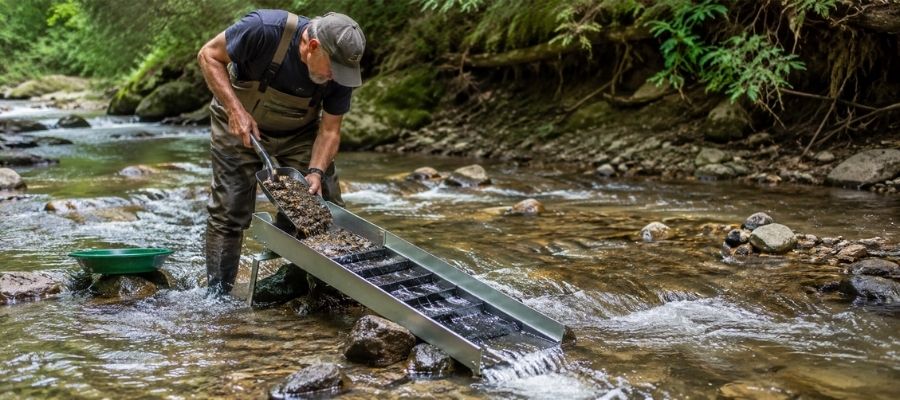
A hand sluice is a small channel with riffles that you set in the current, then feed with gravel while the creek does the panning for you. It processes ten times what a pan can, which matters when the gold runs this fine. In Tennessee the catch is legal, because sluices are not allowed on the Cherokee National Forest, so this is a tool for private land, the gold camp, and club claims only.
Where it is legal, the Tellico and Hiwassee bars are the best sluicing gravel in the state.
Essential Tools:
- Hand sluice: Keene A52 Hand Sluice
- Classifier screen: SE Half Inch Sifting Screen
- Fine classifier: SE 1/8 Inch Mesh Sifting Screen
- Black sand magnet: SE Magnetic Separator Pick Up Tool with Quick Release
How To Tell Real Gold From Fool’s Gold
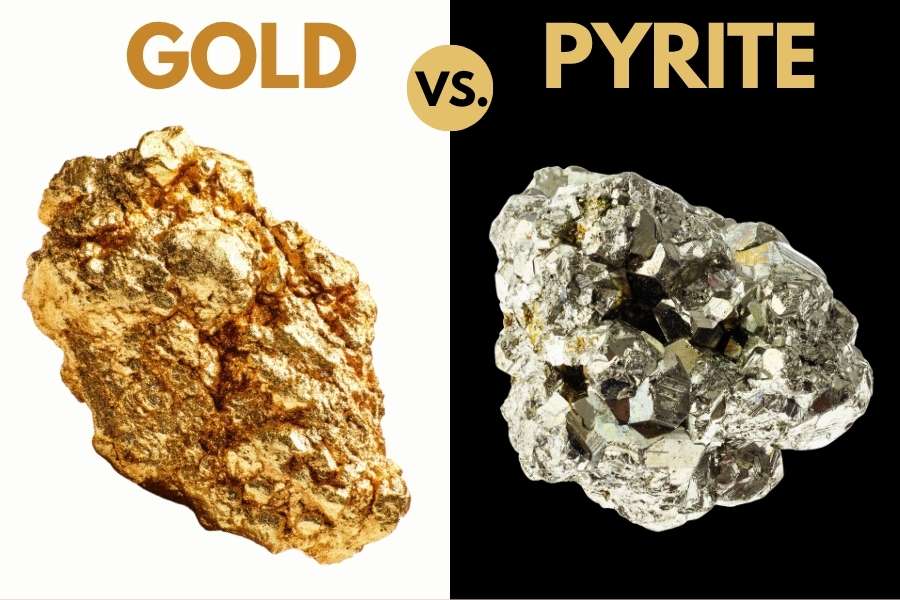
Tennessee is copper and sulfide country, so its creeks sparkle with pyrite, chalcopyrite, and mica right alongside the gold. Telling them apart is a skill you can master in one afternoon. Two quick tests sort them out every time.
The shadow test takes one second. Shade your pan with your hand and watch the sparkle. Real gold stays rich and golden in shadow, while pyrite and mica go gray and lifeless the instant the direct light leaves them.
The poke test settles anything the shadow test misses. Press a pin firmly into the particle. Gold is soft metal, so it dents and holds the mark. Pyrite is brittle and shatters, and mica just slides apart in sheets.
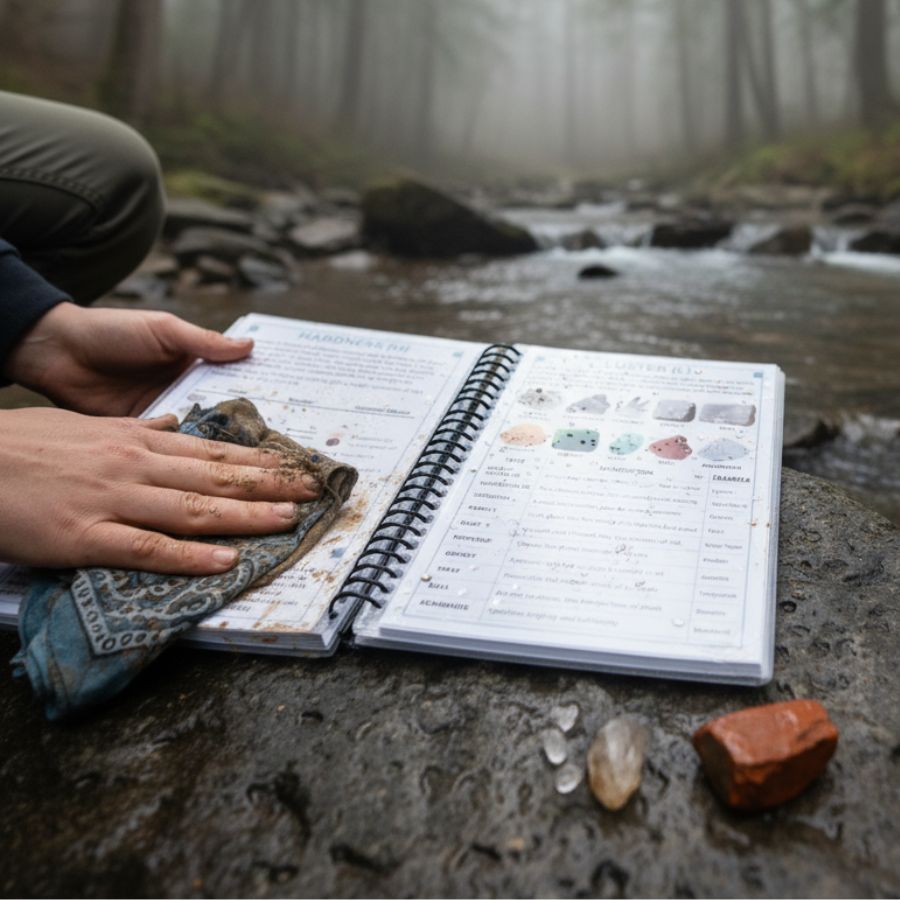
The reason to get this right is not avoiding embarrassment. It is that people who cannot tell the difference eventually toss a pan that had real gold in it. The Rocks and Minerals of the United States Field Guide is the insurance policy, with side by side photos of gold and every one of its imitators, printed on waterproof pages you can hold right over your wet pan.
How Gold Got Into Tennessee
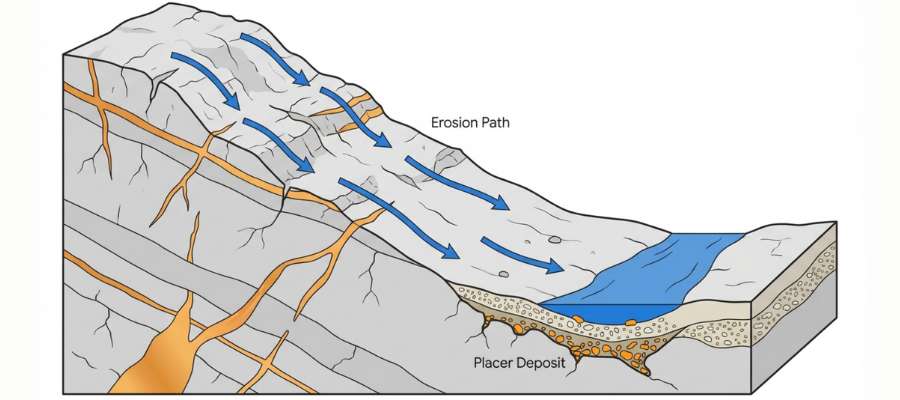
Every spot in this guide sits where it sits because of the Appalachians. Tennessee’s gold country is a thin slice of Blue Ridge mountain rock pressed against the North Carolina line, and it packs all of the state’s gold into one target rich corner.
The story starts with sand and mud piled up on an ancient sea floor close to a billion years ago. Continental collisions then crushed those layers into the slates and quartzites of today’s mountains, and the heat of mountain building drove hot mineral rich water through every crack. Where that water cooled, it left quartz veins, and locked inside some of them was gold.
Erosion has been unwrapping the package ever since. Rain and frost break down the veins, and the mountain creeks carry off the light rock while the heavy gold lags behind, settling into bench gravels, terraces, and streambeds like Coker Creek. The source veins themselves are still hiding, which is why the district’s gold keeps coming.
Middle and West Tennessee are flat lying limestone and river bottom that were never squeezed or cooked, which is exactly why knowing this story gives you an edge. Head straight for the mountains of the southeast and every creek in this guide makes geological sense.
What To Bring for a Tennessee Gold Day Trip

Here is the full checklist. Screenshot this section before you head for the mountains.
- Gold pans and snuffer bottle, covered in the techniques section
- Crevice tools and trowel, same place
- Classifier screen and vials
- Rubber boots or wading shoes with real tread, these creeks are slick
- Drinking water and bug spray, mountain hollows breed mosquitoes all summer
- Sunscreen and a brimmed hat
- Printed landowner permission and a paper map showing forest boundaries
- Snacks and a dry change of clothes, mountain water is cold even in July
If you are starting from zero, one box solves it. The Garrett Deluxe Gold Pan Kit has the pans, classifier, snuffer, and vials in one purchase, and it is the kit we hand to every beginner who joins us.
The Best Time of Year To Hunt for Gold in Tennessee
Timing a Tennessee gold trip is about water levels, because the gold does not move but these mountain creeks rise fast. Here is the calendar, region by region.
Southeastern Tennessee

Late summer through fall is prime time on Coker Creek and the Tellico. Water drops to its lowest levels, exposing gravel bars and the bedrock runs that crevicers need, and October in these mountains is flat out beautiful. The Coker Creek community even celebrates its gold heritage with a fall festival, which tells you how alive the tradition is.
Skip the days after mountain thunderstorms. These steep creeks rise fast, run muddy, and hide everything you came to read.
Smoky Mountain Foothills

June through October is the window for the Little River and the Chilhowee Mountain streams. Summer low water exposes the bar gravels, and farm access is easier once fields dry out. Early fall brings the best combination of low water and cool working weather.
March through May is snowmelt and storm season off the high Smokies. Let the rivers settle, then pan the fresh gravel the floods leave behind.
Other Valuable Rocks and Minerals You Can Find in Tennessee
The same mountain gravel that hides Tennessee’s gold is loaded with other treasure, and some of it is worth more than the gold. Our overview of Tennessee rocks, minerals, and gems covers the full lineup, and these are the ones most likely to share your pan.
Quartz

Quartz is the mother rock of Tennessee gold, and clear or milky crystals wash out of the same veins. Watch for glassy points and clusters in the coarse gravel. Our guide to Tennessee crystals shows where the best ones come from.
Pyrite

Yes, fool’s gold is worth keeping when it forms sharp brassy cubes. Good pyrite crystal clusters sell to collectors and look fantastic on a shelf. Tennessee’s sulfide rich southeast corner produces plenty, so save the best pieces you pan up.
Garnet

Those tiny red grains glittering in your black sand are garnets, ground off the same metamorphic rock that made the gold. Most are sand sized, but chunky ones turn up for lucky panners. Our guide to gem hunting in Tennessee shows what other gems hide in the gravel.
Unakite

Unakite is the green and salmon pink stone first described from the Unaka Mountains right here on the Tennessee border. Rounded pebbles of it wash down the mountain rivers, and polished pieces are gorgeous. Our Tennessee rockhounding guide lists the best places to hunt it.
Agate

Banded agate is one of Tennessee’s official state stones, and the paint rock variety from the southern counties is famous with collectors. Wet agates glow with color that dry rock hides. Here is our full guide to finding agates in Tennessee.
Calcite

Tennessee’s Elmwood Mine produces some of the finest golden calcite crystals on Earth, specimens that sell for serious money. Loose calcite also flashes like glass in creek gravel statewide. Learn what the valuable pieces look like before you toss one.
Fluorite

The same Middle Tennessee zinc mines that produce calcite also yield rich purple fluorite cubes prized worldwide. Collectors pay well for good crystals. Keep an eye out at rock shops and swaps across the state, because Elmwood material circulates constantly.
Geodes

Middle Tennessee creek beds are loaded with round lumpy geodes that look like plain rocks until you crack them open on sparkling crystal. They are the state’s best beginner treasure. Our guide to Tennessee geodes lists the best hunting grounds.
Silver
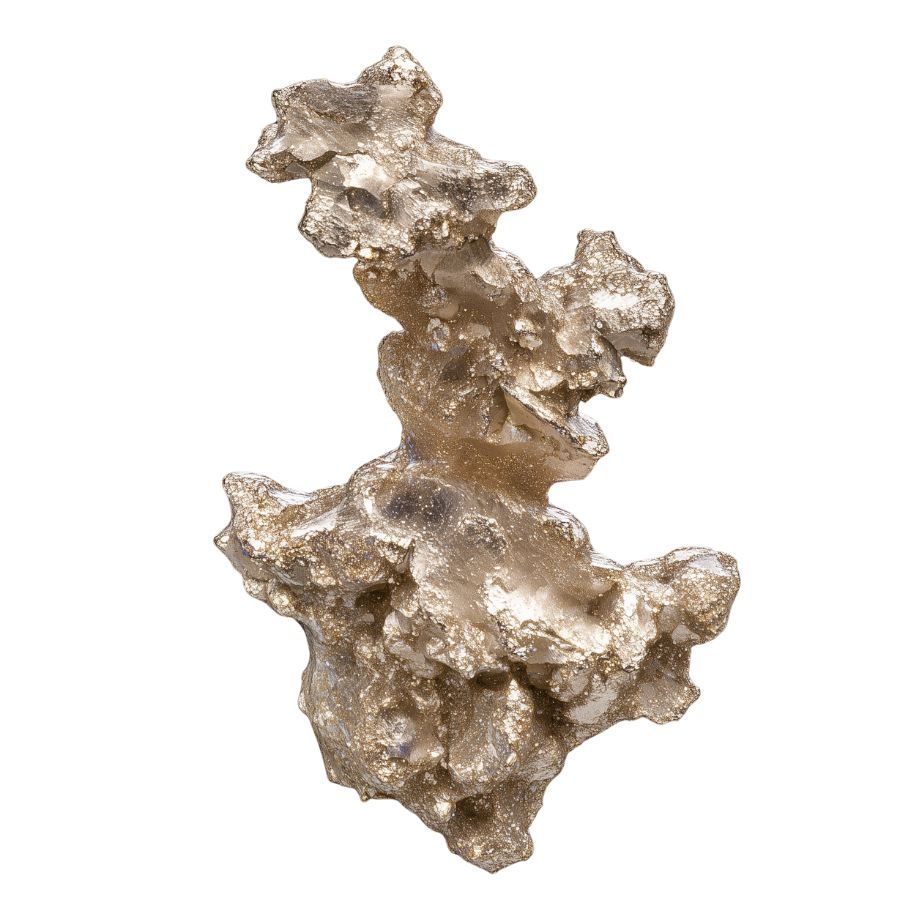
The Copper Basin’s ores carried silver alongside their gold, and traces still show up in the district’s minerals. Our guide to silver in Tennessee covers where it hides.
Fossilized Crinoids

Most of Tennessee sat under a shallow tropical sea, and creek gravel across the state carries the stony stems of crinoids, ancient animals that looked like flowers. Polished pieces are beautiful and collectors buy them. Our guide to fossils in Tennessee shows what else the limestone hides.
Here is the thing about every mineral on this list. In a wet pan, half of them look like gray or white pebbles, and people flick real treasure back into the creek every single weekend. The Rocks and Minerals of the United States Field Guide exists so that never happens to you, with photo identification for more than 140 rocks and minerals you can check creekside in seconds.
Legal Rules for Gold Prospecting in Tennessee

Before you touch a pan to gravel, read this section. We are rockhounds, not lawyers, and nothing here is legal advice. Rules change, and staying legal is entirely your responsibility.
Private Property
Most of Tennessee’s gold bearing water crosses private mountain land, and the landowner generally controls the streambed too. Wading up a creek without permission is trespassing even if you entered at a public bridge. Written permission is the single most important tool you can carry, and in our experience rural landowners often say yes to a polite ask.
Protected and Restricted Land
Great Smoky Mountains National Park bans all collecting, full stop, which closes the upper Little River and Pigeon River. Tennessee state parks and natural areas prohibit mineral collecting too. On the Cherokee National Forest, hand panning is allowed only where the Forest Service designates it, currently including Lyons Creek and Wildcat Creek near Coker Creek, while Coker Creek itself is pannable only on private property. Wilderness areas like Citico Creek are closed to prospecting, so call the Tellico Ranger District at (423) 253-8400 before any forest trip.
Equipment Restrictions
Hands, pans, and simple hand tools are the legal baseline everywhere panning is allowed. The Forest Service does not permit sluices, highbankers, or any mechanized or motorized equipment on the Cherokee National Forest, and suction dredging in Tennessee waters triggers state Aquatic Resource Alteration Permits and federal Clean Water Act permitting. Keep it to a pan and hand tools on public land and you stay inside the rules.
Play it safe on every trip. Confirm access directly with the landowner or the managing agency before you dig, because boundaries and rules change without notice.
Some locations in this guide sit on land where collecting is limited or banned, including the historic mine sites. When in doubt, treat a spot as look but do not take until you have confirmation in hand.
The best shortcut is local knowledge. The Gold Prospectors Association of America chapter at Coker Creek holds member property in the heart of the district, and a club membership pays for itself in legal access alone.
Tennessee Gold FAQ
Is there gold in Tennessee?
Yes, there is gold in Tennessee, concentrated in the Coker Creek district of Monroe County and nearby mountain streams in the state’s southeastern corner. It occurs as fine placer gold, flakes, and small nuggets. All of it comes from the Blue Ridge rock of the southeastern mountains, so that is where to point your trip.
Where can you pan for gold in Tennessee?
Coker Creek in Monroe County is the state’s most famous gold area, with legal access through the pay to pan gold camp and club property, plus Forest Service designated panning streams nearby. The Tellico River and the creeks of the surrounding national forest round out the district. The best places section above breaks down access for every spot.
Is it legal to pan for gold in the Cherokee National Forest?
Hand panning is allowed only in streams the Forest Service designates for it, and only with pans and hand tools. Coker Creek itself can currently be panned only on private property, while nearby designated streams remain open to hand panning. Call the Tellico Ranger District before your trip for the current list.
Do you need a permit to pan for gold in Tennessee?
Tennessee has no state permit for recreational hand panning. You do need landowner permission on private land, and you must follow Forest Service rules on the Cherokee National Forest. Motorized equipment like dredges requires state and federal permits most hobbyists never pursue.
Has anyone found a gold nugget in Tennessee?
Yes, small nuggets around a gram still come out of the bench gravels of the Coker Creek district, and larger pieces were recorded during the historic rush. Most modern finds are fine gold and flakes. Patience and the right creek put a nugget genuinely within reach.
Get Every Find In Your Pan Identified In Seconds
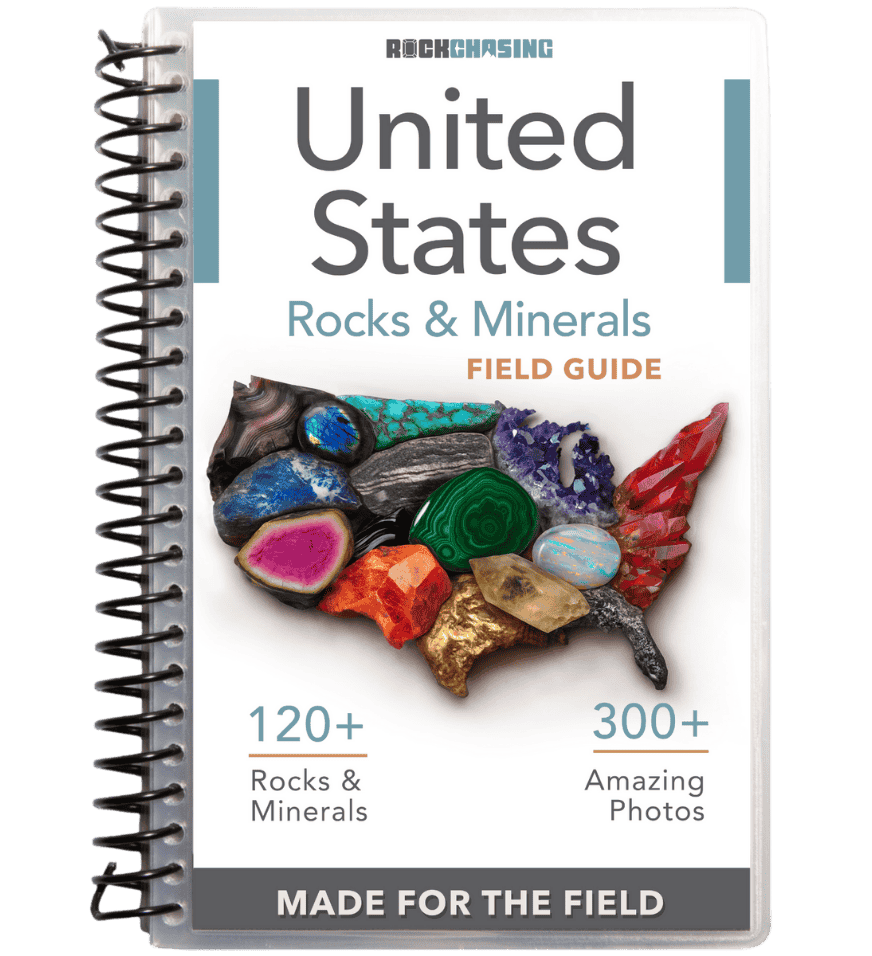
Every pan you pull out of a Tennessee creek is a mystery until you can name what is in it. The Rocks and Minerals of the United States Field Guide identifies more than 140 rocks, minerals, and gemstones from across the country with clear photos, printed waterproof so it works right at the water’s edge.