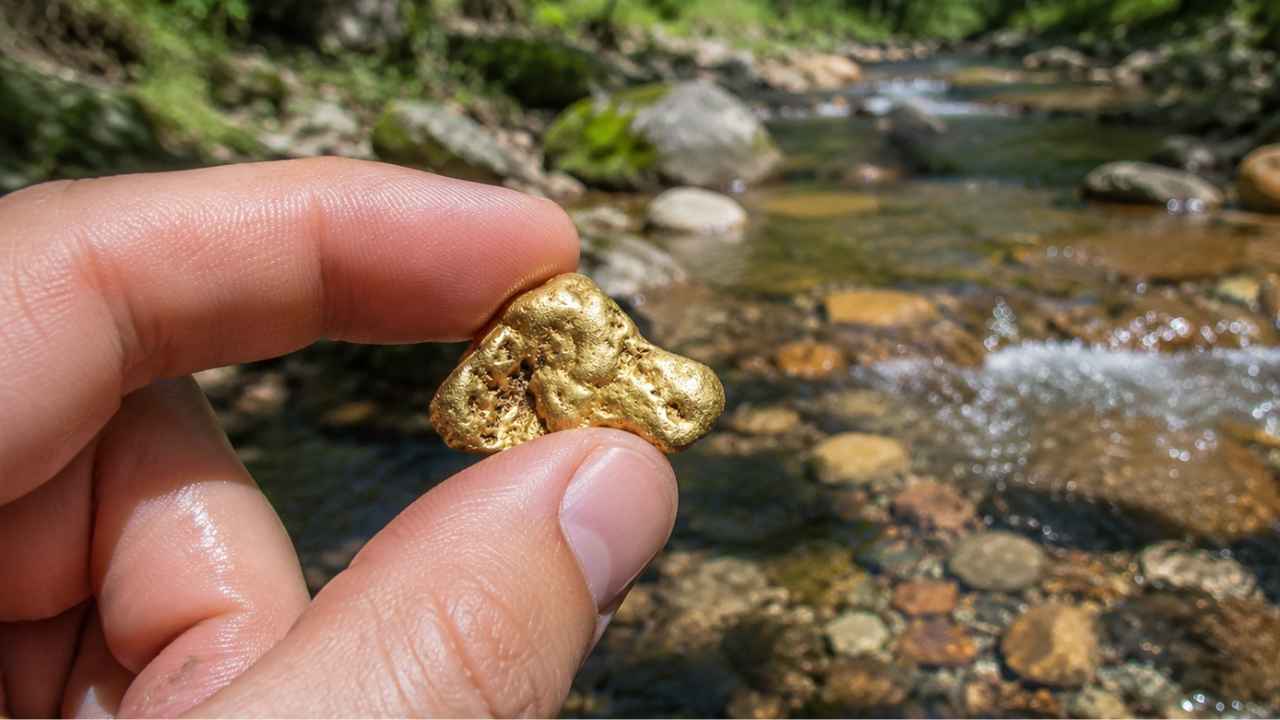
Glaciers hauled gold down from Canada and packed it into Michigan river gravel, and the west side rivers of the Lower Peninsula drain the largest share. Yes, you can still find gold in Michigan today, especially along the Manistee River and the west side glacial rivers south of it, where placer gold has been documented for more than a century.
With gold trading above $4,000 an ounce, you do not need to find much for a weekend of panning to pay for itself.
Most people who try gold prospecting in Michigan make the same mistake. They assume every flake sits in the far Upper Peninsula, so they never test the glacial rivers of the western Lower Peninsula. That band of water, from the Manistee down to the Grand, is your X on the map, and part of it flows within an hour of Grand Rapids.
Dig the upstream end of a Manistee River gravel bar or an inside bend on the Flat River near Lowell, and you are working gravel that has given up fine gold since the 1800s. Every spring flood restocks it for you.
Our team of geologists and experienced rockhounds built this guide by matching the geology against the state’s documented finds. Grab your pan and your boots, and let’s find you some Michigan gold.
What’s In This Guide: Biggest Discovery | Types of Gold | Where Gold Hides | Best Places | Techniques | Real vs Fool's Gold | How Gold Got Here | What To Bring | Best Seasons | Other Minerals | Legal Rules | FAQ | Field Guide
The Biggest Gold Discovery in Michigan History
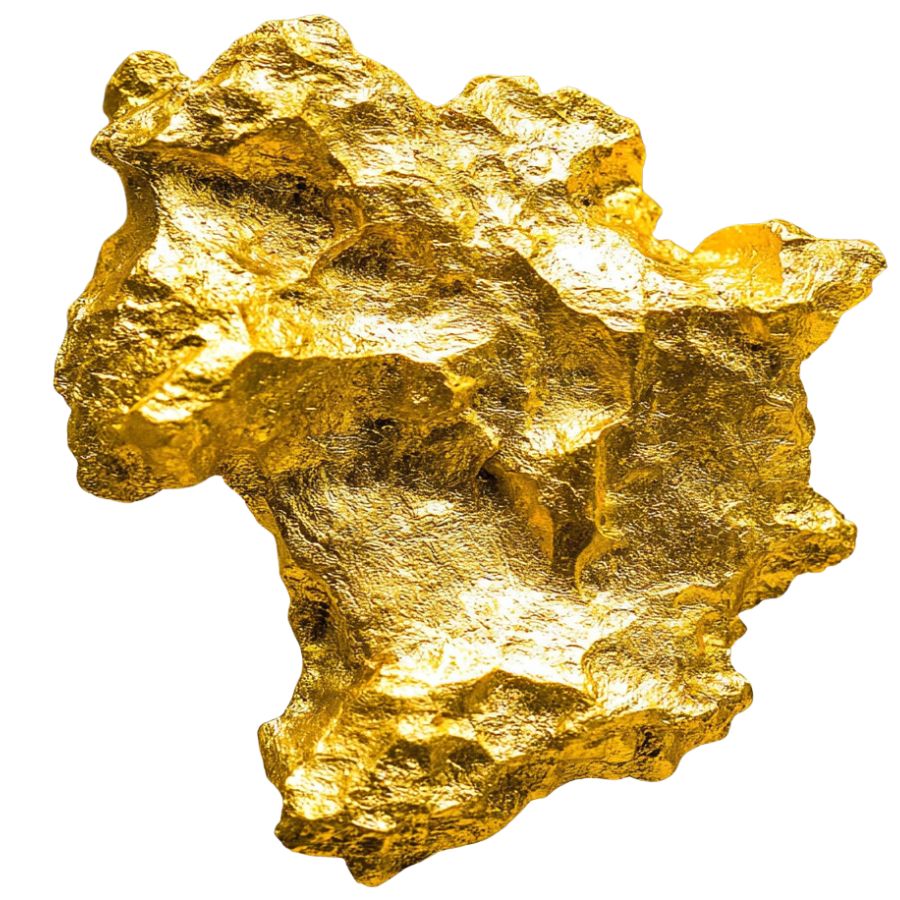
Michigan’s gold story starts with a quill full of dust and a drowning. In the early 1840s, the state’s first geologist panned enough placer gold from a small Upper Peninsula stream to fill an eagle’s quill. He drowned in Lake Superior before he ever revealed the spot, and prospectors have hunted for that lost stream ever since.
The real strike came about four decades later, when a chemist from Ishpeming traced gold to a quartz vein in the hills northwest of town. The Ropes Gold Mine opened in the early 1880s and ran for roughly 15 years. It pulled about $645,000 in gold and silver out of the ground when gold sold for around $20 an ounce. More than 75 mines and prospects chased that same belt before the boom faded.
The wildest chapter came a century later. A modern mining company spent $20 million reopening the Ropes in the mid 1980s, and within four years it had produced about 167,000 ounces of gold and 208,000 ounces of silver. With gold above $4,000 an ounce today, that gold alone would be worth well over $650 million.
The veins that fed the Ropes are still in the Marquette County hills. Every river south of them is still moving glacial gold one flake at a time, and far fewer people are out there looking for it than in the boom years. Your pan is the only thing missing.
The Kinds of Gold You Can Find in Michigan
Michigan gold comes in more forms than almost any state east of the Rockies, and each form tells you where it came from and whether more is nearby.
Flour Gold
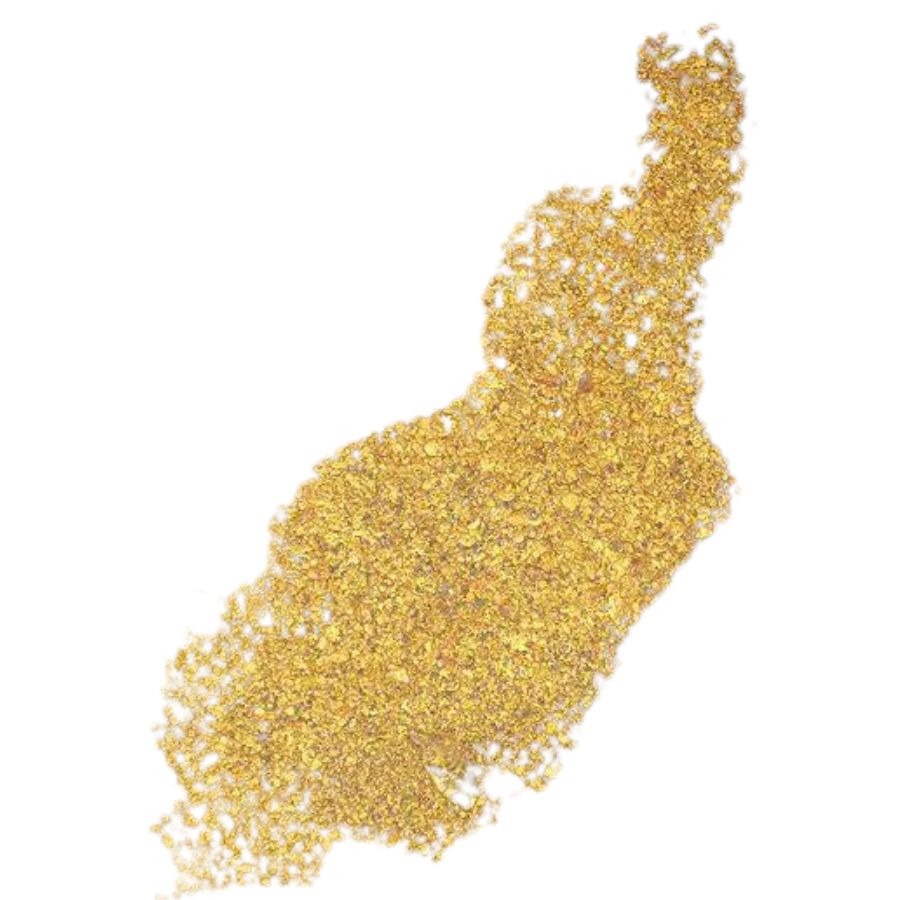
Flour gold is gold ground finer than grains of sugar, and it fills most Michigan pans. The glaciers crushed it against bedrock for hundreds of miles, which is why Lower Peninsula gold runs so fine. You will see it as a bright golden dust line in the crease of your pan.
Mica is the mineral that fools you here. It flashes gold in sunlight but weighs almost nothing, so it floats while real gold sinks and stays golden in the shade.
Gold this fine washes out of a normal pan, so finish your concentrates in the Garrett Prospecting 10 Inch Backpacker Gold Pan.
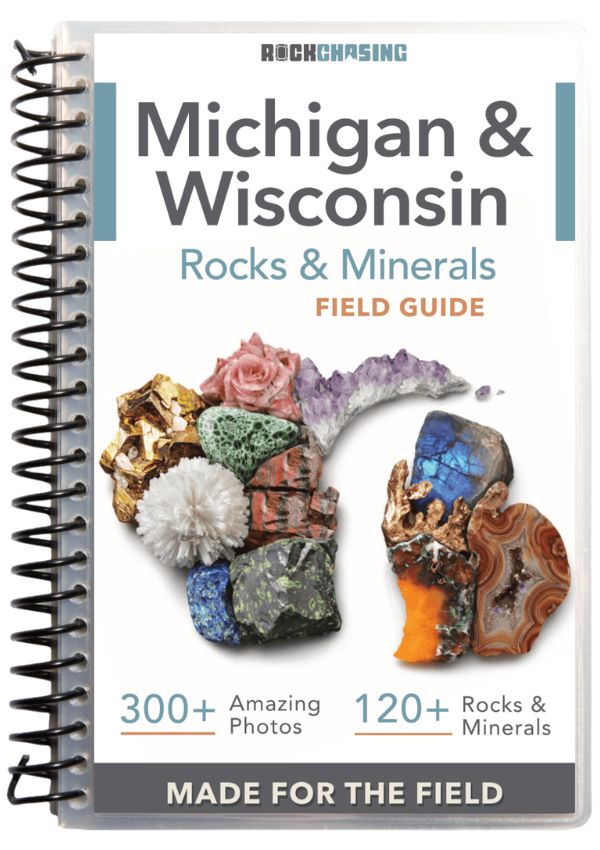
A good identification reference saves your trip at this stage. The Michigan and Wisconsin Rocks and Minerals Field Guide shows you real gold next to every local mineral that imitates it, while your pan is still wet.
Gold Flakes
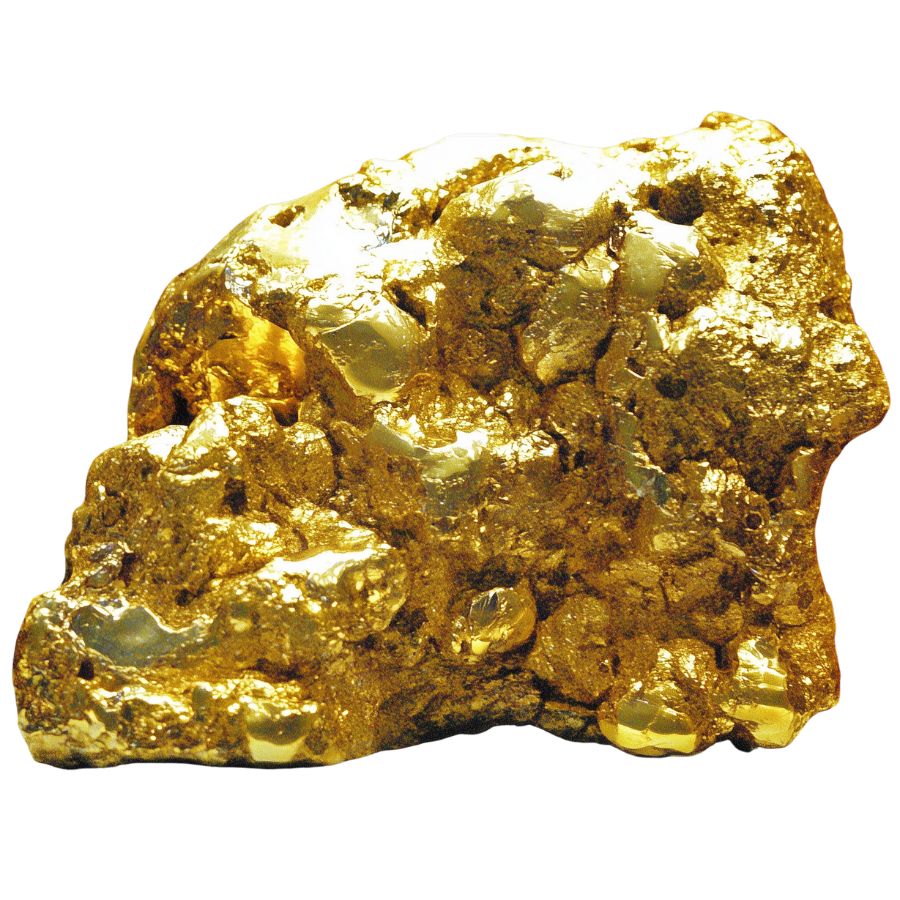
Flakes are the next size up, flat pieces about the size of a grass seed. In Michigan they show up most often after spring floods tear into fresh glacial gravel. One good flake is a real trophy in a Lower Peninsula pan.
The lookalike is chalcopyrite, a brassy copper mineral that breaks into glittery bits. Poke it with a pin, because gold dents while chalcopyrite shatters.
Wet fingers cannot lift a flake. The Garrett Gold Guzzler Bottle sucks them out of your pan without losing one.
Glacial Pickers
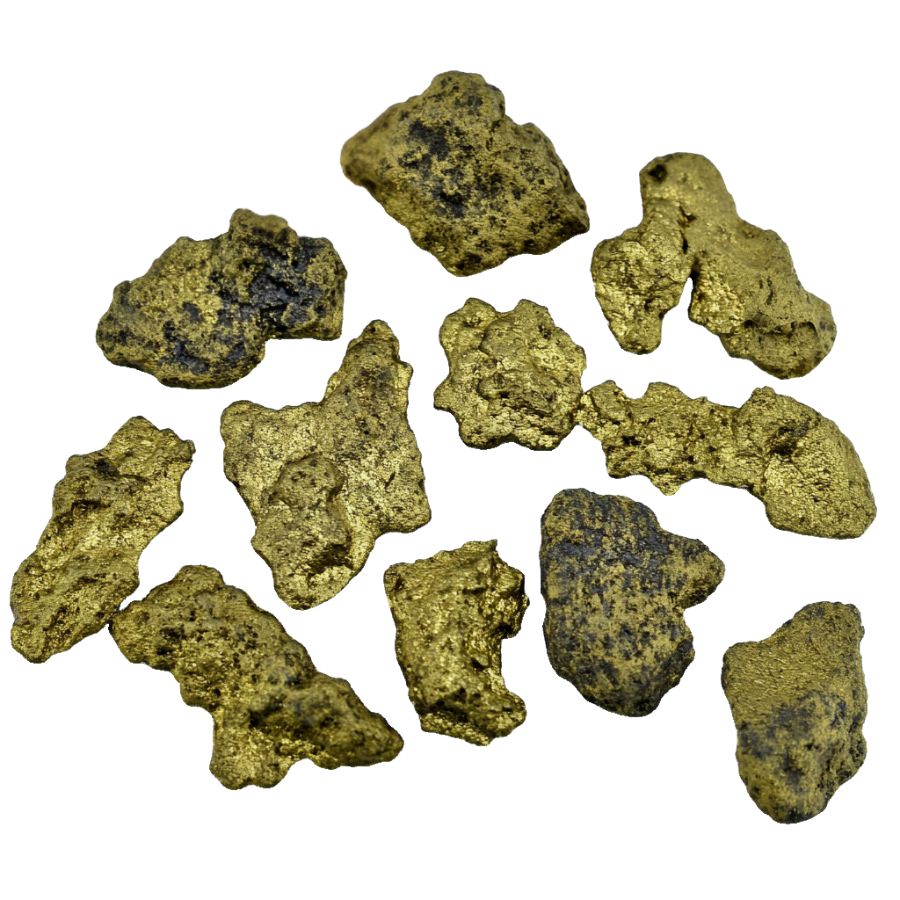
Pickers are pieces big enough to lift with your fingers, and Michigan produces just enough of them to keep every trip exciting. They ride down inside glacial drift, so they can turn up anywhere a river cuts into old moraine gravel. Historic accounts describe occasional small nuggets from northern Lower Peninsula rivers.
Weathered pyrite is the classic false alarm at this size. Crush a corner, because pyrite crumbles into black powder while gold flattens and smears.
Checking texture on a piece this small takes magnification. The JARLINK 30X 60X Illuminated Loupe shows you the soft rounded surface of real gold in seconds.
Gold in Quartz
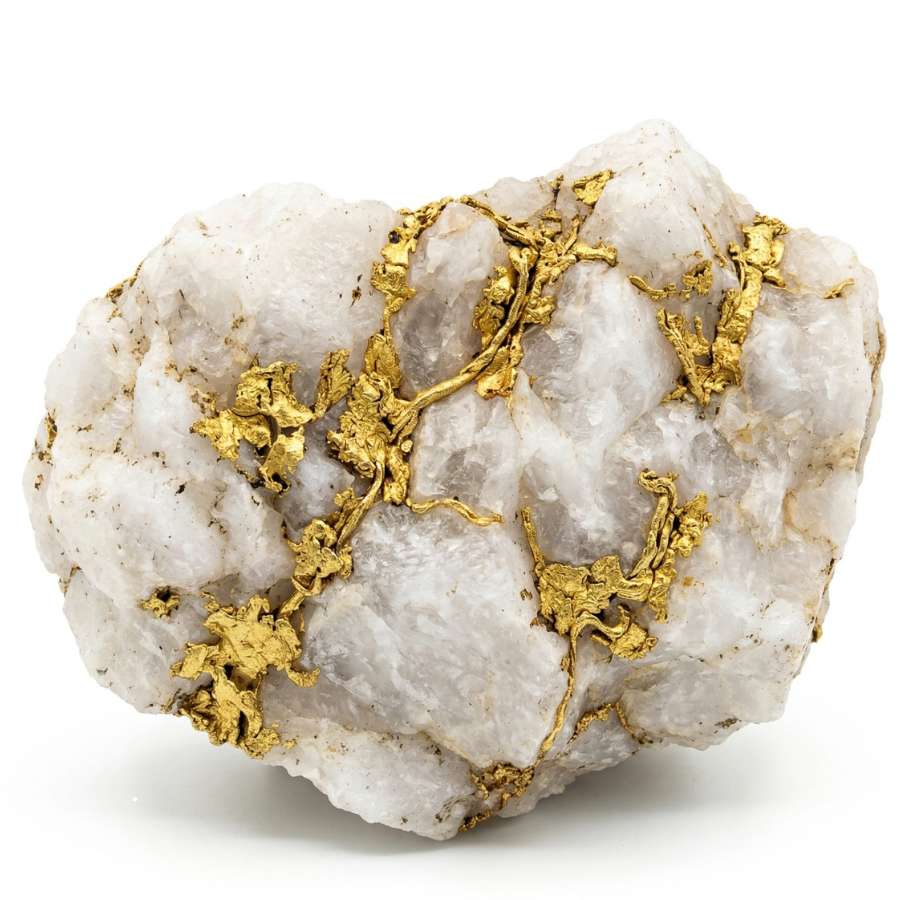
The Upper Peninsula’s greenstone belts still hold quartz veins carrying visible gold, the same kind the Ropes chased. Old mines near Ishpeming produced some of the finest museum specimens of native gold in quartz ever found in the eastern United States. Sharp eyes still spot rusty quartz with golden specks in those hills.
Pyrite in quartz is the classic fake. Pyrite forms sharp little cubes with flat faces, while real gold looks like soft rounded blobs and threads.
Cracking suspect quartz cleanly takes a real rock pick. The Estwing Geo Paleo Rock Pick is the tool our team carries.
Where Gold Hides in Michigan Rivers
Gold is about 19 times heavier than water, so it sinks to the lowest, slowest spot the current allows. Read these five features and you will know where to dig first.
Inside Bends
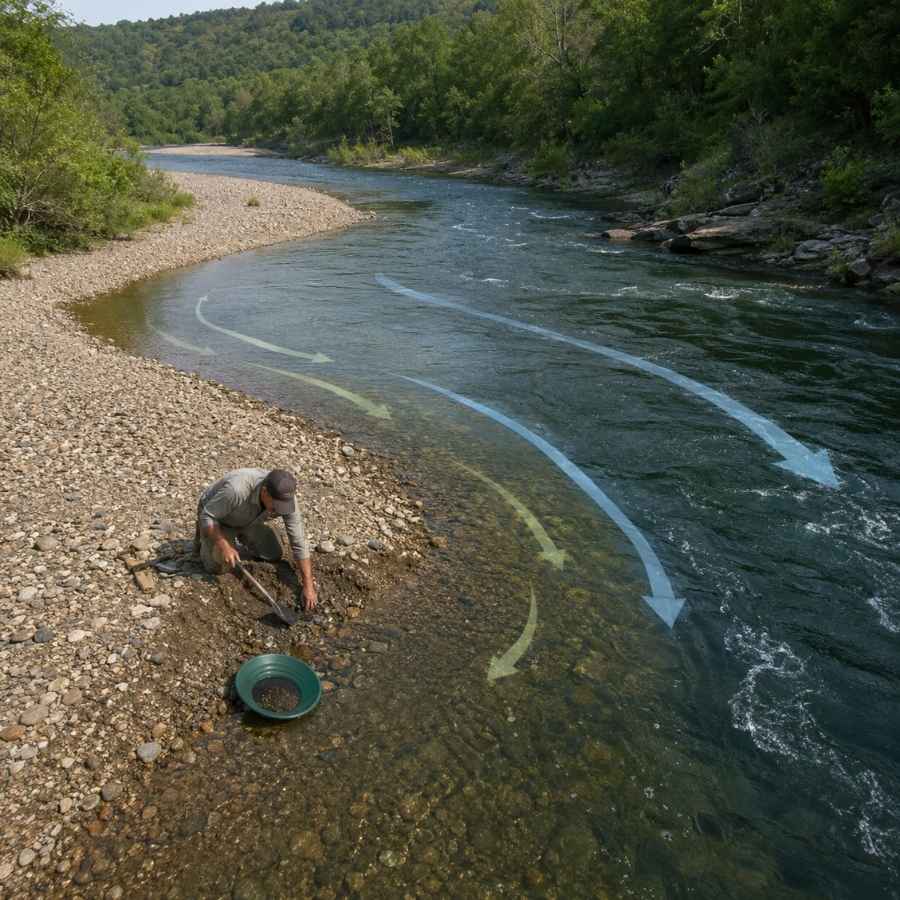
Water slows on the inside of every curve, and slow water drops its gold. Look for the gravel bar on the inside of a bend and dig where the coarse gravel starts. Michigan’s winding rivers are packed with textbook bends.
You will be moving packed gravel, and a wide pan with deep riffles catches the fine gold as you work. The Garrett 15 Inch Dual Riffle SUPERSLUICE Gold Pan is built for this kind of high volume panning.
Gravel Bars
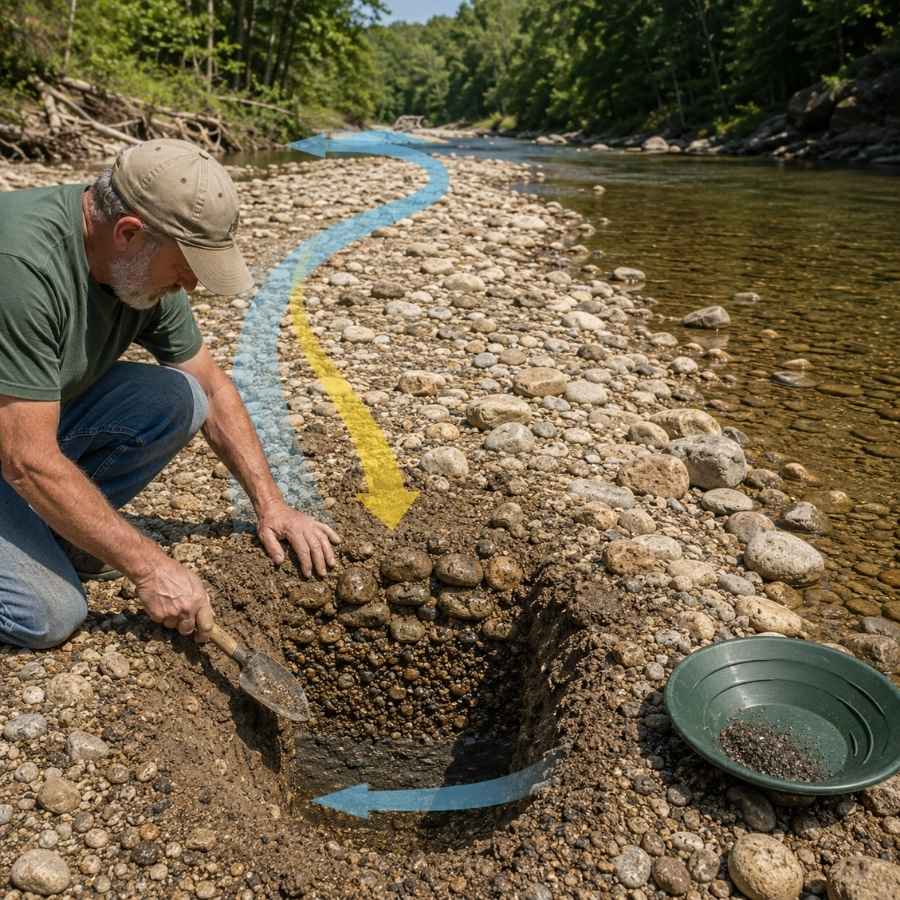
Late summer low water exposes bars that sat drowned all spring. The gold concentrates at a bar’s upstream end and down on the hard glacial clay that acts as false bedrock. Dig test holes until you hit that clay, then pan the last few inches above it.
Bars are full of oversized rock that wastes your pan space. Screen it out with the SE Half Inch Sifting Screen and you double the gravel you process in a day.
Bedrock Cracks
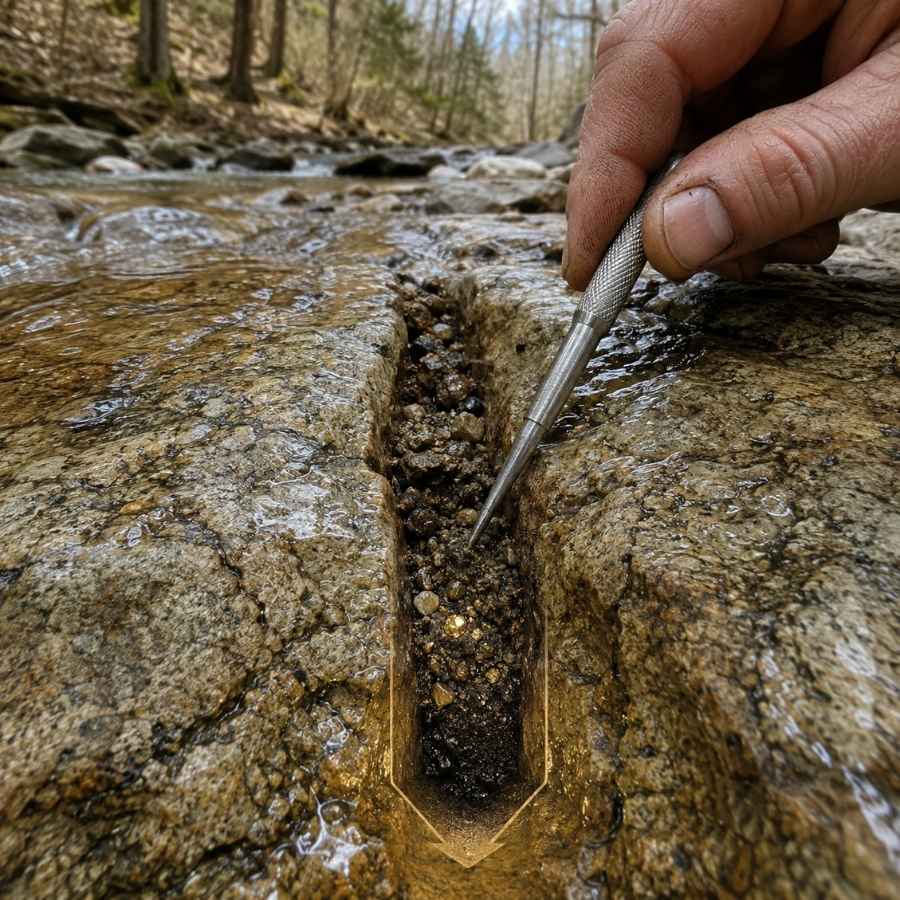
Bedrock is the floor gold cannot sink through, so its cracks fill up like nature’s own sluice box. True bedrock streams are mostly an Upper Peninsula feature, where rivers cut across some of the oldest rock in North America. Every crack in a gold range creek has been collecting for thousands of years.
The bottom inch is the richest dirt in the river. The ASR Outdoor Steel Crevice Tool Set scrapes out material your fingers cannot reach.
Behind Glacial Boulders
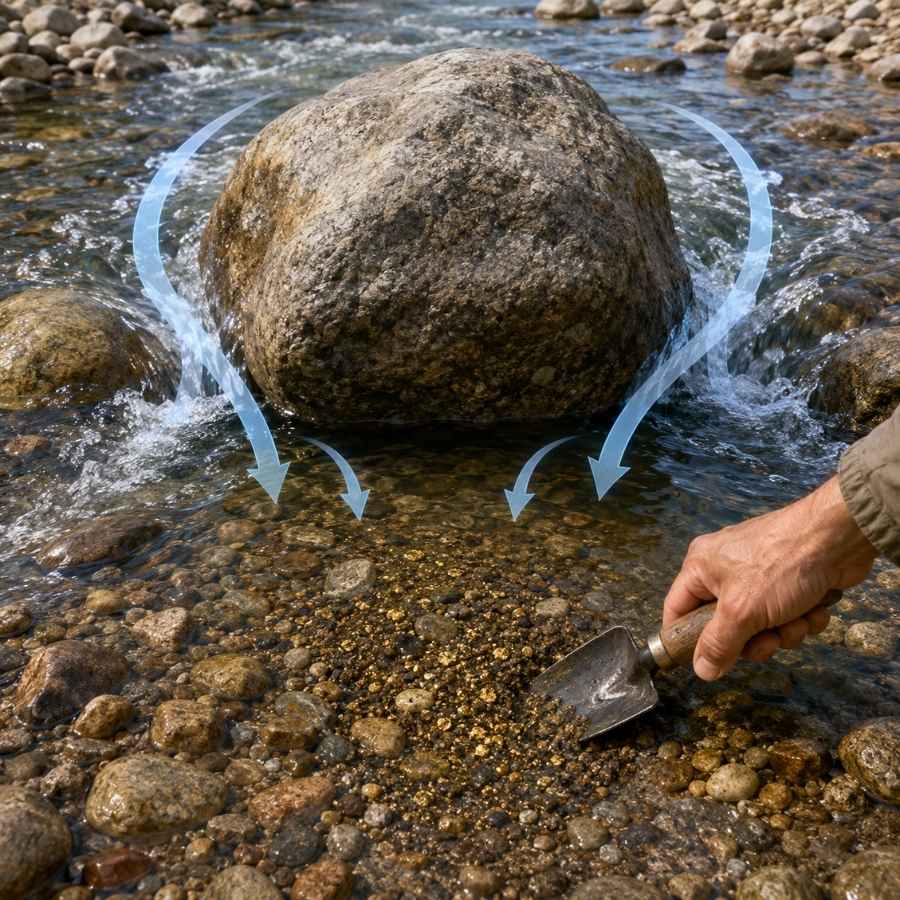
Michigan rivers are littered with glacial boulders, and every one creates a calm pocket directly downstream. Gold traveling in a flood drops right into that pocket. Feel around the downstream base of big rocks and dig the packed gravel your fingers find.
That gravel is usually cemented tight. The Bully Tools 14 Gauge Round Point Shovel breaks it loose without snapping a handle mid trip.
Black Sand Streaks
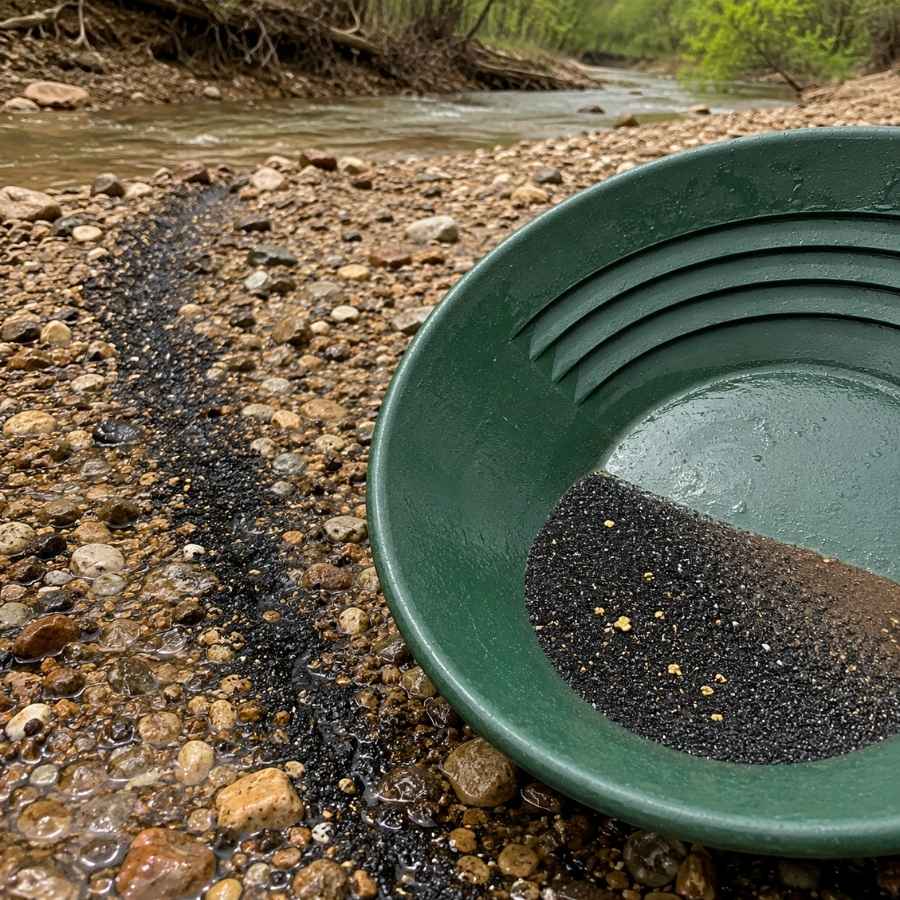
Black sand is crushed magnetite and hematite, and Michigan’s iron country supplies it by the ton. It is heavy, so it settles where gold does. When you see a dark streak in the gravel or a black layer in your pan, you are digging in the right place.
Separating fine gold from black sand by hand is slow. The SE Magnetic Separator Pick Up Tool pulls the black sand out and leaves your gold behind.
Always Confirm Access and Collection Rules!
Before heading out to any of the locations on our list you need to confirm access requirements and collection rules for both public and private locations directly with the location. We haven’t personally verified every location and the access requirements and collection rules often change without notice.
Many of the locations we mention will not allow collecting but are still great places for those who love to find beautiful rocks and minerals in the wild without keeping them. We also can’t guarantee you will find anything in these locations since they are constantly changing.
Always get updated information directly from the source ahead of time to ensure responsible rockhounding. If you want even more current options it’s always a good idea to contact local rock and mineral clubs and groups
The Best Places To Find Gold in Michigan
Your map starts on the west side of the Lower Peninsula, works north, and finishes in the Upper Peninsula hard rock hills. Here is every spot worth your gas money.
Western Lower Peninsula
The big west side rivers drain the largest share of Michigan’s glacial drift, and access here is the easiest in the state.
Manistee River (Wexford and Manistee Counties)
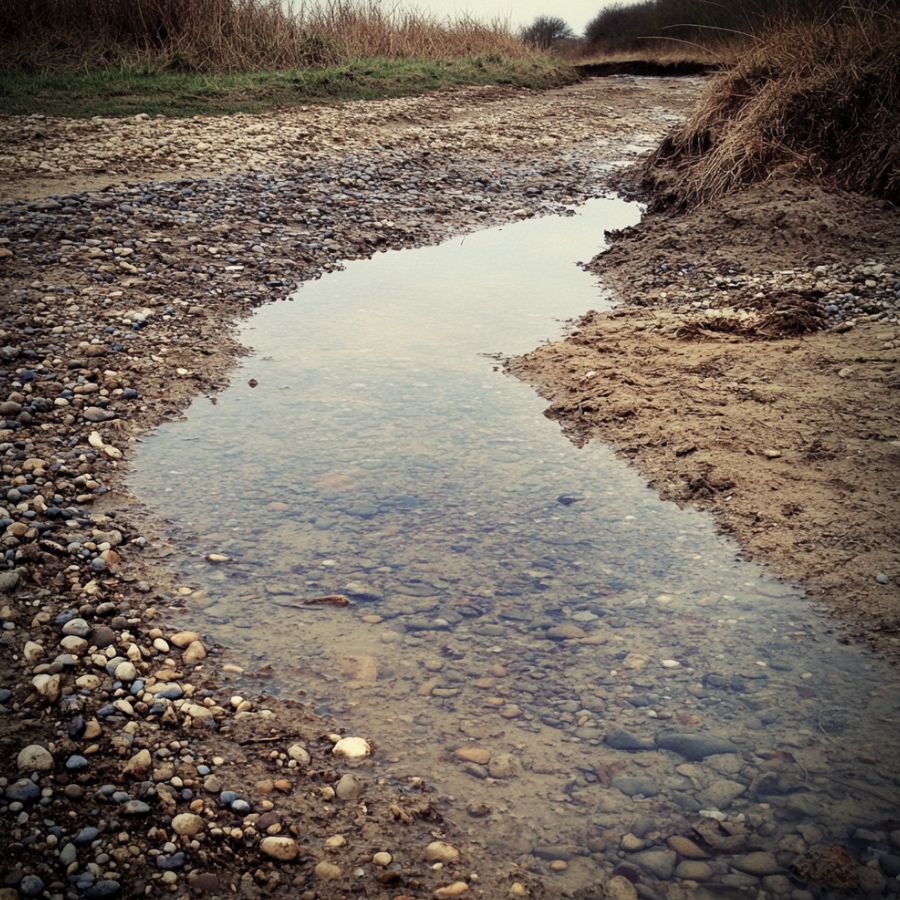
The Manistee is one of Michigan’s best documented placer rivers, with finds recorded in state survey records more than a century ago. Its endless gravel bars reshuffle every spring. Long stretches flow through the Huron Manistee National Forests, where casual hand panning is generally allowed.
Flour gold with occasional flakes is your find. Dig the upstream ends of bars and pan the gravel sitting on the clay hardpan.
Your pan will also show quartz pebbles, jasper, and black sand, and this is where beginners toss good finds. The Michigan and Wisconsin Rocks and Minerals Field Guide lets you check every odd wet stone against clear photos before it goes back in the river.
Check the trout stream map first. Big water means big gravel to move. Bring the Garrett 15 Inch Dual Riffle SUPERSLUICE Gold Pan and work the bar heads at low water.
Difficulty rating: 2 out of 5. Beginner friendly.
Muskegon River (Newaygo County)
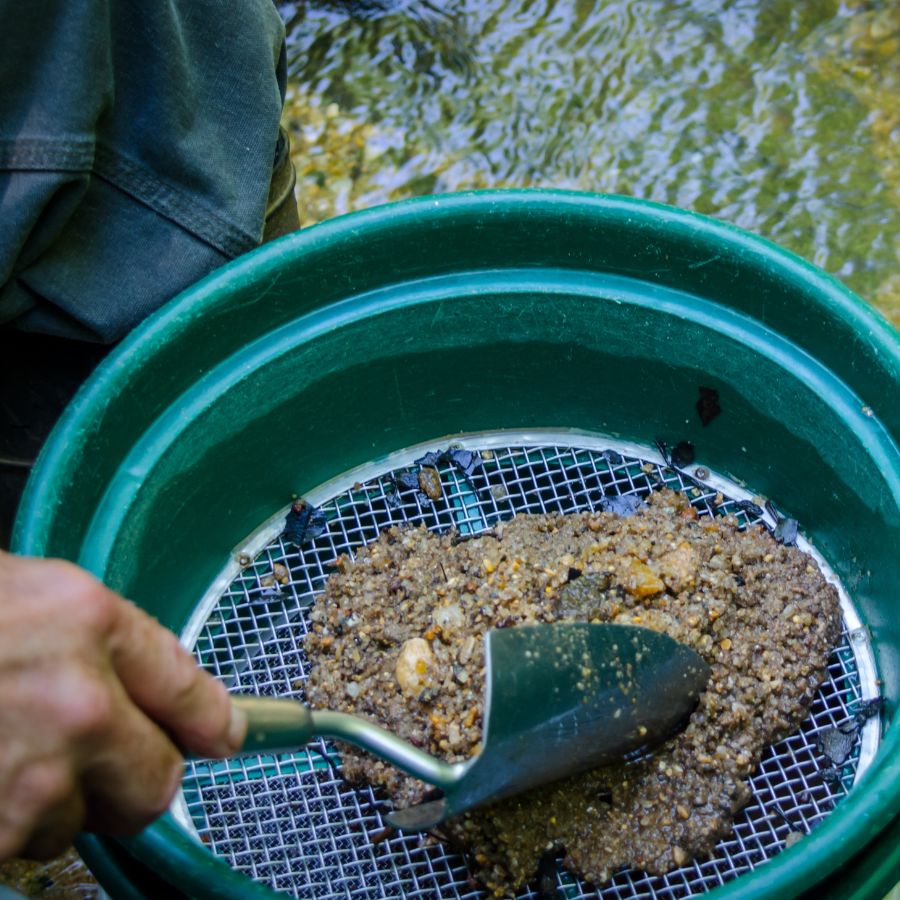
The Muskegon is a placer workhorse, with old accounts reporting fine gold in exposed gravel along its run through Newaygo County. Public access sites, bridge crossings, and county parks line its whole length. Summer low water exposes bar after bar of workable gravel.
Flour gold with the odd flake is your find, and high volume panning is the technique. This is a numbers game, so keep moving gravel.
Your pan also turns up quartz, jasper, and heavy black sand. Some stretches are trout water, so check the map first.
Run every shovelful through the SE Half Inch Sifting Screen and you will pan twice the gravel before lunch.
Difficulty rating: 2 out of 5. Easy public access.
Flat River (Greenville to Lowell)
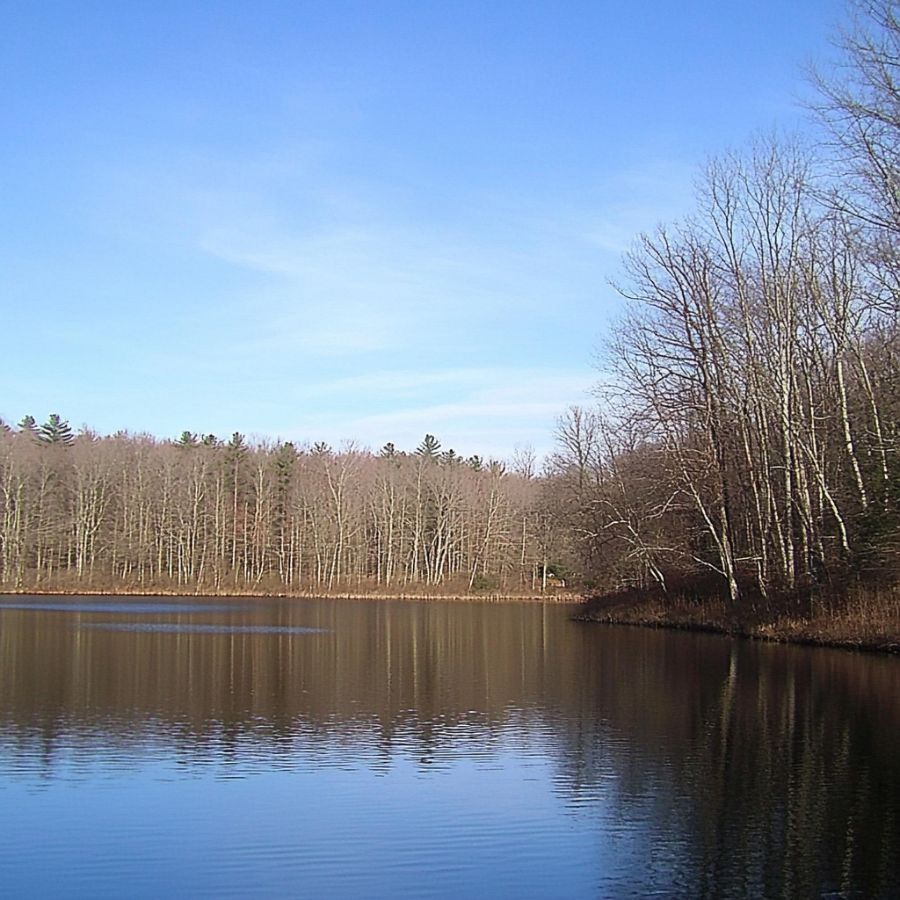
The Flat River between Greenville and Lowell is one of the most repeated gold names in Lower Peninsula lore, with glacial gold panned from its gravels and the moraines around Lowell. It is a gentle, wadable river with public access through the Flat River State Game Area.
Flour gold is your find. Test the inside bends and any gravel point where the current slackens.
Your pan will also show quartz pebbles, granite, and black sand. On state game area water, confirm the parcel allows panning under the state land rules.
Pry the packed gravel off those points with the Edward Tools Bend Proof Trowel and pan it slow.
Difficulty rating: 1 out of 5. Your perfect first trip.
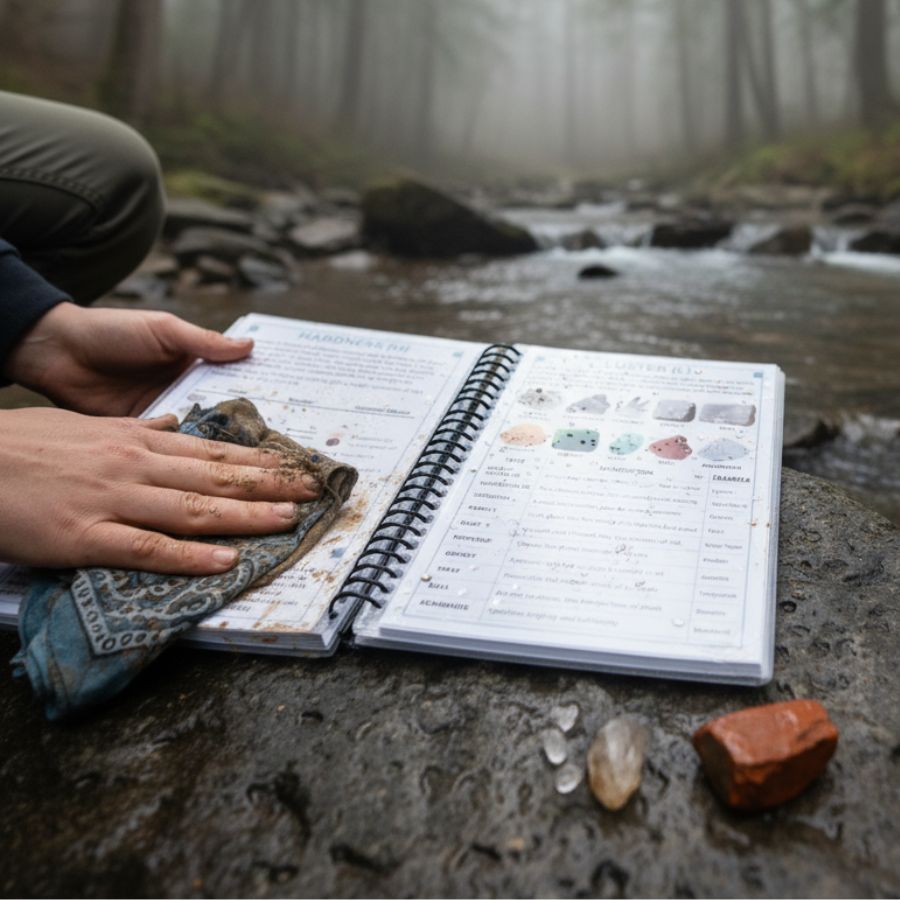
Before you toss that grey rock back, look twice. Half the stones in a wet Michigan pan look like nothing until you match them to a photo. The Michigan and Wisconsin Rocks and Minerals Field Guide is printed on waterproof pages you can hold right over your pan.
Grand River (Kent County)
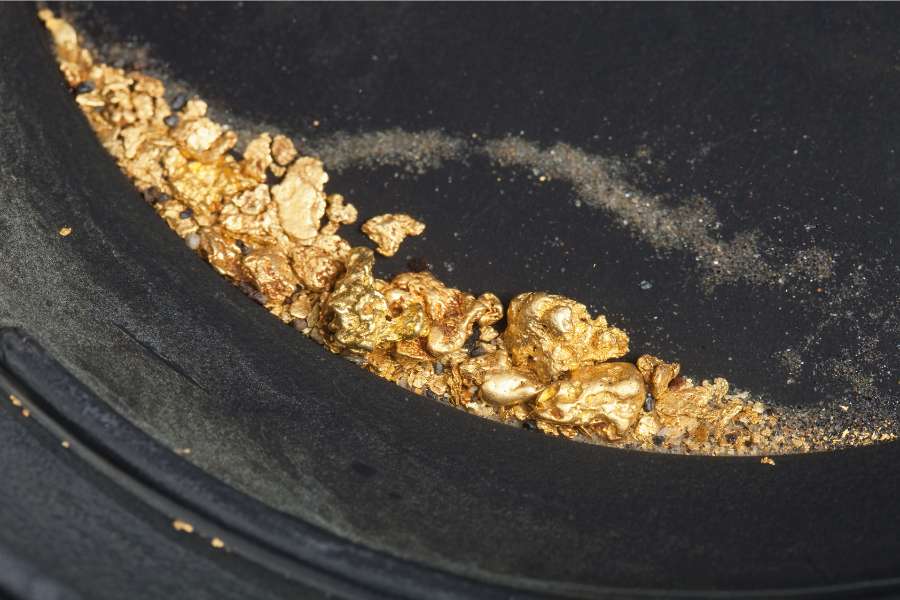
Michigan’s longest river drains a huge sweep of gold bearing glacial country, and old survey records list Kent County among the state’s documented gold counties. The stretches around Ada, Lowell, and the Portland and Ionia state game areas are the traditional testing grounds. Urban access near Grand Rapids makes this your easiest after work gold water.
Ultra fine flour gold is your find, so careful finish panning is mandatory. Pan the black sand streaks on the downstream ends of bars.
The gravel also carries quartz, jasper, and petoskey stone fragments.
Finish every pan in the Garrett Prospecting 10 Inch Backpacker Gold Pan so the tiny stuff stays with you.
Difficulty rating: 1 out of 5. City access, fun water.
White River (Oceana and Muskegon Counties)
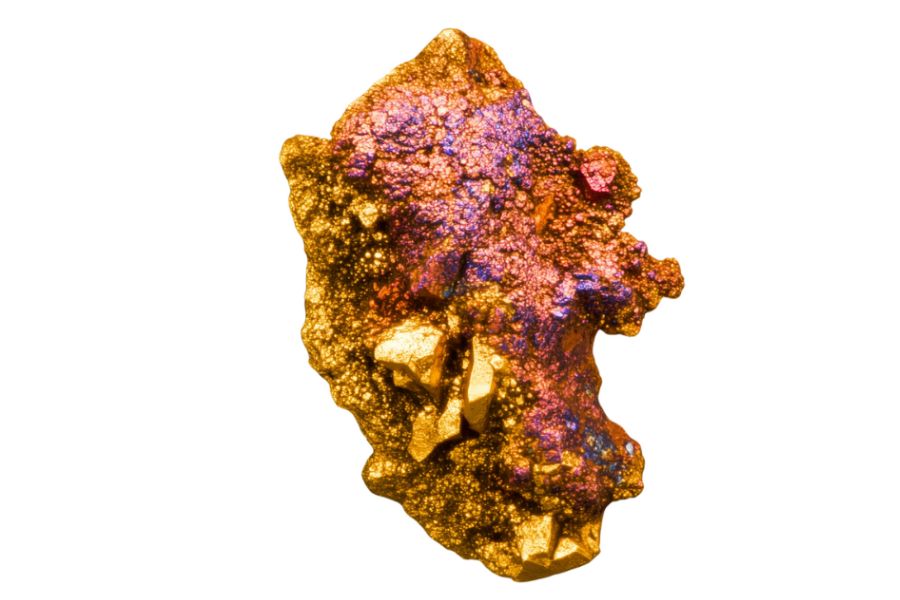
The White River carries one of the more specific old placer records in the state, with gold reported from Hesperia down toward Montague. It is a smaller, wilder river than the Muskegon, and fewer people means unworked gravel for you.
Flour gold hides in bars and behind boulders. Work the bends, but dig in the streambed, never the banks.
Expect quartz, granite pebbles, and heavy black sand. Parts of the river are trout water and a national forest stretch is wild and scenic, so map your spot first.
The boulder pockets are cemented tight. Bring the Bully Tools 14 Gauge Round Point Shovel to break them loose.
Difficulty rating: 3 out of 5. Wild water, map carefully.
Northern Lower Peninsula
The glaciers stacked their deepest gravel across the northern Lower Peninsula, and these quiet rivers reward a pan and patience.
Au Sable River (East of Grayling)
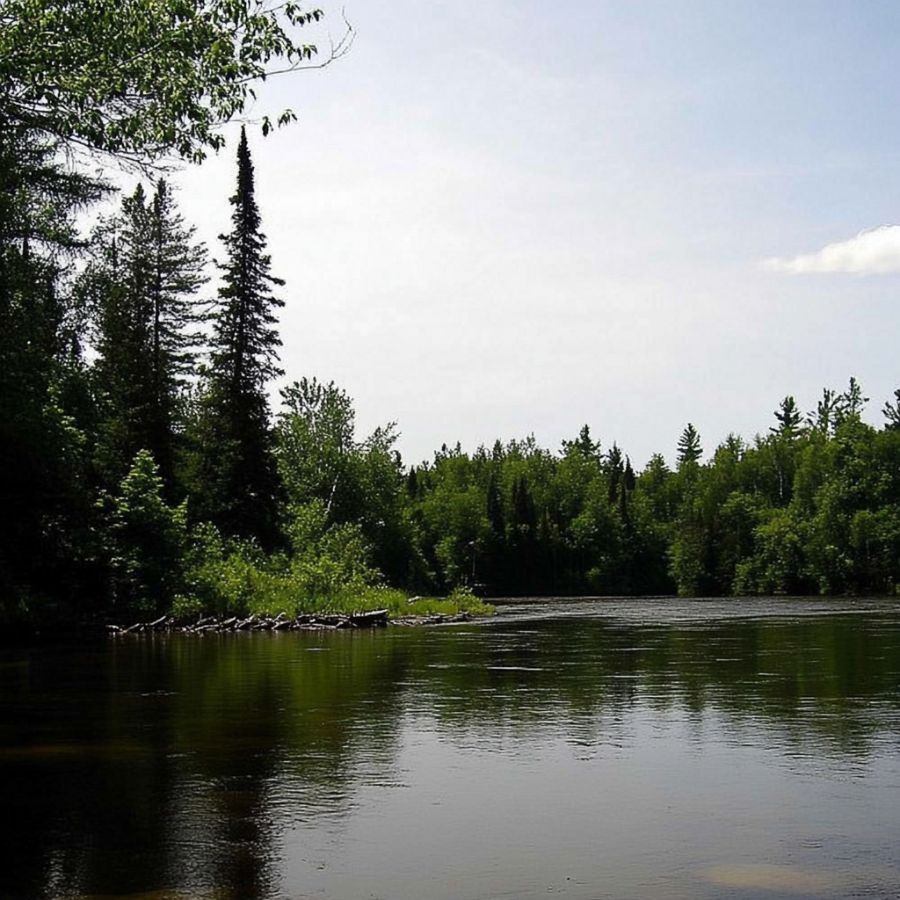
The Au Sable has produced gold reports since the 1800s as it drains some of the deepest glacial deposits in the state east of Grayling. Fine flour gold hides in its gravel bars and behind its countless fallen logs. Much of it is designated trout stream closed to state land panning, so this is a permission river.
Landowners along the non designated stretches sometimes welcome a polite prospector, and the feeder creeks are worth your test pans too. Pan the inside bends slowly.
Your pan also shows quartz, granite, and black sand.
This gold runs tiny, so classify down with the SE 1/8 Inch Mesh Sifting Screen before you pan.
Difficulty rating: 3 out of 5. Permission required.
Boyne River (Charlevoix County)
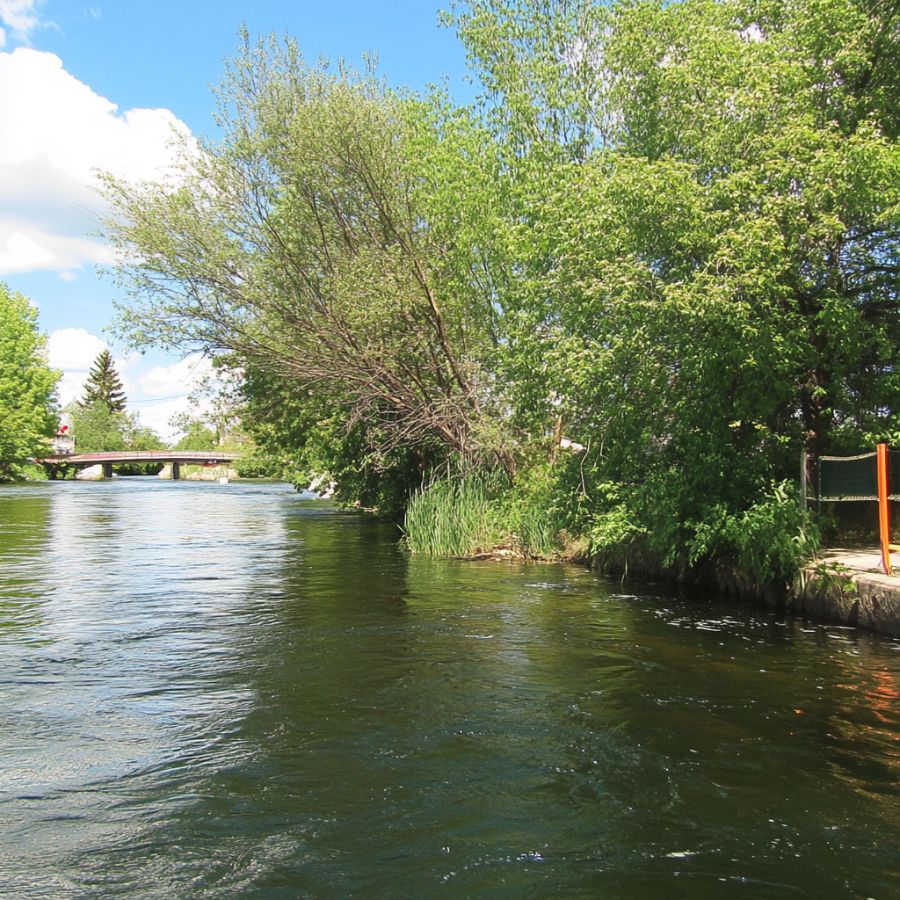
State geologists documented placer gold on the Boyne in a survey of Charlevoix County more than a century ago. It is a small, clear river running out of steep glacial hills into Lake Charlevoix, and small rivers are easy to read at late summer low water.
Flour gold in low water gravels is your find. Work the inside bends and any gravel sitting on clay.
Much of the river is private, so knock on doors and check the trout stream map. Your bycatch runs to quartz, granite, and the occasional garnet.
Keep the Garrett Gold Guzzler Bottle in your pocket, because the flakes here are too small for fingers.
Difficulty rating: 2 out of 5. Small water, ask first.
Leelanau County Creeks
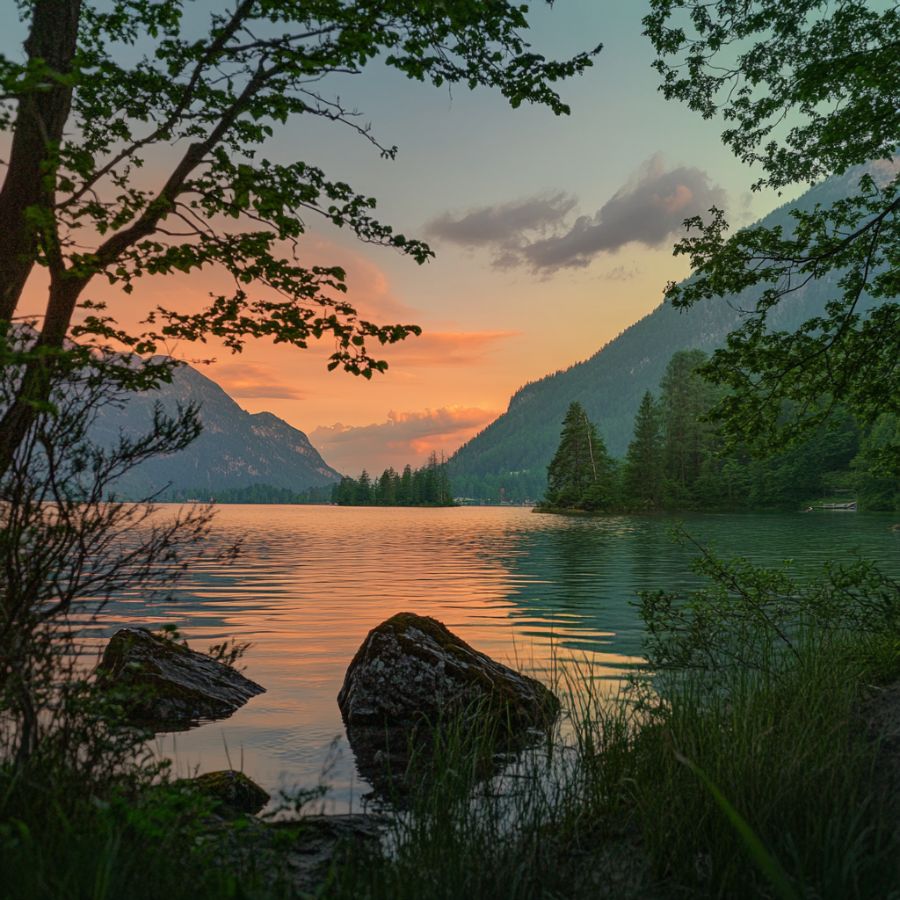
The little creeks feeding Lake Leelanau drain some of the highest moraine country in the Lower Peninsula, and old reports describe fine gold in their gravels and along the lakeshore. This is easy walking country where your gold trip doubles as a wine country vacation.
Fine flour gold is your find, panned from creek mouths and gravel riffles.
The same gravels carry petoskey stones, and our guide to gem hunting in Michigan covers the other finds here. Most land is private, so ask first, always.
A finish pan matters most here. Bring the Garrett Prospecting 10 Inch Backpacker Gold Pan and swirl slow.
Difficulty rating: 2 out of 5. Easy walking, ask first.
Upper Peninsula
Marquette County is the heart of Michigan hard rock gold country, and its old gold range produced every commercial ounce the state ever mined.
Ropes Gold Mine Country (Marquette County)
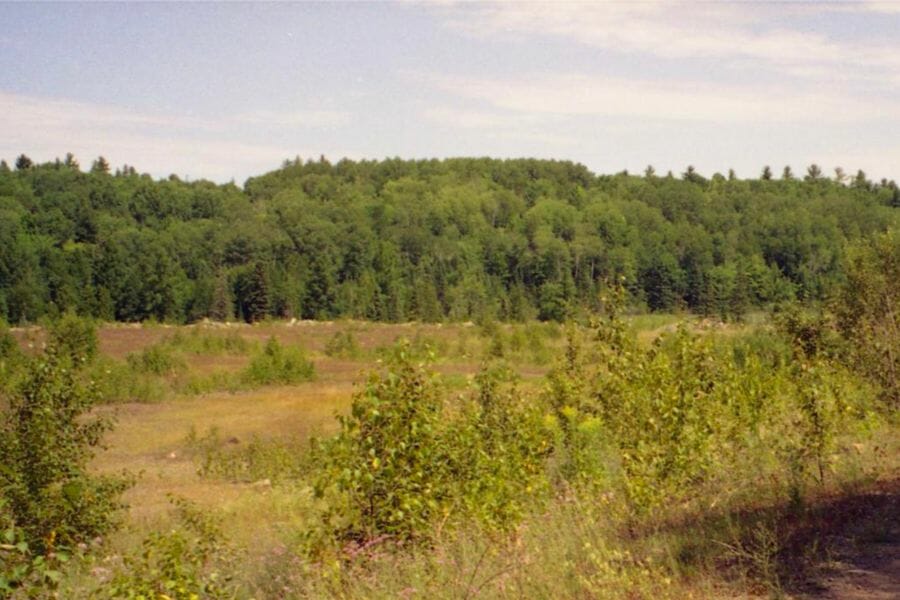
The hills northwest of Ishpeming hosted Michigan’s only real gold mines, and this gold range is still the best place to find gold at its source. The Ropes property is private, but the greenstone belt runs for miles and its creeks cross state forest.
Gold in quartz and coarse creek gold are the finds, panned from the creek gravels below the old workings. Check mineral ownership carefully, because mining companies still hold many parcels here.
Your pan will also turn up pyrite, quartz, and jasper. Our guide to Michigan crystals covers more spots in this district.
Crack rusty quartz with the ESTWING 22 oz Rock Pick and check the fresh face for golden threads.
Difficulty rating: 4 out of 5. Rugged country, big upside.
Dead River (Marquette County)
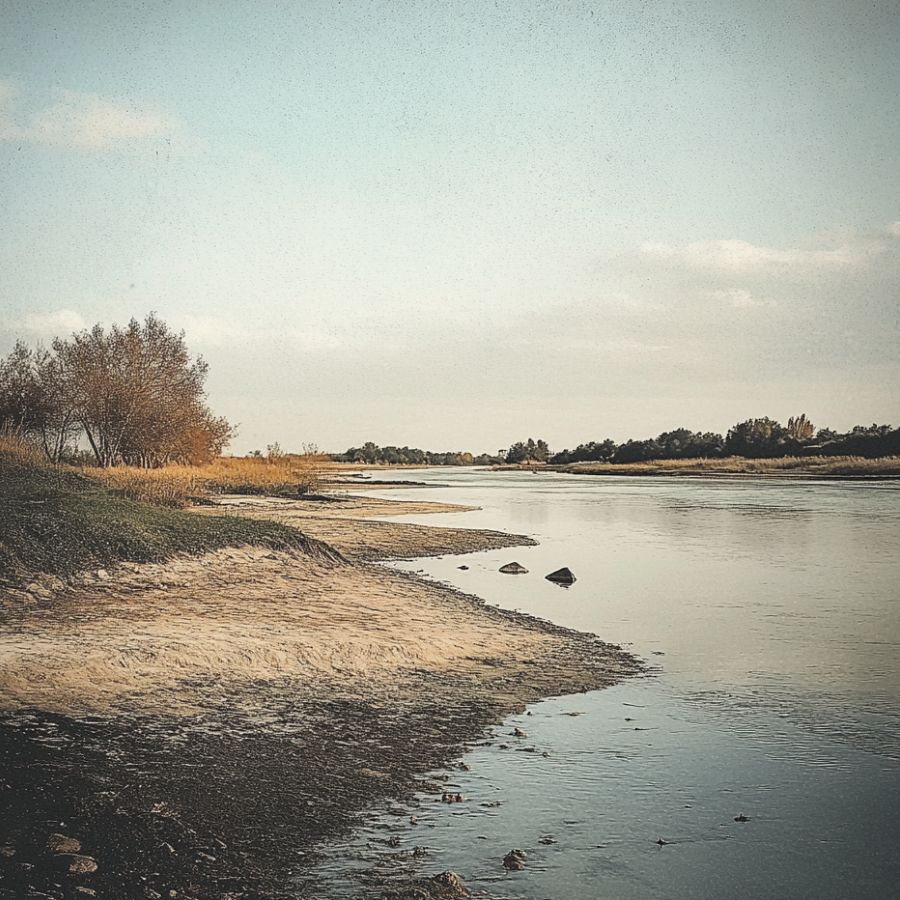
The Dead River drains the gold range north of Ishpeming and Negaunee to Lake Superior at Marquette, directly downstream of every historic prospect in the district. Fine gold and black sand concentrate in its bedrock stretches. Access mixes state land, commercial forest, and power company property, so map your stretch first.
Fine gold in bedrock cracks is the find, and crevicing at low water is the technique.
The gravels also carry quartz, jasper, and the occasional Lake Superior agate. Our guide to finding agates in Michigan shows you what they look like wet.
Scrape every crack to the bottom with the ASR Outdoor Steel Crevice Tool Set and pan what comes out.
Difficulty rating: 3 out of 5. Bedrock work, mixed access.
More Proven Places To Find Gold in Michigan
The detailed spots above are only the start. State survey files and generations of local prospectors point to plenty more water worth your test pan, so confirm land ownership and the DNR closed waters list before you visit any of them.
Upper Peninsula
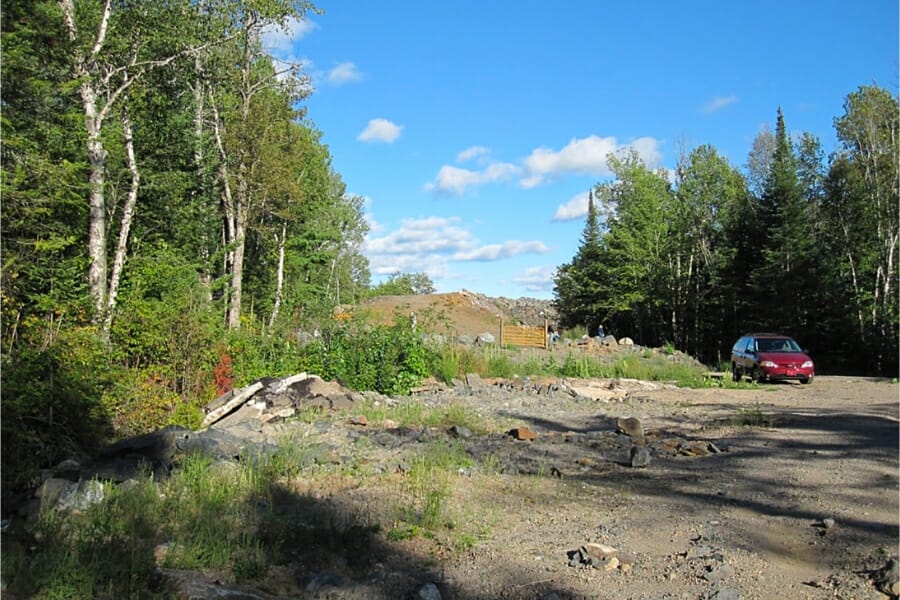
Lake Michigamme and the Grummett Exploration Prospect (Baraga County). Old survey reports describe rich gold specimens from Baraga County near Lake Michigamme, and the Grummett prospect carried that search into the modern era. Commercial forest allows foot access, but mineral rights are often private, so check ownership first.
Pine Creek (Dickinson County). Prospectors report fine gold from Pine Creek, and old survey work noted gold bearing veins in the Menominee iron range nearby. Land is a patchwork of company forest and private parcels, so confirm access first.
Paint River and Cook’s Run (Iron County). Native placer gold has been documented from the Paint River near Gibbs City, and prospectors have long reported colors from Cook’s Run. Both are prized trout waters, so check the DNR closed waters list and plan on private permission.
Huron Mountains (Marquette County). The state’s old gold survey records a prospector washing as many as 20 colors to a pan from glacial drift in these remote hills north of the gold range. Much of it is private club and timber land, so map the state forest fringes and stay legal.
Michigan Gold Mine and the North Lake Prospects (Marquette County). The old Michigan Mine, about two and a half miles west of the Ropes, produced some of the finest free gold specimens ever taken from Michigan rock. The Gold Lake, Superior, and North Lake prospects dot the same greenstone on private mineral ground, so get written permission first.
Northern Lower Peninsula
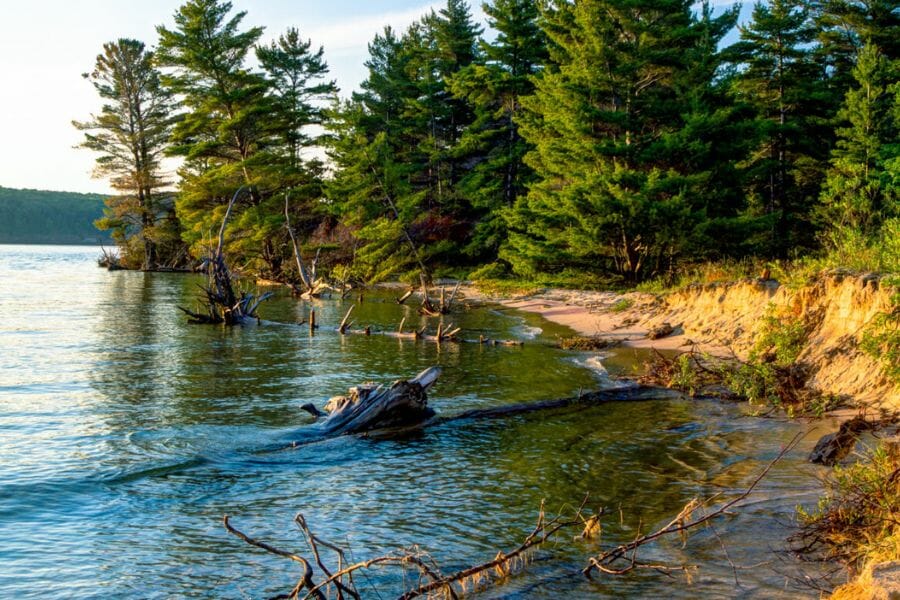
Jordan River (Antrim County). The state’s old gold files called Antrim County nugget reports reliable, and the Jordan drains the county’s deepest glacial valley. It is a designated Natural River and trout stream, which closes state land to panning, so knock on doors along private stretches.
Betsie River (Benzie County). Prospectors report fine glacial gold from the Betsie, which drains high moraine hills to Lake Michigan, and spring floods restock its bars every year. It is a state Natural River, so you will need landowner permission.
Sturgeon River (Cheboygan County). The fastest flowing river in the Lower Peninsula churns fresh glacial gravel on its run to Mullett Lake, and prospectors report fine colors behind bars and logs. It is trout water for much of its length, so plan on private land with permission.
Little Traverse Creek (Grand Traverse County). Prospectors have reported as many as five or six colors to a pan from this little creek, a serious count for Lower Peninsula water. The gold is fine glacial flour in small gravel riffles, and most land is private, so ask before you wade in.
Rapid River (Kalkaska County). State records list Kalkaska County among Michigan’s documented gold counties, and prospectors report placer gold in the Rapid’s gravel bars. It is a small, clear, easily read river with state forest along parts of its run, so check the trout stream map first.
Western Lower Peninsula
Little Sable River (Mason County). The Little Sable carries one of the more specific old placer listings in the state’s files, with gold reported along much of its length. Few prospectors ever visit, which means unworked gravel for you, and most frontage is private, so ask first.
Howard City Gravels (Montcalm County). The state’s gold records list Howard City among documented glacial gold finds, in the same moraine belt that feeds the Flat River. Test the small creeks and gravel deposits around town, and get the operator’s permission before you touch a gravel pit.
The Best Gold Hunting Techniques in Michigan
Michigan’s fine glacial gold rewards patient technique over expensive machinery. These three methods put Michigan gold in your vial, ordered from easiest to hardest.
Gold Panning (Difficulty: 1 out of 5)
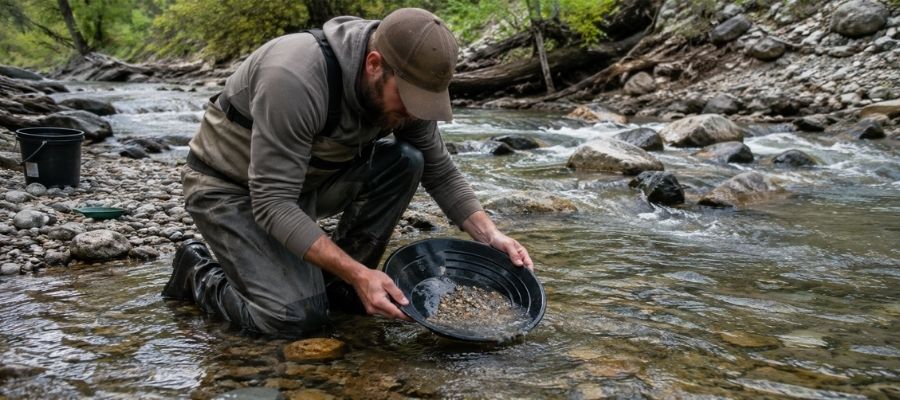
Panning is the whole game in Michigan, and it is legal almost everywhere prospecting is allowed. Fill your pan with gravel, submerge it, and shake hard so the heavy gold sinks. Then tilt and swirl the light material off the top until only the heavy concentrate line remains.
With gold this fine, finish each pan slowly, because one careless swirl sends a day of gold back into the river. On eligible state land you can pan year round with hand tools.
Essential Tools:
- Deep riffle gold pan: Garrett 15 Inch Dual Riffle SUPERSLUICE Gold Pan.
- Snuffer bottle: Garrett Gold Guzzler Bottle.
- Storage vials: SE Glass Vials with Caps.
Crevicing (Difficulty: 2 out of 5)
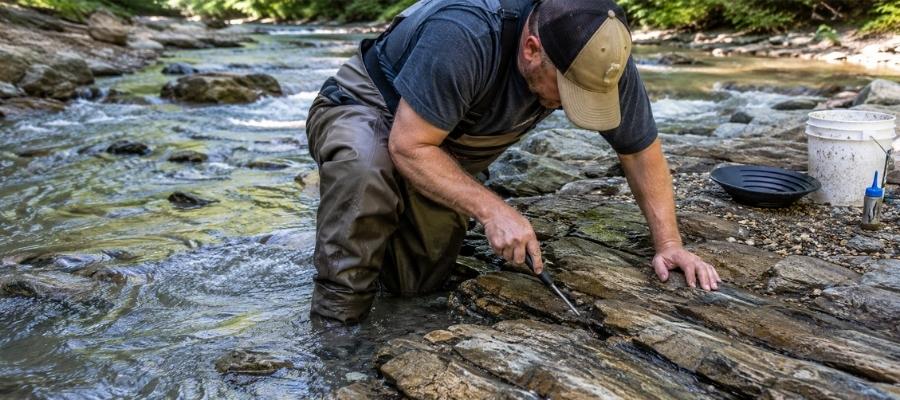
Crevicing means cleaning out the cracks in exposed bedrock and panning what you scrape loose. It is slow, surgical work, and in Michigan it shines on the Upper Peninsula rivers where ancient bedrock lies open to the sky. The Dead River’s rock stretches are the state’s crevicing headquarters.
In the Lower Peninsula, the same idea works on the glacial clay hardpan. Scrape the packed gravel sitting right on the clay, because that layer stops gold exactly like bedrock does.
Essential Tools:
- Crevice tool set: ASR Outdoor Steel Crevice Tool Set.
- Hand trowel: Edward Tools Bend Proof Trowel.
- Magnifying loupe: JARLINK 30X 60X Illuminated Loupe.
Sluicing (Difficulty: 3 out of 5)
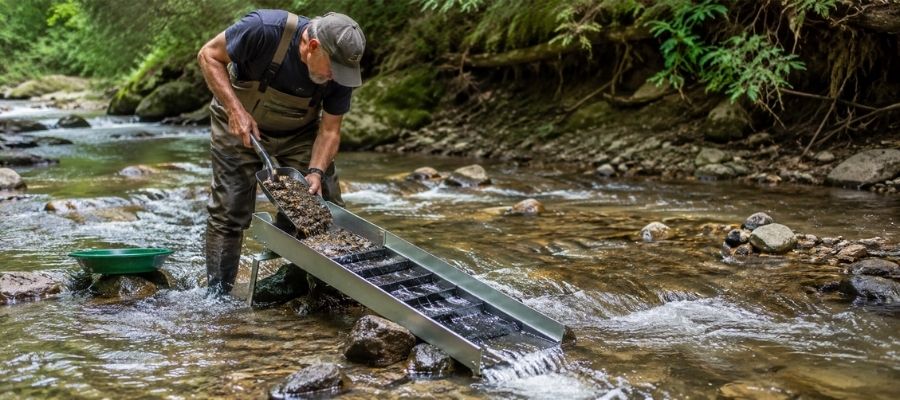
A hand sluice is a small channel with riffles that you set in the current and feed with gravel while the river does the panning for you. It processes ten times what your pan can, which matters when the gold runs this fine. The big western rivers like the Muskegon are where a sluice earns its keep.
Michigan regulates sluicing harder than panning. On state land you need a permit, the season is midsummer only, and your sluice must stay under the legal size. Read the legal section before you buy or build one.
Essential Tools:
- Hand sluice: Keene A52 Hand Sluice.
- Digging shovel: Bully Tools 14 Gauge Round Point Shovel.
- Classifier screen: SE Half Inch Sifting Screen.
How To Tell Real Gold From Fool's Gold
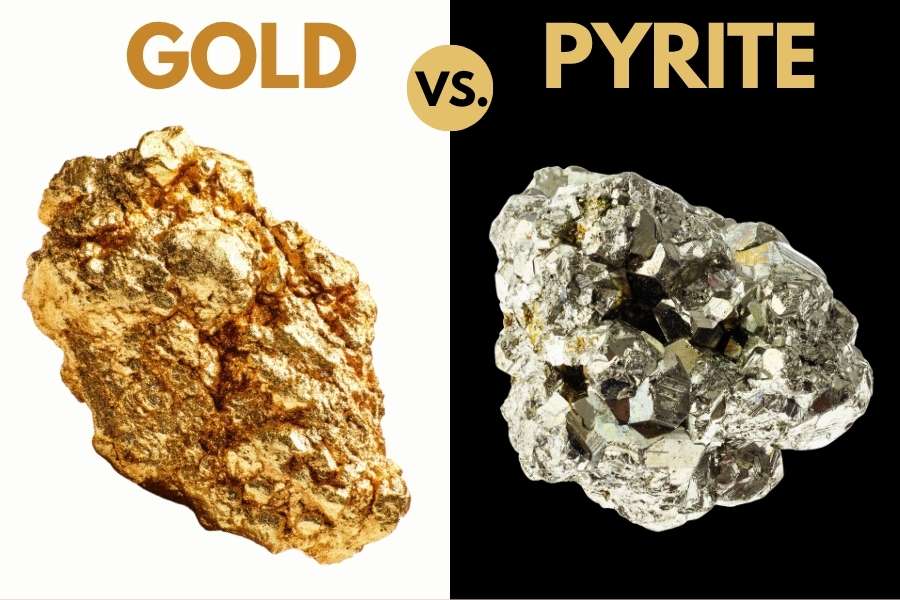
Michigan’s iron country streams carry far more pyrite, mica, and chalcopyrite than gold, and all three have ended trips early with false celebrations. Two quick tests sort them out every time, and you can run both streamside.
The shadow test takes one second. Shade your pan with your hand and watch the sparkle. Real gold stays rich and golden in shadow, while pyrite and mica go gray and lifeless the instant direct light leaves them.
The poke test settles anything the shadow test misses. Press a pin firmly into the particle. Gold is soft metal, so it dents and holds the mark, while pyrite shatters and mica slides apart in sheets.
Get this right and you never toss a pan that had real gold in it. Run both tests on every sparkle until your eye learns the difference, and it will.
How Gold Got Into Michigan
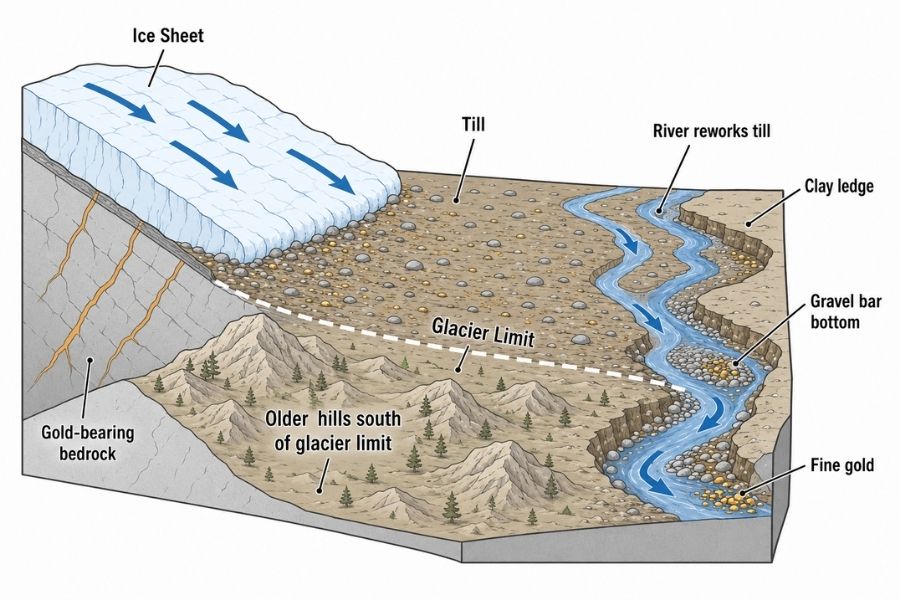
Every spot in this guide sits where it sits because of two events separated by more than two billion years. One made Michigan’s gold, and the other delivered it to your nearest river.
The making happened in the Upper Peninsula, where some of the oldest rocks in North America hold belts of dark greenstone. Hot mineral rich fluids squeezed through cracks in that rock and cooled into quartz veins, and some of those veins carried gold. That is the gold the Ropes mine chased, and it is still locked in the Marquette County hills.
The delivery came with the ice. Over the last two million years, glaciers up to a mile thick ground south across Canada and the Upper Peninsula. They shaved off gold bearing rock and smeared it across the entire Lower Peninsula as sand, gravel, and clay, so every moraine and outwash plain got a dusting of gold.
That glacial delivery is your advantage. The ice spread the gold far and wide, and ever since, the rivers have been concentrating it back into bends, bars, and crevices for you to find. Every spring flood restocks the gravel.
What To Bring for a Michigan Gold Day Trip
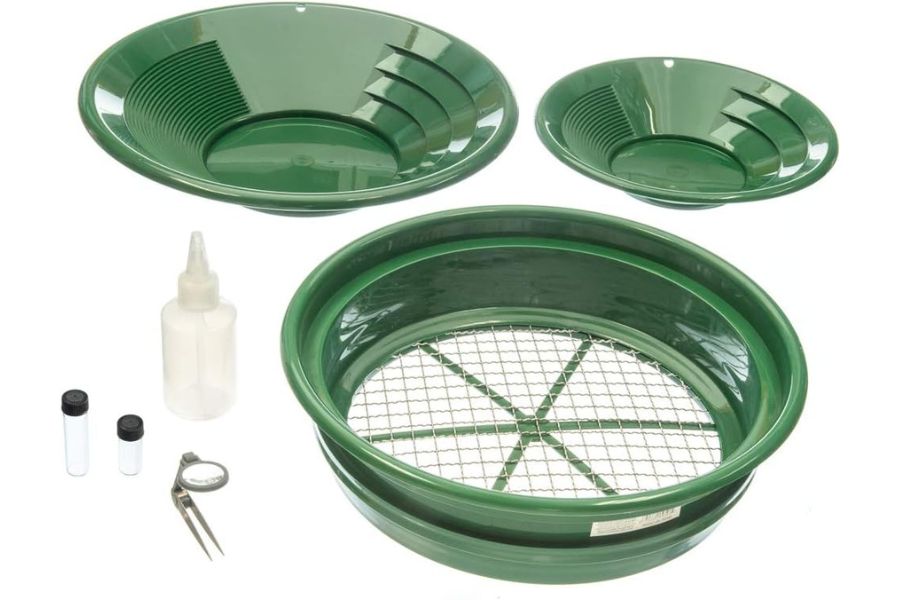
Here is your full checklist. Screenshot this section before you lose cell service in the north woods.
- Gold pan and snuffer bottle.
- Crevice tools and trowel.
- Classifier screen and storage vials.
- Rubber boots or waders, because Michigan water stays cold into July.
- Bug spray, because the June blackflies in the Upper Peninsula are legendary.
- Drinking water, sunscreen, and a brimmed hat.
- Printed landowner permission or a screenshot of the state land map for your spot.
- Snacks and a dry change of clothes.
If you are starting from zero, one box solves it. The Garrett Deluxe Gold Pan Kit has the pans, classifier, snuffer, and vials in one purchase, and it is the kit we hand to every beginner who joins us.
The Best Time of Year To Hunt for Gold in Michigan
Timing your Michigan gold trip is about water levels, ice, and bugs. Here is your calendar, region by region.
Upper Peninsula
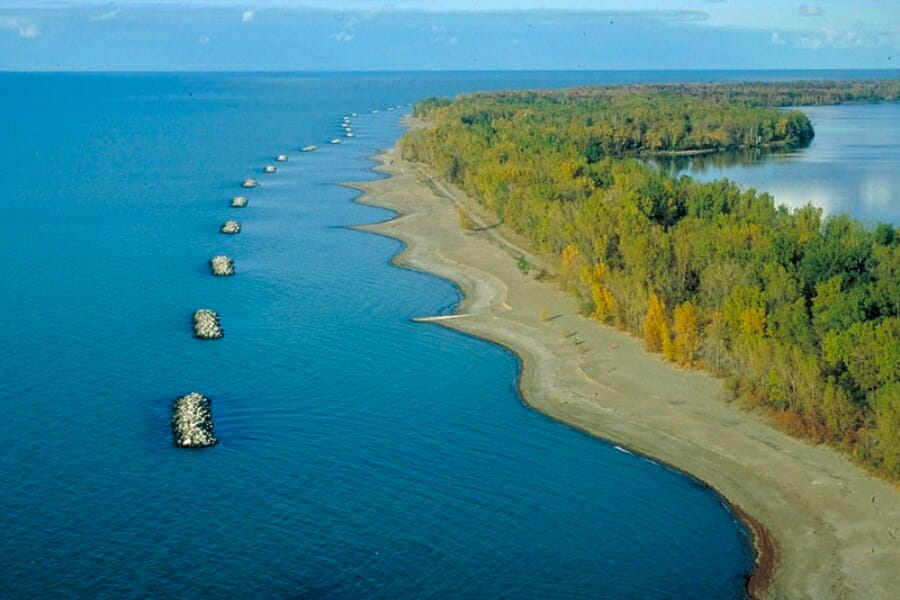
July through September is your window in gold range country. Snowmelt keeps the rivers high and cold well into June, and the blackflies are at their worst right as the water drops. By late July the creeks are low, clear, and readable.
October can be gorgeous but brief. Snow returns early up here, and the back roads to the best spots close fast.
Northern Lower Peninsula
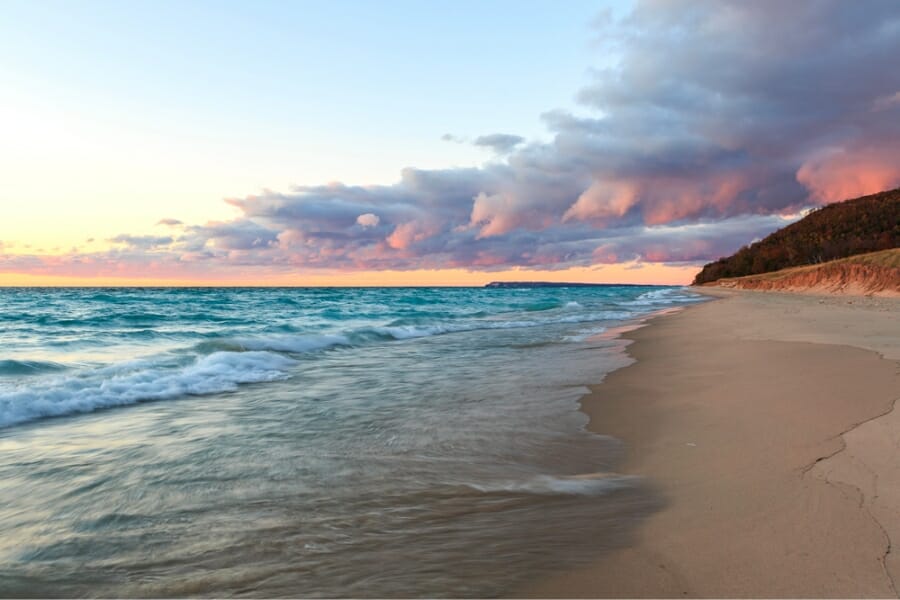
Late June through October is prime time on the Boyne, Au Sable, and Leelanau country rivers. Summer low water exposes the gravel bars, and the crowds clear out after Labor Day. Your bonus window is right after spring floods recede, when fresh gold has just been redeposited.
If you plan to sluice on state land, remember the legal season only runs through midsummer. Panning has no season, so your fall trips stay on the table.
Western Lower Peninsula
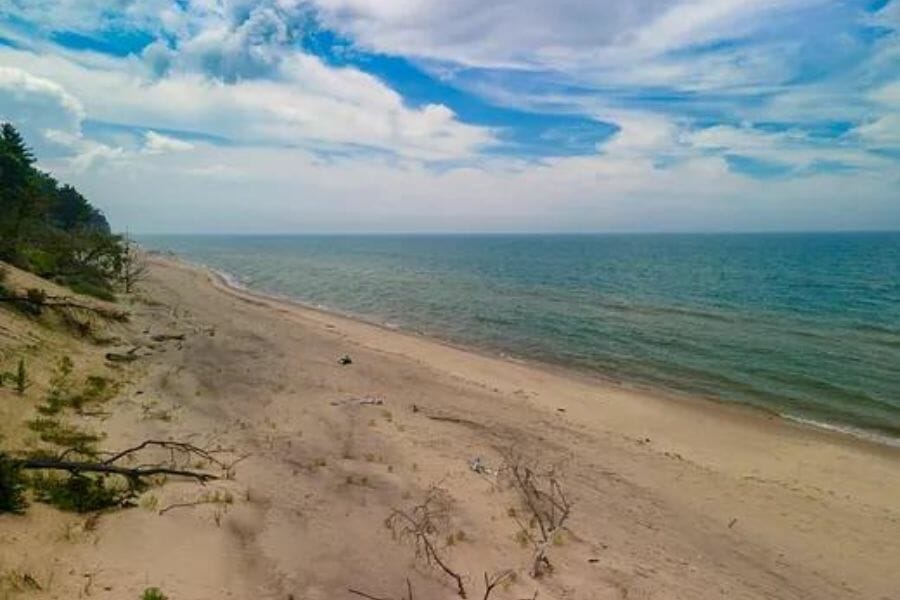
The west side rivers fish best for gold from late summer into early winter. Low water in August and September exposes the endless bars of the Manistee, Muskegon, and Grand. Mild southern Michigan falls keep your season going long after the north freezes.
Skip the spring runoff, when these big rivers run high, muddy, and dangerous. The gravel will still be there in August, freshly restocked.
Other Valuable Rocks and Minerals You Can Find in Michigan
The same gravel that hides Michigan’s gold is loaded with other finds, and some are worth more than the gold. Keep an eye out for these while your pan is working.
Lake Superior Agate
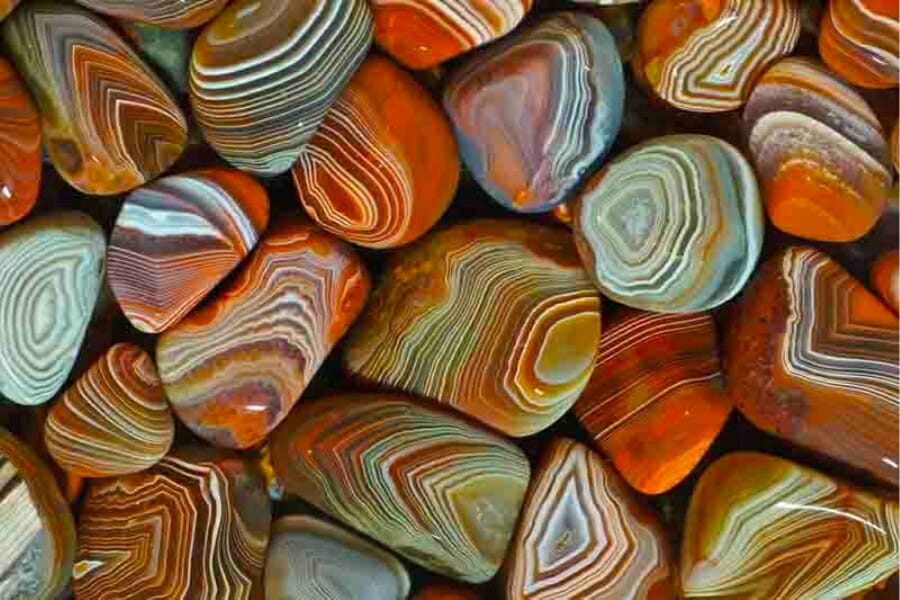
Lake Superior agates are billion year old banded stones that glaciers scattered statewide, so they turn up in the same bars you pan for gold. Wet agate glows with red and orange bands. Our guide to finding agates in Michigan shows you the best hunting grounds.
Petoskey Stone
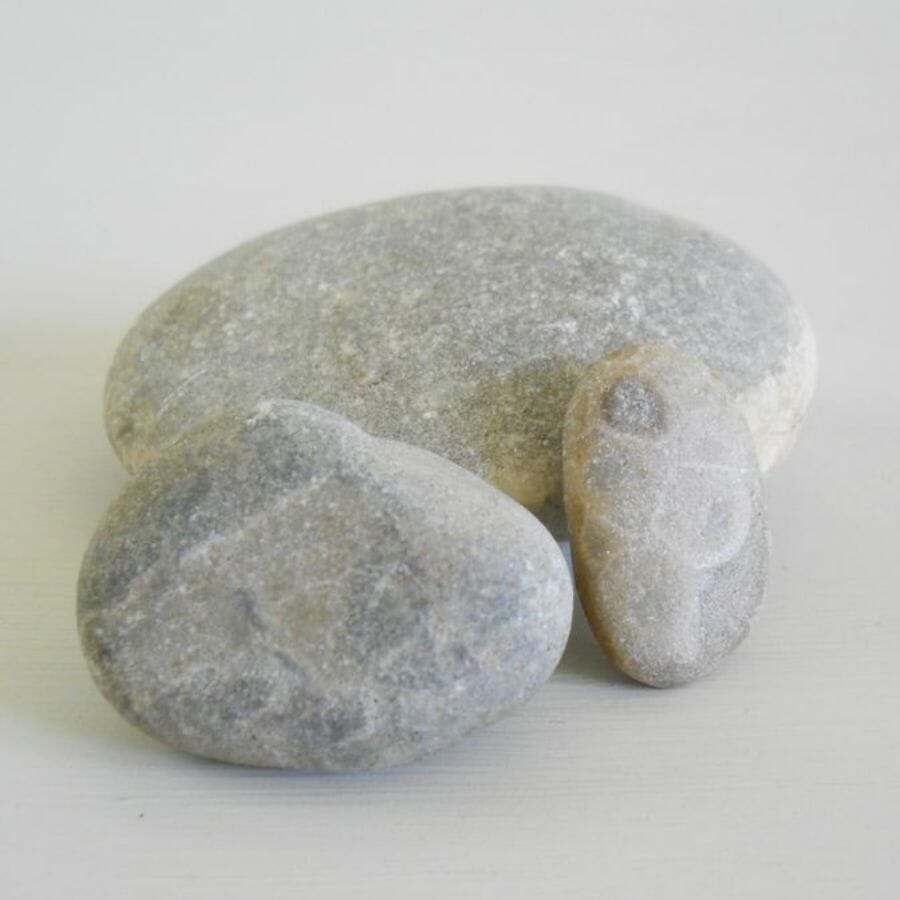
The petoskey stone is fossilized coral and Michigan’s official state stone, and northern Lower Peninsula gravel is full of it. A gray pebble with a honeycomb pattern is your giveaway. Our guide to gem hunting in Michigan covers where the best ones wash up.
Native Copper
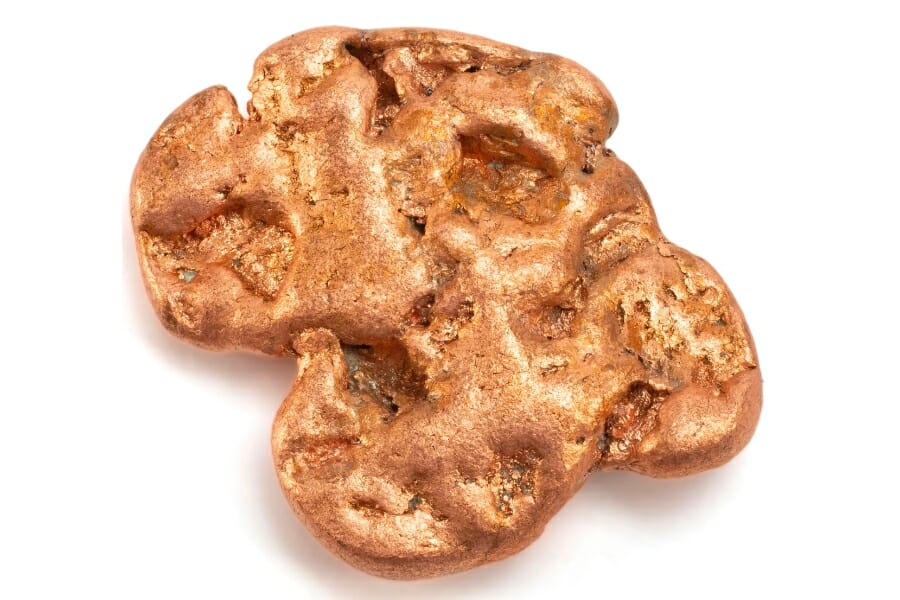
Michigan is world famous for pure native copper, and small glacial copper nuggets turn up in pans all over the state. A heavy green crusted pebble that gleams orange when scratched is the sign. Our Michigan rockhounding guide lists the copper country classics.
Chlorastrolite
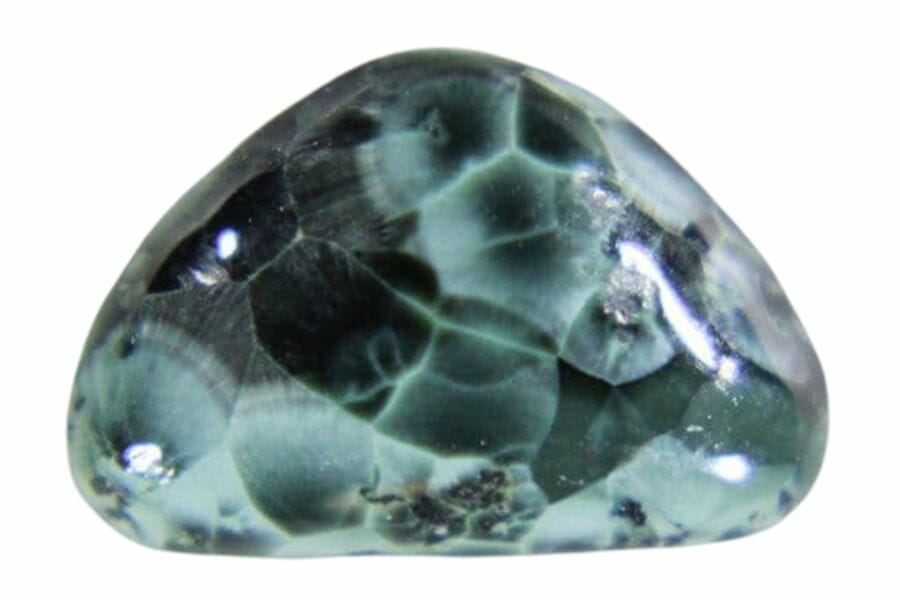
Chlorastrolite, the Isle Royale greenstone, is Michigan’s state gem and one of the hardest gems in America to find. It shows a green turtle shell pattern when wet. Our overview of Michigan rocks, minerals, and gems shows you what to look for.
Datolite
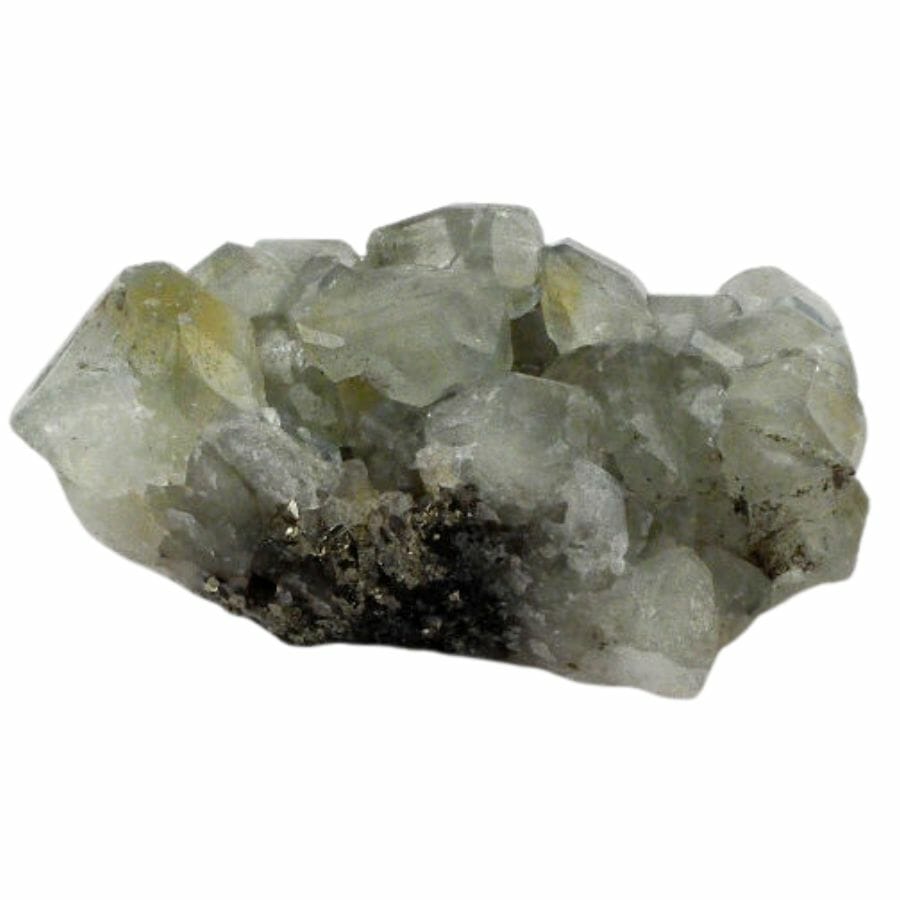
Datolite forms porcelain like nodules in copper country, often tinted pink or green by copper inclusions. Collectors pay real money for clean colored nodules. Our guide to Michigan crystals covers the best datolite ground.
Quartz
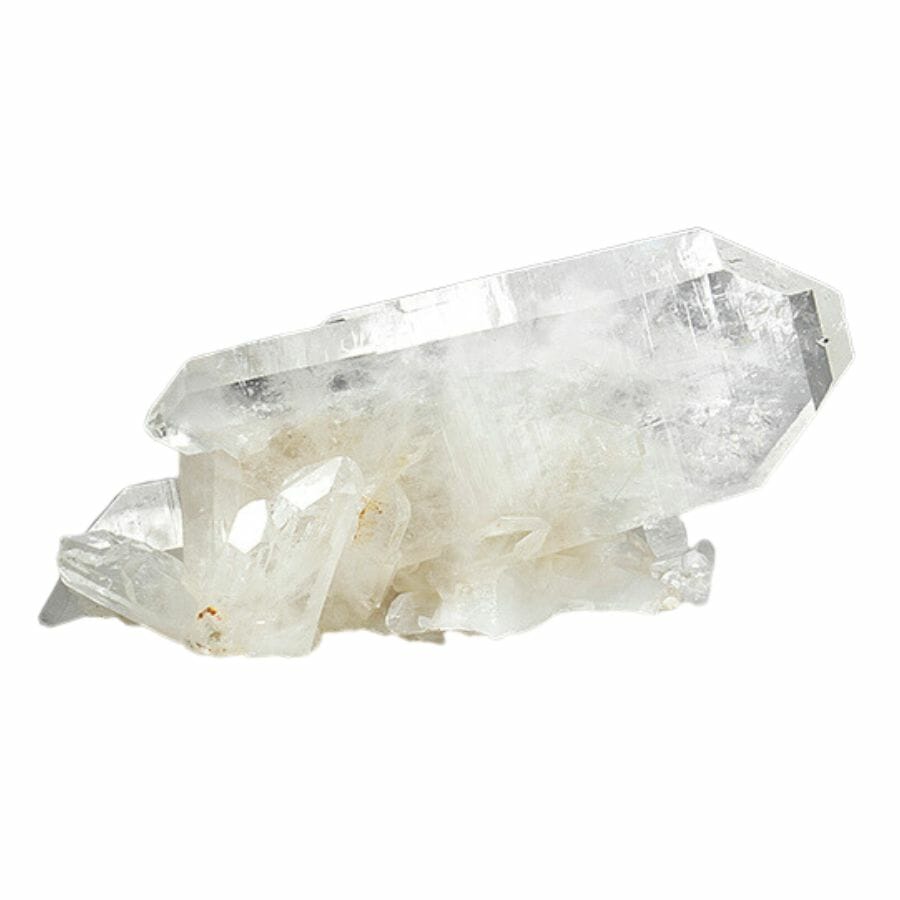
Quartz rides along in every Michigan gold pan, and clear crystal points wash out of glacial gravel statewide. Check any white pebble with flat shiny faces. Our guide to Michigan geodes covers the crystal lined pockets hiding in Michigan rock.
Pyrite
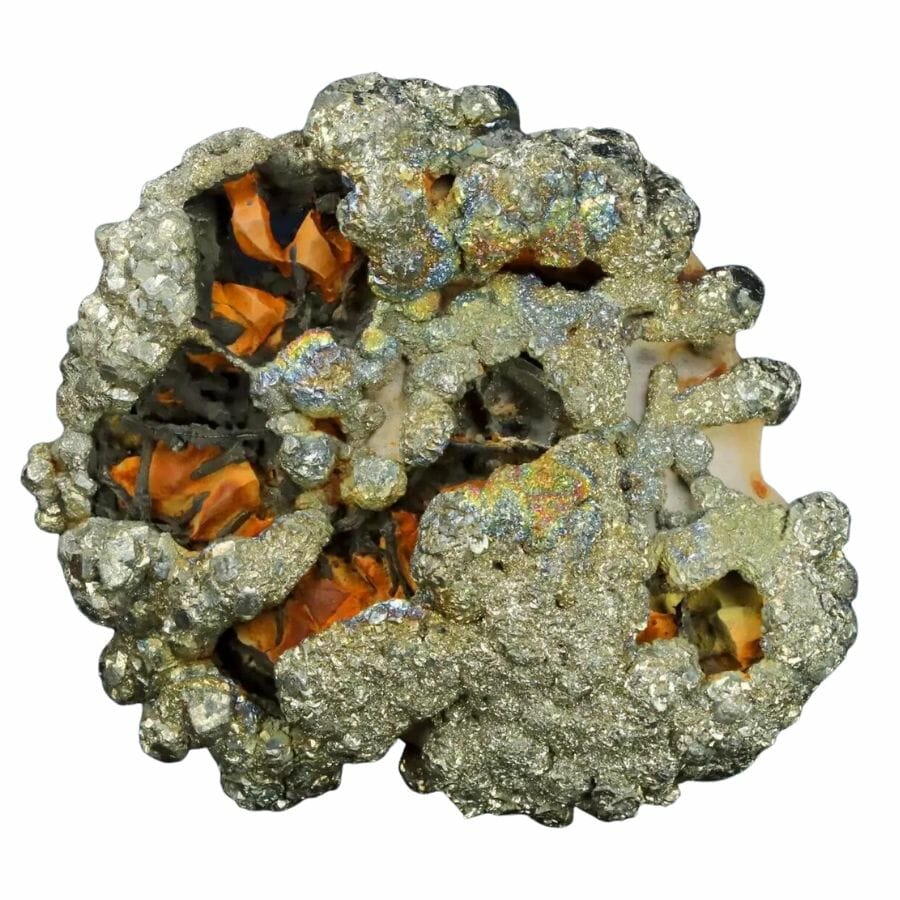
Yes, fool’s gold is worth keeping when it forms sharp brassy cubes. Good pyrite clusters sell to collectors and look fantastic on your shelf. Upper Peninsula iron country streams produce plenty.
Garnet
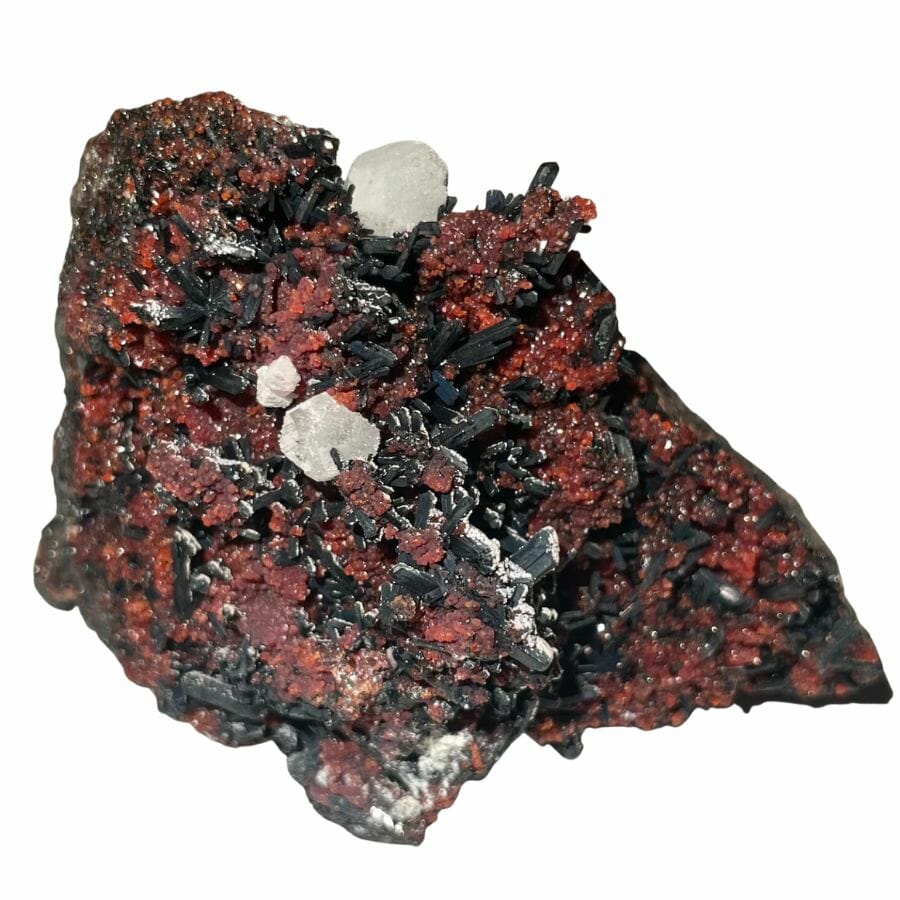
Tiny red garnets concentrate in the same heavy black sand as your gold, and bigger glacial garnets turn up as wine red pebbles. Check the dark corner of your pan for a flash of red.
Jasper
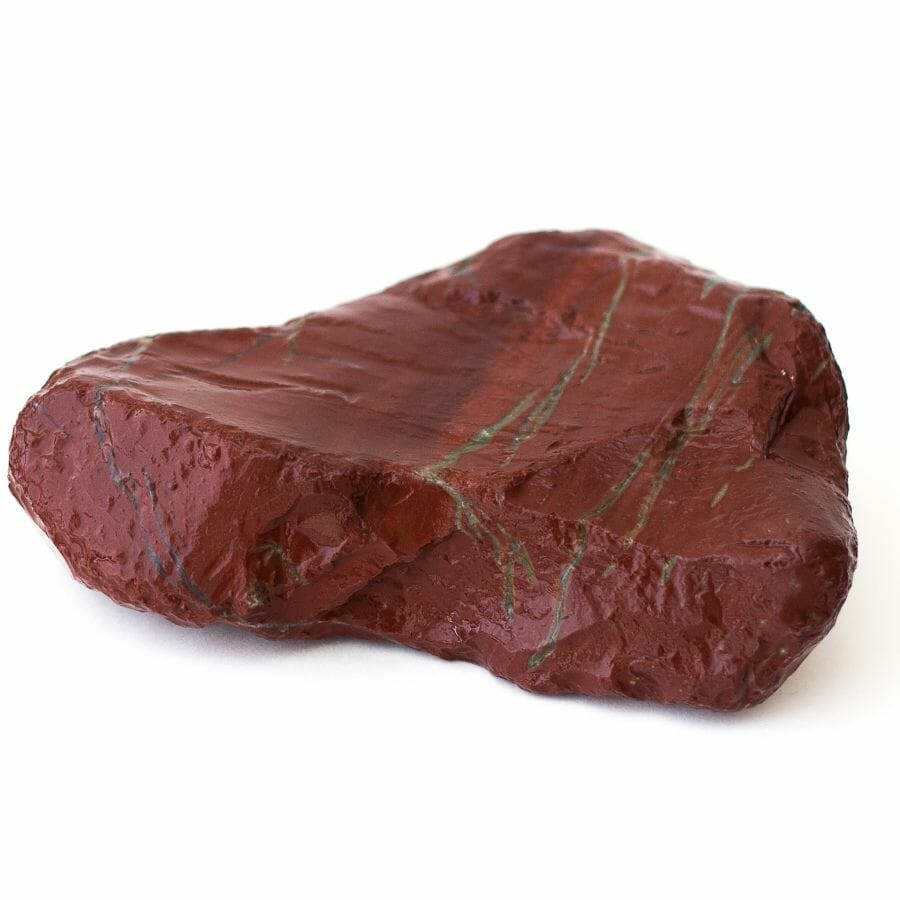
Michigan’s iron country supplies deep red jasper, including the famous banded jaspilite from the Upper Peninsula. It turns up as smooth red pebbles in gravel bars statewide. Wet it and look for a rich brick red glow.
Hematite
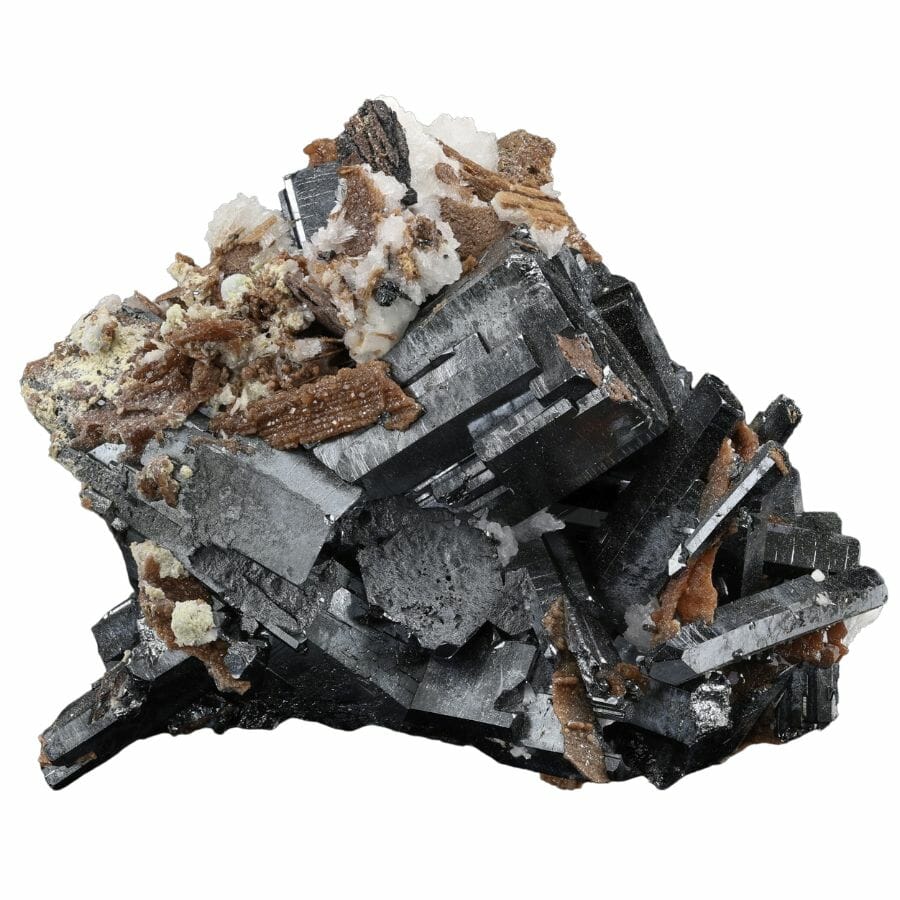
Hematite is the iron ore that built the Upper Peninsula’s mining towns, and heavy silver black chunks of it collect in the same pan corner as your gold. Polished hematite has been jewelry material for centuries, so big clean pieces are worth pocketing.
Here is the thing about every mineral on this list. In a wet pan, half of them look like gray or white pebbles, and people flick real finds back into the river every weekend. The Michigan and Wisconsin Rocks and Minerals Field Guide exists so that never happens to you, with photo identification for more than 120 local rocks and minerals you can check streamside in seconds.
Legal Rules for Gold Prospecting in Michigan

Before you touch a pan to gravel, read this section, because Michigan regulates recreational prospecting more specifically than most states. We are rockhounds, not lawyers, and nothing here is legal advice. Staying legal is your responsibility.
Private Property
Most gold bearing water in Michigan flows through private land, and the adjacent landowners generally own the streambed too. That makes written permission the most important tool you can carry. Rural landowners often say yes to a polite ask, especially when you offer to show them what you find.
State Land and Closed Waters
The DNR allows recreational gold panning on state land only where the state owns both the surface and the mineral rights, so check both ownership maps before you go. State designated trout streams, natural rivers, natural areas, and Great Lakes shores and bottomlands are closed completely. There is also a harvest cap, commonly cited as one half troy ounce of gold per person per year from state land, and digging into stream banks is prohibited everywhere.
Equipment Restrictions
Hand panning with hand tools needs no permit on eligible state land, but sluicing does. A non motorized sluice on state land requires a permit through EGLE, runs only from July 1 through August 31, and must stay within 52 inches long, 12 inches wide, and 6.5 inches deep. Power sluicing and suction dredging are prohibited on state land. In the national forests, casual hand panning is generally allowed while anything more needs ranger district approval.
Play it safe on every trip. Confirm access with the landowner or managing agency before you dig, because rules change without notice.
Upper Peninsula mineral rights are often held by mining companies even under public surface. When in doubt, treat a spot as look but do not take until you have confirmation in hand.
Your best shortcut is local knowledge. Michigan’s rock and mineral clubs know which landowners welcome prospectors, and a membership pays for itself in access alone.
Michigan Gold FAQ
Is there gold in Michigan?
Yes, there is gold in Michigan, both lode gold in Upper Peninsula quartz veins and fine glacial placer gold in rivers across the Lower Peninsula. The Ropes Gold Mine near Ishpeming was a true commercial gold mine, and hobby panners still find color today.
Where can you pan for gold in Michigan?
The Manistee, Muskegon, Flat, and Boyne rivers are among the best documented placer waters in the Lower Peninsula, and the Marquette County gold range creeks lead the Upper Peninsula. State land is open where Michigan owns both surface and mineral rights, outside of closed waters. The best places section above breaks down access for every spot.
Do you need a permit to pan for gold in Michigan?
Hand panning needs no permit on state land where the state owns both surface and mineral rights, as long as you use hand tools and stay out of closed waters. A sluice on state land requires a permit and is limited to a midsummer season and a maximum size. Power sluicing and dredging are prohibited on state land.
Was there ever a gold mine in Michigan?
Yes. The Ropes Gold Mine near Ishpeming opened in the early 1880s and was Michigan’s first and most productive gold mine. A modern operator reopened it a century later and recovered roughly 167,000 ounces of gold, and dozens of smaller mines and prospects worked the same gold range.
What rivers in Michigan have gold?
The Manistee, Au Sable, Boyne, Muskegon, Flat, Grand, and White rivers all have documented or long reported placer gold in the Lower Peninsula. In the Upper Peninsula, the Dead River drains the historic gold range near Ishpeming. State geologists noted a century ago that nearly every Michigan river system has shown at least traces of gold.
Get Every Find In Your Pan Identified In Seconds
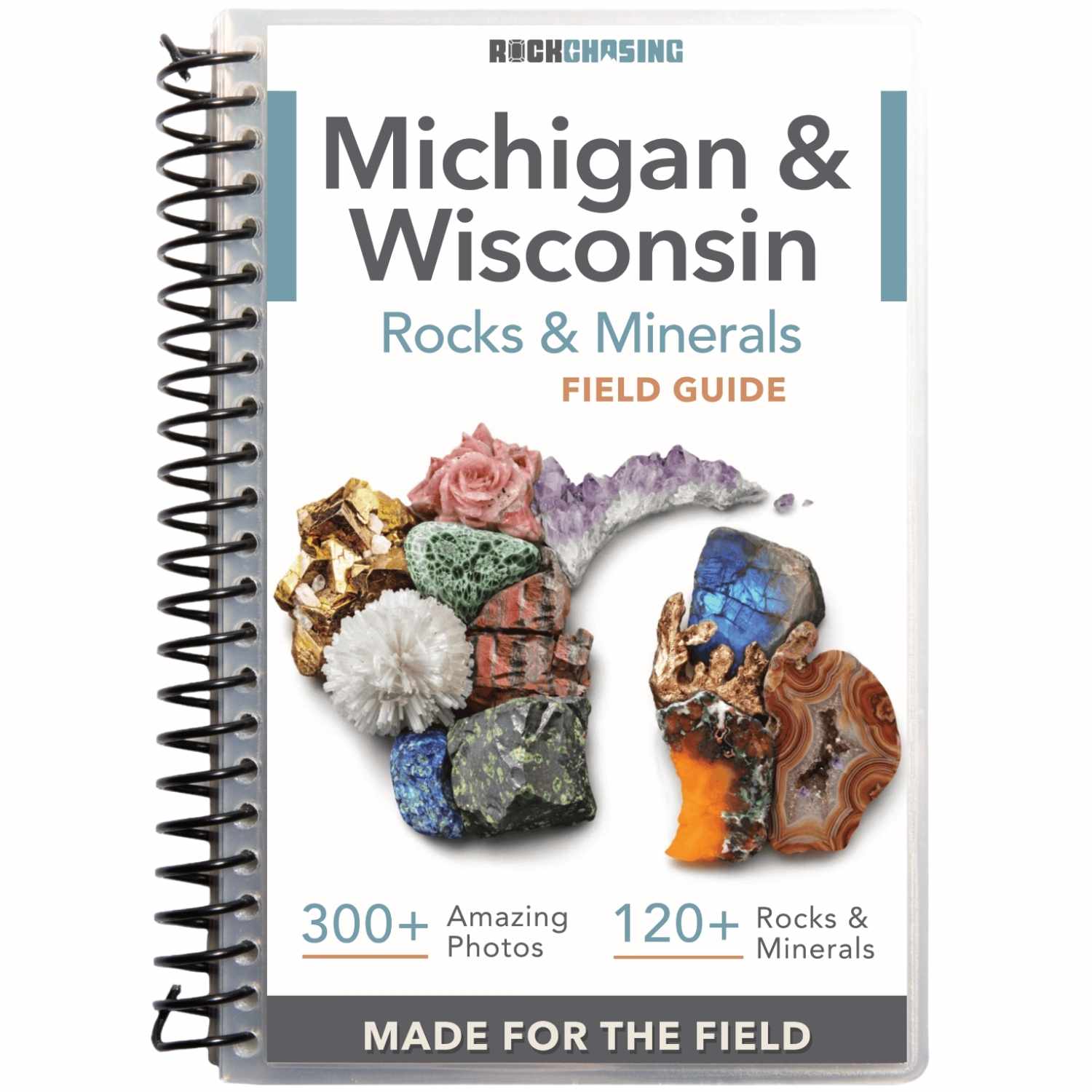
Every pan you pull out of a Michigan river is a mystery until you can name what is in it. The Michigan and Wisconsin Rocks and Minerals Field Guide identifies more than 120 local rocks, minerals, and crystals with over 300 color photos. It is printed waterproof and tear proof so it works right at the water’s edge, so grab your copy before your first trip.