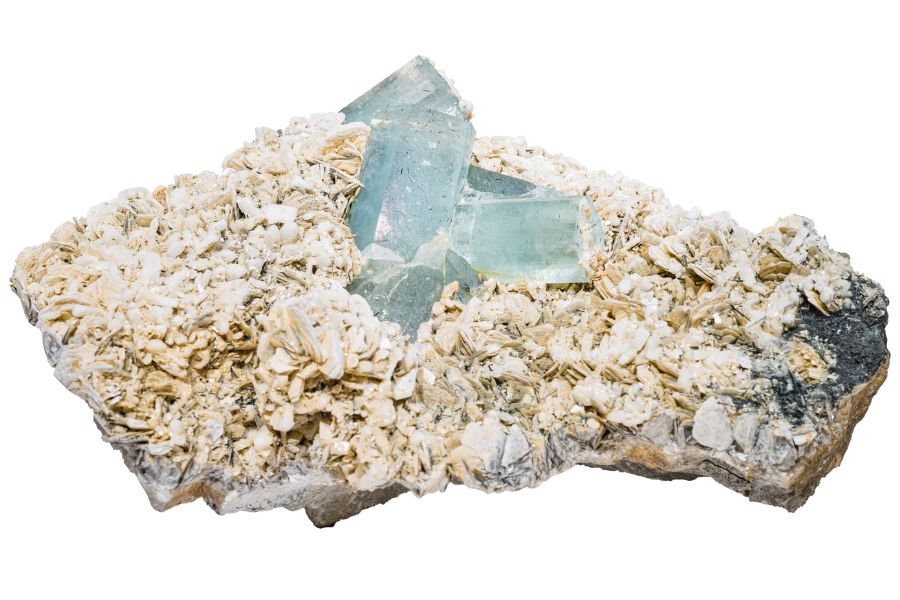
Texas has some amazing spots to find aquamarine! From the well-known Granite Mountain in Marble Falls to the hidden gem mines near Llano, there are plenty of places to dig for this stunning crystal.
Mason County’s pegmatite deposits hold beautiful gemstones, while the hidden streams of the Rio Grande Valley sometimes reveal small aquamarine pieces. Pay-to-dig sites like the Seaquist Ranch in Mason offer a chance to uncover dazzling blue stones waiting beneath the surface.
We’ll give you all the information you need to search like a pro, but the only other tool you need is a guide. Grab Rock Chasing’s Texas Rocks & Minerals Identification Field Guide to save tons of hours and ensure you never walk right past another amazing discovery.
How Aquamarine Forms Here
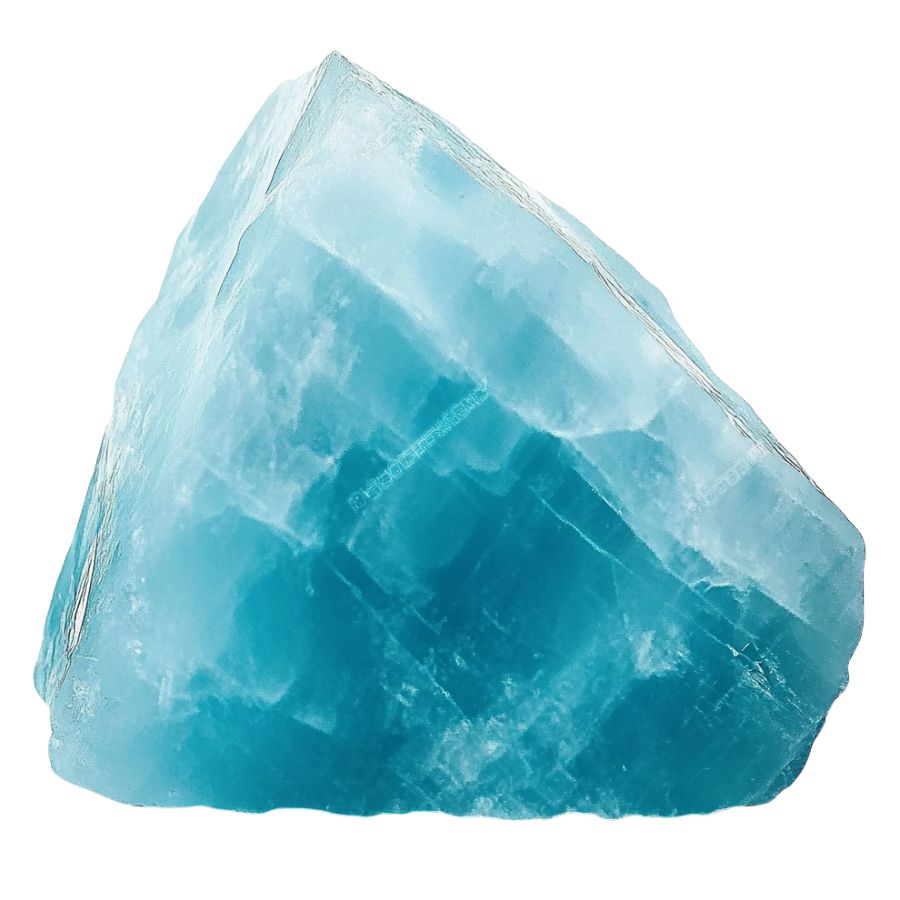
Aquamarine forms deep underground when hot fluids rich in beryllium and aluminum mix with slowly cooling magma. These minerals crystallize in hexagonal shapes as the magma cools.
The stone gets its signature blue color when tiny amounts of iron sneak into the crystal structure during formation.
The best crystals grow in pockets called pegmatites, where they have lots of room to develop. And the process takes millions of years!
The clearer and bluer the stone, the more perfect the conditions were during its formation. These gems can grow quite large, sometimes reaching several inches in length.
Types of Aquamarine
Aquamarine comes in several varieties, each with unique characteristics and value. From the prized deep blue stones to the more common lighter varieties, here’s what you need to know about different types of aquamarine.
Brazilian Aquamarine
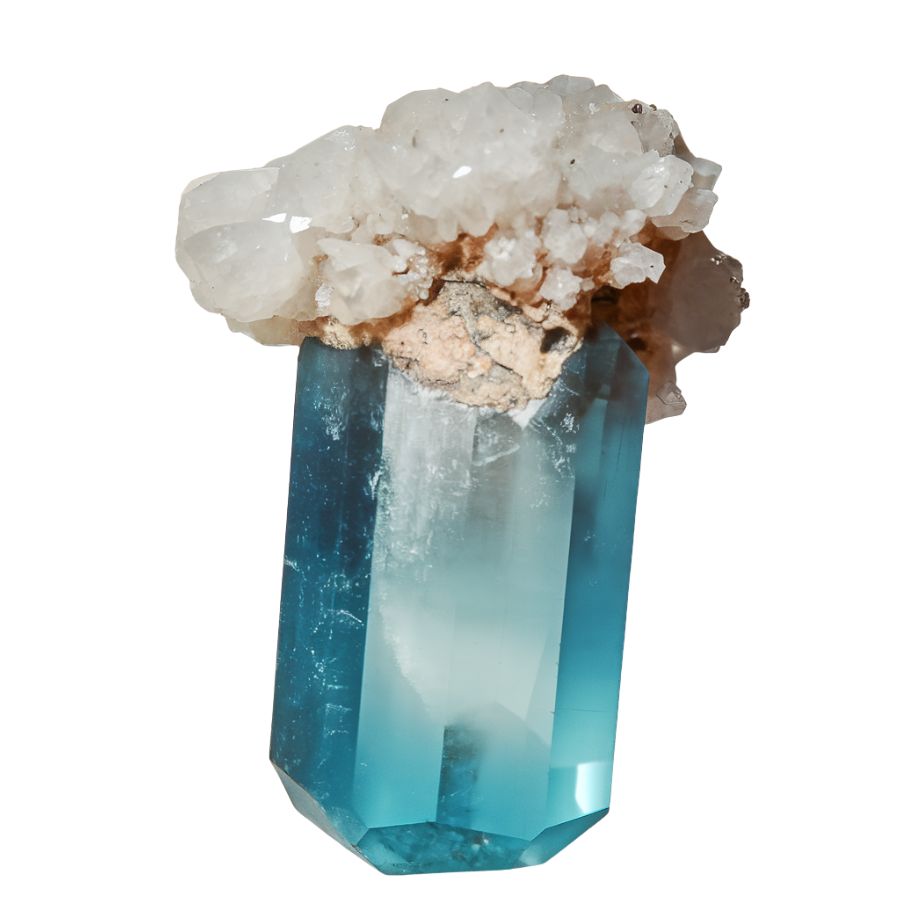
Brazilian aquamarine shows off stunning blue to greenish-blue colors that can range from subtle pastels to rich, deep shades. The stones are remarkably clear, with few or no visible flaws inside.
These stones often form in large, clean crystals that allow cutters to create impressive gems of substantial size. The clarity of Brazilian specimens is particularly noteworthy, as they typically contain fewer inclusions than aquamarines from other sources.
The colors in Brazilian aquamarine remain stable and don’t fade when exposed to light. This stability makes them especially valuable for collectors and enthusiasts.
The finest Brazilian specimens often display a pure, saturated blue color without any hints of green. These gems can achieve exceptional brilliance due to their excellent transparency and optimal cutting, making them stand out in any collection.
If you want REAL results finding incredible rocks and minerals in Texas you need one of these 👇👇👇

Finding the coolest rocks in Texas isn’t luck, it's knowing what to look for. Thousands of your fellow rock hunters are already carrying Rock Chasing field guides. Maybe it's time you joined the community.
Lightweight, mud-proof, and packed with clear photos, it’s become the go-to tool for anyone interested discovering what’s hidden under our red dirt.
Join them, and make your next rockhounding trip actually pay off.
📘 Order the Texas Field Guide Now →
What makes it different:
🚙 Field-tested across Texas rivers, ranchlands, and roadcuts.
📘 Heavy duty laminated pages resist dust, sweat, and water.
🧠 Zero fluff — just clear visuals and straight-to-the-point info.
📍 Find hidden gems like Blue Topaz, Texas agate, and petrified wood fast.
⭐ Rated 4.8★ by real collectors who actually use it in the field.
Moss Aquamarine
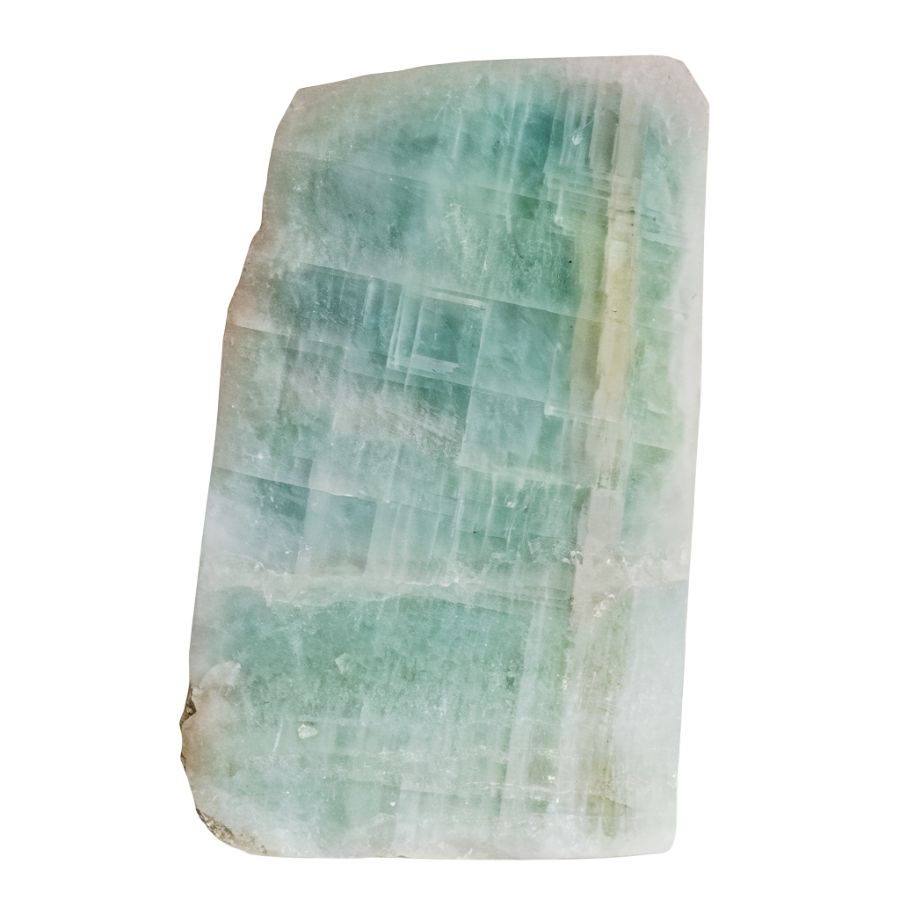
Moss aquamarine features an intriguing network of green, thread-like inclusions that create patterns resembling moss or ferns frozen in ice. These natural formations give each stone a unique character, with no two pieces looking exactly alike.
The base color ranges from pale blue to greenish-blue, but the defining feature is the presence of iron-rich inclusions that create a moss-like appearance.
Unlike clear aquamarines, moss aquamarine’s beauty lies in its internal landscape. The inclusions catch light in interesting ways, creating depth and dimension within the stone.
Some specimens show concentrated areas of moss-like patterns, while others display more scattered formations.
Milky Aquamarine

Milky aquamarine displays a dreamy, cloud-like appearance with a soft, diffused blue color. The stone’s translucent quality creates a gentle glow that seems to come from within, rather than the sharp sparkle of clear varieties.
The color can range from almost white to pale blue, with some specimens showing gentle color zoning.
These stones often have a smooth, satin-like appearance when polished, enhancing their ethereal quality. Some pieces show subtle bands or waves of color within the milky background.
When cut as cabochons, milky aquamarine displays a gentle, rolling shimmer that moves across the surface as the stone is turned. The subtle play of light through the stone’s cloudy interior creates an effect similar to moonlight on water.
Santa Maria Aquamarine

Santa Maria Aquamarine stands out for its deeply saturated blue color. The color is so intense and pure that it has become the standard for top-quality blue in aquamarines.
They possess a vitreous (glass-like) lustre and high transparency, making them visually appealing and desirable for jewelry
An interesting feature of Santa Maria Aquamarine is its color-changing ability. When viewed from different angles, it can appear colorless from one direction and deeply blue from another. This effect, called dichroism, makes each stone fascinating to observe.
Some famous Santa Maria Aquamarines include the “Martha Rocha” aquamarine, celebrated for its stunning blue hue and clarity, which gained attention in the 1950s.
Bauchi Aquamarine
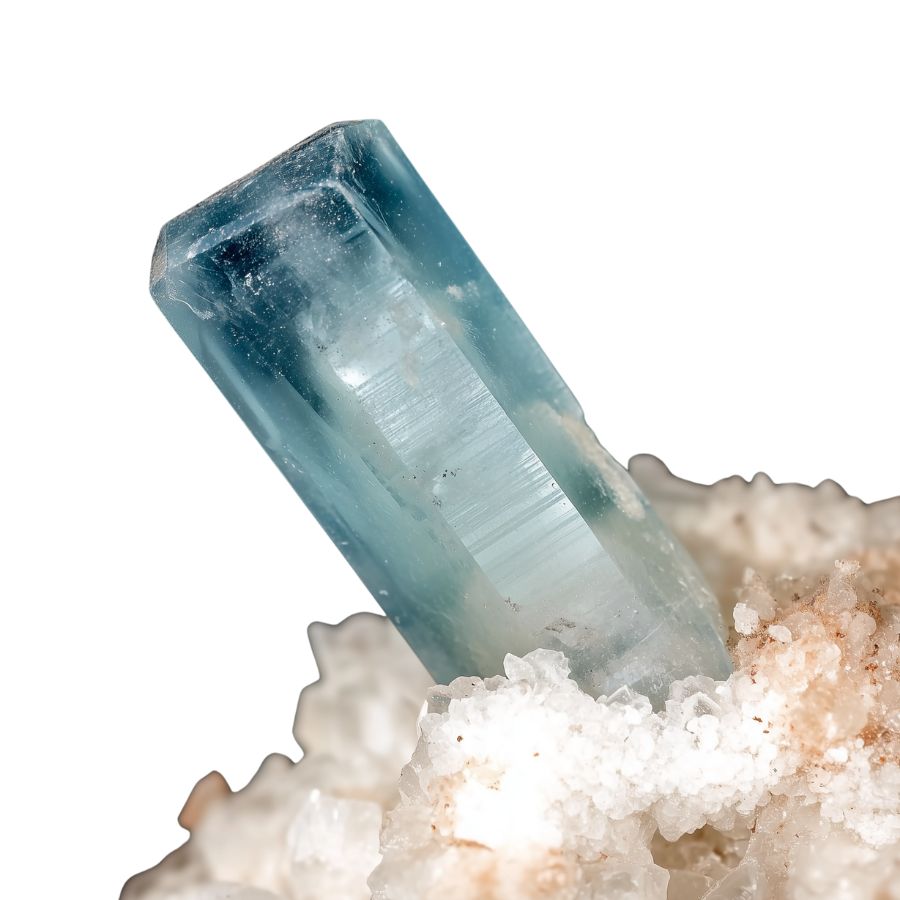
Bauchi Aquamarine shows a distinctive soft ice-blue color that looks gentle and soothing. The color reminds many people of a winter sky or frozen lake.
One of the unique aspects of Bauchi Aquamarine is its hexagonal crystal structure. The crystals can grow quite large, sometimes exceeding a foot in length, which is impressive compared to many other gemstones.
Additionally, while most aquamarines are known for their pale blue to light green colors, Bauchi Aquamarine maintains a consistent soft blue tone that appeals to collectors looking for specific color attributes.
Furthermore, the increasing recognition of African aquamarines in the global market has contributed to the popularity of Bauchi Aquamarine as a collectible stone.
Cat’s Eye Aquamarine
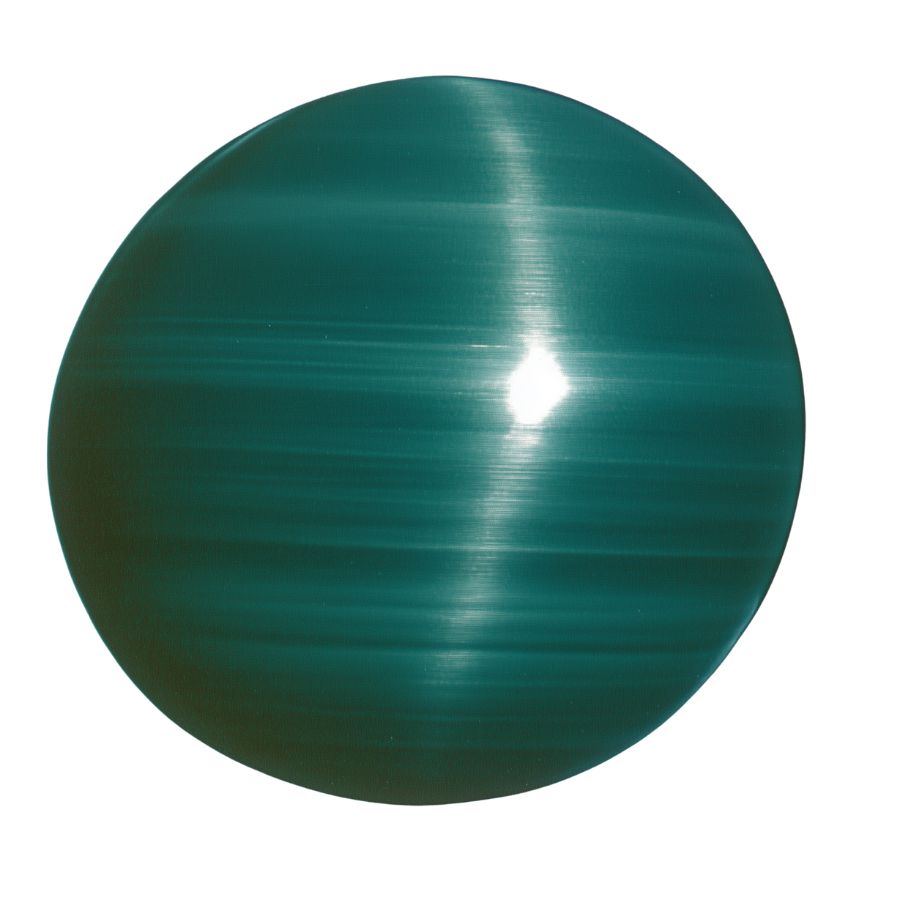
Cat’s Eye Aquamarine shows a remarkable visual effect – a bright line of light that moves across the surface like a cat’s eye. This effect comes from tiny parallel tubes inside the crystal that reflect light in a concentrated band.
The color of Cat’s Eye Aquamarine typically ranges from blue to greenish-blue, reminiscent of ocean waters.
The stone’s most fascinating feature is how the light band moves when you rotate the stone. This movement creates a dynamic, living quality. The sharper and more defined this light band is, the more valued the stone becomes.
The best specimens show a perfectly straight, bright line against a smooth, silky background. The effect is most dramatic when the stone is cut as a smooth dome shape.
São Domingos Aquamarine
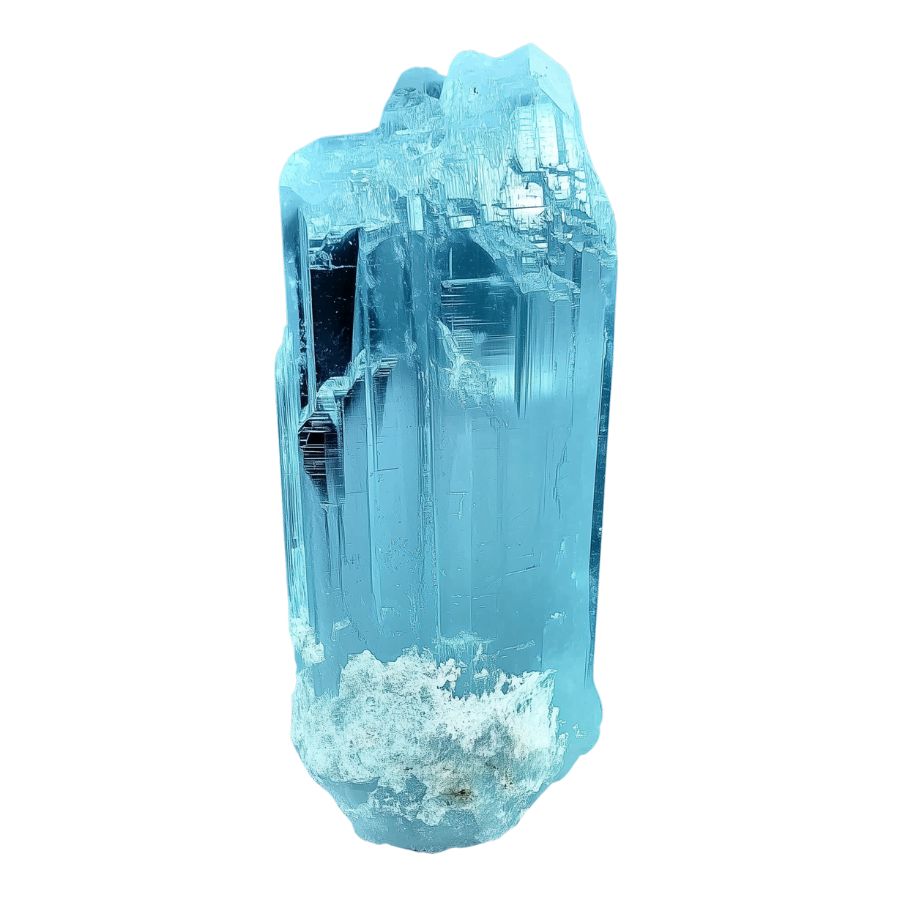
São Domingos Aquamarine shows a gentle pastel blue color that’s soft and soothing to the eye. The color has a delicate quality that makes it perfect for people who prefer subtle beauty.
Its pastel shade allows for versatile use in various designs, appealing to both traditional and modern tastes in gemstone jewelry.
The stone maintains its pastel shade consistently throughout the crystal. This even distribution of color is special because many other aquamarines can show patches or zones of different color intensities.
One unique aspect of the São Domingos Aquamarine is its origin story; it was discovered by chance on a cattle farm, giving it a distinct narrative compared to other aquamarines that are often associated with specific mining locations or historical significance
Tatu Aquamarine

Tatu Aquamarine shows a pure, sea-blue color. The purity of color makes it special. These stones often grow into large, perfectly formed crystals. The six-sided shape is clear and well-defined, even in natural pieces. This regular crystal growth leads to stones with excellent clarity and shine.
A notable feature of Tatu Aquamarine is how clean it looks inside. Most pieces have very few internal marks or inclusions. This clarity lets light travel through the stone smoothly, creating beautiful sparkles and flashes.
The stone’s natural blue color doesn’t need any treatment to look good. It comes out of the ground with its beautiful color ready to show. This natural beauty makes each piece special and valuable to collectors who appreciate untreated stones.
What Rough Aquamarine Look Like?
Aquamarine in its natural form can be tricky to identify, but once you know what to look for, it’s pretty distinctive. Here’s how you can spot rough aquamarine:
Look for the Distinct Blue-Green Color
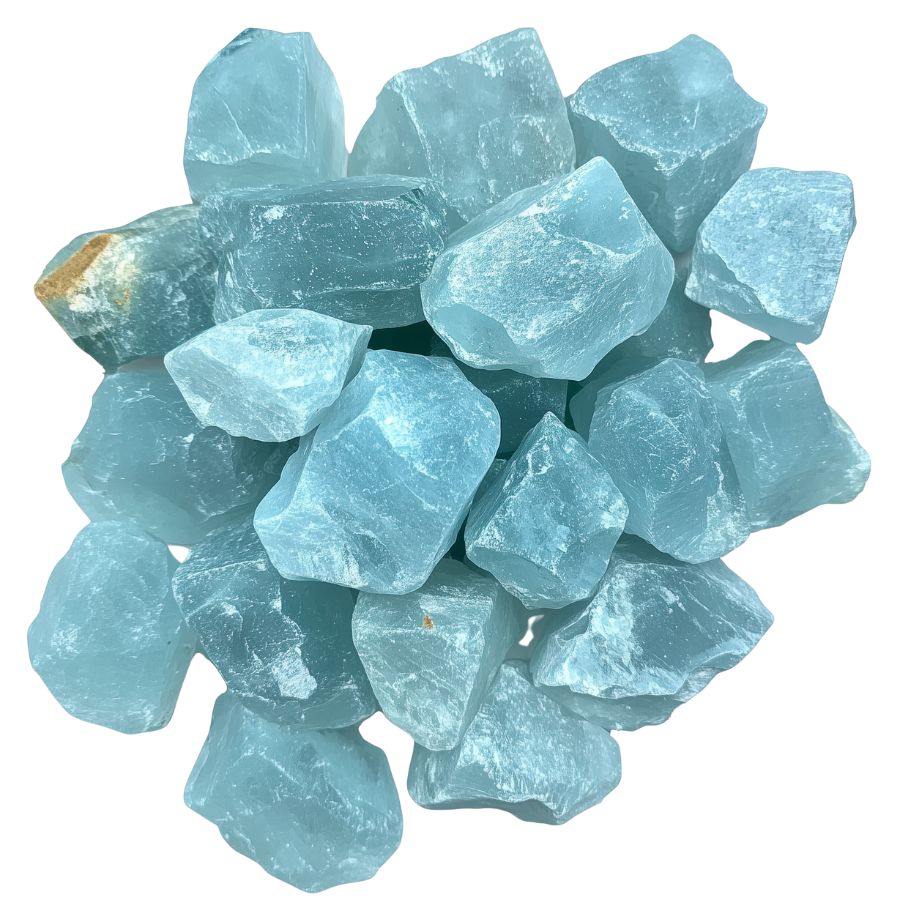
Raw aquamarine typically shows a pale blue to blue-green color, like seawater. You’ll notice it’s not as intense as blue topaz. The color might appear unevenly distributed or zoned within the crystal.
Here’s a pro tip: hold it up to natural light – genuine aquamarine often shows stronger color from certain angles. If it’s too dark or too perfect, it might be glass or another mineral.
Check for Hexagonal Crystal Structure
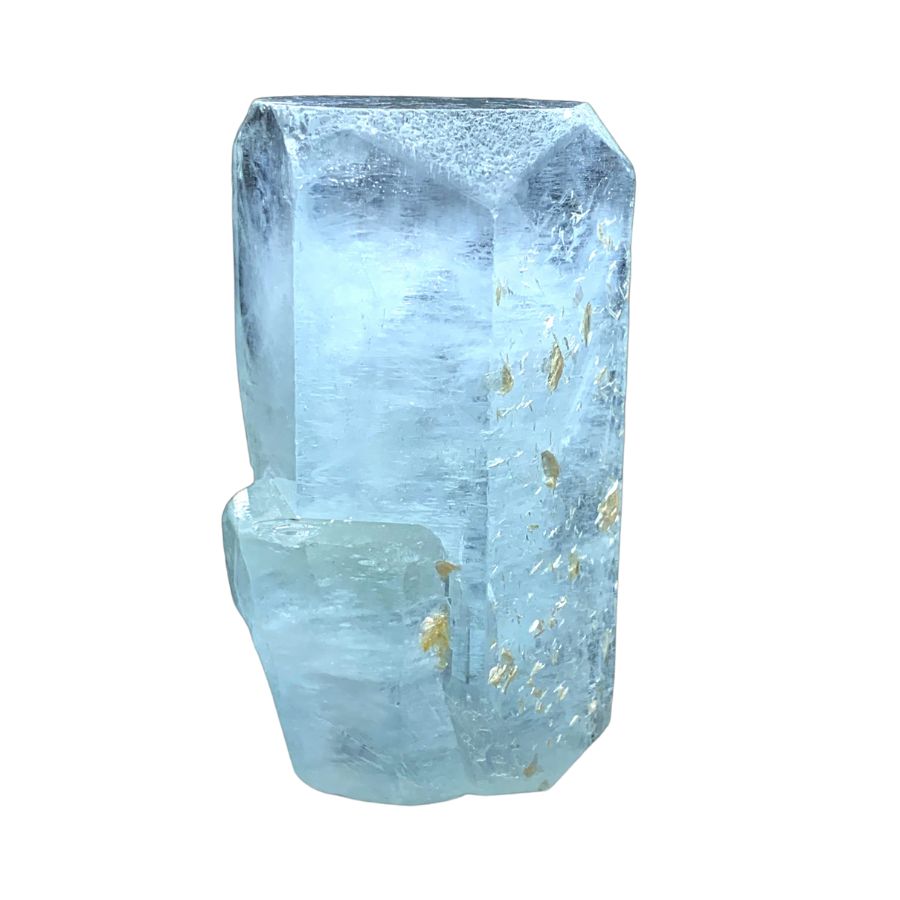
Natural aquamarine forms in six-sided (hexagonal) crystals. Even in rough form, you can spot these geometric patterns. Sometimes they’re perfect columns, but often they’re broken or abraded.
Run your finger along the sides – you should feel subtle ridges where the crystal faces meet. Fake stones rarely show this distinctive crystal habit.
Examine Surface Texture and Transparency
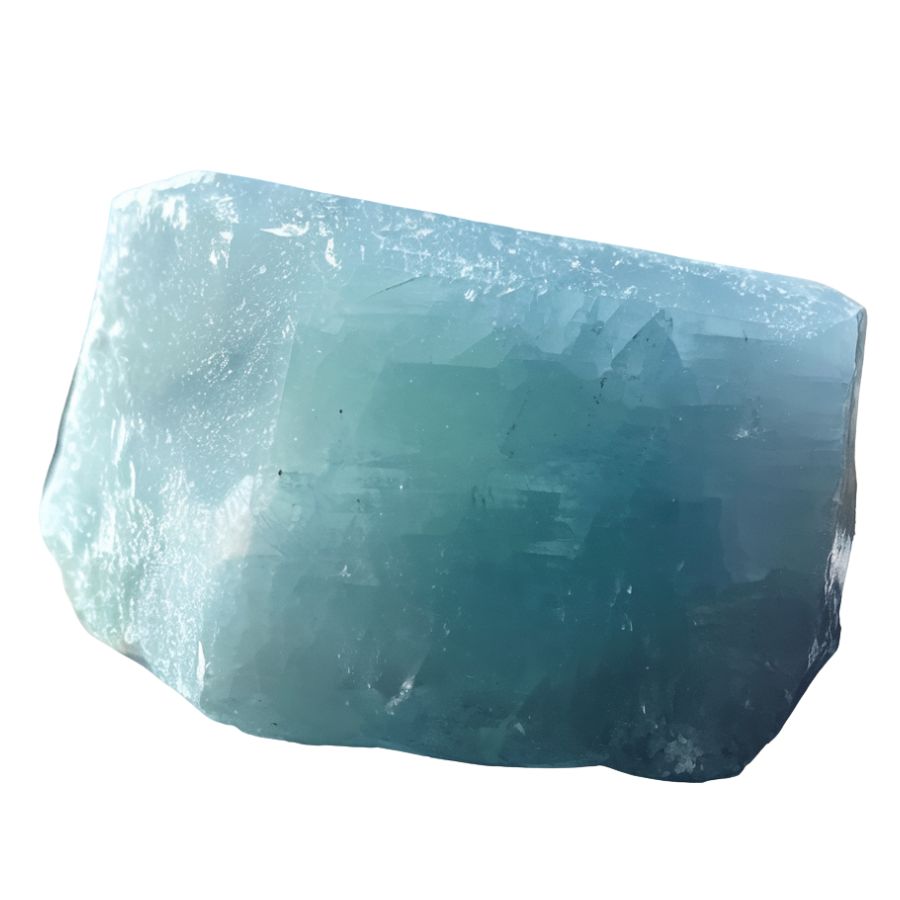
Raw aquamarine has a specific vitreous (glass-like) luster, but it’s not as shiny as glass. Look for small natural etchings on the surface – they look like tiny triangular impressions.
Most pieces are translucent to transparent, letting some light through. If it’s completely opaque or too perfectly clear, be suspicious.
Test for Pleochroism and Inclusions
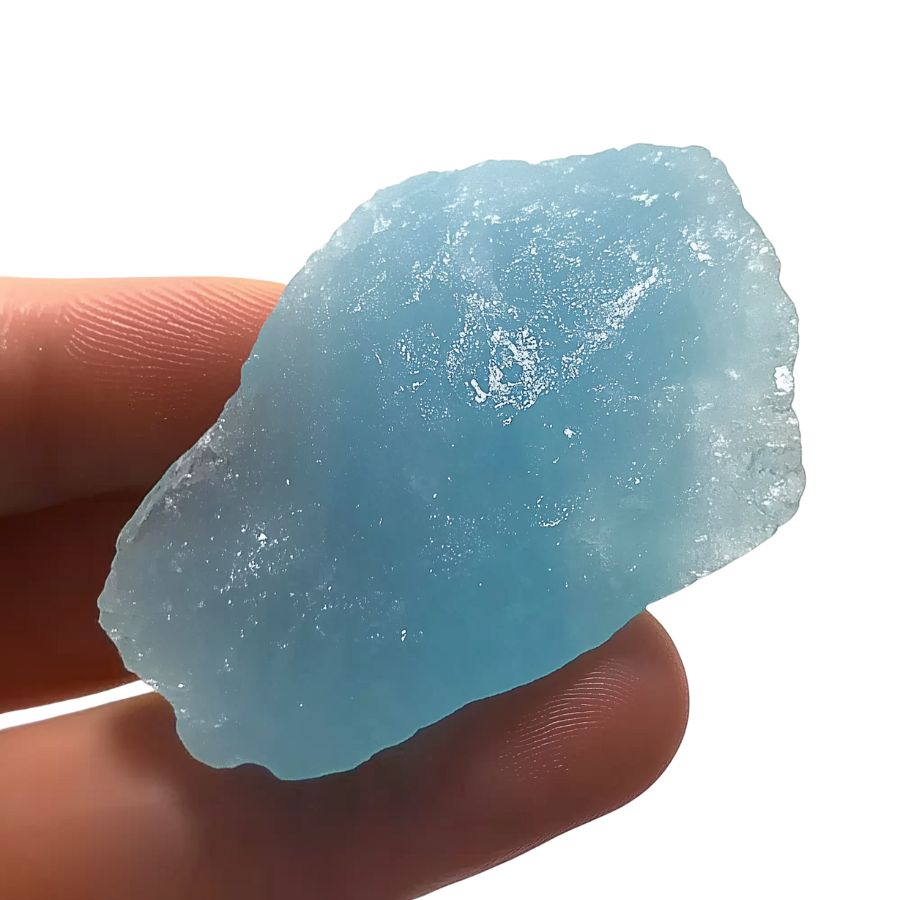
Hold the stone up and rotate it slowly. Genuine aquamarine shows different shades of blue when viewed from different angles (pleochroism).
Through a loupe or magnifying glass, look for tube-like or parallel needle inclusions – these are telltale signs of natural aquamarine. Also, small liquid bubbles are common and good indicators of authenticity.
The Tools You Will Need

Going out to hunt for Texas aquamarine is a perfect way to start your own real-life treasure hunt. You don’t need a lot of complicated gear to get started, just a few inexpensive items to make your trip safe and successful. With just the bare necessities, you can start searching for beautiful crystals.
A Dependable Field Identification Guide – Essential
A high-quality field guide is your best friend in the field. It helps you identify rocks quickly, keeps you from mistaking plain quartz for aquamarine, and saves you hours of guesswork when you’re back home sorting your finds.
It also teaches you what types of formations to look for, making each trip a learning experience instead of a guessing game.
Rock Chasing’s Texas Field Guide is perfect for this. It’s waterproof, lightweight, and packed with over 300 full-color photos, so even beginners can confidently spot gemstones across the state.
See HERE why thousands of rockhounds across Texas rely on this guide for their next big find.
Rock Hammer – Essential
Aquamarine is usually found embedded in tough granite or pegmatite rock, so you will need a way to break a piece open to find the treasure inside. A rock hammer, sometimes called a geologist’s hammer, is designed to safely and effectively chip away at hard rock surfaces.
Cold Chisel – Essential
When you locate a promising piece of hard rock, the chisel works hand-in-hand with your rock hammer. A heavy-duty cold chisel lets you direct your strike exactly where you need to split the rock open along a weakness or fracture line.
This tool is essential for carefully prying out delicate crystals, like aquamarine, without damaging them.
Safety Glasses – Essential
Any time you use a hammer and chisel on a rock, small, high-speed fragments of stone can fly into the air. You must protect your eyes from these tiny, sharp pieces with a pair of simple safety glasses or goggles. Keeping your eyesight safe is the most important rule on any crystal hunting trip.
Collection Bag or Bucket – Essential
You need a reliable place to store the crystals and rocks you find. A durable canvas bag or a small, strong plastic bucket works perfectly for hauling your treasures. This is essential for protecting your aquamarine specimens from being scratched by other rocks or damaged during your hike.
Tips on Where to Look
Aquamarine can be found in various accessible locations if you know where to look. Below-mentioned practical tips will help you locate areas where aquamarine naturally occurs.
Stream Beds and Rivers
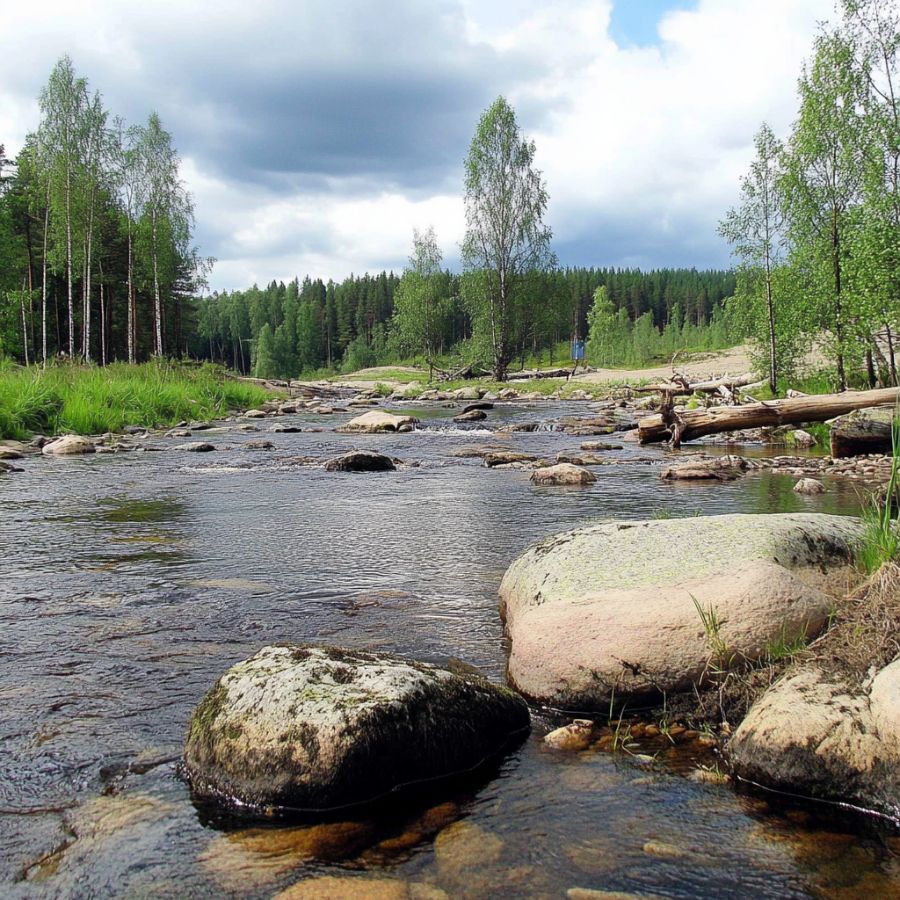
Look for places where water flows over rocks regularly. Aquamarine often breaks from its host rock and gets carried downstream. Check gravel bars and sandy areas where water slows down.
The best spots are just after a bend in the river where heavy minerals get trapped. Use a sieve or pan to sort through sediments. Pro tip: search after heavy rains when new material gets washed down.
Pegmatite Outcrops
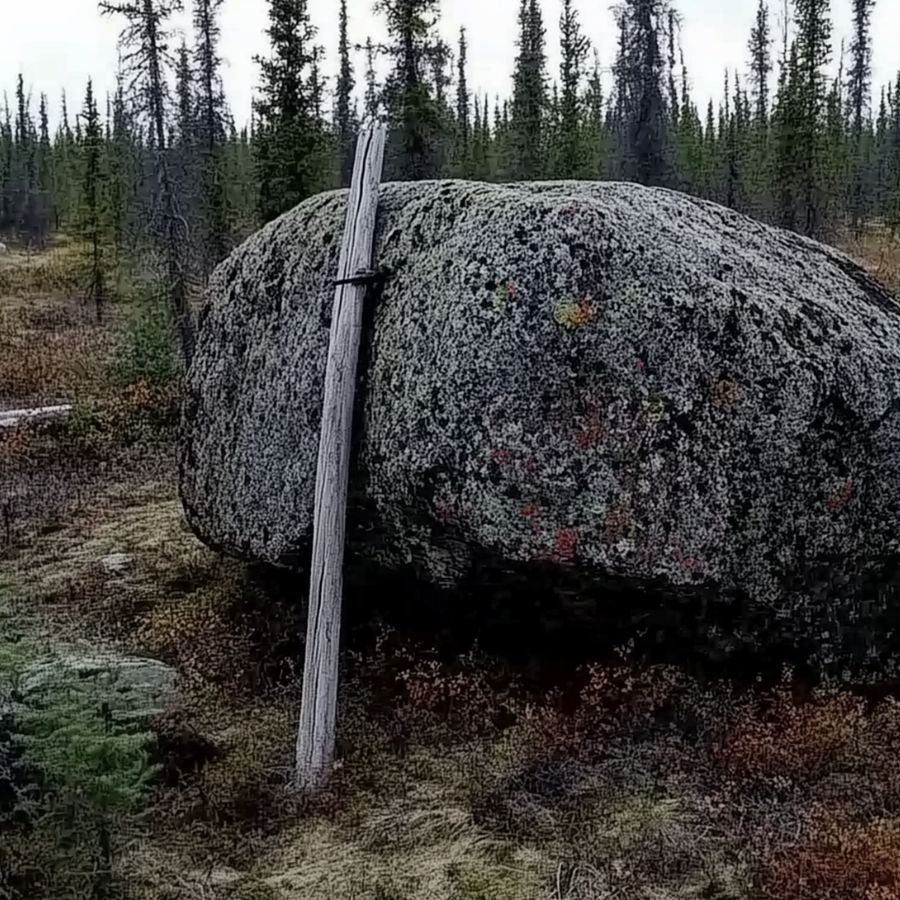
Pegmatites are coarse-grained rocks that often contain large crystals of various minerals, including aquamarine, which typically forms in these igneous rock formations when mineral-rich fluids cool slowly deep within the Earth, allowing beautiful hexagonal crystals to develop over time.
Look for white or pink rocks with large crystals – that’s pegmatite. Check weathered surfaces and cracks. Aquamarine crystals often stick out from eroded areas.
Old Mining Areas

Hit up abandoned mica or feldspar mines. Check mine dumps and tailings piles. Lots of overlooked gems there. Bring a UV light – aquamarine sometimes fluoresces. Look for hexagonal crystals with glassy luster.
Tools needed: rock hammer, safety glasses, small shovel. Mine owners sometimes allow collecting for a fee.
Mountain Slopes

Focus on granite areas. Check scree slopes (loose rock piles). Look after rain. Stones are more visible when wet. Scan for pale blue or greenish crystals.
The best time is spring after snow melt exposes new material. Important Note: avoid steep slopes, stick to accessible areas.
Some Great Places To Start
Here are some of the better places in the state to start looking for aquamarine:
Always Confirm Access and Collection Rules!
Before heading out to any of the locations on our list you need to confirm access requirements and collection rules for both public and private locations directly with the location. We haven’t personally verified every location and the access requirements and collection rules often change without notice.
Many of the locations we mention will not allow collecting but are still great places for those who love to find beautiful rocks and minerals in the wild without keeping them. We also can’t guarantee you will find anything in these locations since they are constantly changing.
Always get updated information directly from the source ahead of time to ensure responsible rockhounding. If you want even more current options it’s always a good idea to contact local rock and mineral clubs and groups
Austin
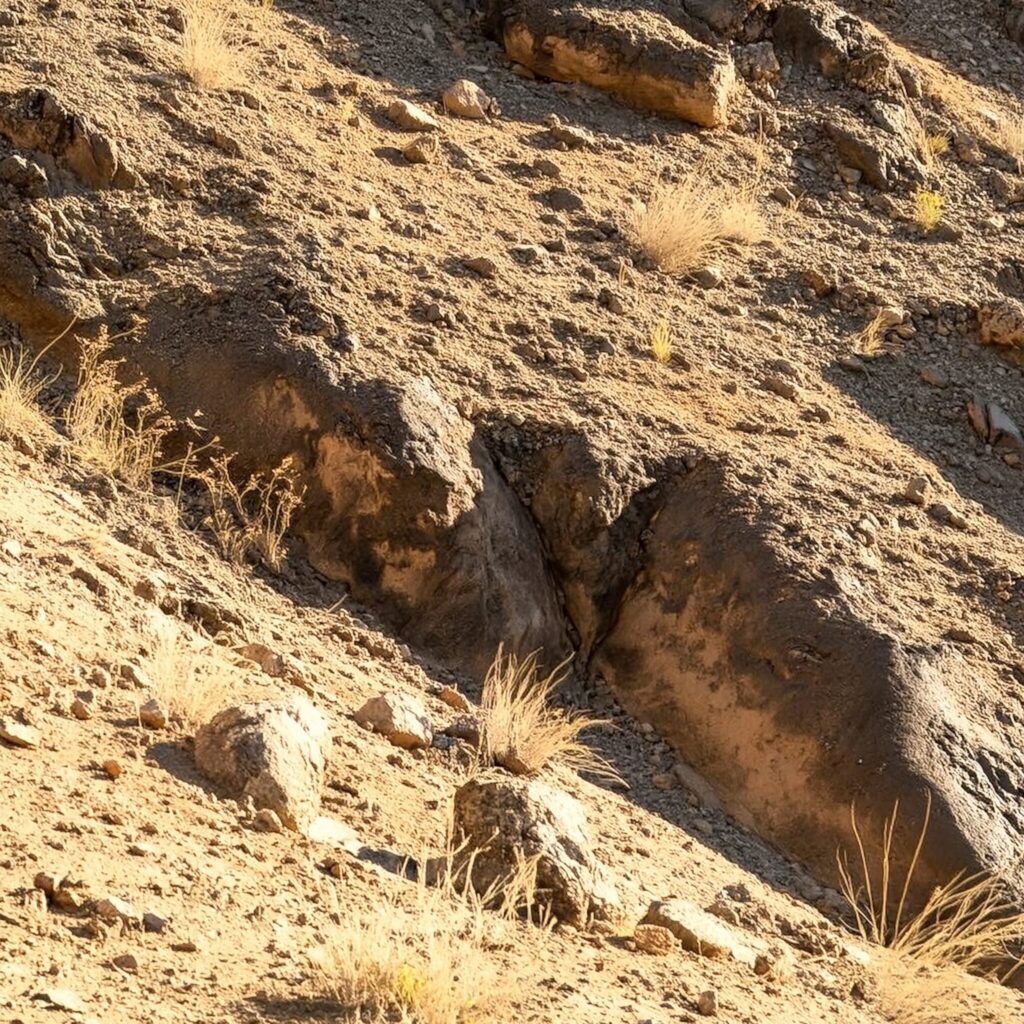
Austin sits in Central Texas, where rivers, limestone hills, and granite outcrops shape the land. The city’s warm climate and diverse geology make it an interesting place for rockhounds, with pegmatite-rich areas nearby that could hold aquamarine.
Within Austin, exposures of pegmatite can be found in certain rock outcrops, especially near construction sites or natural creek beds. The edges of the Balcones Fault Zone, which cuts through the city, have areas where mineral-rich rocks are exposed, creating potential spots for discoveries.
West of Austin, the Llano Uplift contains pegmatite formations that may hold aquamarine, especially near Kingsland and Packsaddle Mountain. The Texas Hill Country, including areas near Marble Falls and Spicewood, has similar rock formations where this gemstone might be found.
You've probably walked past some incredible rocks and minerals. You need this guide 👇👇👇

We've all come across a cool rock that we could have sworn was rare or valuable but couldn't tell what it was.
If you're not 100% confident that you know every rock and mineral in Texas this guide is for you.
The Texas Rocks & Minerals Field Guide helps you ID what you find in seconds, from Hill Country agates to Llano granite, with crisp photos, simple charts, and zero fluff.
→ Grab your copy today and spot your next gem before anyone else does.
What this guide unlocks:
🧭 Confidence in the field — ID rocks fast and move on to the next find
🎒 Lightweight and waterproof — built for trails, not coffee tables
🌅 Weekend adventures — find treasures on rivers, ranches, and roadsides
🤠 Texas pride — explore the real geological beauty of your state
🔥 Motivation — every trip outside feels like a hunt for hidden gems
Franklin Mountains
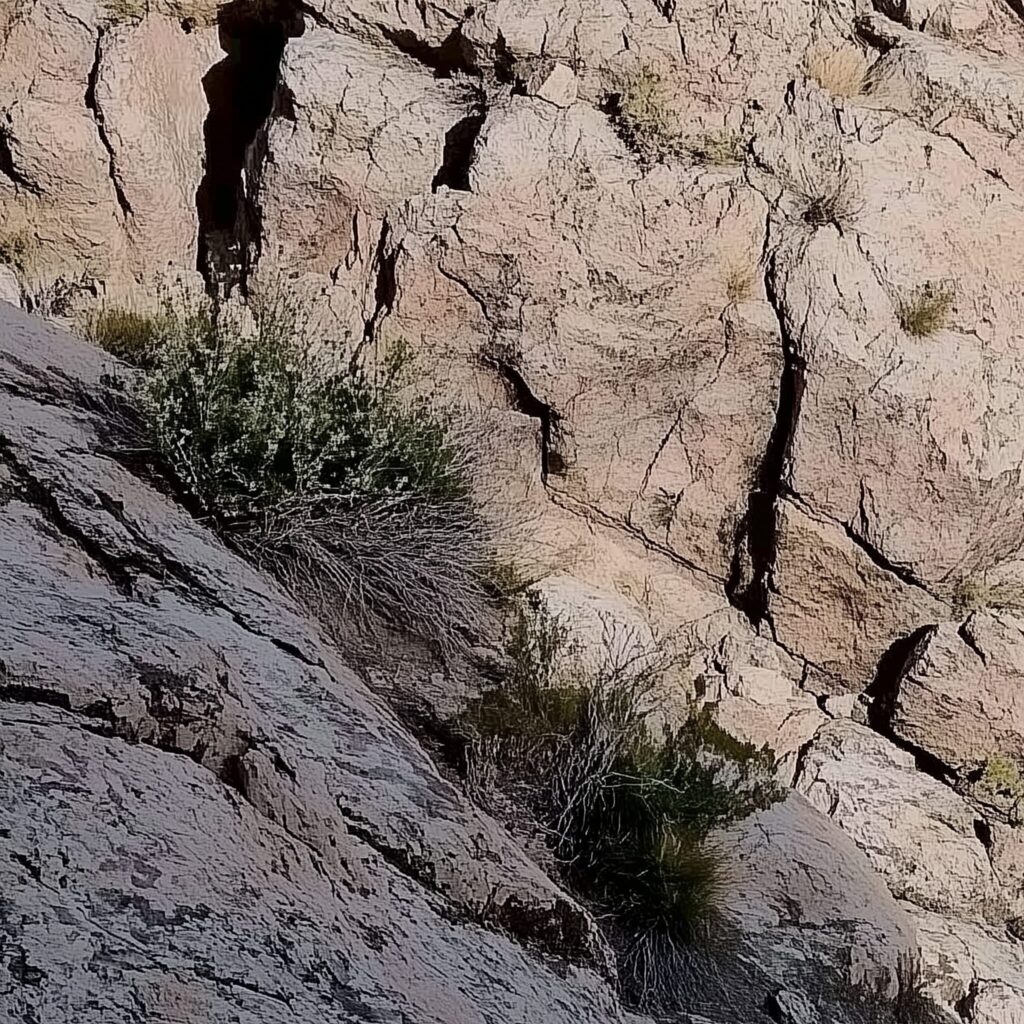
The Franklin Mountains rise above El Paso, stretching across rugged desert terrain with exposed rock formations. This range contains pegmatite intrusions and metamorphic rocks, creating conditions where minerals like beryl could be present.
Rocky outcrops and faulted zones in the southern and central parts of the range provide access to mineral-rich areas. Certain sections with exposed granite and quartz veins may hold traces of aquamarine within their formations.
Higher elevations and steep canyons in the Franklin Mountains have scattered pegmatite dikes. These formations, along with mineralized faults, could be locations where aquamarine might be found.
Devils Backbone
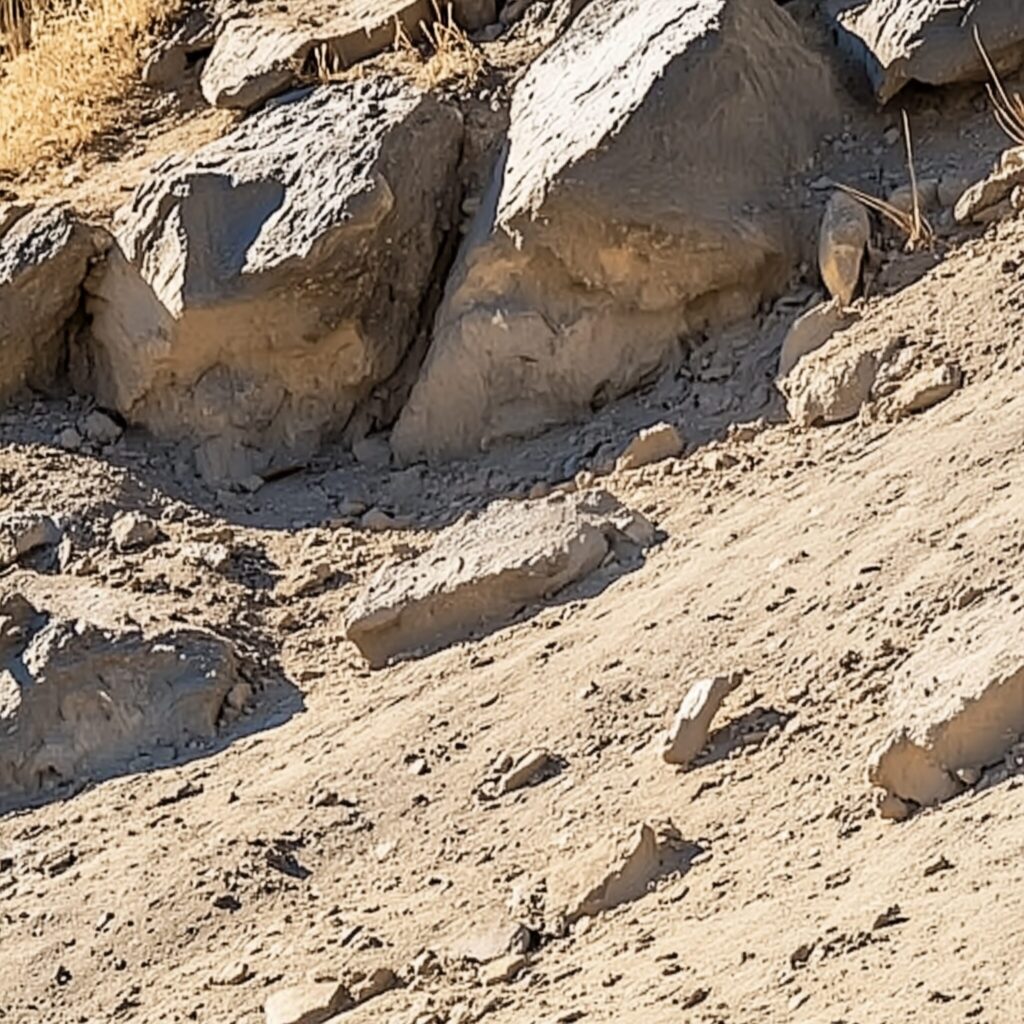
Devil’s Backbone is a rugged ridge in the Texas Hill Country, known for its limestone bluffs and rolling hills. Though much of the area is sedimentary, sections contain pegmatite intrusions that could hold beryl minerals.
Certain rocky slopes and creek beds along the ridge expose older formations beneath the limestone. These areas, where erosion has revealed deeper rock layers, might have pockets of aquamarine-bearing material.
Scattered mineral deposits in parts of the Devil’s Backbone region include quartz and feldspar. The presence of these minerals suggests that pegmatite-rich zones could exist, offering a chance of finding aquamarine.
Big Bend region
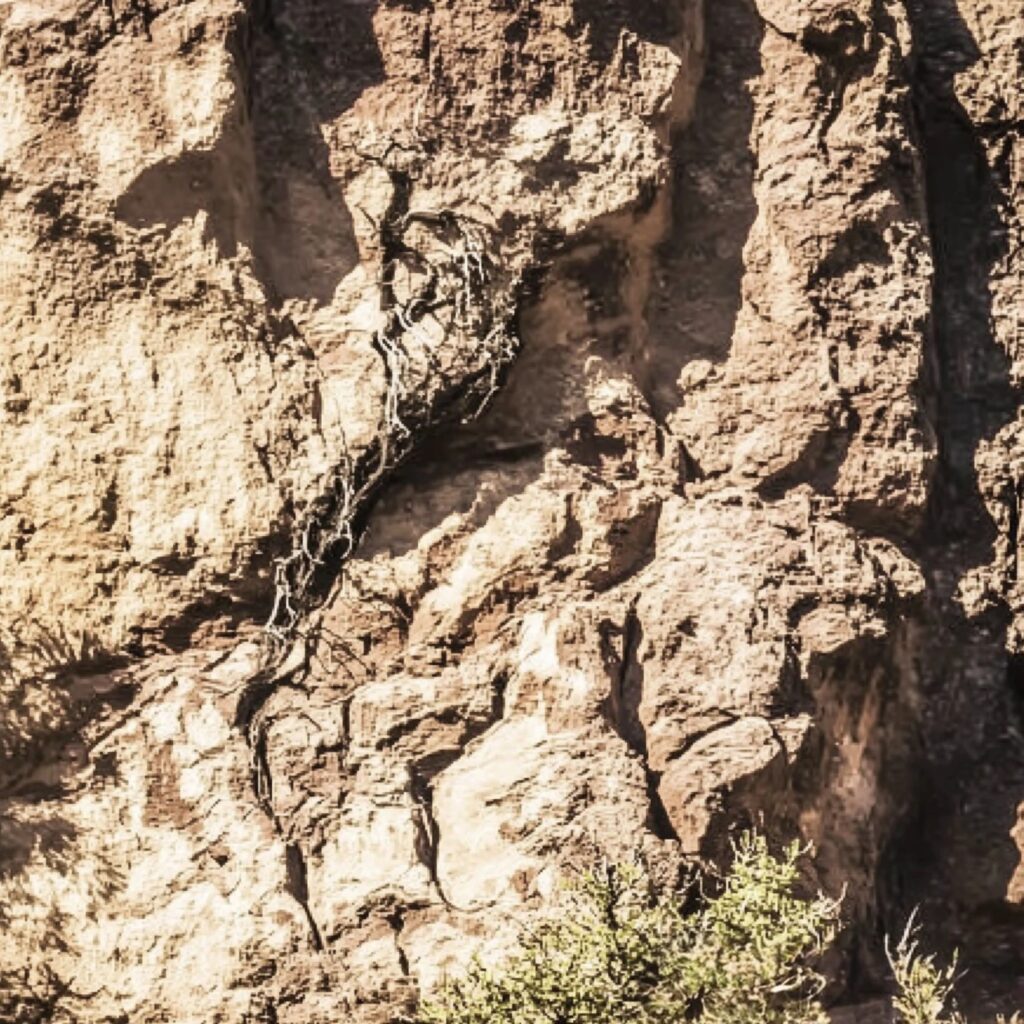
The Big Bend region of Texas is a promising destination for aquamarine collectors, thanks to its varied geology and mineral-rich formations. Situated along the Rio Grande, this area contains pegmatite deposits where aquamarine can be found in shades of blue and green.
Riverbeds and mountainous outcrops are the best places to search, as natural weathering can expose hidden crystals. The rugged landscape provides excellent conditions for uncovering minerals, especially in areas where erosion has gradually revealed new material.
Bringing the right tools, such as a rock hammer and gloves, is essential for navigating the rocky terrain. Since many parts of Big Bend are remote, it’s also important to check trail maps and access points before setting out, particularly near Terlingua Abajo.
Blue Ridge
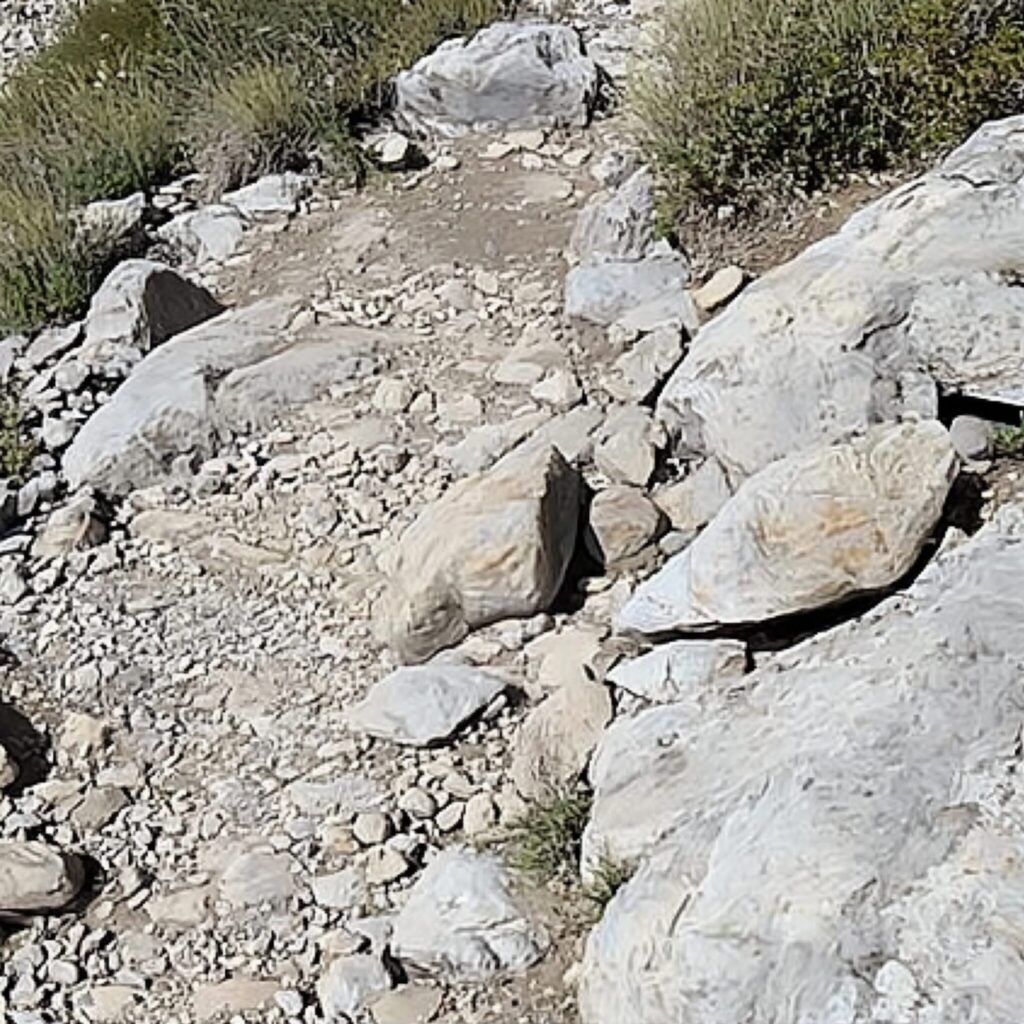
Blue Ridge, located northeast of Dallas, is a well-known spot for aquamarine collectors. This region contains pegmatite formations that have produced aquamarine in varying shades of blue.
Creek beds and exposed rock formations are the best areas to explore, as flowing water can help unearth hidden crystals. Searching along the edges of rock outcrops or near creek banks often leads to promising finds.
Bringing tools like a pickaxe, rock hammer, and gloves is recommended for handling the rugged terrain. Many collectors have had success in areas where natural weathering has loosened stones from the surrounding rock.
Places Aquamarine has been found by County
After discussing the top picks, we wanted to discuss the other places. Below is a list of the additional locations along with a breakdown of each place by county.
| County | Location |
| Burnet | Cactus Jack pegmatites |
| Crockett | Sierra Blanca |
| Eastland | Weatherford |
| Ector | Odessa |
| El Paso | Franklin Mountains |
| Gillespie | Willow City |
| Glasscock | Garden City |
| Guadalupe | New Braunfels |
| Hardin | Kountze |
| Harris | Houston |
| Hidalgo | McAllen |
| Hill | Hillsboro |
| Hudspeth | Sierra Blanca |
| Jefferson | Beaumont |
| Kinney | Brackettville |
| Lampasas | Lampasas |
| Limestone | Groesbeck |
| Lubbock | Lubbock |
| Maverick | Eagle Pass |
| McCulloch | Brady |
| Montague | Saint Jo |
| Nacogdoches | Nacogdoches |
| Reagan | Big Lake |
| Real | Leakey |
| Runnels | Ballinger |
| Schenck | Fredericksburg |
| Smith | Tyler |
| Tarrant | Fort Worth |
| Terrell | Sanderson |
| Tom Green | San Angelo |
| Travis | Austin area |
| Upton | McCamey |
| Van Zandt | Canton |
| Wichita | Wichita Falls |
| Wilbarger | Vernon |
| Wise | Decatur |
| Wood | Mineola |
| Young | Graham |
| Borden | Gail |
| Cochran | Morton |
| Mitchell | Colorado City |
| Rains | Emory |
| Scurry | Snyder |
| Ward | Monahans |